Spirit Animal
Alligator Spirit Animal
Alligator and crocodile spirit animal meaning: primal power, ancient patience and hidden strength. Traced from the modern primal-power reading back through Ted Andrews's Animal Speak to the Egyptian crocodile god Sobek of the Faiyum, the Mesoamerican Cipactli earth-crocodile in Sahagún, the Seminole alligator traditions documented by William Bartram, and Herodotus Book 2 on Egyptian crocodile-worship.
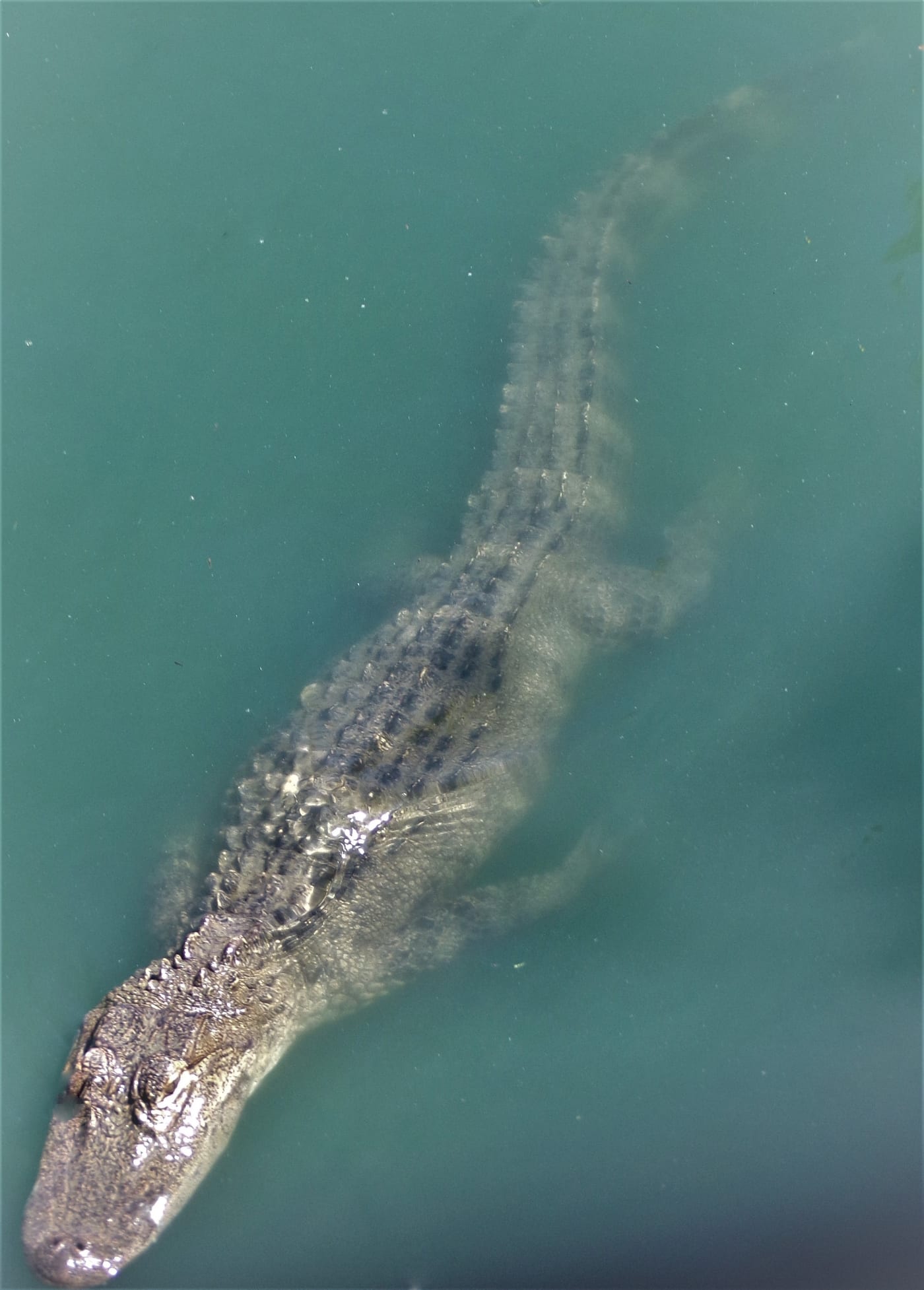
In modern American "spirit animal" usage, the alligator/crocodile stands for primal power, ancient patience, and the hidden predator beneath calm water. That reading comes through Ted Andrews's Animal Speak (Llewellyn, 1993). The older traditions are specific and dense. The Egyptian crocodile god Sobek, centered at Crocodilopolis in the Faiyum, is attested from the Old Kingdom Pyramid Texts through Ptolemaic cult; Herodotus Book 2 (chapters 68–70) describes Egyptian crocodile-mummification. The Mesoamerican Cipactli is the earth-crocodile from whose body the world is formed in Sahagún's Florentine Codex Book 7. And the Seminole alligator traditions of Florida are documented in William Bartram's 1791 Travels, one of the canonical American natural-history texts.
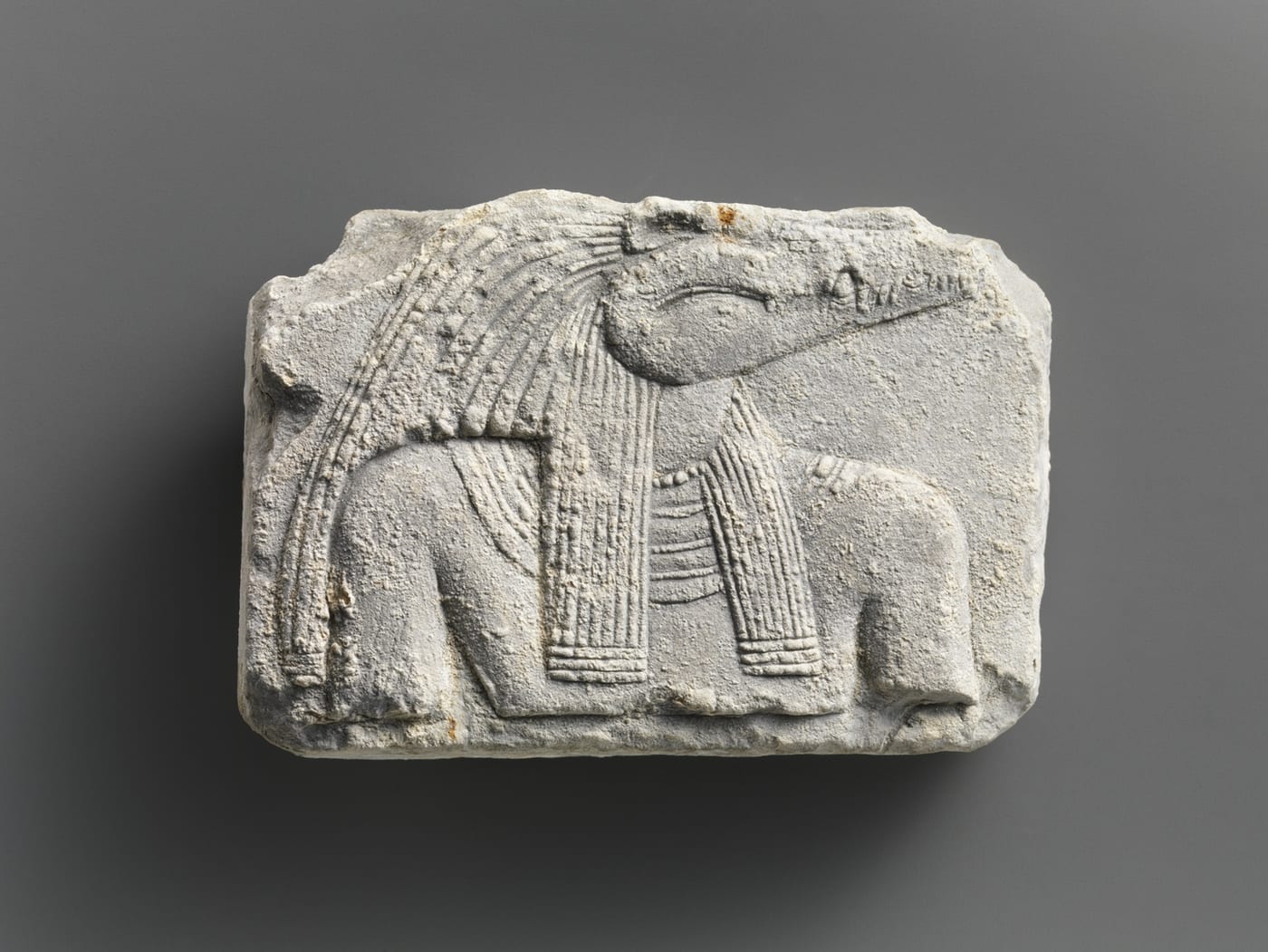
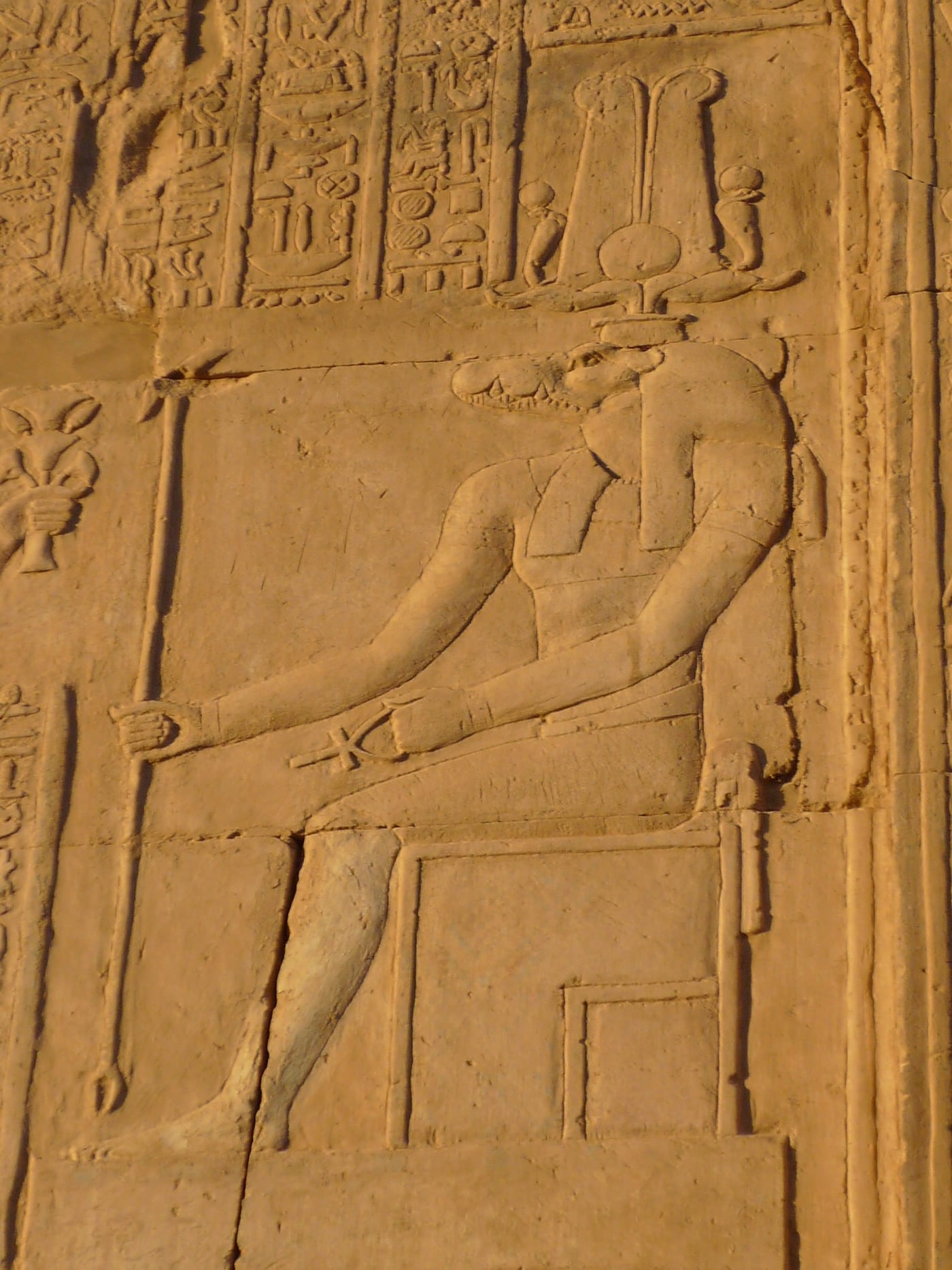
At Kom Ombo temple on the east bank of the Nile in Upper Egypt, the Ptolemaic sanctuary has two symmetric halves, each with its own axis. The left side is dedicated to Haroeris (Horus the Elder); the right side is dedicated to Sobek, the crocodile god. It is the only known Egyptian temple jointly dedicated to two deities on parallel axes. A small side chapel now displays three dozen mummified crocodiles, some still wrapped, excavated from nearby animal cemeteries. Over ten thousand crocodile mummies have been recovered from the Faiyum and from Kom Ombo combined. The cult of Sobek was real, serious, and operated at imperial scale for roughly two and a half thousand years.
Meanwhile, across the Atlantic and a thousand years later, the Mexica creation narrative has Tezcatlipoca and Quetzalcóatl seizing the primordial crocodile-monster Cipactli from the waters of the first sea and tearing her in half to make the world. The Leyenda de los Soles, c. 1558, preserves the story. The Sun Stone at Mexico City’s Museo Nacional de Antropología carries her day-sign as the first of the twenty tonalpohualli day-signs.
Those are two of the deepest single-animal-god theologies in the history of religion. Both centered on this one animal.
The traditions in brief
Sobek. Egyptian. Cult center Shedet (Crocodilopolis) in the Faiyum. Pyramid Texts back to c. 2400 BCE; cult extends to Ptolemaic period. Kom Ombo temple (jointly with Horus). Over 10,000 recovered crocodile mummies. Herodotus 2.68–70 describes the live-crocodile temple practice from his c. 440 BCE visit.
Cipactli. Mesoamerican. Primordial earth-crocodile, tonalpohualli day-sign one. Leyenda de los Soles (1558, Codex Chimalpopoca). Sahagún Florentine Codex Book 7. Sun Stone iconography.
The Seminole alligator. Florida-specific. William Bartram’s 1791 Travels is the canonical 18th-century natural-history description. Patricia Wickman’s The Tree That Bends (University of Alabama Press, 1999) treats the Seminole-Miccosukee cultural context. The Ah-Tah-Thi-Ki Museum of the Seminole Tribe of Florida is the contemporary living-tradition resource.
What the pop reading flattens
Andrews’s 1993 Animal Speak: primal power, ancient patience, hidden strength. Real observations about the animal’s biology. But the Sobek temple at Kom Ombo and the Cipactli creation narrative are genuinely more interesting readings, two of the most specific single-animal theologies in world religion, and both arrive through the same creature.
Across traditions
Egyptian (Sobek of the Faiyum)
Sobek (Egyptian Sbk) is the crocodile god of the Faiyum oasis, attested from the Old Kingdom Pyramid Texts (Utterances 317, 507) through the Ptolemaic period. His cult center was Shedet (Greek Crocodilopolis, modern Medinet el-Fayum), where live crocodiles were kept in temple pools, fed ritually, and mummified after death. Herodotus's Histories 2.68–70 provides the fullest Greek description of Egyptian crocodile-veneration.
Over ten thousand crocodile mummies have been recovered from the Faiyum and from the Kom Ombo temple complex in Upper Egypt. Kom Ombo, the only known Egyptian temple jointly dedicated to two deities (Sobek and Horus the Elder), preserves extensive Ptolemaic-era crocodile iconography and a sanctuary where mummies are still displayed. Salima Ikram's Divine Creatures: Animal Mummies in Ancient Egypt (AUC Press, 2005) documents the cult's scale.
- PRIMARY Pyramid Texts, Utterances 317, 507 . Faulkner trans., Oxford, 1969.
- PRIMARY Herodotus, Histories 2.68–70 . Godley trans., Loeb Classical Library.
- PEER-REVIEWED Salima Ikram, Divine Creatures: Animal Mummies in Ancient Egypt . AUC Press, 2005.
- MUSEUM Kom Ombo temple, Sobek-and-Horus sanctuary
Mesoamerican (Cipactli, the earth-crocodile)
Cipactli is the primordial crocodile-monster from whose body the earth is made in Mexica (Aztec) cosmogony. The Leyenda de los Soles (c. 1558, preserved in the Codex Chimalpopoca) narrates the creation: Tezcatlipoca and Quetzalcóatl seize Cipactli from the primordial waters and tear her in half, making the sky from one part and the earth from the other. Sahagún's Florentine Codex Book 7, chapter 2, and the Histoyre du Mechique preserve parallel versions.
Cipactli is also the first day-sign of the 260-day tonalpohualli (ritual calendar), making her foundational to both Mesoamerican cosmology and time-reckoning. The iconography appears on the Sun Stone (Stone of the Fifth Sun, Museo Nacional de Antropología, Mexico City) and across surviving Aztec codices. Miguel León-Portilla's Aztec Thought and Culture (University of Oklahoma Press, 1963) is the standard introduction to the theological context.
- PRIMARY Leyenda de los Soles (Codex Chimalpopoca) . Bierhorst trans., University of Arizona Press, 1992.
- PRIMARY Sahagún, Florentine Codex Book 7 ch. 2 . Anderson & Dibble trans., University of Utah Press, 1950–82.
- PEER-REVIEWED Miguel León-Portilla, Aztec Thought and Culture . University of Oklahoma Press, 1963.
- MUSEUM Sun Stone (Stone of the Fifth Sun) . Museo Nacional de Antropología, Mexico City.
Seminole / Florida (Bartram's 1791 Travels)
William Bartram (1739–1823), the American naturalist, traveled through Seminole Florida and the Southeast between 1773 and 1777. His Travels Through North and South Carolina, Georgia, East and West Florida (Philadelphia, 1791) contains the most famous description of Florida alligators in early American literature, including a near-death encounter on the St. Johns River. Bartram recorded Seminole oral traditions about alligators, though his account is filtered through a late-18th-century naturalist's frame.
More recent Seminole scholarship, including the ongoing work of the Seminole Tribe of Florida's Ah-Tah-Thi-Ki Museum, preserves contemporary tribal traditions around the alligator as both food source and respected being. The alligator-clan tradition (i-fa-lo-wa) within Seminole and Miccosukee kinship is documented in Patricia Wickman's The Tree that Bends: Discourse, Power, and the Survival of the Maskoki People (University of Alabama Press, 1999).
- PRIMARY William Bartram, Travels Through North and South Carolina, Georgia, East and West Florida . James & Johnson, Philadelphia, 1791.
- PEER-REVIEWED Patricia Wickman, The Tree That Bends . University of Alabama Press, 1999.
- REFERENCE Ah-Tah-Thi-Ki Museum, Seminole Tribe of Florida
Ted Andrews (1993)
Andrews's 1993 alligator/crocodile is the primal-power figure, drawn generically from the animal's obvious apex-predator biology and softened into personal-spirit keyword form. The Sobek, Cipactli, and Seminole traditions are largely absent, which is a real loss since they include two of the deepest and most specific single-animal-god theologies in world religion.
- REFERENCE Ted Andrews, Animal Speak . Llewellyn, September 1993.
Working with the Alligator
If you want a regular practice rather than a one-time read, an oracle deck is the standard tool: you draw a card and sit with whatever animal comes up. Our ranked guide to spirit animal oracle decks compares the field.
Frequently asked
- What does an alligator or crocodile symbolize spiritually?
- In modern pop usage, primal power, ancient patience, and hidden strength. Older traditions are specific. Egyptian Sobek, crocodile god of the Faiyum, was worshipped with live sacred crocodiles and mummification (Herodotus 2.68–70; over 10,000 crocodile mummies recovered). Mesoamerican Cipactli is the earth-crocodile from whose body the world is formed (Leyenda de los Soles; Sahagún Florentine Codex Book 7). The Seminole alligator traditions of Florida are preserved in William Bartram's 1791 Travels and in contemporary Seminole scholarship.
- Who was Sobek?
- Sobek (Egyptian Sbk) is the crocodile god of the Faiyum oasis, attested from the Old Kingdom Pyramid Texts (Utterances 317, 507) through the Ptolemaic period. His cult center was Shedet (Greek Crocodilopolis, modern Medinet el-Fayum), where live crocodiles were kept in temple pools, fed ritually, and mummified after death. Herodotus 2.68–70 is the fullest Greek description. The Kom Ombo temple complex in Upper Egypt is jointly dedicated to Sobek and Horus the Elder.
- What is Cipactli?
- Cipactli is the primordial crocodile-monster from whose body the earth is made in Mexica (Aztec) cosmogony. The Leyenda de los Soles (c. 1558, preserved in the Codex Chimalpopoca) narrates the creation: Tezcatlipoca and Quetzalcóatl seize Cipactli from the primordial waters and tear her in half, making the sky from one part and the earth from the other. Cipactli is also the first day-sign of the 260-day tonalpohualli ritual calendar.
- What is the difference between alligators and crocodiles?
- Biologically, they are distinct families within the order Crocodilia: Alligatoridae (alligators and caimans) and Crocodylidae (true crocodiles). American alligators (Alligator mississippiensis) are the species native to the southeastern US. Crocodiles have a more V-shaped snout, lower-hanging fourth teeth visible when the mouth is closed, and are found across Africa, southern Asia, Australia, and tropical Americas. The ancient traditions covered here refer mostly to the Nile crocodile (Crocodylus niloticus, Egypt) and to Mesoamerican caimans/crocodiles; American alligators enter the record substantially only with Bartram's 1791 fieldwork.
Sources
- PRIMARY Pyramid Texts, Utterances 317, 507 . Faulkner trans., Oxford, 1969.
- PRIMARY Herodotus, Histories 2.68–70 . Loeb Classical Library.
- PEER-REVIEWED Salima Ikram, Divine Creatures . AUC Press, 2005.
- MUSEUM Kom Ombo temple
- PRIMARY Leyenda de los Soles (Codex Chimalpopoca) . Bierhorst trans., University of Arizona Press, 1992.
- PRIMARY Sahagún, Florentine Codex Book 7 . Anderson & Dibble trans.
- PEER-REVIEWED Miguel León-Portilla, Aztec Thought and Culture . University of Oklahoma Press, 1963.
- MUSEUM Sun Stone, Museo Nacional de Antropología
- PRIMARY William Bartram, Travels . Philadelphia, 1791.
- PEER-REVIEWED Patricia Wickman, The Tree That Bends . University of Alabama Press, 1999.
- REFERENCE Ah-Tah-Thi-Ki Museum
- REFERENCE Ted Andrews, Animal Speak . Llewellyn, September 1993.