Animals in the Bible
The Eagle in the Bible: Divine Wings, Isaiah's Renewal, Ezekiel's Throne, and the Nesher Translation Problem
The Hebrew nesher covers eagles and vultures both. Several "eagle" passages in English Bibles read differently when you recognize the vulture is also present.
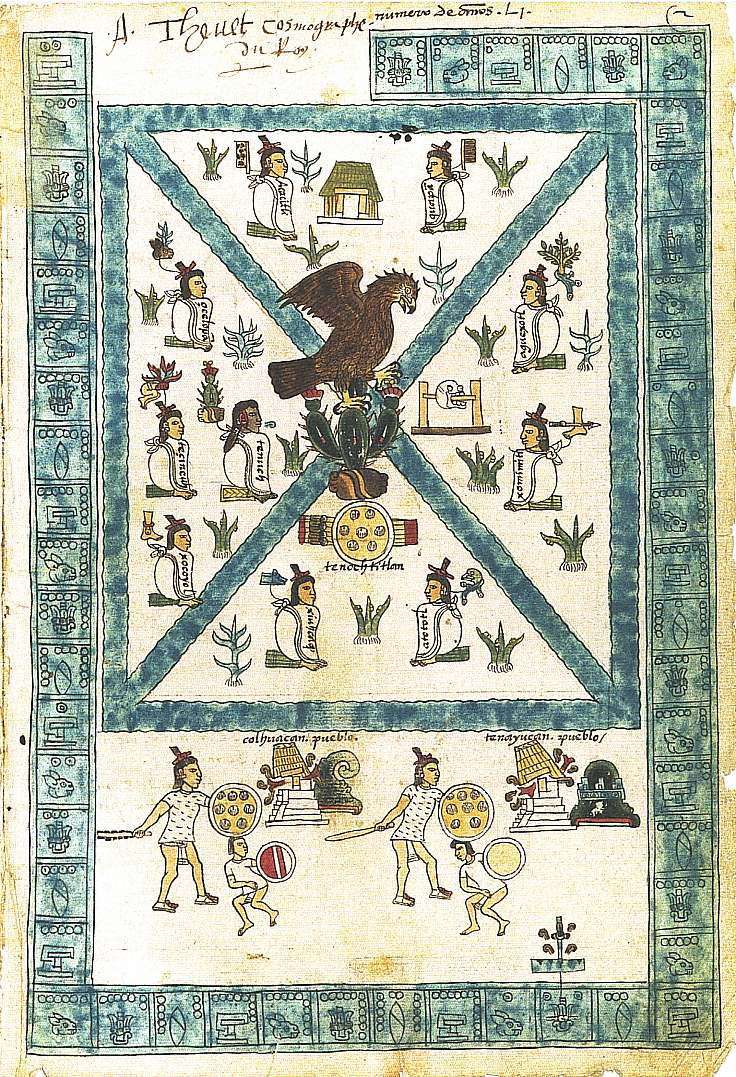
The biblical eagle (Hebrew nesher; Greek aetós) carries divine-rescue imagery (Exodus 19:4: 'I bore you on eagles' wings'), renewal-of-strength promise (Isaiah 40:31), and one of the four faces of divine presence in Ezekiel's throne-vision (1:10) and Revelation 4:7. The word nesher covers both eagle and vulture depending on context — Micah 1:16's 'baldness like the eagle' is ornithologically accurate only for a vulture. In Christian tradition, the eagle-face of the four living creatures was allegorized as the Evangelist John, which is why eagle lecterns (eagle-shaped book-stands) became standard furniture in Western churches.
Isaiah 40:31 is one of the most frequently quoted verses in American Christian culture. The promise to "mount up with wings like eagles" appears on everything from church bulletins to athletic wear. What the quotation almost never includes is the verse's original context: a consolation poem addressed to the Babylonian exile community, promising strength to those who endure waiting rather than act prematurely. The eagle in Isaiah 40 is not a personal motivational metaphor; it is a communal eschatological promise. The difference matters.
Exodus 19:4 and Deuteronomy 32:11
Two foundational eagle-verses carry the divine-protection register. Exodus 19:4 records God's speech at the foot of Sinai: "You yourselves have seen what I did to the Egyptians, and how I bore you on eagles' wings and brought you to myself." The eagle's wings are the vehicle of rescue — not a metaphor for divine power in the abstract but a specific claim about the Exodus event. Deuteronomy 32:11, from the Song of Moses, extends the parenting metaphor: "Like an eagle that stirs up its nest, that flutters over its young, spreading out its wings, catching them, bearing them on its pinions." The image is of a parent eagle teaching its young to fly by dislodging them from the nest and catching them when they fall. Both passages use nesher, and both fit true eagles (specifically the golden or short-toed eagle) in the ecology of the Sinai-Jordan region.
Isaiah 40:31 in context
Isaiah 40 begins "Comfort, comfort my people" — the opening of what scholars (since Duhm's 1892 commentary) have called Deutero-Isaiah, the consolation section addressed to the Babylonian exile community. Verse 31 closes a sequence arguing that God does not grow tired (vv. 28–29), strengthens the weak and powerless (v. 29–30), and sustains those who wait. "Those who wait for the Lord shall renew their strength; they shall mount up with wings like eagles; they shall run and not be weary; they shall walk and not faint." The communal context — a people in exile, being told to endure the wait rather than pursue premature action — is essential to the verse's meaning. The promise is not to individuals who feel tired; it is to a community that has been stripped of agency and is being asked to trust a longer arc.
Ezekiel's throne-vision and the four faces
Ezekiel 1 records the prophet's vision of the divine chariot (merkavah) near the Chebar canal in Babylon. The four living creatures (ḥayyôt) that support the divine throne each have four faces: "the face of a human being," "the face of a lion," "the face of an ox," and "the face of an eagle" (1:10). John Day's work on the ancient Near Eastern divine-chariot tradition provides the Babylonian and Canaanite background. Revelation 4:7 gives each creature one face, with one "like a flying eagle." In the Christian iconographic tradition established by Irenaeus (c. 180 CE) and codified in Gregory the Great (c. 600 CE), the eagle became the symbol of the Evangelist John, whose Gospel was read as soaring above the earthly narratives of the other three. Eagle lecterns — free-standing eagle-shaped book stands that support the Gospel book for reading — became standard furniture in medieval and Reformation-era Western churches.
The nesher translation problem
Micah 1:16 presents the clearest case where "vulture" reads better than "eagle": "Make yourselves bald and cut off your hair, for the children of your delight; make yourselves as bald as the eagle (nesher), for they shall go from you into exile." Bald as the eagle? The golden eagle is not bald. The Eurasian griffon vulture (Gyps fulvus), which is native to the Near East, has a bare or white-downed head that is conspicuously "bald." The Septuagint, probably following the bald-eagle connection in the culture, renders this passage as aetós; but the ornithological fit is better with the vulture. The King James Version's consistent "eagle" translation reflects the Septuagint choice rather than independent ecological analysis. Several modern translations footnote the vulture alternative.
Frequently asked
- What does the eagle symbolize in the Bible?
- The eagle in the Hebrew Bible primarily symbolizes divine protection and rescue (Exodus 19:4; Deuteronomy 32:11), renewal of strength through waiting on God (Isaiah 40:31), and the incomprehensibility of divine freedom (Proverbs 30:19). In Ezekiel 1:10 and Revelation 4:7, an eagle-face is one of the four faces of the divine throne-creatures, making the eagle one of the four symbols of divine presence. The bird itself (Hebrew nesher) is sometimes a true eagle and sometimes a vulture, depending on context; the translational conflation affects how the imagery reads.
- What does 'mounting up with wings like eagles' mean in Isaiah 40:31?
- Isaiah 40:31 ('they shall mount up with wings like eagles') is in the context of Isaiah 40's great consolation poem, which addresses a community in Babylonian exile. 'Those who wait for the Lord' — who endure rather than act prematurely — will find their strength renewed. The eagle imagery evokes height, speed, and effortlessness in ascending. In the original Hebrew context, 'mounting up with wings like eagles' is not an individual motivational promise; it is a collective promise to an exiled community that their strength will be renewed if they keep faith during the waiting period.
- What is the eagle's role in Ezekiel's vision?
- Ezekiel 1:10 describes the four living creatures (ḥayyôt) that support the divine throne: each has four faces — human, lion, ox, and eagle. Revelation 4:7 reproduces this imagery with the four creatures each having one face (one like an eagle). In Christian tradition, the four creatures were allegorized as the four Evangelists: the eagle as John. This interpretation appears in Irenaeus (c. 180 CE) and became the standard Western iconographic reading. The eagle-as-John accounts for the eagle lecterns common in Anglican and Roman Catholic churches, which support the Gospel book.
- Is the nesher in the Bible an eagle or a vulture?
- The Hebrew nesher covers both eagle and vulture in different contexts. The BHS critical apparatus notes that Micah 1:16's 'baldness like the eagle' makes ecological sense as the Eurasian griffon vulture (Gyps fulvus), which has a bald or white-downed head. Deuteronomy 32:11's nesting behavior fits both species. Isaiah 40:31's ascending flight fits the eagle better. The Septuagint typically renders nesher as aetós (eagle), which is why the English tradition consistently uses 'eagle'; but several passages read more accurately with 'vulture' understood.
Sources
- PRIMARYExodus 19:4 (BHS) — 'I bore you on eagles' wings and brought you to myself.' God's speech at Sinai; the eagle as the vehicle of divine rescue.
- PRIMARYDeuteronomy 32:11 (BHS) — The Song of Moses: God as an eagle that 'stirs up its nest, that flutters over its young, spreading out its wings, catching them, bearing them on its pinions.' The most detailed eagle-parenting metaphor in the Hebrew Bible.
- PRIMARYIsaiah 40:31 (BHS) — 'But they who wait for the Lord shall renew their strength; they shall mount up with wings like eagles.' The most-quoted eagle verse in Christian devotional literature.
- PRIMARYEzekiel 1:10; Revelation 4:7 (BHS / NA28) — The four living creatures (ḥayyôt) of Ezekiel's throne-vision and Revelation's parallel vision: one face of each creature is that of an eagle. The eagle as one of the four faces of divine presence.
- PRIMARYMicah 1:16 (BHS) — 'Make yourselves as bald as the eagle, for they shall go from you into exile.' The Hebrew nesher here is likely a vulture — its 'baldness' (bald head) fits the Eurasian griffon vulture better than the eagle.
- PRIMARYProverbs 30:19 (BHS) — 'the way of an eagle in the sky' — listed among the four things too wonderful to understand. The eagle's flight as a figure of incomprehensible beauty and freedom.
- PEER-REVIEWEDJohn Day, God's Conflict with the Dragon and the Sea — Cambridge University Press, 1985. Context for the divine-chariot imagery in Ezekiel 1.