Animals in the Bible
The Lion in the Bible: Judah, Christ, the Devil, and the Prophet's Voice
In the same biblical book that calls Christ "the Lion of Judah," Peter compares the devil to a roaring lion. The text sustains both readings without flinching.
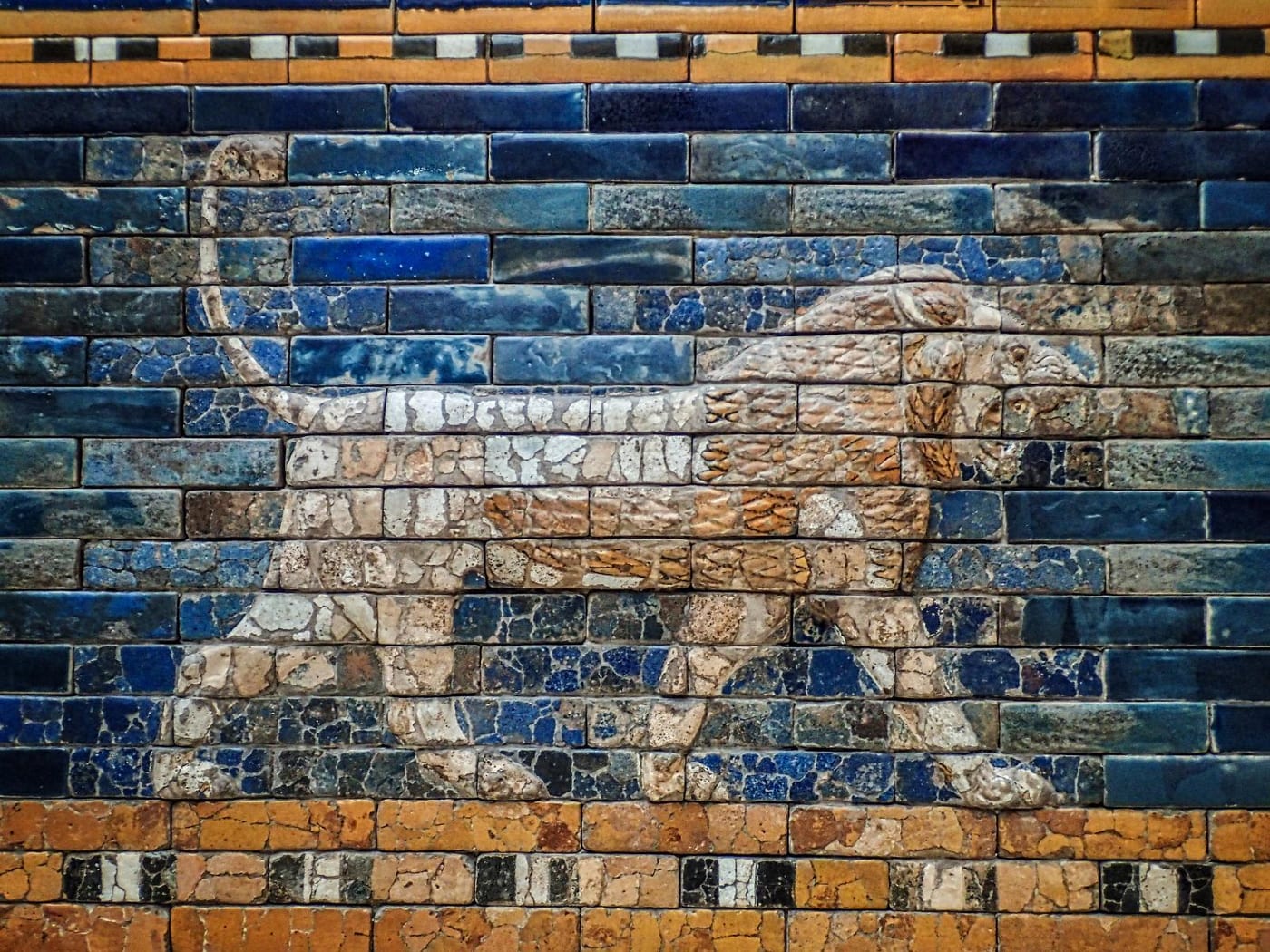
The lion (Hebrew aryeh / Aramaic arye / Greek leōn) appears approximately 150 times in the Hebrew Bible and New Testament. It carries at minimum four distinct symbolic registers: royal power of Judah (Genesis 49:9; 1 Kings 10:18–20), divine prophetic voice (Amos 3:8; Hosea 11:10), satanic predatory threat (1 Peter 5:8), and the messianic title of Christ (Revelation 5:5). The Lion-Lamb paradox of Revelation 5:5–6, Christ is announced as the conquering Lion but appears as the slaughtered Lamb, is the theological climax of this tension.
No biblical animal carries more simultaneous meanings than the lion. In the same canonical text, it is the symbol of Christ and the symbol of the devil. It represents God's voice in prophecy and the threat of Israel's enemies. It is the royal symbol of Judah and the killer that Daniel's God miraculously neutralizes. This is not inconsistency in the text; it is the lion's actual power being deployed in different directions. Understanding the biblical lion requires holding all the readings at once.
Genesis 49 and the Lion of Judah
The foundational biblical lion-text is Genesis 49:9, Jacob's deathbed blessing of Judah: "Judah is a lion's cub; from the prey, my son, you have gone up. He stooped down; he crouched as a lion and as a lioness; who dares rouse him?" The image is of a lion crouching over its kill, unchallenged. This becomes the tribal symbol of Judah, the tribe from which David and Solomon descended, the royal tribe of the southern kingdom.
Solomon's throne, described in 1 Kings 10:18–20, had lions flanking every step: "six steps to the throne, and the throne had a rounded top, and on each side of the seat were armrests and two lions standing beside the armrests, while twelve lions stood there, one on each end of a step on the six steps." This is the royal lion iconography in architectural form, directly expressing the Genesis 49 tribal identification. Othmar Keel's The Symbolism of the Biblical World (1978) documents the close parallels with Egyptian, Mesopotamian, and Canaanite throne-lion imagery; this was the visual language of ancient Near Eastern kingship, and Israel was fluent in it.
The title outlived the ancient Near East by millennia. Haile Selassie took "Lion of Judah" as an imperial title in Ethiopian Christianity, and the same title became foundational to Rastafari theology in the 20th century, both drawing directly on this Genesis 49 line and its extension to Christ in Revelation 5:5.
The lion as prophetic voice
Amos 3:8 provides the sharpest expression of the lion-as-divine-voice equation: "The lion has roared; who will not fear? The Lord God has spoken; who can but prophesy?" The lion's roar and God's speech are placed in direct parallel. The prophet cannot remain silent when the Lord speaks, just as a person cannot remain calm when a lion roars. The rhetorical force depends on the lion's roar being the most viscerally irresistible sound in the Israelite natural world.
Hosea 11:10 uses the same parallelism: "They shall go after the Lord; he will roar like a lion; when he roars, his children shall come trembling from the west." Here the lion's roar is simultaneously terrifying and a signal of gathering. Proverbs 30:30 places the lion in the wisdom tradition's catalog of admirable natural creatures: "the lion, which is mightiest among beasts and does not turn back before any." The lion here is an example of confident, undeterred action, a model for human behavior.
Daniel 6: the king's lions and God's restraint
The lion's den episode of Daniel 6 (the narrative is in Aramaic, Daniel 2:4b–7:28, with arye as the lion term) operates on a specific theological logic: the lion pit is the instrument of royal execution, used by Darius the Mede against those who have offended him. Daniel is thrown in because he prays to God despite the royal prohibition. God shuts the lions' mouths overnight. The lions themselves are not symbols of evil; they are powerful animals in the service of royal power, and God's ability to neutralize them demonstrates divine sovereignty over both the lions and the king who commands them. When the accusers are thrown to the same lions in verse 24, they are killed before reaching the bottom.
1 Peter 5:8: the devil as lion
The New Testament introduces the most challenging counter-reading: "Be sober-minded; be watchful. Your adversary the devil prowls around like a roaring lion, seeking someone to devour" (1 Peter 5:8, NA28). The same animal that is the symbol of the messianic tribe of Judah is used as the image of satanic predation. The author's choice is not careless; the lion's power cuts both ways. Its strength, speed, and predatory effectiveness are exactly what makes it useful both as a royal-power symbol and as an image of dangerous threat. Othmar Keel's survey of the biblical world finds the same duality outside Israel: Egyptian, Mesopotamian, and Canaanite art use the lion as both throne symbol and predator-menace, often in the same artistic program, so Peter's readers would have had no trouble recognizing which half of the lion's reputation he meant.
The tension is not resolved in the canonical text. 1 Peter was likely written within a generation of Revelation, and both texts were included in the same canon. The reader of the complete New Testament must hold "the Lion of Judah" (Revelation 5:5) and "the devil as lion" (1 Peter 5:8) simultaneously.
The Lion-Lamb paradox in Revelation 5
Revelation 5:5–6 is the climax of the biblical lion's theological career. One of the elders announces the Lion of the tribe of Judah, the Root of David, as the one who can open the scroll with seven seals. John turns to look, and sees a Lamb, "standing as though it had been slain, with seven horns and with seven eyes, which are the seven spirits of God." The conquering Lion appears as the slaughtered Lamb.
G.K. Beale's commentary in the New International Greek Testament Commentary series (Eerdmans, 1999) treats this juxtaposition as the pivotal theological statement of the passage: the Lion conquers precisely by dying as the Lamb. Power expressed through vulnerability, victory through sacrifice. The two images do not cancel each other; they define each other. The lion of Genesis 49 and the lamb of Isaiah 53 are held in the same figure, and the paradox is the point.
Sources
- PRIMARY Genesis 49:9 (BHS) . Jacob's blessing of Judah: 'Judah is a lion's cub; from the prey, my son, you have gone up.' The lion of Judah as tribal-royal identification.
- PRIMARY 1 Kings 10:18–20 (BHS) . Solomon's throne flanked by twelve lions — six on each side of the six steps. Royal lion iconography in the Jerusalem throne-room.
- PRIMARY Daniel 6:16–24 (Aramaic, BHS) . Daniel in the lion's den. The Aramaic arye; lions as instruments of royal judgment whose mouths God can shut.
- PRIMARY 1 Peter 5:8 (NA28) . 'Your adversary the devil prowls around like a roaring lion, seeking someone to devour.' The lion as satanic threat in the New Testament epistolary tradition.
- PRIMARY Revelation 5:5 (NA28) . 'The Lion of the tribe of Judah, the Root of David, has conquered.' Christ as lion, directly invoking Genesis 49:9. Same chapter identifies Christ as the Lamb (5:6).
- PRIMARY Amos 3:8 (BHS) . 'The lion has roared; who will not fear? The Lord God has spoken; who can but prophesy?' The lion's roar as the voice of divine prophecy.
- PRIMARY Proverbs 30:30 (BHS) . 'the lion, which is mightiest among beasts and does not turn back before any.' The lion in Israel's wisdom tradition as the exemplar of courage and strength.
- PEER-REVIEWED Othmar Keel, The Symbolism of the Biblical World . Seabury Press, 1978. Ancient Near Eastern lion iconography: Egyptian, Mesopotamian, and Canaanite parallels to biblical lion imagery.
- PEER-REVIEWED G.K. Beale, The Book of Revelation (NIGTC) . Eerdmans, 1999. Revelation 5:5–6: the Lion-Lamb paradox and its significance in Johannine theology.