Animals in the Bible
The Raven in the Bible: Noah's First Release, Elijah's Miraculous Feeder, and Jesus's Anxiety Lesson
A ritually unclean bird that doesn't return to Noah, then feeds a prophet for months, then shows up in the Gospels as proof that God provides even for the impure.
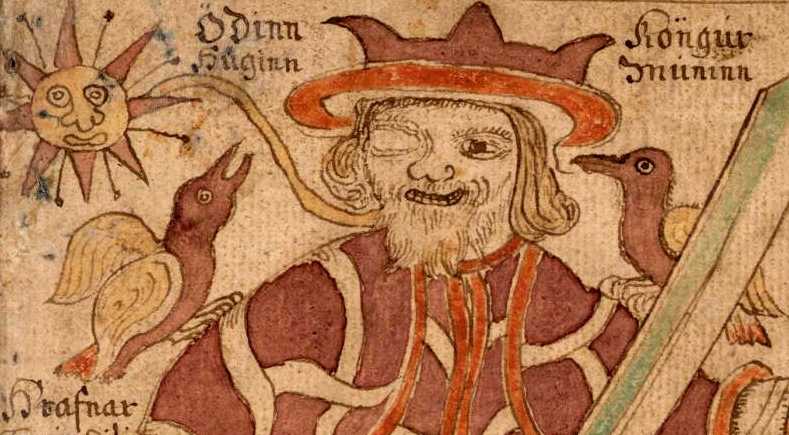
The raven (Hebrew ʿorév; Greek kórax) is the first bird Noah releases in Genesis 8:6–7, flying 'to and fro until the waters dried up' — notably not returning, unlike the dove. In 1 Kings 17:4–6, God specifically commands ravens to feed the exiled prophet Elijah twice daily at the Wadi Cherith. Job 38:41 and Psalm 147:9 cite the young raven as a creature dependent on divine provision. Luke 12:24 records Jesus using the raven as an anti-anxiety argument: God feeds even the ritually unclean raven. Song of Solomon 5:11 uses raven-black hair as a beauty standard.
The raven is the only animal in the Hebrew Bible that goes from ritually unclean (Leviticus 11:15) to divinely appointed food-courier (1 Kings 17) to anti-anxiety illustration in the Gospels. The bird the Levitical code forbids as food becomes the instrument of miraculous provision for a prophet, then the example Jesus uses to argue against worrying about provision. The biblical tradition is not embarrassed by this tension; it exploits it.
Genesis 8: the bird that doesn't come back
Genesis 8:6–7 reads: "At the end of forty days Noah opened the window of the ark that he had made and sent forth a raven. It went to and fro until the waters were dried up from the earth." The raven does not return to the ark. No explanation is given. The contrast with the dove is immediate: two verses later, Noah sends the dove, which returns because "the waters were still on the face of the whole earth." Then the dove returns with the olive leaf, then the dove stays away permanently.
The raven's non-return has generated centuries of interpretive effort. Talmudic tradition (Sanhedrin 108b) suggests the raven suspected Noah of designs on its mate and refused to return. Origen and other church fathers read the raven as the symbol of impure desires the soul must release before purification. The text itself offers nothing; the silence is the feature, not a gap. Whatever the raven encountered — land, food, freedom — it chose not to come back. In Genesis 8's economy, the dove is the messenger of hope; the raven is the bird that was already gone.
1 Kings 17: the divine food-courier
The raven's rehabilitation in the biblical text is complete in 1 Kings 17. Elijah, fleeing Jezebel's wrath after the drought announcement, is directed to the Wadi Cherith. God's instruction is specific: "I have commanded the ravens to feed you there" (v. 4). The ravens bring bread and meat in the morning and bread and meat in the evening — twice daily, for the duration of Elijah's stay, until the wadi dries up and he must move on. The bird that Leviticus declares unfit to eat becomes the vehicle of divine sustenance for Israel's most dramatic prophet.
The Talmudic debate about ʿorébim (1 Kings 17:4, 6) reflects the discomfort this passage creates for a tradition that takes the Levitical food code seriously. Some read the word as "Arabs" (from the root ʿrb, also "to mix" or "to be dark") rather than ravens. Most modern commentators retain "ravens" and read the episode as a deliberate miracle that uses an impure vehicle to deliver pure provision. The reversal is pointed.
Luke 12:24 and the anti-anxiety argument
Jesus's teaching on anxiety in Luke 12 (the parallel is Matthew 6:26, which uses "birds of the air" rather than specifically ravens) identifies the raven by name in Luke's version: "Consider the ravens: they neither sow nor reap, they have neither storehouse nor barn, and yet God feeds them. Of how much more value are you than the birds!" The rhetorical logic is intensified by the raven's unclean status. The argument is: if God provides for this bird — which your own law declares impure and inedible — then how much more can you trust divine provision for yourselves? The Levitical stigma is the argument's amplifier, not its obstacle.
Frequently asked
- What does the raven symbolize in the Bible?
- The biblical raven carries three distinct and somewhat contradictory roles. First, it is the bird that does not return to Noah's ark (Genesis 8:7) — often read as unreliability or the failure of an impure bird to complete its mission. Second, it is the instrument of miraculous divine provision: God commands ravens to feed the prophet Elijah (1 Kings 17:4–6). Third, it appears in Jesus's teaching on anxiety in Luke 12:24 as an example of a creature God feeds without its own effort. Separately, it is listed as ritually unclean in Leviticus 11:15 and Deuteronomy 14:14.
- Why did Noah release a raven before a dove?
- Genesis 8:6–7 records Noah releasing a raven first; it 'went to and fro until the waters were dried up from the earth.' The raven's behavior — not returning to the ark — contrasts with the dove, which returns twice before finding land. Commentators disagree on the interpretation: some read the raven as finding land but being an unclean bird that chooses not to return; others read it as finding no resting place but simply flying continuously. The raven's role in the Flood narrative is ambiguous in the text itself.
- How did ravens feed Elijah?
- 1 Kings 17:4–6 records God's instruction to Elijah: 'I have commanded the ravens to feed you there.' The ravens bring bread and meat in the morning and bread and meat in the evening at the Wadi Cherith. The text does not explain the mechanism. Jewish interpretive traditions (Talmud, Sanhedrin 92b) debated whether these were actual ravens or whether orebim should be translated differently (some suggested 'Arabs' from the root ʿrb). Most modern commentators retain 'ravens,' reading the episode as a miraculous divine provision regardless of the birds' ordinary behavioral ecology.
- Why does Jesus mention ravens in Luke 12?
- Luke 12:24 ('Consider the ravens: they neither sow nor reap, they have neither storehouse nor barn, and yet God feeds them') uses the raven specifically because it is conspicuous, familiar, and — critically — unclean under Levitical law. Jesus's teaching audience would have known that ravens are ritually impure birds. If God feeds even the unclean raven, how much more will he provide for humans? The unclean-bird detail is not incidental; it intensifies the argument.
Sources
- PRIMARYGenesis 8:6–7 (BHS) — Noah releases the raven first; it 'went to and fro until the waters were dried up from the earth.' The raven does not return — a notable contrast to the dove.
- PRIMARY1 Kings 17:4–6 (BHS) — God commands ravens to bring bread and meat to the prophet Elijah at the Wadi Cherith during the drought. Ravens feed the prophet twice daily.
- PRIMARYJob 38:41 (BHS) — 'Who provides for the raven its prey, when its young ones cry to God for help and wander about for lack of food?' The raven's young as examples of creatures dependent on divine provision.
- PRIMARYPsalm 147:9 (BHS) — 'He gives to the beasts their food, and to the young ravens that cry.' Parallel to Job 38:41; the young raven as an emblem of helpless dependence on God.
- PRIMARYLuke 12:24 (NA28) — 'Consider the ravens: they neither sow nor reap, they have neither storehouse nor barn, and yet God feeds them. Of how much more value are you than the birds!' Jesus's teaching on anxiety.
- PRIMARYSong of Solomon 5:11 (BHS) — 'his hair is wavy, black as a raven.' The raven's blackness as a beauty standard.
- PRIMARYLeviticus 11:15; Deuteronomy 14:14 (BHS) — Ravens listed among the unclean birds that Israelites were not to eat. The raven is ritually impure in the Levitical food code.