Animals in the Bible
The Serpent in the Bible: Genesis Nahash, Nehushtan, Leviathan, and the Satan-Identification
In Genesis 3, the serpent is an animal. It becomes the devil centuries later. And in Numbers 21, it becomes a healing symbol that Jesus cites as a type of his own death. The Bible's serpent cannot be reduced to one thing.
The Genesis nahash (serpent) is described in Genesis 3:1 as a 'beast of the field' (BHS). The identification of the Genesis serpent with Satan or the devil is absent from Genesis 3 itself and appears first in Second Temple Jewish literature (Wisdom of Solomon 2:24, c. 100 BCE), with the fullest New Testament statement in Revelation 12:9. Separately, the bronze serpent (Nehushtan) of Numbers 21:4–9, a serpent that heals, survived in Jerusalem Temple practice for centuries before Hezekiah destroyed it (2 Kings 18:4), and Jesus cites it as a type of the crucifixion in John 3:14–15.
The serpent in the Bible is doing more theological work than any single interpretive tradition can hold. It is a created animal that talks. It becomes the symbol of evil in the Christian tradition. It is also the instrument of healing in Numbers 21 and a Christ-figure in the Gospel of John. That is four separate things, and two of them (evil and Christ-figure) directly contradict each other. A serious reading of the biblical serpent has to hold this tension rather than resolve it too quickly.
Genesis 3: the creature in the garden
The Hebrew text of Genesis 3:1 describes the nahash as "more crafty (arum) than any other beast of the field that the Lord God had made." This is a comparison: the serpent is craftier than the other animals. It is not set apart from the animal world; it is the apex of it in one particular quality. Gordon Wenham's Word Biblical Commentary on Genesis 1–15 (1987) notes that the Hebrew arum (crafty) is a morally neutral term in the wisdom literature, it describes a quality that can be used well or poorly. The serpent uses its craftiness poorly.
The word nahash may be doing double duty. The Hebrew root n-h-sh also shows up as a verb meaning "to practice divination" or "to observe omens" (Genesis 44:5, 15; Leviticus 19:26). John Day and others have flagged the possible wordplay: the creature both practices nahash (divination) and is the nahash. If that pun is live in the original text, it adds a layer most English translations lose completely, casting the serpent not just as crafty but as something that traffics in hidden knowledge, which fits its role in the story with unusual precision.
The serpent's curse in Genesis 3:14 is the curse of an animal: "on your belly you shall go, and dust you shall eat all the days of your life." An etiological note about why snakes crawl. The text does not describe a fallen angel receiving judgment; it describes an animal receiving the curse appropriate to an animal that has exceeded its station. Wenham and most modern commentators read Genesis 3 as an originally independent narrative in which the serpent is a creature, whatever later theological layers were added.
The Ugaritic background: Litan and Leviathan
The serpent in the Hebrew Bible is not only the Genesis nahash. Isaiah 27:1 describes God's end-time judgment: "In that day the Lord with his hard and great and strong sword will punish Leviathan the fleeing serpent, Leviathan the twisting serpent, and he will slay the dragon that is in the sea." The Ugaritic Baal Cycle (clay tablets from Ras Shamra, c. 1400–1200 BCE) contains Baal's battle against Litan, described as "the fleeing serpent, the twisting serpent, the tyrant with seven heads." John Day's God's Conflict with the Dragon and the Sea (Cambridge, 1985) made the parallel definitive: Isaiah is using vocabulary directly paralleling the Ugaritic creation-battle tradition.
Leviathan isn't confined to Isaiah 27:1, either. Job 41 spends a full chapter on the creature, describing something no human weapon can touch and that answers to God and nobody else. Psalm 74:14 remembers God crushing "the heads of Leviathan" in a creation-battle scene, and Psalm 104:26 names the same creature again. The Genesis nahash and the Job-and-Psalms Leviathan are different Hebrew words and, on the surface, different figures. But the overlap in imagery, serpentine, chaotic, tamed only by God, is not a coincidence.
This matters for understanding the Genesis serpent because the same cultural world that produced the Genesis narrative also produced the Chaoskampf tradition. The Genesis serpent and the Leviathan-serpent are not identical figures, but they exist in the same mythological universe. The serpent in Genesis is not an alien intrusion into creation; it belongs to the ancient Near Eastern world in which the narrative was composed.
Nehushtan: the healing serpent
Numbers 21:4–9 is one of the most theologically productive passages in the entire serpent-tradition. Israel complains against God and Moses in the wilderness; God sends "fiery serpents" (seraphim nechashim, burning or venomous serpents) that kill many people. The people repent; God instructs Moses to make a "fiery serpent" (seraph) and mount it on a pole. Anyone bitten who looks at it lives. Moses makes a serpent of bronze (nehushtan) and mounts it.
2 Kings 18:4 records the sequel: King Hezekiah's reform in the late 8th century BCE includes destroying "the bronze serpent that Moses had made, for until those days the people of Israel had burned incense to it; it was called Nehushtan." The serpent had been in the Jerusalem Temple for centuries, receiving incense-offerings, before the Deuteronomistic reformers had it destroyed. This is not fringe practice: it is Jerusalem Temple cult-practice, attested in the text itself.
John 3:14–15 cites the Nehushtan explicitly: "As Moses lifted up the serpent in the wilderness, so must the Son of Man be lifted up, that whoever believes in him may have eternal life." The serpent-on-the-pole, the instrument through which looking brought healing, is used as a type of the crucifixion. The serpent that is the symbol of evil in the Christian tradition is, in John 3, the image Jesus uses for himself.
The Satan-identification: when and where it develops
The identification of the Genesis serpent with Satan or the devil is absent from the Hebrew Bible. It appears first in the deuterocanonical/apocryphal Wisdom of Solomon, dated to roughly 100 BCE: "through the devil's envy death entered the world" (2:24), connecting the devil with the serpent's role in introducing death in Genesis 3. 1 Enoch (also Second Temple period) further develops the fallen-angel mythology that provides a framework for the serpent-as-devil reading.
In the New Testament, Revelation 12:9 makes the identification explicit: "the great dragon was thrown down, that ancient serpent, who is called the devil and Satan, the deceiver of the whole world." Revelation 20:2 repeats it. Paul in Romans 16:20 says "the God of peace will soon crush Satan under your feet," echoing Genesis 3:15's language of crushing the serpent's head. The New Testament identification of the serpent with Satan is complete.
Notice the word choice in Revelation 12:9: "dragon" is the same register Isaiah 27:1 uses for Leviathan, and "ancient serpent" points straight back to Genesis 3. That verse isn't reaching for evil-animal imagery in general. It is deliberately fusing the Genesis nahash, the Chaoskampf dragon-monster, and the New Testament's devil into one figure. Three serpent-traditions this page has traced separately collapse into a single verse.
But the process took centuries. Genesis 3 in its original form is not about Satan. A reader who takes the plain Hebrew text seriously must hold two facts simultaneously: the original narrative is about an animal, and the canonical reading within the New Testament definitively identifies that animal with the devil.
The medical tradition: the staff of Asclepius
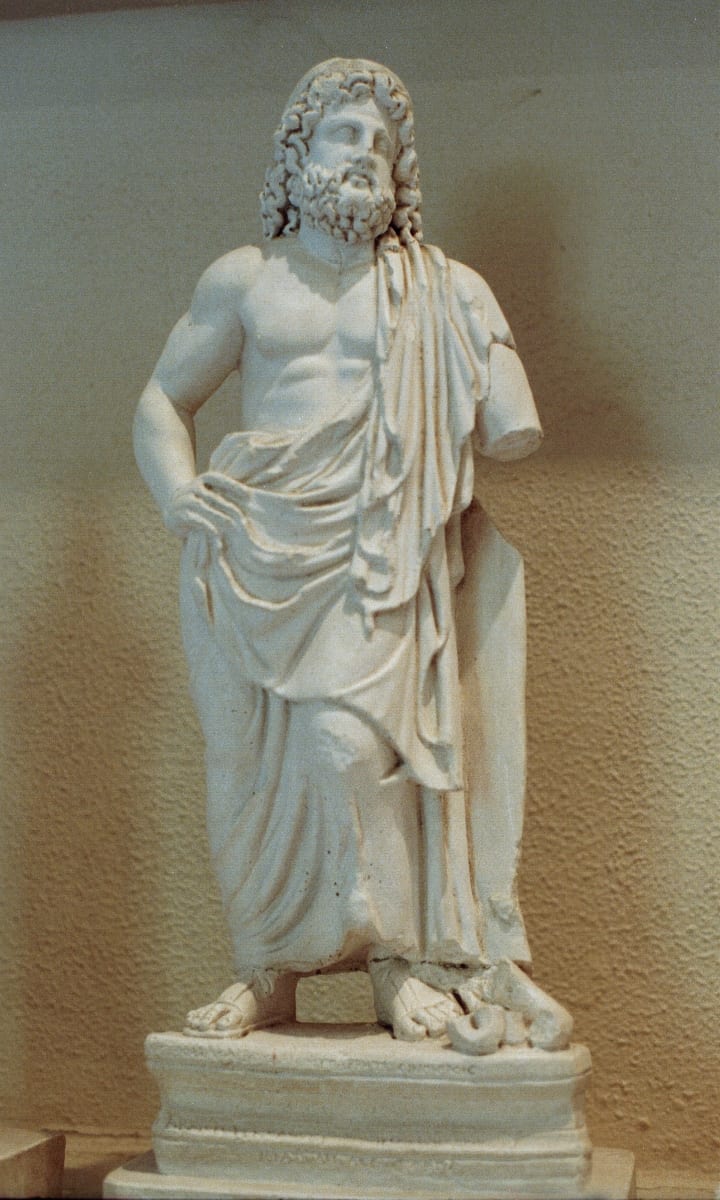
Outside the biblical canon but relevant to the Western serpent-as-healing symbol: the Greek Asclepian tradition, in which a serpent twined around a staff represents the medical arts (the rod of Asclepius), runs parallel to the Nehushtan tradition's association of serpents with healing. The connection between serpents and medicine is ancient and cross-cultural, probably originating in the serpent's visible skin-shedding behavior (which reads as renewal and healing). The biblical Nehushtan and the Greek Asclepian staff represent independent developments of a shared ancient symbolic logic.
Sources
- PRIMARY Genesis 3:1–24 (Biblia Hebraica Stuttgartensia) . Deutsche Bibelgesellschaft, 5th ed. The nahash as a created beast of the field; condemned to crawl on its belly (3:14).
- PRIMARY Numbers 21:4–9 (BHS) . The bronze serpent (nehushtan) erected by Moses; seraphim serpents bite the people, but looking at the bronze serpent heals them. A theologically complex episode: the serpent is both threat and cure.
- PRIMARY 2 Kings 18:4 (BHS) . King Hezekiah destroys the bronze serpent Nehushtan because the Israelites have been burning incense to it — evidence that the serpent-cult survived centuries in Jerusalem Temple practice.
- PRIMARY Isaiah 27:1 (BHS) . Leviathan as 'the fleeing serpent... the twisting serpent... the dragon that is in the sea.' The Chaoskampf imagery in prophetic literature.
- PRIMARY Wisdom of Solomon 2:24 (Septuagint / NRSV Apocrypha) . 'Through the devil's envy death entered the world.' First Jewish text to identify the Genesis serpent with the devil; Second Temple period (c. 100 BCE).
- PRIMARY John 3:14–15 (NA28) . Jesus cites the Nehushtan typologically: 'As Moses lifted up the serpent in the wilderness, so must the Son of Man be lifted up.' The serpent as a Christ-figure.
- PRIMARY Revelation 12:9; 20:2 (NA28) . The dragon 'called the devil and Satan, the deceiver of the whole world' explicitly identified with the serpent of Genesis. The fullest New Testament identification.
- PEER-REVIEWED Gordon Wenham, Word Biblical Commentary: Genesis 1–15 . Word, 1987. The Hebrew nahash and the absence of the Satan-identification in Genesis 3's original context.
- PEER-REVIEWED John Day, God's Conflict with the Dragon and the Sea . Cambridge University Press, 1985. Ugaritic Litan and its parallels to Leviathan and the Genesis serpent.