Power animals in specific traditions
Power symbolism in animals is always culturally specific. The same biological creature carries different power associations in different political and theological contexts — and those associations are not arbitrarily assigned but arise from specific historical uses of the animal in statecraft, warfare, and religious iconography.
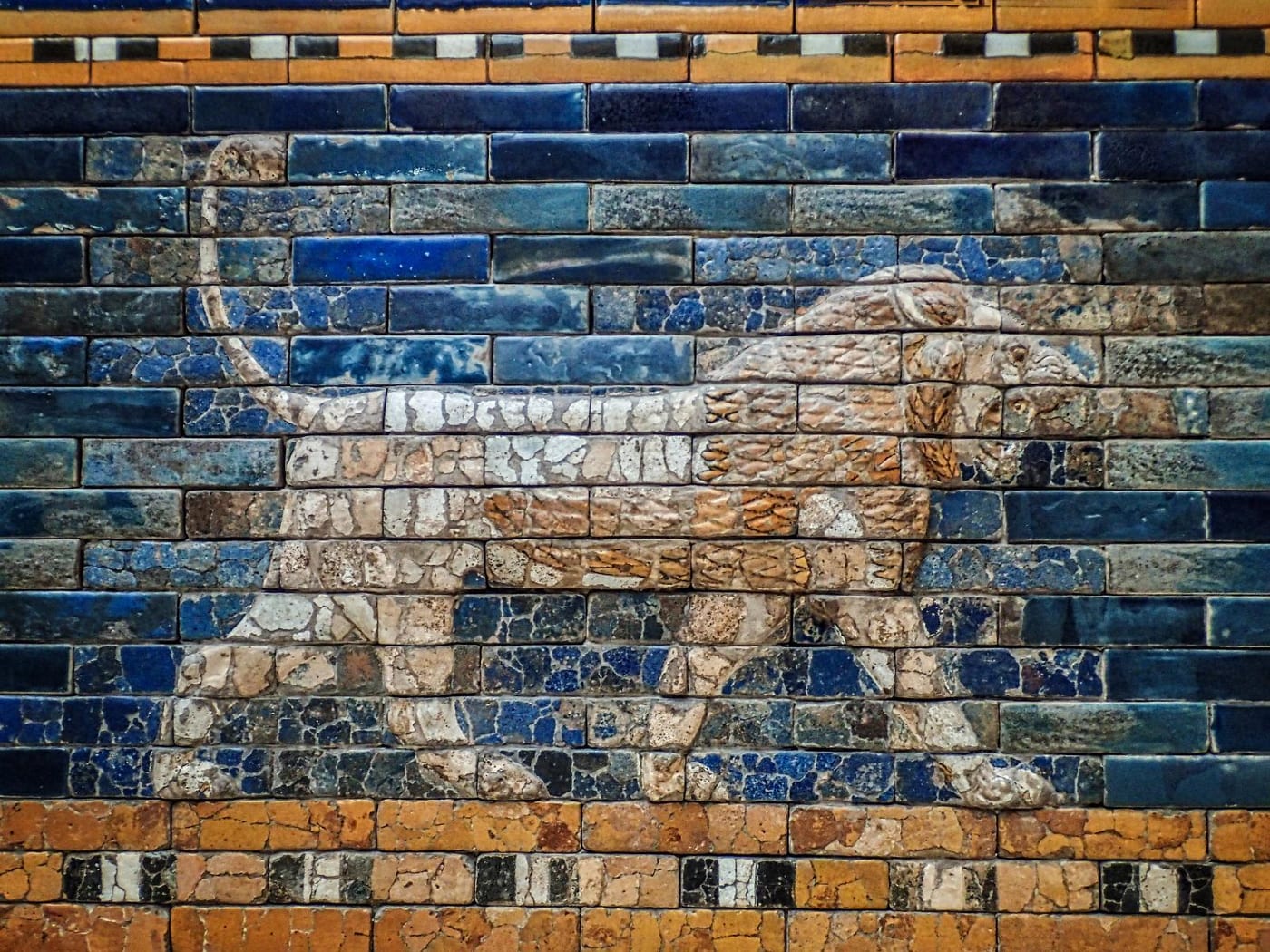
The lion is the most consistently documented power animal in the Western and Near Eastern tradition. Mesopotamian rulers — Assyrian, Babylonian, Achaemenid Persian — used the royal lion hunt as a demonstration of sovereign authority: the king who could kill the lion embodied power over the most dangerous animal in the landscape. The Ishtar Gate reliefs (c. 575 BCE) depict lion after lion in the procession to Babylon's inner sanctuary; the lions are not decorative, they are a statement of Babylonian power made in fired brick. In Egyptian tradition, the pharaoh was identified with the lion through Sekhmet (lioness goddess of war) and through the Sphinx (lion-bodied, human-headed, the pharaoh's eternal watchfulness). The biblical "Lion of Judah" (Genesis 49:9) carries the same sovereign encoding into Hebrew tradition; in Revelation 5:5, the Lion of Judah is a title of the risen Christ. The heraldic lion in medieval European tradition — the English royal arms, the Scottish lion rampant — descends from the same Mesopotamian/Roman-triumphal lineage.
The eagle is the primary power animal of the Roman tradition. The Roman legionary standard (aquila) was an eagle — bronze or silver, mounted on a pole, carried into battle as the embodiment of the legion's identity and honor. Losing the aquila was catastrophic (the disaster of the Teutoburg Forest in 9 CE resulted in three legions' eagles being captured by Germanic tribes; Augustus famously never recovered). The eagle transferred from Roman to later European imperial iconography: the Carolingian double-headed eagle, the Habsburg arms, the Russian imperial eagle. In Hindu tradition, the parallel figure is Garuda — the eagle-like vahana of Vishnu, divine mount of the supreme deity, destroyer of serpents. Garuda and the Roman eagle are historically unrelated but structurally parallel: the apex predator bird as the visual emblem of supreme authority.
The tiger carries power associations specifically in South Asian and East Asian contexts. In Hindu tradition, the tiger is Durga's mount — the goddess of warrior power rides the tiger into battle against the demon Mahishasura (Devi Mahatmya, c. 400–600 CE). In Chinese cosmology, the White Tiger (Bái Hǔ) is one of the four directional guardian beasts, ruler of the West and of autumn. In both traditions the tiger carries a specifically dangerous, boundary-testing power — not the lion's sovereign authority but the predator's raw force.
The dragon in Chinese imperial tradition (lóng) was the exclusive emblem of the emperor: a five-clawed dragon could only appear on the imperial robe, and unauthorized use was a capital offense. The Chinese dragon is fundamentally different from the European dragon (draco) — it is auspicious, water-associated, sovereignty-encoding rather than chaotic and destructive. The Han dynasty (206 BCE – 220 CE) formalized the dragon-emperor identification that persisted through the Qing dynasty (1644–1912). The bear carries power associations through the Norse berserkir tradition (warriors who fought in bear-skins, invoking the bear's rage) and through Ainu tradition (the bear as the most powerful animal in the forest, host of the divine). The wolf carries power through Odin's companion wolves Geri and Freki and through the martial wolf associations of Germanic warrior culture.
Thematic list
Animals That Symbolize Power
The animals that have stood in for rulership, across cultures.
Historic power symbolism follows specific animals in specific states. The lion in Mesopotamia, Egypt, and medieval Europe; Vishnu's eagle-mount Garuda as the Hindu parallel to the Roman aquila; the Chinese dragon (lóng) as the exclusive imperial emblem (five claws, Qing dynasty); the tiger as Durga's mount. None of these is a pan-cultural 'power animal' — each belongs to its tradition.
Animals in this list
Lion spirit animal meaning, traced from the modern courage-and-royalty reading back through Ted Andrews's Animal Speak to Sumerian Inanna and her seven lions, the Egyptian Sekhmet, the Hebrew Bible's Samson and the Lion of Judah, and the Buddhist singha temple guardian.
Eagle spirit animal meaning, traced from the modern courage-freedom reading back through Ted Andrews's Animal Speak to Zeus's eagle in Homer, the Roman legionary aquila, the Vedic Garuda, the Mexica founding of Tenochtitlan, and Lakota eagle-feather protocol.
Tiger spirit animal meaning, traced from the modern strength-and-courage reading back through Ted Andrews's Animal Speak to Durga's mount in the Devi Mahatmya, the Korean mountain-god sanshin, the Chinese Bai Hu (White Tiger) of the Four Symbols, and the Siberian Tungusic Amba.
Dragon spirit animal meaning, traced from the modern power-and-wisdom reading back through Ted Andrews's Animal Speak to the Chinese long (龍), the Welsh Y Ddraig Goch, the Norse Fáfnir of the Völsunga saga, the Biblical Leviathan of Job 41, and the Revelation 12 dragon.
Bear spirit animal meaning, traced from the modern strength-protector reading back through Ted Andrews's Animal Speak to Finno-Ugric bear ceremonialism, the Ainu iyomante, the Greek Brauron arkteia, and Anglo-Saxon kenning tradition.
Wolf spirit animal meaning, traced from the modern pop-concept back through Ted Andrews's Animal Speak (1993) to Old Norse sagas, Anishinaabe doodem tradition, and the Roman foundation myth. Named-nation specific. No pan-tribal framing.
Horse spirit animal meaning, traced from the modern freedom-and-power reading back through Ted Andrews's Animal Speak to the Vedic Aśvamedha, the Greek Pegasus, the Welsh Rhiannon of the Mabinogion, the Gallo-Roman Epona, and the Plains horse cultures that began with the 1680 Pueblo Revolt.