Color symbolism, sourced
Black Butterfly Meaning: Death Omens, Itzpapálotl, and the Modern Reversal
The black butterfly was a death-sign in the traditions that documented it first. Contemporary culture turned it into transformation. Here's what the record actually shows.
In Southern US folk tradition (Puckett 1926; Frank C. Brown Collection, 1961–64) and Martinique Creole belief (Hearn 1890), a black butterfly near the house was a death-omen. In Mexica religion, the black butterfly connects to Itzpapálotl (Obsidian Butterfly), a supernatural predator associated with sacrifice and infant death. Japanese tradition (Sekien 1776) places black-winged butterfly-figures in the yōkai death-adjacent category. The contemporary 'black butterfly = transformation, rebirth, and new beginnings' reading appears primarily in New Age literature from the 1990s onward, reversing a traditionally negative omen-valence.
The black butterfly is the one color-variant where the folk-omen tradition and the contemporary spiritual reading are in direct conflict. The old tradition said death or bad luck. The new reading says transformation and rebirth. You will not find a single pre-20th-century primary source that frames a black butterfly as a comfortable sign. That reversal is recent, and understanding it helps clarify what the contemporary reading is actually doing.
Southern US and Caribbean: the death-omen tradition
Puckett's 1926 Folk Beliefs of the Southern Negro (pages 230–232) catalogs black insect omens. A black butterfly entering the house or hovering near a sick person was a death-warning in the tradition his informants documented. This was not a fringe belief; it appears consistently across informants in multiple Southern states. The underlying logic is the same black-equals-death color-coding that appears in other Southern folk-omen tradition: black birds, black cats, black insects all cluster in the death-warning category.
Lafcadio Hearn's Two Years in the French West Indies (Harper, 1890) documents a similar tradition in Martinique Creole folk-belief. Hearn, who lived in Martinique in the late 1880s and recorded folk customs meticulously, notes that a black butterfly (papillon noir) seen hovering near a doorway was a sign of coming death or serious misfortune in the households he observed. Hearn was a perceptive collector; his Martinique material is an independent Caribbean confirmation of the Southern US omen tradition.
The Frank C. Brown Collection of North Carolina folklore (Hand, 1961–64) adds Appalachian confirmation. The black butterfly omen is documented across multiple counties and informants. This is an old American folk tradition, not an isolated personal superstition.
Mexica: Itzpapálotl, the Obsidian Butterfly
The Mexica supernatural figure Itzpapálotl (literally "Obsidian Butterfly" in Nahuatl) is documented in Sahagún's Florentine Codex and in the Leyenda de los Soles. She rules Tamoanchan, the paradise reserved for infants who died before naming. Her iconography, documented extensively by Karl Taube in Aztec and Maya Myths (University of Texas Press, 1993), combines butterfly wings edged with obsidian blades. She is a predatory figure capable of attacking travelers at night and is associated with sacrifice and dangerous supernatural power.
Itzpapálotl is not a comfort-figure in any reading of the primary sources. The black-and-obsidian butterfly in the Mexica theological framework is a powerful, dangerous entity. This is consistent with the Southern folk-omen tradition's reading, though the two traditions arrived at the negative valence independently.
Japan: Sekien's yōkai taxonomy
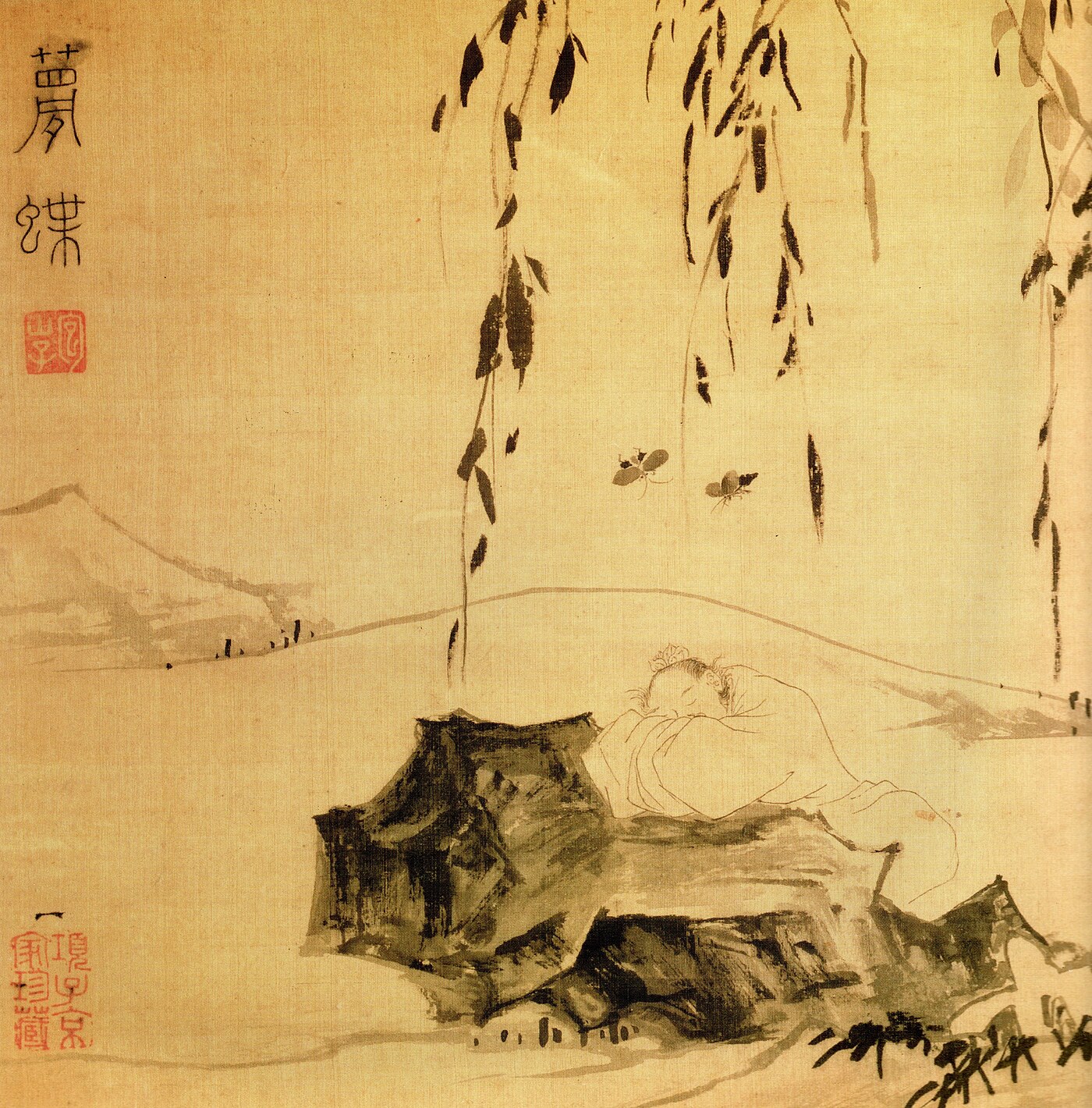
Toriyama Sekien's Gazu Hyakki Yagyō (1776, "Illustrated Night Parade of One Hundred Demons") is the founding document of the illustrated yōkai taxonomy. Sekien places butterfly-soul figures (kochō) in his classification of supernatural entities. Dark-winged butterfly figures in Japanese tradition cluster in the death-adjacent and supernatural categories. The white butterfly is the soul of a specific kind of ancestor (Yanagita 1946); the dark or black butterfly enters different, more ominous company.
The modern reversal and where it came from
Contemporary American folk-spiritual culture reversed the black butterfly's valence through a two-step process. First, Ted Andrews's Animal Speak (1993) treated the butterfly generically as transformation and metamorphosis, which created a framework where any butterfly could be read positively. Second, the general New Age adoption of "shadow work" and "dark night of the soul" vocabulary in the late 1990s and 2000s reframed darkness as a transitional rather than terminal state. Under this framework, a black butterfly became "the transformation that looks dark before the light" rather than a death warning.
This reversal is a specific cultural move, not a recovery of an older meaning. There is no pre-20th-century primary source that frames the black butterfly as a positive omen of personal transformation in the contemporary sense. That reading is genuinely modern. Whether it is more or less useful than the old death-omen reading is a separate question; whether it is old is not.
The actual butterflies
The black swallowtail (Papilio polyxenes) ranges across North America east of the Rockies. The pipevine swallowtail (Battus philenor) is iridescent blue-black on the upper wing. The mourning cloak (Nymphalis antiopa) overwinters as an adult and is often the first butterfly of early spring — it is very large, very dark (maroon-black with cream-yellow borders), and because it appears while snow may still be on the ground, it can feel like an unexpected and uncanny presence. Its emergence from winter dormancy is, ironically, a genuine metaphor for transformation. But the tradition that documented it first called it an omen of death, not of new beginnings.
Frequently asked
- What does a black butterfly mean?
- In Southern US folk tradition (Puckett 1926; Hand 1961–64) and Caribbean Creole belief (Hearn 1890), a black butterfly near the house was consistently read as a death-omen or bad-luck sign. In Mexica tradition, the 'black butterfly' reads into the Itzpapálotl complex (Obsidian Butterfly), a supernatural predator associated with infant death and sacrifice. Japanese tradition (Sekien 1776) places black-winged butterfly-figures in the yōkai death-adjacent category. The contemporary positive 'black butterfly = transformation and rebirth' reading is a recent reversal of a traditionally negative omen.
- Is a black butterfly a sign of death?
- In the primary-source folk-omen record for the Southern US and the Caribbean (Puckett 1926; Hearn 1890), yes: a black butterfly near the house was a death-warning. This reading is consistent across multiple independent folk traditions. The modern reversal of this omen into a positive 'transformation' reading appears in New Age literature from the 1990s onward, primarily via Ted Andrews's Animal Speak framework. Both readings are present in contemporary American culture.
- What is Itzpapálotl?
- Itzpapálotl (Obsidian Butterfly) is a Mexica supernatural figure documented in the Florentine Codex (Sahagún) and in the Leyenda de los Soles. She rules Tamoanchan, the paradise of infants who died before naming, and is associated with sacrifice, predation, and dangerous liminal power. Her imagery combines butterfly wings with obsidian blades. She is not a comfort-figure; she is a powerful and frightening supernatural entity. The connection between the black butterfly and Itzpapálotl makes the Mexica reading the opposite of a gentle visiting-sign.
- What black butterfly species are common in North America?
- The black swallowtail (Papilio polyxenes) and the pipevine swallowtail (Battus philenor) are the most commonly encountered large black butterflies in eastern North America. The mourning cloak (Nymphalis antiopa), dark maroon-black with yellow-cream borders, is a widespread species that overwinters as an adult and is often the first butterfly seen in early spring. None of these is the same species as the smaller black-and-orange monarch or the black-and-yellow tiger swallowtail, though all are subject to similar omen-readings in folk tradition.
Sources
- PRIMARYNewbell Niles Puckett, Folk Beliefs of the Southern Negro — University of North Carolina Press, 1926. Black butterfly as death-omen in Southern US tradition, pp. 230–232.
- PRIMARYWayland Hand (ed.), Popular Beliefs and Superstitions from North Carolina (Frank C. Brown Collection) — Duke University Press, vols. VI–VII, 1961–64. Black-butterfly and black-insect omen entries.
- PRIMARYLafcadio Hearn, Two Years in the French West Indies — Harper, 1890. Black butterfly omen-tradition in Martinique Creole folk-belief; associated with death and bad luck.
- PRIMARYFray Bernardino de Sahagún, Florentine Codex, Book 3 — Trans. Anderson and Dibble, School of American Research, 1950–82. Black butterfly in Mexica tradition associated with Itzpapálotl (Obsidian Butterfly), a supernatural predator figure.
- PEER-REVIEWEDKarl Taube, Aztec and Maya Myths — University of Texas Press / British Museum Press, 1993. Itzpapálotl's iconography and narrative context.
- PRIMARYToriyama Sekien, Gazu Hyakki Yagyō (Illustrated Night Parade of One Hundred Demons) — 1776. The kochō (butterfly) as soul-shape in Sekien's yōkai compendium; black-winged variants appear in death-adjacent supernatural taxonomy.
- REFERENCEBAMONA (Butterflies and Moths of North America), Black Swallowtail (Papilio polyxenes)