Spirit Animal
Camel Spirit Animal
Camel spirit animal meaning: endurance, patience and long-distance carrying. Traced to the pre-Islamic Bedouin poetry of Imru' al-Qais's Muʿallaqah, Qur'anic verses (88:17 and others), Silk Road commercial centrality, and the Bactrian-versus-dromedary biological split.
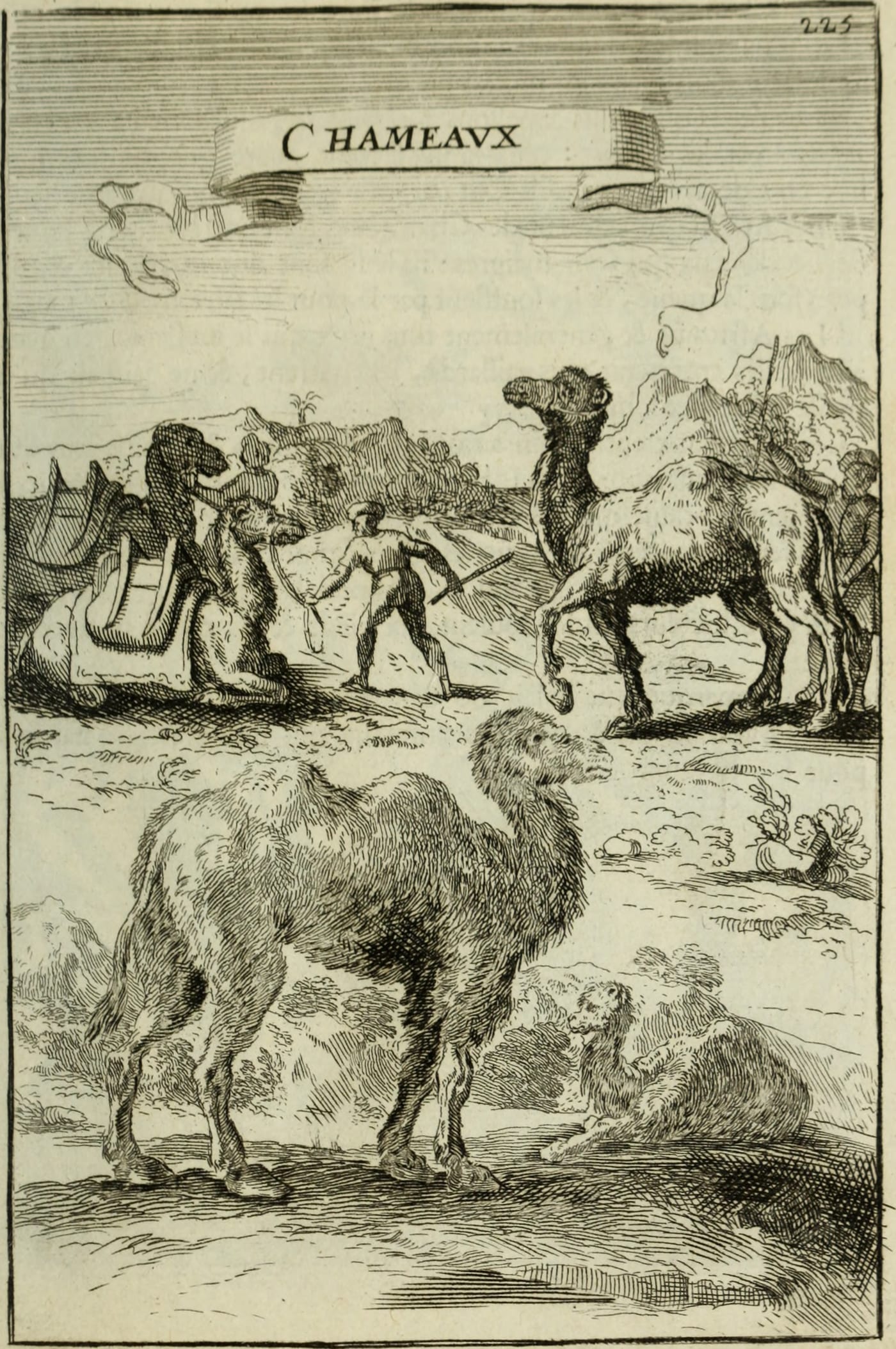
In modern pop-spiritual usage, the camel stands for endurance, patience across long journeys, and the carrying of heavy loads. That reading comes through Ted Andrews's Animal Speak (Llewellyn, 1993). The deeper traditions are Arabic and Central Asian. Imru' al-Qais's Muʿallaqah, one of the Seven Hanging Odes of pre-Islamic Arabian poetry (c. 540 CE), devotes multiple lines to camel-description. The Qur'an references the camel in several verses, including 88:17 ('Do they not look at the camels, how they are created?'). The Silk Road's commercial network (c. 200 BCE–1450 CE) ran on Bactrian camel (Camelus bactrianus) caravans; the dromedary (Camelus dromedarius) served a parallel role across the Sahara, Arabia, and Horn of Africa. Both species were domesticated around 3,000–4,000 years ago.
The Silk Road ran on camels. For roughly 1,600 years (from the Han dynasty’s opening of the overland routes around 200 BCE through the gradual maritime displacement of the overland trade by the 15th century) the commercial spine of Eurasia operated on Bactrian camel caravans. Richard Bulliet’s The Camel and the Wheel (Harvard University Press, 1975) is the definitive economic-history treatment, arguing that the wheel-based cart system in the Roman Empire was actually less efficient for long-distance freight in arid terrain than the camel-saddle system that replaced it across the ancient Near East.
Pre-Islamic Arabic poetry
No literary tradition has produced more sustained, detailed, and reverent camel material than pre-Islamic Arabic poetry. The Muʿallaqāt (the Seven Hanging Odes, composed by seven poets roughly between 500 and 620 CE) are the canonical masterworks of early Arabic literary culture. Imru’ al-Qais, Labīd, Zuhair, Tarafa, and the others devote extended passages to specific camel description: the gait, the color, the endurance, the sound, the smell. Tarafa’s ode, in A.J. Arberry’s 1957 translation, famously runs to over a hundred lines before getting to any subject other than the camel.
The Arabic camel-poetry tradition is not metaphor-driven in the way that Western animal symbolism is. The camel in pre-Islamic poetry is specific (a named animal, a known individual beast) and the precision of description is an aesthetic value in itself. Jaroslav Stetkevych’s The Zephyrs of Najd (University of Chicago, 1993) provides the scholarly treatment.
The Qur’anic naqa
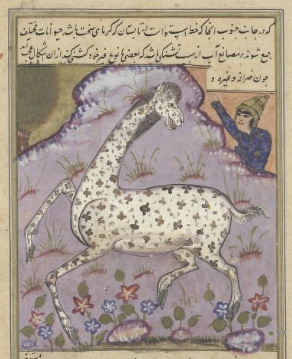
The Qur’an invites believers to reflect on the camel as evidence of divine creation in Surah 88:17: “Do they not look at the camels, how they are created?” This is a specific invitation to observe the animal’s extraordinary adaptation to its environment as theological evidence.
More dramatic is the Qur’anic story of the Prophet Ṣāliḥ and the she-camel (nāqa) sent as a divine sign to the people of Thamūd. Surah 7:73–79 and 11:64–68 narrate the story: God sends a miraculous she-camel as a sign to the people. They are commanded to let her graze freely and do her no harm. They kill her instead. The retribution is swift and total. The nāqa of Ṣāliḥ is one of the more specific animal-miracle narratives in the Qur’an, a sign given, rejected, and avenged.
The Silk Road
Marco Polo’s Travels (13th century, Penguin Classics, 1958 trans.) records Bactrian camel caravans in Central Asia from direct observation. Ibn Battuta’s Riḥla (c. 1355, Hakluyt Society translation, 1958–2000) describes caravan travel across North Africa and Central Asia over a total distance of roughly 75,000 miles across three decades of journeying. Valerie Hansen’s The Silk Road: A New History (Oxford, 2012) synthesizes the archaeological and documentary evidence for how the trade networks actually functioned.
Andrews 1993
Andrews, in Animal Speak, reads endurance, patience, and the ability to carry heavy loads across hostile terrain without complaint. This is honest to the biology and matches the real qualities that made the Bactrian and dromedary camel the dominant long-distance freight animal of the ancient world. But it is thin compared to the Arabic poetry tradition, which treats the camel not as a symbol but as a specific being worth knowing in detail.
Across traditions
Pre-Islamic Arabian (the Muʿallaqāt)
The Muʿallaqāt (Seven Hanging Odes), the pre-eminent collection of pre-Islamic Arabian poetry (c. 500–600 CE), contain extensive camel-description. Imru' al-Qais's ode (one of the seven) devotes multiple sections to the poet's she-camel. Labīd's ode similarly. Arberry's The Seven Odes (George Allen & Unwin, 1957) is the standard English-language translation. The Arabic camel-poetry tradition, in which the naming and praising of specific camels is a recognized poetic form (raḥīl), runs to tens of thousands of surviving lines.
Suzanne Stetkevych's The Mute Immortals Speak (Cornell University Press, 1993) treats the tradition's structural role in pre-Islamic Arabian culture. The camel is not simply a beast of burden in this poetry; it is a vehicle of praise, a site of memory, and a reader of the desert landscape.
- PRIMARY Muʿallaqāt (Seven Hanging Odes) . Arberry trans. (The Seven Odes), George Allen & Unwin, 1957.
- PEER-REVIEWED Suzanne Pinckney Stetkevych, The Mute Immortals Speak: Pre-Islamic Poetry and the Poetics of Ritual . Cornell University Press, 1993.
Qur'anic (88:17 and related verses)
The Qur'an references the camel in several surahs, with Qur'an 88:17 (Sūrat al-Ghāshiyah, 'The Overwhelming') the best-known: Afalā yanẓurūna ilā al-ibili kayfa khuliqat ('Do they not then look at the camel, how it is created?'). The verse is a creation-theology prompt, inviting reflection on the camel's remarkable adaptation to desert conditions as a sign of divine design. Qur'an 6:144 and 7:73 also reference camels.
The tradition of the nāqah (she-camel) of Allah's prophet Ṣāliḥ in surahs 7:73–79 and 11:64–68 is a specific narrative of a miraculous camel sent as a sign to the people of Thamūd. Ibn Kathīr's Qiṣaṣ al-Anbiyā' (Stories of the Prophets, 14th century) collects the classical exegetical treatments.
- PRIMARY Qur'an 88:17, 6:144, 7:73–79, 11:64–68 . Standard Hafs 1924 Egyptian edition; Pickthall trans. (Meaning of the Glorious Koran, 1930) or Arberry trans. (The Koran Interpreted, Oxford 1955).
- PRIMARY Ibn Kathīr, Qiṣaṣ al-Anbiyā' . Shamsi trans. (Stories of the Prophets), Dar al-Manarah, 2001.
Silk Road (Bactrian camel caravans)
The Silk Road's overland network, active c. 200 BCE–1450 CE, operated on Bactrian camel (Camelus bactrianus) caravans across Central Asia. Individual caravans could comprise hundreds of camels; the 8th-century records of the An Lushan rebellion describe military caravans of over 1,000 animals. Marco Polo's 13th-century Travels and Ibn Battuta's 14th-century Riḥla both preserve first-hand caravan accounts.
The dromedary (Camelus dromedarius) served a parallel role across the Sahara, Arabia, and Horn of Africa trade networks. Valerie Hansen's The Silk Road: A New History (Oxford, 2012) is the standard recent treatment of the commercial network; Richard Bulliet's The Camel and the Wheel (Harvard, 1975) is the foundational scholarly treatment of the camel's role in Old World economic history.
- PRIMARY Marco Polo, Travels . Latham trans., Penguin Classics, 1958.
- PRIMARY Ibn Battuta, Riḥla . Gibb trans. (The Travels of Ibn Battuta), Hakluyt Society, 1958–2000.
- PEER-REVIEWED Richard W. Bulliet, The Camel and the Wheel . Harvard University Press, 1975.
- PEER-REVIEWED Valerie Hansen, The Silk Road: A New History . Oxford University Press, 2012.
Ted Andrews (1993)
Andrews's 1993 camel is the endurance-patience-long-distance-carrying figure. The Muʿallaqāt poetic tradition and the Qur'anic verses are absent. The pop reading draws on general Orientalist camel-imagery rather than specific Arabic sources.
- REFERENCE Ted Andrews, Animal Speak . Llewellyn, September 1993.
Working with the Camel
If you want a regular practice rather than a one-time read, an oracle deck is the standard tool: you draw a card and sit with whatever animal comes up. Our ranked guide to spirit animal oracle decks compares the field.
Frequently asked
- What does a camel symbolize spiritually?
- In modern pop usage, endurance, patience, and long-distance carrying. The deeper traditions are Arabic and Central Asian. Imru' al-Qais's Muʿallaqah (c. 540 CE) and other pre-Islamic Hanging Odes devote extensive sections to camel-description. Qur'an 88:17 invites reflection on the camel as a sign of divine design. The Silk Road overland network ran on Bactrian camel caravans for over 1,600 years. The dromedary served parallel networks across the Sahara and Arabia.
- What does the Qur'an say about camels?
- Qur'an 88:17 (Sūrat al-Ghāshiyah, 'The Overwhelming') asks: 'Do they not then look at the camel, how it is created?' The verse is a creation-theology prompt inviting reflection on the camel's desert-adaptation as divine design. The tradition of the nāqah (she-camel) of the prophet Ṣāliḥ appears in surahs 7:73–79 and 11:64–68 as a miraculous sign sent to the people of Thamūd. Ibn Kathīr's Qiṣaṣ al-Anbiyā' (14th century) collects classical exegesis.
- What were the Muʿallaqāt?
- The Muʿallaqāt (Seven Hanging Odes) are the pre-eminent collection of pre-Islamic Arabian poetry, c. 500–600 CE. Traditionally said to have been hung at the Kaaba in Mecca. Imru' al-Qais's ode, Labīd's, and others include extensive camel-description; the Arabic camel-poetry tradition runs to tens of thousands of surviving lines. A.J. Arberry's The Seven Odes (George Allen & Unwin, 1957) is the standard English translation; Suzanne Stetkevych's The Mute Immortals Speak (Cornell, 1993) is the foundational modern scholarly treatment.
- Are there different kinds of camels?
- Yes. The dromedary (Camelus dromedarius) has one hump and is native to the Arabian Peninsula, North Africa, and the Horn of Africa. The Bactrian camel (Camelus bactrianus) has two humps and is native to Central Asia. Both were domesticated roughly 3,000–4,000 years ago. The wild Bactrian camel (Camelus ferus) is a separate species, critically endangered, with fewer than 1,000 wild individuals remaining in the Gobi Desert.
Sources
- PRIMARY Muʿallaqāt (Arberry trans., 1957)
- PEER-REVIEWED Suzanne Pinckney Stetkevych, The Mute Immortals Speak . Cornell University Press, 1993.
- PRIMARY Qur'an 88:17, 7:73–79, 11:64–68 . Hafs 1924; Pickthall or Arberry trans.
- PRIMARY Ibn Kathīr, Qiṣaṣ al-Anbiyā' . Dar al-Manarah, 2001.
- PRIMARY Marco Polo, Travels . Penguin Classics, 1958.
- PRIMARY Ibn Battuta, Riḥla . Hakluyt Society, 1958–2000.
- PEER-REVIEWED Richard Bulliet, The Camel and the Wheel . Harvard University Press, 1975.
- PEER-REVIEWED Valerie Hansen, The Silk Road . Oxford University Press, 2012.
- REFERENCE Ted Andrews, Animal Speak . Llewellyn, September 1993.