Spirit Animal
Cardinal Spirit Animal
Cardinal spirit animal meaning: vitality, divine messaging and remembered love. Distinct from our cardinal-visiting-meaning page. Cherokee totsuhwa (daughter of the sun), 1672 English-language etymology from Catholic vestments, and the American memorial tradition.
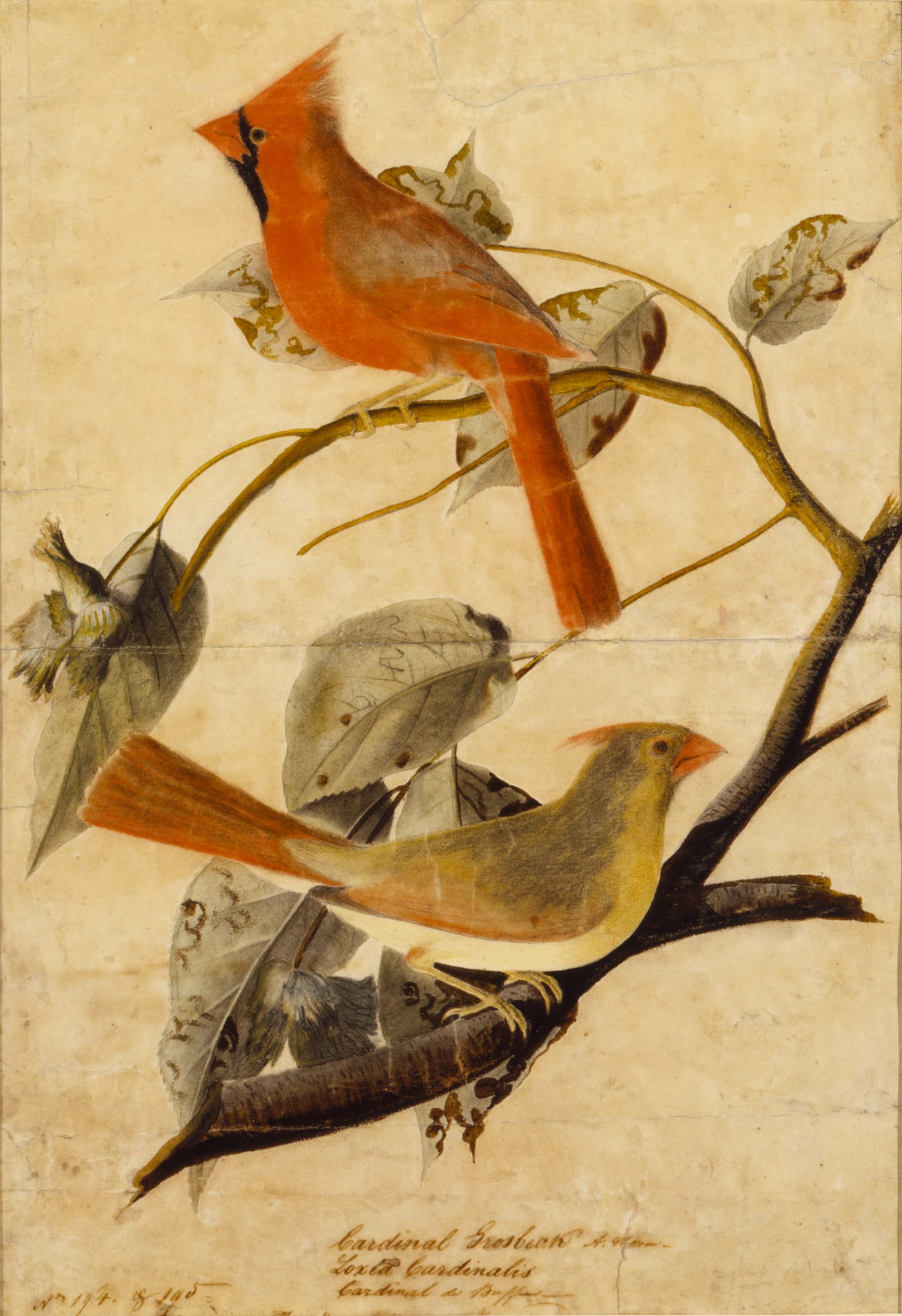
In modern pop-spiritual usage, the cardinal stands for vitality, divine messaging, and remembered love. See our /cardinal-visiting-meaning/ page for the full treatment of the 'cardinal is a visit from a deceased loved one' American folk-tradition; this page focuses on the broader cardinal-as-spirit-animal material. The Cherokee totsuhwa appears in James Mooney's Myths of the Cherokee (Smithsonian BAE 1900) as daughter of the sun. The English word 'cardinal' was transferred to the bird from the scarlet vestments of Roman Catholic cardinals by 1672 per OED. The northern cardinal (Cardinalis cardinalis) is the state bird of seven US states (Illinois, Indiana, Kentucky, North Carolina, Ohio, Virginia, West Virginia).
The cardinal’s contemporary meaning in American culture (“a cardinal visiting after a loved one’s death is a sign from that person”) is a recent American folk belief, well-documented and genuinely widespread, but not ancient. The older material about the cardinal is richer and more specific, and the contemporary belief is interesting precisely because it developed so recently and spread so quickly.
Cherokee totsuhwa

James Mooney’s Myths of the Cherokee (Smithsonian BAE Annual Report 19, 1900) records the Cherokee cardinal under the name totsuhwa. The cardinal appears in Mooney’s corpus in the context of solar mythology, the daughter of the sun narrative, in which the cardinal plays a specific cosmological role. This is a different tradition entirely from the modern American “visiting loved one” belief. Mooney’s consultants were named Eastern Band Cherokee elders, and the narrative they shared places the cardinal in a specific mythological context connected to the sun, not to the dead.
Cherokee cultural authorities have clarified that the contemporary Anglo-American belief connecting cardinals with the deceased does not trace to Cherokee teaching. The two traditions share the same bird but differ on what the bird’s appearance means.
The English name’s etymology
The English word “cardinal” for the bird is a color-transfer from Catholic ecclesiastical vocabulary. Catholic cardinals wear red vestments and caps, and the color is called “cardinal red.” When English settlers in North America encountered the brilliant red northern cardinal, they named the bird after the same color, “cardinal” as a description of the bird’s red plumage, not the other way around. The OED’s earliest documented English usage for the bird in this sense is from 1672.
This is a completely mundane fact, but it explains why “the cardinal is a messenger from heaven” feels more natural in American Catholic or broadly Christian cultural contexts than in others, the bird’s name already carries a Catholic institutional resonance that the color transfer created accidentally.
The state-bird record
The northern cardinal is the official state bird of seven US states: Illinois (1929), Indiana (1933), Kentucky (1926), North Carolina (1943), Ohio (1933), Virginia (1950), and West Virginia (1949). No other bird holds more state-bird designations in the US. This civic honor reflects the cardinal’s year-round presence across the eastern US (a familiar, visibly bright bird that residents encounter regardless of season) and its distinctiveness (the male’s brilliant red is unmistakable) that made it an obvious choice for state-symbol committees looking for a locally relevant emblem.
The memorial tradition
The post-1990 American belief that a cardinal visiting after a loss is a sign from the deceased is documented in Puckett’s 1926 Folk Beliefs of the Southern Negro without appearing there, suggesting its specific “visiting loved one” form is later. The belief spread rapidly in the 1990s and 2000s through sympathy cards, bereavement literature, and later social media. By the 2010s it had become one of the most widely-shared American grief-comfort beliefs, crossing denominational and regional lines. The cardinal-visiting-meaning entry traces the full historiographic record of how this belief developed.
Andrews 1993
Andrews, in Animal Speak, reads the cardinal as vitality, divine messaging, and renewed life force. The reading anticipates the memorial-bird belief that crystallized in the decade after publication, the connection between the cardinal’s brilliant red and a sense of divine or otherworldly presence was in the cultural air already.
Across traditions
Cherokee (Totsuhwa, daughter of the sun)
James Mooney's Myths of the Cherokee (Smithsonian Bureau of American Ethnology Annual Report 19, 1900) records the Cherokee cardinal tradition. The Cherokee name totsuhwa is associated with the daughter of the sun in specific origin narratives. The contemporary American 'cardinal is a visit from a deceased loved one' belief is not a continuation of this Cherokee tradition; see our cardinal-visiting-meaning page for the historiography of the modern American folk-belief.
- PRIMARY James Mooney, Myths of the Cherokee . Smithsonian BAE Annual Report 19, 1900.
- PRIMARY Barbara R. Duncan, Living Stories of the Cherokee . UNC Press, 1998.
English etymology (1672 cardinal-vestment transfer)
The English word 'cardinal' was transferred to the northern cardinal bird (Cardinalis cardinalis) from the scarlet vestments of Roman Catholic cardinals by 1672, per the Oxford English Dictionary. The transfer is a purely descriptive color-match; the bird had no Christian-theological significance before the name-transfer. John James Audubon's Birds of America plate CLIX (1827–38) popularized the name in North America.
- REFERENCE Oxford English Dictionary, 'cardinal (noun), sense 5' (the bird)
- ARCHIVE John James Audubon, The Birds of America (plate CLIX) . 1827–38.
American state-bird identity (1920s–present)
The northern cardinal is the state bird of seven US states: Illinois (adopted 1929), Indiana (1933), Kentucky (1926), North Carolina (1943), Ohio (1933), Virginia (1950), and West Virginia (1949). No other bird is the state symbol of as many US states. The cardinal's year-round residency across the eastern US, its striking scarlet coloration, and its presence at backyard feeders made it a natural civic-identification symbol.
- REFERENCE US state-bird legislation records (state archives)
American memorial tradition (1990s onward)
See our cardinal-visiting-meaning page for the full historiography of the 'cardinal is a visit from a deceased loved one' American folk-belief. Briefly: the belief is absent from Puckett's 1926 Folk Beliefs of the Southern Negro and the Frank C. Brown Collection (1952–64), so is 20th- and 21st-century American, almost entirely post-1990 in its current specific form. Sympathy-card industry adoption in the 1990s and Etsy-era memorial merchandise (2010s) accelerated the diffusion.
- PRIMARY Newbell Niles Puckett, Folk Beliefs of the Southern Negro . University of North Carolina Press, 1926.
- PRIMARY Wayland Hand (ed.), Popular Beliefs and Superstitions from North Carolina (Frank C. Brown Collection) . Duke University Press, 1961–64.
Ted Andrews (1993)
Andrews's 1993 cardinal is the vitality-divine-messaging figure drawing from the cardinal's observable scarlet prominence and the early stirrings of the memorial-bird folk-tradition. The 1926 Puckett catalog does not include the memorial-bird reading.
- REFERENCE Ted Andrews, Animal Speak . Llewellyn, September 1993.
Working with the Cardinal
If you want a regular practice rather than a one-time read, an oracle deck is the standard tool: you draw a card and sit with whatever animal comes up. Our ranked guide to spirit animal oracle decks compares the field.
Frequently asked
- What does a cardinal symbolize spiritually?
- In modern pop usage, vitality, divine messaging, and remembered love. See our /cardinal-visiting-meaning/ page for the fullest treatment of the 'cardinal visit means a loved one' American folk-tradition. Cherokee totsuhwa (daughter of the sun) in Mooney 1900 is a separate older tradition. The English word 'cardinal' was transferred from Catholic vestments to the bird by 1672 per OED. The cardinal is the state bird of seven US states.
- Why is the cardinal a state bird for so many states?
- The northern cardinal is the state bird of Illinois (1929), Indiana (1933), Kentucky (1926), North Carolina (1943), Ohio (1933), Virginia (1950), and West Virginia (1949). Its year-round residency across the eastern US, its striking scarlet coloration, and its presence at backyard feeders made it a natural civic-identification symbol. No other bird holds the state-bird title of as many US states.
- Is the cardinal-as-deceased-loved-one belief Cherokee?
- No. The Cherokee totsuhwa tradition (Mooney 1900) associates the cardinal with the daughter of the sun in origin narratives, a distinct tradition. The contemporary American 'cardinal is a visit from a deceased loved one' belief is 20th- and 21st-century American, absent from Puckett's 1926 and Hand's 1952–64 catalogs of Southern and Appalachian folk beliefs. See our /cardinal-visiting-meaning/ page for the full historiography.
Sources
- PRIMARY James Mooney, Myths of the Cherokee . Smithsonian BAE Annual Report 19, 1900.
- PRIMARY Barbara R. Duncan, Living Stories of the Cherokee . UNC Press, 1998.
- REFERENCE Oxford English Dictionary, 'cardinal'
- ARCHIVE John James Audubon, Birds of America (plate CLIX)
- PRIMARY Newbell Niles Puckett, Folk Beliefs of the Southern Negro . UNC Press, 1926.
- PRIMARY Wayland Hand (ed.), Frank C. Brown Collection . Duke University Press, 1961–64.
- REFERENCE Ted Andrews, Animal Speak . Llewellyn, September 1993.