Spirit Animal
Cat Spirit Animal
Cat spirit animal meaning: independence, mystery and intuition. Traced from the modern independence-and-mystery reading back through Ted Andrews's Animal Speak to Egyptian Bastet and the Bubastis cult (Herodotus 2.59–60), Freyja's chariot-cats in Snorri's Prose Edda, and the Japanese maneki-neko tradition.
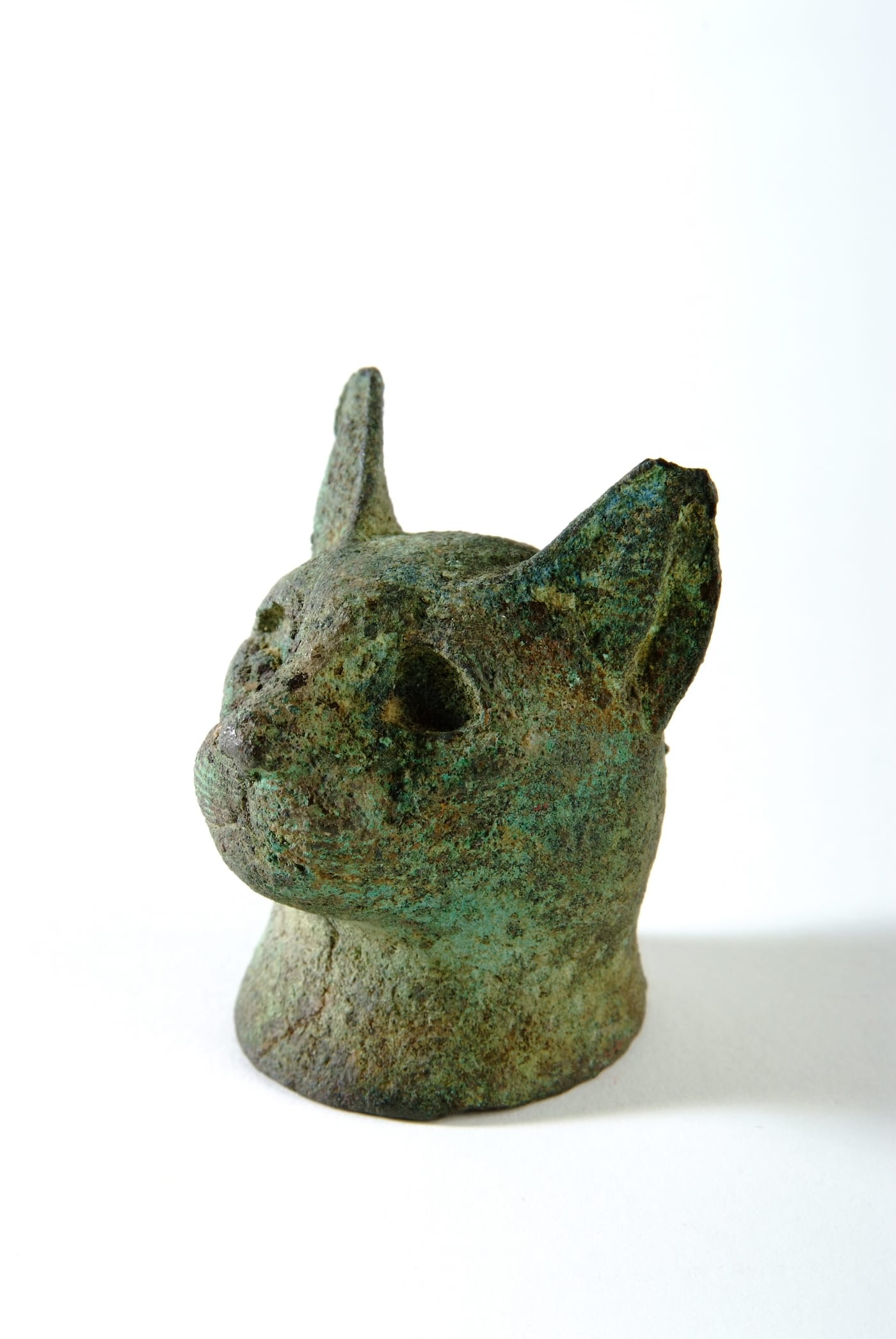
In modern American "spirit animal" usage, the cat stands for independence, mystery, intuition, and the keeping of one's own counsel. That reading comes through Ted Andrews's Animal Speak (Llewellyn, 1993). The older traditions are specific and well-documented. Egyptian Bastet was the cat-goddess of Bubastis, her annual festival described by Herodotus 2.59–60 as drawing 700,000 celebrants. The Norse goddess Freyja rides a chariot drawn by two cats, per Snorri's Prose Edda. The Japanese maneki-neko (beckoning cat) is a 17th-century Edo-era lucky figurine whose origin is traced to Gōtoku-ji temple in Setagaya. And the early-modern European witch-cat folklore, documented in the witch-trial archives from the 1540s forward, is the source of the Western 'black cat as unlucky' tradition.
If Herodotus’s numbers were even close to accurate, the annual festival of Bastet at Bubastis was the single largest religious gathering anywhere in the ancient world. Seven hundred thousand celebrants. Barge-processions down the Nile. Music, drinking, sacrifices. All for a cat-goddess. That was the 5th century BCE. The cult had already been running for close to two thousand years.
Nothing in the modern spirit-animal literature touches that scale.
The pop reading is a Victorian-era recovery
Nineteenth-century European Egyptomania, triggered by the Napoleonic campaigns in Egypt and then by the decipherment of hieroglyphs in 1822, handed modern Western culture the image of the Egyptian cat as mysterious, aristocratic, slightly supernatural. Edgar Allan Poe’s “The Black Cat” (1843) sits inside that wave. So does the Victorian-era boom in cat iconography in occult and Theosophical literature. Ted Andrews’s 1993 Animal Speak cat, with its “independence, mystery, self-possession” reading, descends straight from that Victorian imagery by way of early-20th-century pop-occultism.
It is a real reading. It is not, however, what Bastet was actually about.
The Bastet cult’s real shape
Bastet was a protective goddess. Her earliest attestations are at Bubastis, and in the Old Kingdom she is a lion-headed goddess associated with the pharaoh’s protective force, more like Sekhmet than like the domestic cat she eventually merged with. By the Late Period she has softened into the cat-headed goddess of Bubastis, goddess of home, family, childbirth, and the protection of children. Diodorus records that the Egyptian penalty for killing a cat, even accidentally, was death. Cat mummies were stacked in dedicated cemeteries by the hundreds of thousands. The Gayer-Anderson Cat in the British Museum, cast in bronze around 600 BCE, is one of the most aesthetically confident single animal sculptures to survive from antiquity.
This was not, whatever else it was, “independent mystery.” It was a full-stakes religious complex around a specific goddess and her living animal.
Freyja’s chariot and the early-modern witch-cat
Two other traditions, much smaller in scale than Bastet but worth the attention.
Freyja, in the Snorri Edda, drives a chariot pulled by two cats. The note is brief. The image has survived into Scandinavian folklore, which attached cat-related superstitions to grain-harvest and kitten-preservation folk-practices right into the 19th century. If you are looking for a Norse cat-divinity, Freyja is the anchor.
The early-modern European witch-cat is a different thing entirely. Matthew Hopkins’s The Discovery of Witches (1647), the witch-trial pamphlet record, and the folk-magic tradition that followed all converge on the black cat as a familiar spirit, the witch’s sometimes-visible companion. That is where the “black cat unlucky” idea comes from. It is 1540s–1690s European, not ancient.
The maneki-neko is a 1650s figurine
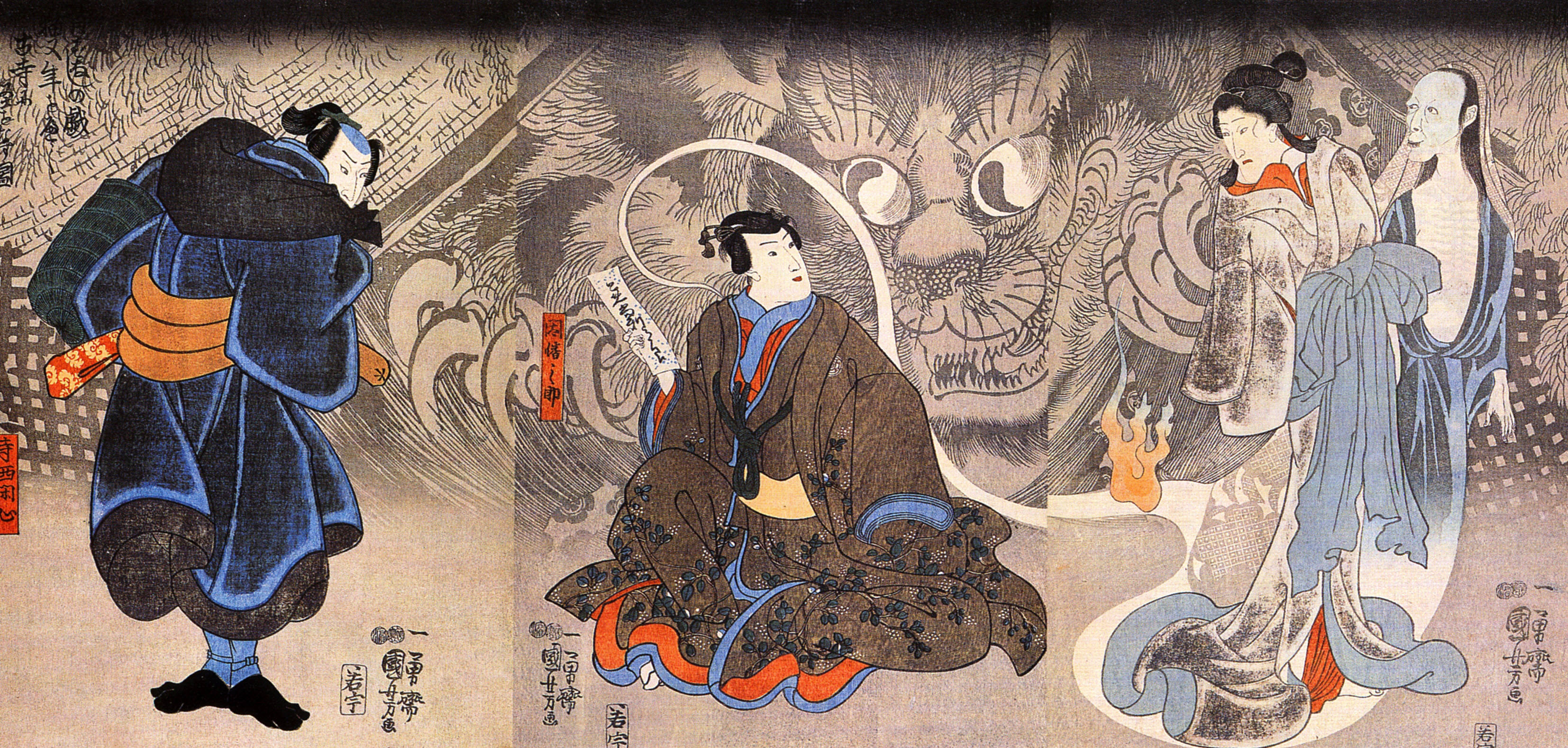
One more. The Japanese beckoning-cat figurine, now ubiquitous on restaurant counters across Japan, China, and parts of East Asia, dates to roughly the mid-17th century. The oldest and most cited origin story is at Gōtoku-ji temple in Setagaya, Tokyo, where the temple cat is said to have beckoned the lord Ii Naotaka inside just before a lightning bolt struck the spot where he had been standing. The lord, saved, endowed the temple, and the beckoning cat became its mascot. Go to Gōtoku-ji today and you find a room packed with thousands of these small ceramic figurines, left as votives by people whose prayers were answered.
The cat with the raised paw is a four-hundred-year-old Japanese folk-religious object. It has nothing to do with Bastet or Freyja. It is its own thing.
Why this matters
A reader who reaches for “cat spirit animal” in 2026 has, in their mental inventory, some mix of Egyptian mystery, Halloween black-cat, domestic-pet affection, maybe a vague Wiccan-witch-cat association. Most popular spirit-animal writing takes that mix and averages it into a single personal-spirit keyword: independence, mystery, intuition. The Andrews 1993 synthesis.
The four traditions below are not that synthesis. They are four distinct historical-religious relationships with the same species. Each has its own textual record, its own date-range, its own theological logic. Reading them side by side is how you get past the vague modern averaging.
Across traditions
Egyptian (Bastet and the Bubastis cult)
Bastet is the cat-headed goddess of Bubastis (modern Tell Basta in the eastern Nile Delta), a major Egyptian deity from the Old Kingdom forward. Herodotus, Histories 2.59–60 (c. 440 BCE), describes the annual festival at Bubastis as drawing 700,000 pilgrims (his number; it is probably exaggerated but indicates scale) and being the most attended religious celebration in Egypt. Cat mummies were interred by the hundreds of thousands at Bubastis and at Saqqara; the British Museum's Gayer-Anderson Cat (EA 64391, c. 600 BCE) is one of the great surviving bronze Bastet figures.
Killing a cat, even accidentally, was a capital offense in Egypt, per Diodorus Siculus Library 1.83. Salima Ikram's Divine Creatures: Animal Mummies in Ancient Egypt (AUC Press, 2005) documents the cat-mummification industry and its scale.
- PRIMARY Herodotus, Histories 2.59–60, 2.66–67 . Godley trans., Loeb Classical Library.
- PRIMARY Diodorus Siculus, Library of History 1.83 . Oldfather trans., Loeb Classical Library.
- MUSEUM Gayer-Anderson Cat (British Museum EA 64391) . c. 600 BCE.
- PEER-REVIEWED Salima Ikram, Divine Creatures: Animal Mummies in Ancient Egypt . AUC Press, 2005.
Norse (Freyja's chariot-cats)
The goddess Freyja rides a chariot pulled by two cats in Snorri Sturluson's Prose Edda (Gylfaginning 49, Faulkner trans., Everyman 1995). The detail is brief in the surviving texts but iconographically consistent: Freyja, the goddess of love, war, and seiðr magic, is associated with cats as her draught-animals, with the boar Hildisvíni as her mount, and with a hawk-feather cloak.
Hilda Ellis Davidson's Gods and Myths of Northern Europe (Penguin, 1964) is the standard English-language overview. The cats-drawing-the-chariot image persists in Scandinavian folklore into the 19th century, where it is connected to folk-practices around kittens and grain-fertility.
- EDITION Snorri Sturluson, Prose Edda (Gylfaginning 49) . Faulkes trans., Everyman, 1995.
- PEER-REVIEWED Hilda Ellis Davidson, Gods and Myths of Northern Europe . Penguin, 1964.
Japanese (maneki-neko, the beckoning cat)
The maneki-neko (招き猫, "beckoning cat") is a 17th-century Edo-era figurine depicting a cat with one paw raised in the Japanese beckoning gesture. The oldest and most widely cited origin legend places its invention at Gōtoku-ji temple in Setagaya, Tokyo, where a cat is said to have beckoned the lord Ii Naotaka inside just before a lightning strike hit the spot where he had been standing. Gōtoku-ji today houses thousands of maneki-neko figurines left as votive offerings.
The commercial ubiquity of the maneki-neko in modern Japanese and Chinese shopfronts is a 19th-century development. A raised right paw is said to beckon money; a raised left paw is said to beckon customers. The figurine is both folk-religious and commercial.
- REFERENCE Gōtoku-ji temple records
- PEER-REVIEWED Alan Pate, Maneki Neko: Japan's Beckoning Cats, From Talisman to Pop Icon . Mingei International Museum / Alan Scott Pate Antique Japanese Dolls, 2011.
Early modern European (the witch-cat)
The European "black cat as witch's familiar" tradition is a specifically early-modern development, documented in the witch-trial archives from the mid-16th century forward. The English case of Mother Samuel (Warboys, 1593) features cat-familiars; Matthew Hopkins's The Discovery of Witches (London, 1647) catalogs cat-familiars extensively as evidence against accused witches.
Earlier medieval theology was less uniformly hostile to cats; the witch-cat amalgam is a Reformation-era European construction. Modern "black cat unlucky" folklore descends from it. Keith Thomas's Religion and the Decline of Magic (Weidenfeld & Nicolson, 1971) remains the standard treatment of the witch-trial context.
- PRIMARY Matthew Hopkins, The Discovery of Witches (London, 1647)
- PRIMARY Witches of Warboys pamphlet (1593) . British Library, C.27.b.45.
- PEER-REVIEWED Keith Thomas, Religion and the Decline of Magic . Weidenfeld & Nicolson, 1971.
Ted Andrews (1993)
Andrews's 1993 cat is primarily an Egyptian-Bastet-filtered-through-Victorian-occultism figure, reduced to a personal-spirit reading of independence, mystery, and intuition. He gestures at the Celtic and Norse layers briefly but without the specific Freyja-chariot imagery. The Japanese maneki-neko and the European witch-cat are absent.
- REFERENCE Ted Andrews, Animal Speak . Llewellyn, September 1993.
Working with the Cat
If you want a regular practice rather than a one-time read, an oracle deck is the standard tool: you draw a card and sit with whatever animal comes up. Our ranked guide to spirit animal oracle decks compares the field.
Frequently asked
- What does a cat symbolize spiritually?
- In modern pop usage, independence, mystery, and intuition, the reading set by Andrews 1993. Older traditions are specific. Egyptian Bastet was worshipped at Bubastis; Herodotus 2.59–60 describes the annual festival drawing 700,000 celebrants. Norse Freyja rides a chariot drawn by two cats (Prose Edda, Gylfaginning 49). The Japanese maneki-neko is a 17th-century Edo-era lucky figurine traced to Gōtoku-ji temple in Setagaya. And the 'black cat is unlucky' folklore is a specifically early-modern European witch-trial inheritance.
- Did ancient Egyptians worship cats?
- They worshipped the cat-goddess Bastet, of whom domestic cats were considered living images and living companions. Killing a cat, even accidentally, was a capital offense (Diodorus Siculus 1.83). Cat mummies were interred by the hundreds of thousands at Bubastis and Saqqara. Herodotus described the Bubastis festival as the most-attended religious celebration in Egypt. Salima Ikram's Divine Creatures (AUC Press, 2005) documents the cat-mummification industry.
- Why does Freyja have cats?
- Snorri Sturluson's Prose Edda (Gylfaginning 49) says Freyja's chariot is drawn by two cats. The connection is brief in the surviving texts but iconographically consistent: Freyja is the goddess of love, war, and seiðr magic, and her cats pair with her boar Hildisvíni and her hawk-feather cloak. Hilda Ellis Davidson's Gods and Myths of Northern Europe (Penguin, 1964) is the standard scholarly treatment.
- Is the maneki-neko good luck?
- In Japanese tradition, yes. The figurine's raised paw beckons good fortune. Different raised paws beckon different things: right paw for money, left paw for customers. The most widely-cited origin is the Gōtoku-ji temple in Setagaya, Tokyo, where a cat is said to have beckoned the lord Ii Naotaka inside just before a lightning strike. Gōtoku-ji today houses thousands of maneki-neko votive offerings.
Sources
- PRIMARY Herodotus, Histories 2.59–60, 2.66–67 . Loeb Classical Library.
- PRIMARY Diodorus Siculus, Library 1.83 . Loeb Classical Library.
- MUSEUM Gayer-Anderson Cat, British Museum EA 64391
- PEER-REVIEWED Salima Ikram, Divine Creatures . AUC Press, 2005.
- EDITION Snorri Sturluson, Prose Edda . Faulkes trans., Everyman, 1995.
- PEER-REVIEWED Hilda Ellis Davidson, Gods and Myths of Northern Europe . Penguin, 1964.
- REFERENCE Gōtoku-ji temple records
- PEER-REVIEWED Alan Pate, Maneki Neko . Mingei, 2011.
- PRIMARY Matthew Hopkins, The Discovery of Witches (1647)
- PEER-REVIEWED Keith Thomas, Religion and the Decline of Magic . Weidenfeld & Nicolson, 1971.
- REFERENCE Ted Andrews, Animal Speak . Llewellyn, September 1993.