American folk-belief, sourced
What It Means When a Dove Visits You: Biblical Roots, Classical Tradition, and American Folk-Belief
Unlike most "spirit animal" beliefs, the dove-as-peace symbol has genuine ancient textual roots. And a separate, sadder folk tradition that most people don't know.
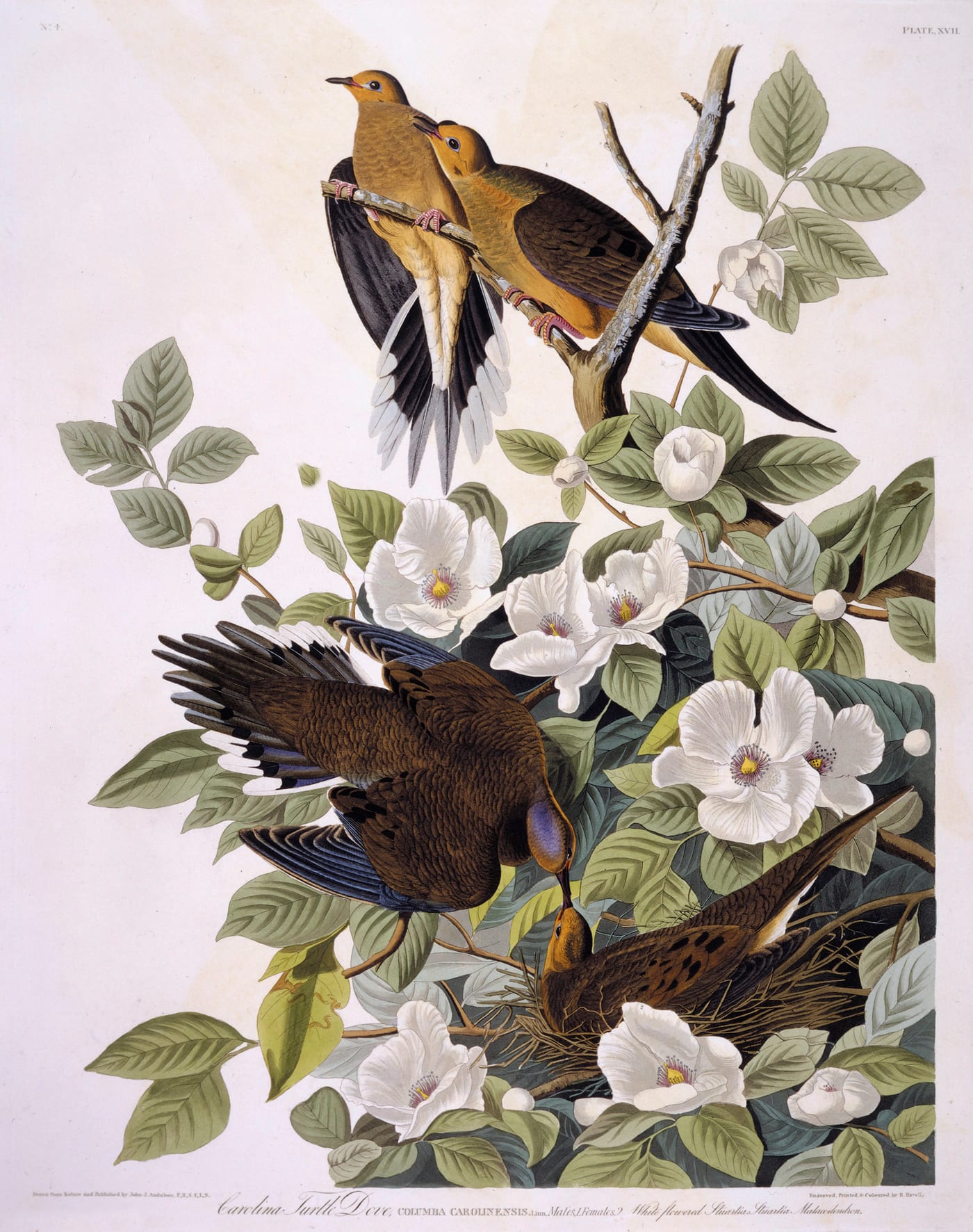
The dove-as-peace symbol derives from two Biblical texts: Genesis 8:11 (Noah's dove returning with the olive branch, signaling the end of divine judgment) and Matthew 3:16 (the Holy Spirit descending as a dove at Jesus's baptism). These are primary texts with real content, not 1990s New Age inventions. Virgil's Aeneid 6.190–204 adds a classical layer: two doves guide Aeneas to the golden bough, sacred to Aphrodite. In contrast, the American mourning dove carries a separate folk-omen meaning in Puckett's 1926 Southern archive: the bird's call near a house meant grief, separation, or coming loss.
The dove is unusual among bird-omen subjects because the contemporary "dove as peace and love" reading is not a recent invention. It has genuine textual roots going back roughly three thousand years. What the contemporary popular treatment misses is not the dove's positive meaning; it misses the mourning dove's parallel tradition in American folk-belief, which is the opposite of comforting.
Genesis 8: the oldest dove-omen in the Western record
The seventh day of Genesis 8 is where the peace-dove enters the Western record. Noah releases a dove after the Flood; it returns the first time with nothing (the waters still cover the earth). The second time, seven days later, the dove returns carrying a fresh olive leaf in its beak (Genesis 8:11, Biblia Hebraica Stuttgartensia text). Noah understands: the waters have receded. The dove's return with the olive branch is the first sign that divine judgment has ended and the world is available again. The association of the dove with peace and new beginnings derives directly from this episode, not from folk tradition but from a specific narrative with a specific plot.
The olive branch as peace symbol also traces through this text. The two iconographies, dove and olive branch, were fused in the Genesis story and have traveled together ever since. When Picasso drew his white dove for the 1949 World Peace Congress poster, he was working with materials that already had two thousand years of prior use.
Matthew 3:16: the Holy Spirit as dove
Matthew 3:16 records Jesus's baptism in the Jordan by John: "And when Jesus was baptized, immediately he went up from the water, and behold, the heavens were opened to him, and he saw the Spirit of God descending like a dove and coming to rest on him." The Greek peristerá (dove) is used consistently across the Synoptic Gospels and John 1:32. This passage established the dove as the iconographic symbol of the Holy Spirit in Christian art from the earliest church period onward.
The San Vitale mosaics in Ravenna (c. 547 CE), the Book of Kells (c. 800 CE), and essentially every major Christian iconographic program through the medieval period represents the Holy Spirit as a white dove. The symbol is so deeply embedded in Western visual culture that its textual origin is often forgotten. When people read a white dove as a sign of divine presence, they are drawing on a continuous tradition from the 1st century CE.
Classical tradition: Aphrodite's birds and the golden bough
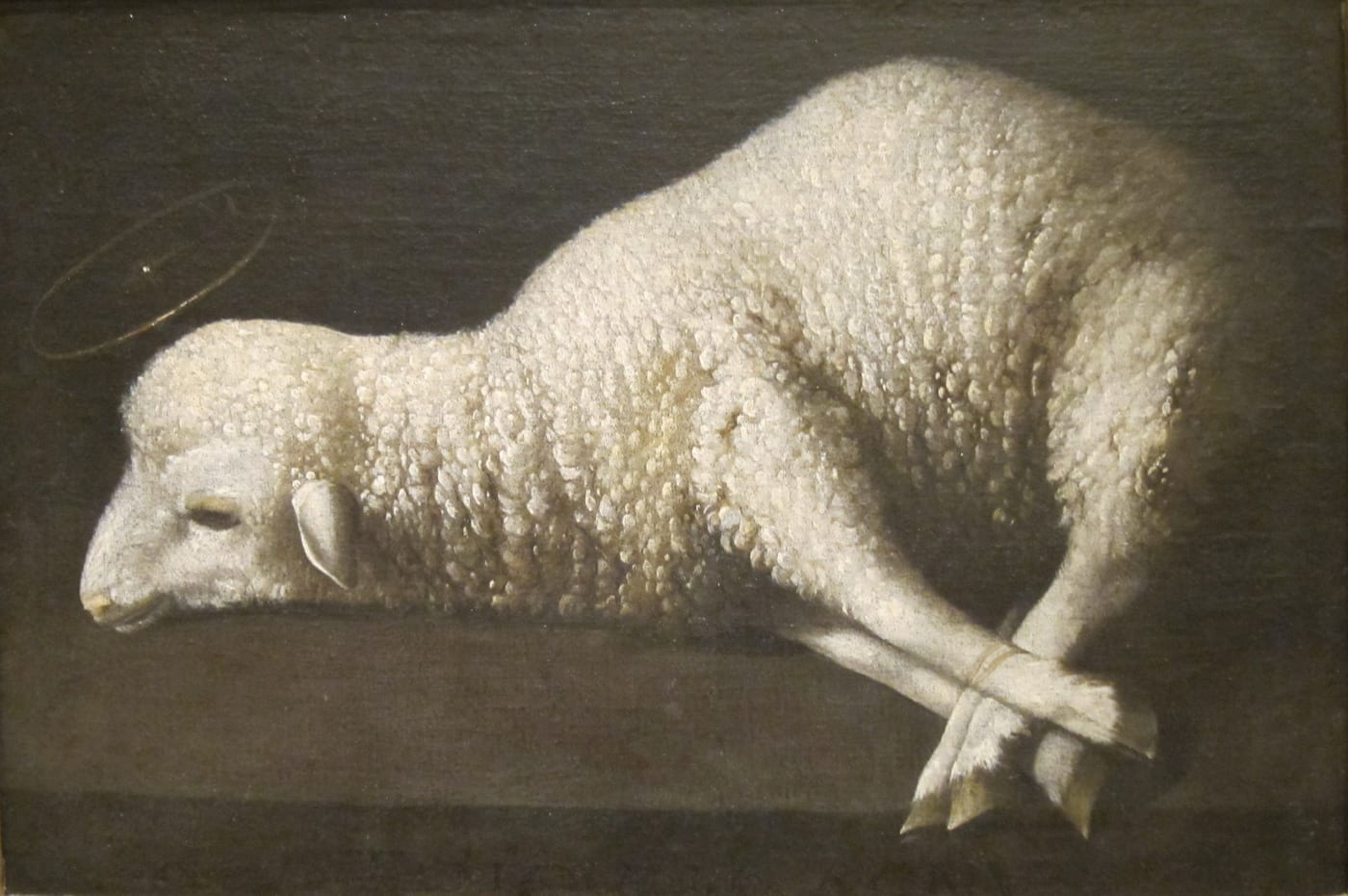
The dove predates its Christian meaning in the classical Mediterranean. Doves were sacred to Aphrodite (Venus in Latin), goddess of love, probably because of the birds' visible pairing behavior and their association with Cyprus (a center of Aphrodite's cult). Virgil's Aeneid 6.190–204 shows Aeneas guided through the Cumaean forest to the golden bough by two doves. In the poem, these are explicitly his mother Venus's birds, sent to help him navigate the passage to the underworld. Homer's Odyssey 12.62–65 calls the Pleiades "peleiades" (doves) in the episode where doves carry ambrosia through the Symplegades to Zeus. The dove's classical associations are with love, divine guidance, and liminality between worlds, meanings that map fairly naturally onto contemporary dove-symbolism.
The mourning dove's separate folk-omen tradition
Here is the tradition most dove-symbolism articles skip. Newbell Niles Puckett's 1926 Folk Beliefs of the Southern Negro documents a persistent American folk-omen: the mourning dove (Zenaida macroura) calling near a house was a sign of separation, grief, or coming loss. This reading is entirely consistent with the bird's call quality. The mourning dove's coo, a descending, hollow, mournful sound, is described by birders as one of the most melancholy bird vocalizations in North America. American folk tradition, hearing this sound close to the home, interpreted it as a warning rather than a blessing.
This omen-tradition runs parallel to the Christian peace-dove symbol without intersecting with it. They concern different things: the Christian symbol is about white doves and divine peace; the Southern folk-omen is about the specific call of the native mourning dove in domestic proximity. Both are genuinely present in American culture. The peace-dove wins in commercial sympathy-card culture; the mourning-dove omen persists in rural Appalachian and Southern communities where Puckett's informants' grandchildren still live.
The contemporary synthesis
Ted Andrews's Animal Speak (Llewellyn, September 1993) frames the dove as "peace," "love," and "the feminine energy of mothering." He draws on the Biblical and classical dove-material without noting the mourning-dove omen tradition. His synthesis is reasonable as a distillation of the positive layers of dove symbolism, but it is incomplete. The full picture includes the folk-omen tradition, which is not comforting.
The contemporary "dove at the window as sign from a deceased loved one" is, as with the blue jay, a late-20th-century extension of the cardinal-as-messenger belief. No pre-20th-century primary source connects a dove sighting to a specific deceased person; the Matthew 3:16 precedent frames the dove as the Holy Spirit, not as a departed relative. The reading is probably reinforced by the memorial dove-release industry (companies offering white-dove releases at funerals and memorials, begun commercially in the 1990s), though the birds released are typically white homing pigeons bred to resemble doves and trained to fly home afterward, not doves at all. The dove-release practice itself draws on the peace-dove iconography from Genesis and Matthew, completing a loop from ancient text to contemporary grief ritual.
The bird itself
The mourning dove (Zenaida macroura) is the most abundant game bird in North America, with Cornell Lab estimates above 350 million birds. It is also one of the most widely hunted game birds (roughly 20 million taken annually in the US). Its abundance, year-round presence, and tendency to perch conspicuously on wires and rooftops near houses explains its omen prominence: people encounter it constantly. The bird's soft-gray coloring and mournful call make it feel like a quiet presence rather than a dramatic one. Whether a quiet presence at the window is a blessing or a warning has depended, for three thousand years, on which tradition the observer inherits.
Sources
- PRIMARY Genesis 8:6–12 (BHS / ESV) . The dove returning with an olive branch on the seventh day after Noah's flood: the oldest widely-known dove-as-peace symbol in the Western record.
- PRIMARY Matthew 3:16 (NA28 / ESV) . The Holy Spirit descends as a dove at Jesus's baptism in the Jordan; the primary New Testament basis for the dove-as-Holy-Spirit iconography.
- PRIMARY Song of Solomon 2:14; 5:2 (BHS / ESV) . Dove as term of endearment between lovers; also Septuagint peristerá.
- PRIMARY Virgil, Aeneid 6.190–204 . Loeb Classical Library. Two doves guide Aeneas to the golden bough in the Cumaean forest; Aphrodite's sacred birds.
- PRIMARY Homer, Odyssey 12.62–65 . Loeb. The Pleiades (called peleiades, 'doves') carry ambrosia through the Symplegades to Zeus.
- PRIMARY Newbell Niles Puckett, Folk Beliefs of the Southern Negro . University of North Carolina Press, 1926. Mourning dove omen-traditions in the American South.
- REFERENCE Cornell Lab of Ornithology, Mourning Dove (Zenaida macroura) species account
- REFERENCE Ted Andrews, Animal Speak . Llewellyn, September 1993.