Spirit Animal
Dragon Spirit Animal
Dragon spirit animal meaning: power, wisdom and sovereignty. Traced from the modern power-and-wisdom reading back through Ted Andrews's Animal Speak to the Chinese long (龍), the Welsh Y Ddraig Goch, the Norse Fáfnir of the Völsunga saga, the Biblical Leviathan of Job 41, and the Revelation 12 dragon.
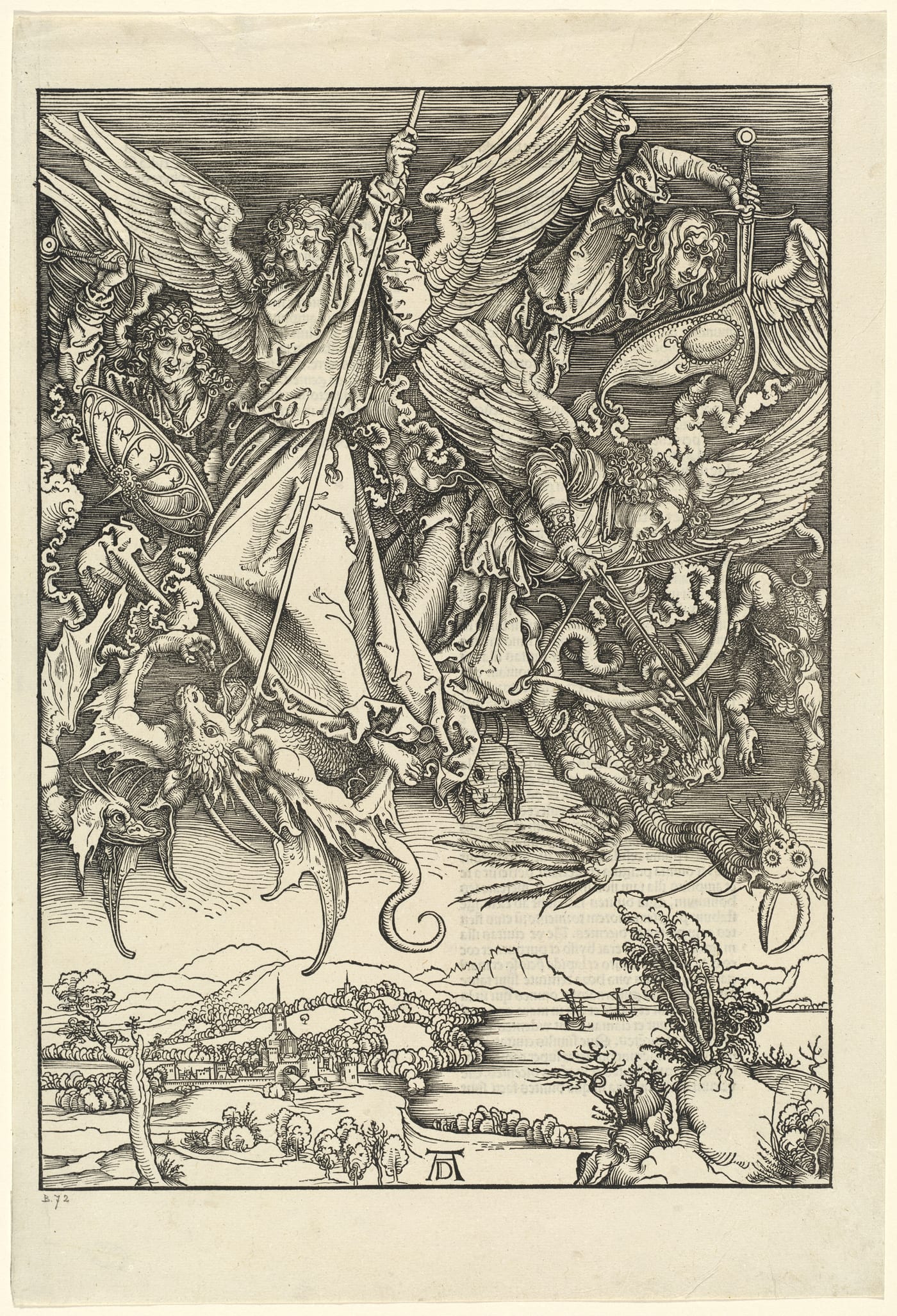
In modern American "spirit animal" usage, the dragon stands for power, wisdom, fire, sovereignty, and the guarding of hoarded treasure. That reading compresses four very different ancient traditions, softened by Ted Andrews's Animal Speak (Llewellyn, 1993). The Chinese long (龍) is a benevolent, water-associated, imperial-celestial creature documented from the Shang oracle bones through the Han I Ching to Tang and Ming imperial dragon-robes. The Welsh Y Ddraig Goch ("Red Dragon") appears in the Historia Brittonum (c. 828 CE) and Geoffrey of Monmouth, still on the Welsh flag. The Norse Fáfnir of the Völsunga saga is the hoard-guarding serpent Sigurd slays. The Hebrew Leviathan of Job 41 and the Revelation 12 dragon shape the Christian apocalyptic imagination. Dragons are not one animal; they are four or more.
The English word “dragon” covers two almost-opposite creatures. Writing about them as if they are one is the single most-common error in popular dragon-symbolism articles. A Chinese long on a Ming imperial robe is not the same creature Sigurd killed in the Völsunga saga. One is benevolent, imperial-celestial, water-associated, and has no wings. The other is malevolent, hoard-guarding, fire-breathing, and has wings. They share the English word and almost nothing else.
That distinction is the first thing any honest article about the dragon has to name.
Four dragons, four traditions
The long. Chinese. Oracle-bone evidence from the Shang dynasty (c. 1200 BCE), I Ching Hexagram 1 describing the dragon’s rising and flying. Five-clawed for the emperor, four for nobles, three for higher commoners. Prayed to for rain. Paired with the fenghuang (phoenix) as emperor-and-empress symbolism. The Met and the Palace Museum in Beijing preserve Tang through Qing dragon-robes that document the tradition in surviving textiles.
Y Ddraig Goch. Welsh. On the national flag. Historia Brittonum (c. 828 CE) narrates the Merlin-boy revelation of the two buried dragons whose combat foretells British victory over the Saxons. The Gwynedd royal line carried the Red Dragon as banner from the 7th–8th centuries. In 1959 the modern flag (red dragon on green and white) was officially adopted. This is a dragon as national-political identity, alive and legally current.
Fáfnir. Norse. Cursed gold. Brother murder. A sorcerer’s son who transforms into a dragon to guard a treasure he stole from his father’s house. Sigurd kills him, tastes his blood, understands birds. The Ramsund runestone, Sweden, c. 1030 CE, is one of the earliest surviving European dragon-images. Wagner’s Ring cycle carries Fáfnir into the 19th-century operatic imagination.
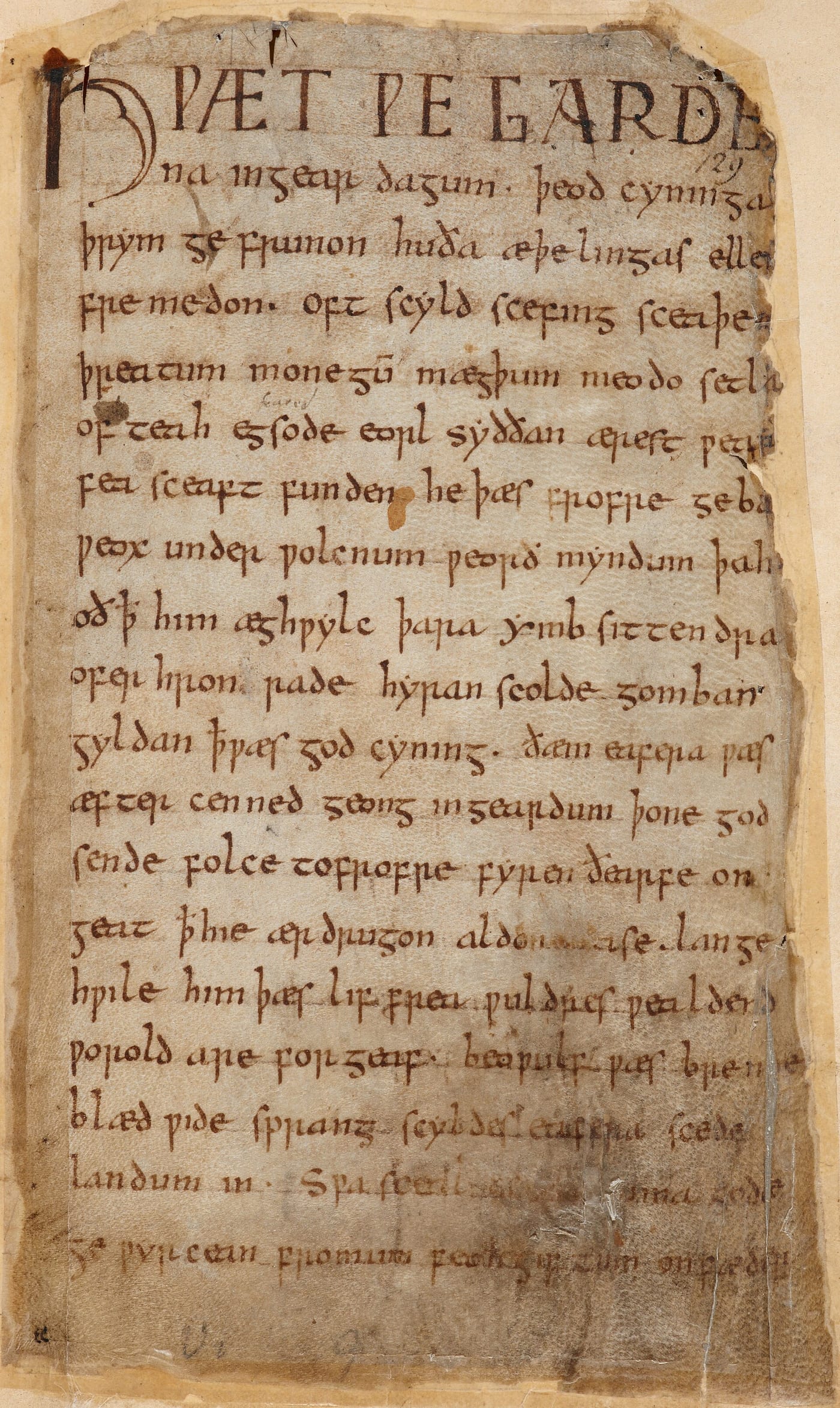
Leviathan and the Revelation dragon. Job 41 gives the Hebrew Bible’s longest zoological description to this creature: scales that cannot be pierced, eyes like the eyelids of the dawn. Revelation 12 reframes the imagery as the apocalyptic red dragon with seven heads, “the ancient serpent, who is called the Devil and Satan.” Medieval manuscript illumination stitched this strand onto the Fáfnir-Beowulf strand to produce the standard Western dragon of fantasy fiction.
The modern pop synthesis
Ted Andrews’s 1993 Animal Speak dragon averages the four into a generic keyword list: power, wisdom, mystery, fire. The Chinese long’s specific distinction from the Western dragon gets lost in the averaging. So does the fact that the Welsh dragon is on a flag, not in a fantasy novel, and that the Revelation dragon is a theological figure with specific Near Eastern roots in Ugaritic Lotan and Babylonian Tiāmat.
Four traditions. Four dragons. The English word does not do them justice, but the tradition sections above treat each on its own terms.
Across traditions
Chinese (long, 龍)
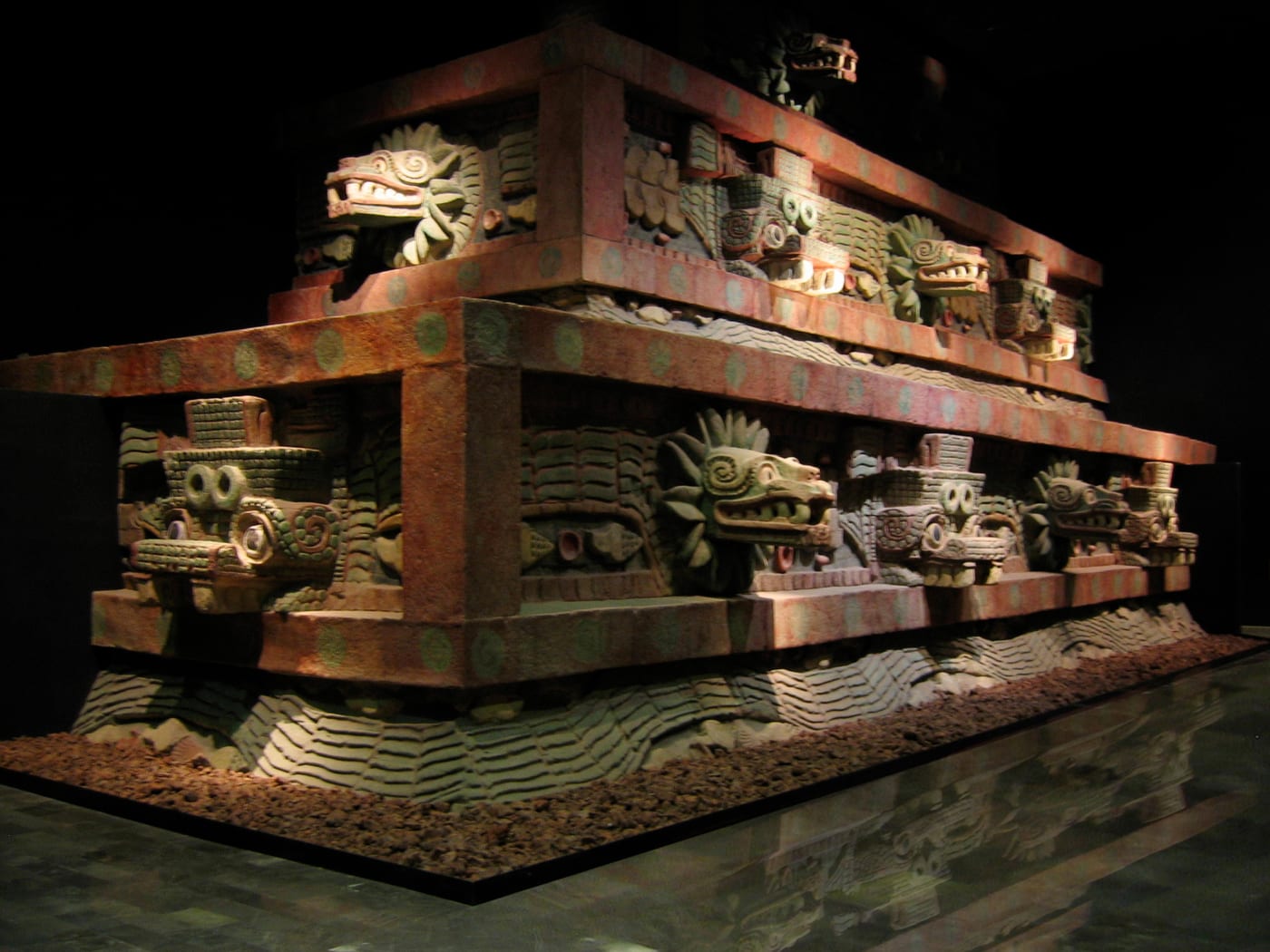
The Chinese long (龍) is not a Western dragon. It is a benevolent, water-associated, celestial-imperial creature, usually depicted as serpentine with four legs, without wings, and with the ability to fly on cloud. The earliest attestations are on Shang-dynasty oracle bones (c. 1200 BCE); the I Ching (c. 1000 BCE) opens with the hexagram Qian, whose six lines describe a dragon rising, flying, and reaching overreach. The dragon is paired with the phoenix (fenghuang) as emperor-and-empress symbolism from the Han dynasty forward.
Han-dynasty Shiji and later imperial regalia reserved five-clawed dragons for the emperor alone; four-clawed for nobility; three-clawed for higher commoners. The Tang and Ming imperial dragon-robes in the Metropolitan Museum and the Palace Museum in Beijing document the tradition in surviving textiles. The dragon's association with water and rain made it the prayed-to figure during droughts; dragon-dances at Chinese New Year preserve the tradition still.
- PRIMARY I Ching (Yi Jing), Hexagram 1 (Qian) . Wilhelm-Baynes trans., Bollingen XIX, 1950.
- PRIMARY Shang oracle-bone inscriptions . David Keightley, Sources of Shang History, University of California Press, 1978.
- PRIMARY Sima Qian, Shiji . Nienhauser ed., Indiana University Press, 1994–.
- MUSEUM Metropolitan Museum of Art, Qing-era imperial dragon-robes
Welsh (Y Ddraig Goch)
The Red Dragon, Y Ddraig Goch, has been the symbol of Wales for more than a thousand years. The earliest narrative appearance is in the Historia Brittonum, a Latin history compiled c. 828 CE and often attributed to Nennius, where the boy Ambrosius (a figure Geoffrey of Monmouth later developed into Merlin) reveals two buried dragons, one red and one white, whose combat prefigures the struggle between the Britons and the Saxons. The red dragon wins.
Geoffrey of Monmouth's Historia Regum Britanniae (c. 1136 CE) expands the tradition. The Mabinogion's tale of Lludd and Llefelys describes a red and a white dragon battling in the center of Britain. The dragon was adopted as the Welsh royal banner by the house of Gwynedd in the 7th–8th centuries; the modern Welsh flag carrying the red dragon on a green and white field was officially adopted in 1959.
- PRIMARY Historia Brittonum (attributed to Nennius, c. 828 CE) . Morris trans., Phillimore, 1980.
- PRIMARY Geoffrey of Monmouth, Historia Regum Britanniae . Reeve-Wright ed./trans., Boydell, 2007.
- PRIMARY The Mabinogion, Lludd and Llefelys . Davies trans., Oxford World's Classics, 2007.
Norse (Fáfnir in the Völsunga saga)
Fáfnir is the dragon-son of the sorcerer Hreidmar in the Völsunga saga (c. 1250 CE, drawing on older Eddic material) and the Poetic Edda's Fafnismál. Fáfnir kills his father to claim the cursed gold of the dwarf Andvari, then transforms himself into a dragon to guard the hoard. The hero Sigurd (Siegfried in the Middle High German Nibelungenlied) kills Fáfnir, tastes his blood, and gains the ability to understand the speech of birds.
The Fáfnir image, especially as depicted on the Ramsund runestone (Sweden, c. 1030 CE), is one of the earliest surviving European dragon-images. The Middle High German Nibelungenlied (c. 1200 CE) and Richard Wagner's Der Ring des Nibelungen (1848–74) carry the Fáfnir tradition into the 19th-century European operatic imagination.
- PRIMARY Völsunga saga . Byock trans., Penguin Classics, 1990.
- PRIMARY Poetic Edda, Fafnismál . Larrington trans., Oxford World's Classics, 2014.
- MUSEUM Ramsund runestone (Sö 101, c. 1030 CE) . Sweden; Riksantikvarieämbetet.
- PRIMARY Nibelungenlied . Hatto trans., Penguin Classics, 1965.
Biblical (Leviathan, the Revelation dragon)
Job 41 contains the longest sustained zoological description of any creature in the Hebrew Bible: Leviathan, a vast sea-monster whose scales cannot be pierced, whose breath kindles coals, whose eyes are like the eyelids of the dawn. Psalm 74:14 and Psalm 104:26 return to the figure. The ancient Near Eastern Chaoskampf parallels (Ugaritic Lotan, Babylonian Tiāmat) ground the image; the Hebrew text reconfigures it into a demonstration of divine sovereignty over the cosmos.
Revelation 12 picks up the imagery: a great red dragon with seven heads and ten crowns, identified as "the ancient serpent, who is called the Devil and Satan." The image shaped the Christian apocalyptic imagination and, through medieval manuscript illumination, the standard Western dragon iconography of the High Middle Ages.
- PRIMARY Job 41:1–34 (Hebrew Bible) . BHS Masoretic text; JPS 1985 trans.
- PRIMARY Revelation 12:3–17 . NA28 Greek; NRSV trans., 1989.
- PRIMARY Ugaritic Baal Cycle (KTU 1.5) . Smith & Pitard trans., Brill, 1997–2009.
- PEER-REVIEWED John Day, God's Conflict with the Dragon and the Sea . Cambridge University Press, 1985.
Ted Andrews (1993)
Andrews's 1993 dragon is a composite: the hoard-guarding Western dragon of Fáfnir and Beowulf, softened, plus gestures toward the Chinese long's wisdom and benevolence. The Biblical dragon is largely absent. The Chinese tradition is mentioned without the imperial-water-celestial specificity. The result is a personal-spirit keywords (power, wisdom, mystery) that reads thinner than any single source tradition.
- REFERENCE Ted Andrews, Animal Speak . Llewellyn, September 1993.
Working with the Dragon
If you want a regular practice rather than a one-time read, an oracle deck is the standard tool: you draw a card and sit with whatever animal comes up. Our ranked guide to spirit animal oracle decks compares the field.
Frequently asked
- What does a dragon symbolize spiritually?
- Depends which dragon. The Chinese long is benevolent, water-associated, and imperial-celestial, opposite in temperament to the Western hoard-guarder. The Welsh Y Ddraig Goch is a national-political symbol, on the Welsh flag since 1959. The Norse Fáfnir is a cursed-gold hoarder killed by Sigurd. The Biblical Leviathan (Job 41) and Revelation 12 dragon are sea-chaos and satanic-apocalyptic figures. There is no single dragon symbolism, only several traditions whose English translation happens to use the same word.
- Are Chinese and Western dragons the same thing?
- No. The Chinese long (龍) is usually serpentine, four-legged, wingless, benevolent, water-associated, and imperial-celestial. The Western dragon (Fáfnir, Beowulf's dragon, the Revelation 12 dragon) is usually winged, fire-breathing, and malevolent. They share a vocabulary word in English translation and almost nothing else. The translation choice is already a flattening.
- Why is the Welsh flag a red dragon?
- Because Y Ddraig Goch (the Red Dragon) has been the symbol of Wales since at least the 7th–8th century, through the Gwynedd royal line. The earliest narrative attestation is the Historia Brittonum (c. 828 CE), where a boy later called Merlin reveals two buried dragons whose combat prefigures the British victory over the Saxons. The modern flag was officially adopted in 1959.
- What is Leviathan in the Bible?
- Leviathan is a vast sea-monster described most extensively in Job 41, whose scales cannot be pierced and whose eyes are like the eyelids of the dawn. The figure appears also in Psalm 74:14, Psalm 104:26, and Isaiah 27:1. The ancient Near Eastern Chaoskampf parallels (Ugaritic Lotan, Babylonian Tiāmat) ground the image; John Day's God's Conflict with the Dragon and the Sea (Cambridge, 1985) is the standard scholarly treatment.
Sources
- PRIMARY I Ching, Hexagram 1 (Qian) . Wilhelm-Baynes trans., Bollingen XIX, 1950.
- PRIMARY Sima Qian, Shiji . Indiana University Press, 1994–.
- PEER-REVIEWED David Keightley, Sources of Shang History . UC Press, 1978.
- PRIMARY Historia Brittonum (Nennius) . Morris trans., Phillimore, 1980.
- PRIMARY Geoffrey of Monmouth, Historia Regum Britanniae . Boydell, 2007.
- PRIMARY Mabinogion, Lludd and Llefelys . Oxford World's Classics, 2007.
- PRIMARY Völsunga saga . Byock trans., Penguin, 1990.
- PRIMARY Poetic Edda, Fafnismál . Larrington trans., Oxford, 2014.
- MUSEUM Ramsund runestone (Sö 101, c. 1030 CE)
- PRIMARY Job 41, Revelation 12 . BHS / NA28; JPS 1985 and NRSV 1989.
- PEER-REVIEWED John Day, God's Conflict with the Dragon and the Sea . Cambridge, 1985.
- REFERENCE Ted Andrews, Animal Speak . Llewellyn, September 1993.