Dream Meaning
Dreams of Dogs: Jung's Loyal-Companion Reading, Homeric Argos Recognition, Anubis Judgment-Context
Dreams of dogs: Jung's loyal-companion archetype, Homer's Argos-recognition scene (Odyssey 17.290–327), Anubis-judgment dream-context, and the Zoroastrian sagdīd dream-adjacent rite.
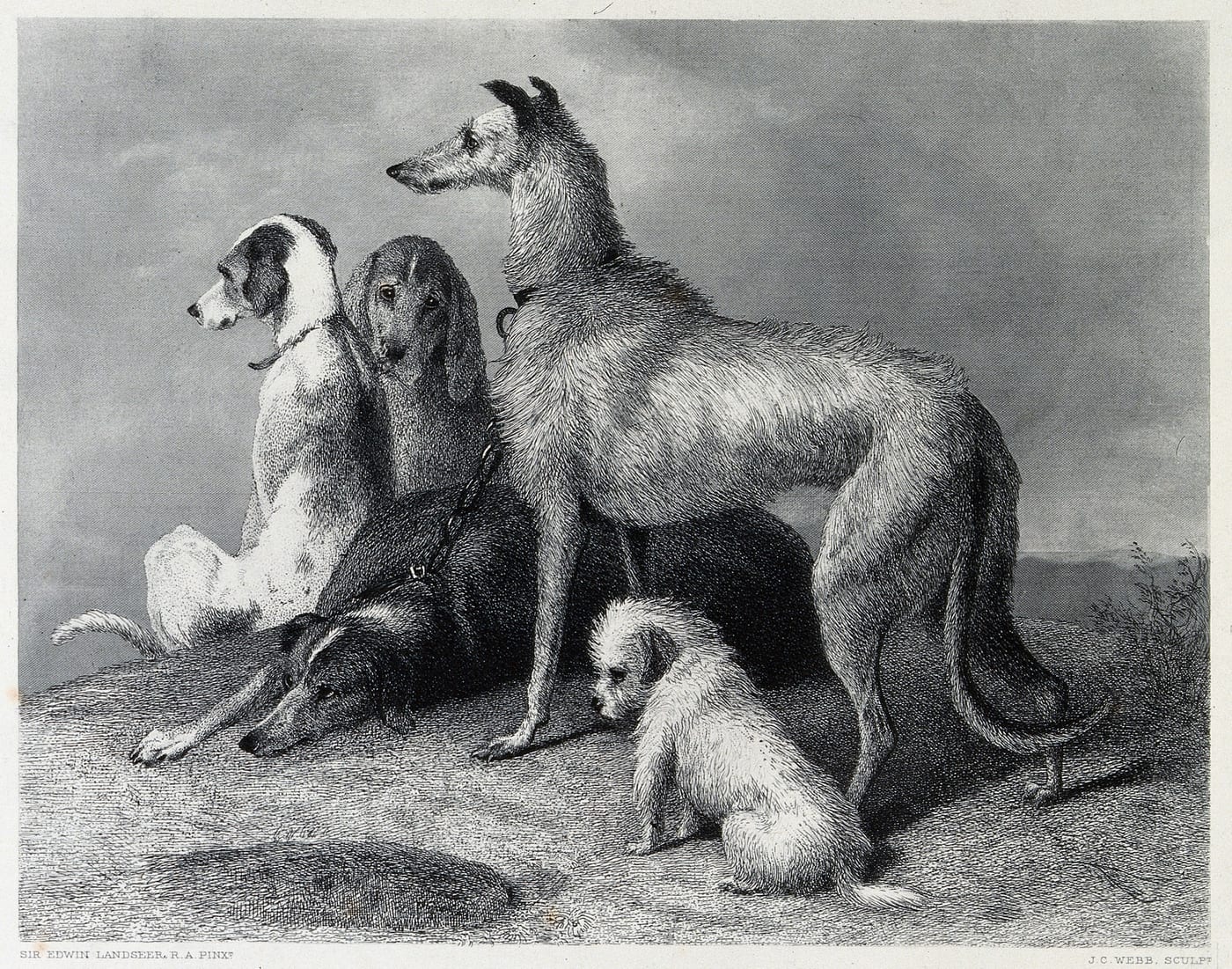
Dog dreams in Jung's analytical psychology typically represent loyalty, recognition, and the familiar-self. Homer's Argos-recognition scene (Odyssey 17.290–327) is the canonical Western literary dog-dream precedent. Egyptian Anubis (Book of the Dead Ch. 125) and the Zoroastrian sagdīd rite both place the dog at death thresholds, a cross-cultural agreement about the canine's liminal role.
Dog dreams are the most common animal dreams in modern surveys, for the most obvious reason: more people share daily life with a dog than with any other non-human animal. The personal layer is real and it dominates. But there’s a deeper symbolic tradition running underneath the personal one, and it adds a second reading that most people miss entirely.
Jung’s loyal-companion reading
C.G. Jung’s analytical psychology treats dogs as typically representing loyalty, instinct in service of consciousness, and the relationship between the trained and the wild aspects of human nature. The dog in dreams, in Jung’s framework, is not the shadow (as the wolf or bear might be) but the shadow’s tamed and allied form, instinct brought into cooperative relationship with the ego. Symbols of Transformation (Collected Works 5) and The Archetypes and the Collective Unconscious (Collected Works 9i) are the primary sources.
Recurring dog-attack dreams, in the Jungian frame, tend to suggest that the relationship between consciousness and instinct has broken down, the loyal companion has turned aggressive because something in waking life has violated the terms of the alliance.
Homer’s Argos
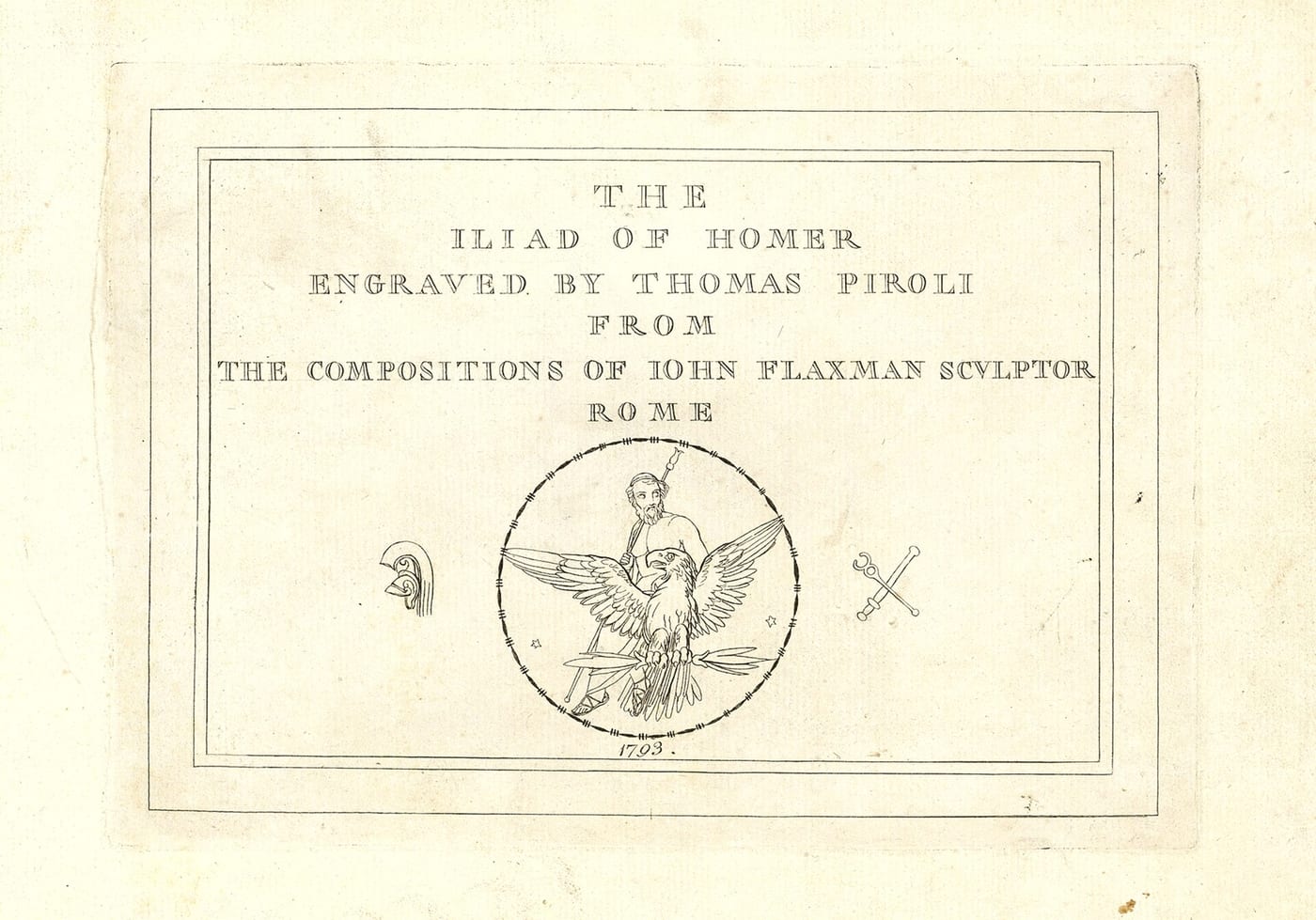
The most famous dog-recognition scene in Western literature is Homer’s Odyssey 17.290–327. Odysseus, returning to Ithaca disguised as a beggar after twenty years of absence, passes the dog Argos lying on a dungheap, old and neglected since his master left. Argos recognizes Odysseus immediately and wags his tail one final time before dying. Odysseus, unable to reveal himself, must pass by without acknowledging the dog.
This is not a dream scene, but it has shaped the archetypal dog-recognition-and-loyalty image that lives in the dream material. The faithful dog who outlasts absence, who recognizes the self that others have failed to recognize, this is the dream-dog who appears at thresholds and transitions, particularly when the dreamer’s identity is in question.
Anubis and the judgment
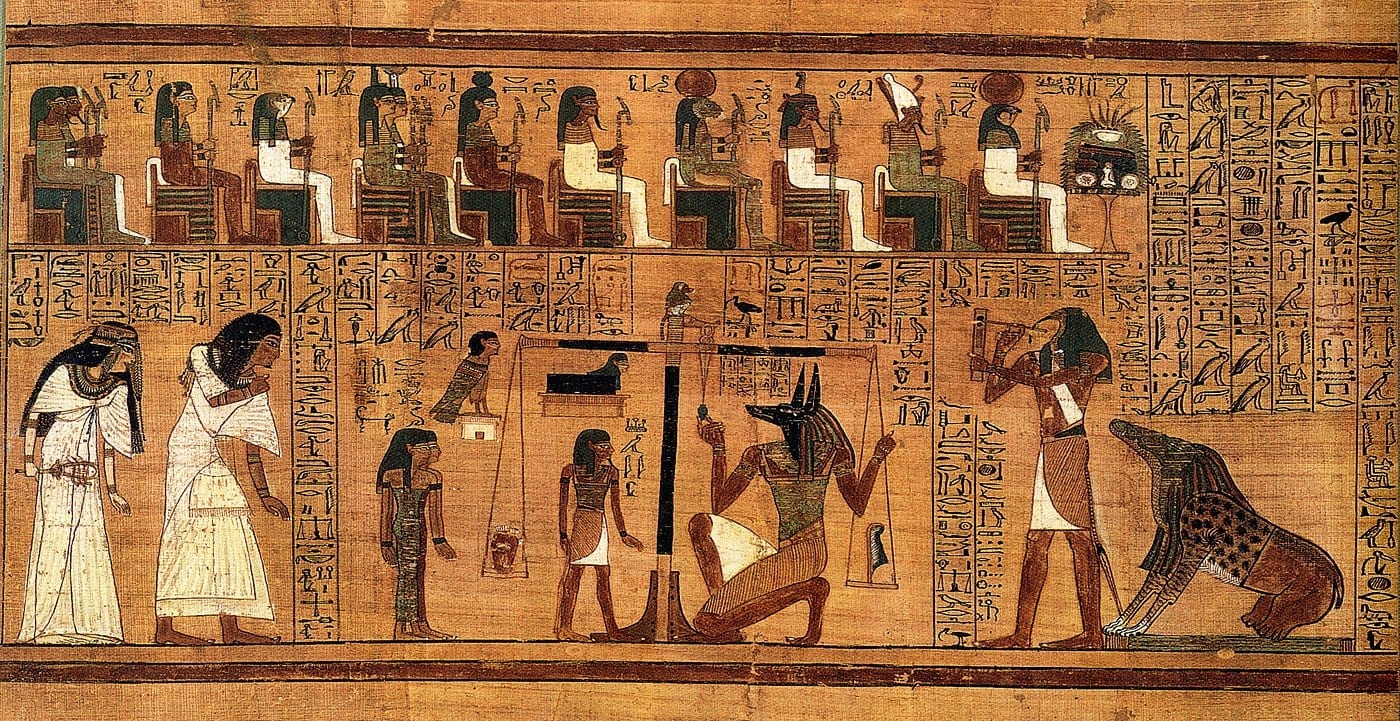
Egyptian Anubis, the jackal-headed psychopomp, stands at the boundary of death and judgment. The Book of the Dead Chapter 125 (the judgment scene) has Anubis weigh the heart of the deceased against the feather of Ma’at. The canine association with death and passage, with the threshold between the living and dead worlds, is one of the most persistent symbolic uses of dog-imagery in world religion.
Zoroastrian law takes this further with the sagdīd rite: the gaze of a “four-eyed dog” (a light-colored dog with spots above its eyes, giving it four apparent eyes) was used to assess corpses and drive away the contaminating demon Nasu. The rite is prescribed in the Vendidad (Avesta) 8.1–72. In this tradition the dog is specifically a death-threshold worker, its gaze a cleansing agent.
Dream dogs at the boundary of loss, death, or transition (the dog that appears when a loved one has died, or in the period following a significant ending) draw on this ancient pairing of canines with threshold-crossing.
Frequently asked
- What does it mean to dream of a dog?
- Jung: loyal-companion, recognition, familiar-self. Homer's Argos-recognition scene (Odyssey 17.290–327). Anubis-judgment-context in Egyptian Book of the Dead Ch. 125. Zoroastrian sagdīd rite (Vendidad 8.1–72) uses the dog at death thresholds.
- What is the Argos-recognition precedent?
- Homer's Odyssey 17.290-327: Odysseus returns to Ithaca after twenty years, disguised, and his old hunting hound Argos is the only being who recognizes him. The dog lifts his head, wags his tail, and dies. It is the canonical Western literary scene of canine loyalty and recognition across separation: the precedent every English-language dog-dream interpretation since carries, knowingly or not.
- Why do Anubis and the Zoroastrian sagdīd both place dogs at death thresholds?
- The agreement across two unconnected cultures is strong: in the Egyptian Book of the Dead chapter 125, Anubis weighs the heart in the underworld judgment; in the Zoroastrian Vendidad 8.1-72, the sagdīd rite required a four-eyed dog (with markings above the eyes) to view the corpse before burial, ensuring safe passage. The dog stands at the threshold between the living world and what follows, a reading the dream-dog inherits in both traditions.
Sources
- PEER-REVIEWED C.G. Jung, Archetypes . Princeton, 1959.
- PRIMARY Homer, Odyssey 17.290–327 . Loeb.
- PRIMARY Book of the Dead, Ch. 125 . Allen trans., 1974.
- PRIMARY Vendidad (Avesta) 8.1–72 (sagdid rite) . Darmesteter trans., Sacred Books of the East 4, 1880.
- PEER-REVIEWED Mary Boyce, A History of Zoroastrianism Vol. I . E.J. Brill, 1975.