Spirit Animal
Fox Spirit Animal
Fox spirit animal meaning: cunning, adaptability and intelligence. Traced from the modern cleverness-adaptability reading back through Ted Andrews's Animal Speak to Japanese kitsune and Inari shrine practice, Chinese húli jīng, the European Reynard tradition, and Aesop's fables.
In modern American "spirit animal" usage, the fox signals cleverness, adaptability, cunning, and the ability to slip through situations other animals can't. That reading traces through Ted Andrews's Animal Speak (Llewellyn, 1993). The older traditions are richer. Japanese kitsune are shape-shifting messengers of the god Inari, with more than thirty thousand Inari shrines across Japan. Chinese húli jīng (fox-spirits) appear in Pu Songling's Liaozhai Zhiyi (1740) as seductive, dangerous, and occasionally benevolent. The European medieval Reynard cycle made the fox the trickster who outwits the lion. Aesop's fables gave Western culture 'sour grapes' and a dozen other fox-as-clever-pragmatist images.
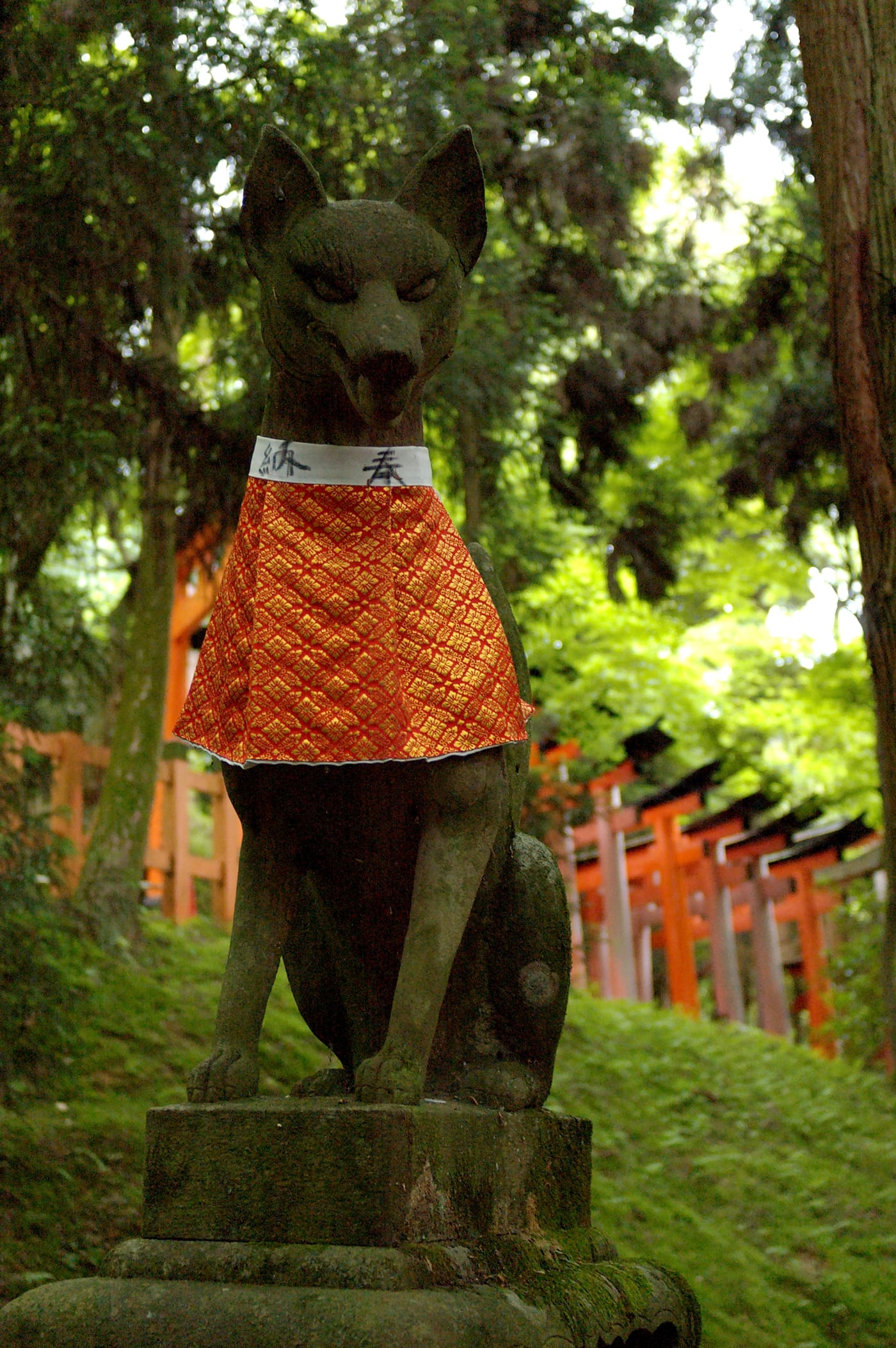
If you walk through the main approach to Fushimi Inari shrine in Kyoto, past the first three or four torii gates, you meet a pair of stone foxes. One holds a key in its mouth. The other holds a jewel, or a sheaf of rice, or a scroll. They flank the path. More foxes wait at the next shrine. And the next. Fushimi Inari has thousands of them, and Fushimi Inari is only one of more than thirty thousand Inari shrines in Japan. The foxes are messengers for Inari Ōkami, the kami of rice and prosperity, and their status in Japanese religious life is much closer to “minor deity” than to “spiritual totem.”
That is the single most important fact a Western spirit-animal article almost never tells you. The fox with the widest and deepest living religious tradition on earth is Japanese, and it is not the Aesop fox.
The four traditions, in rough chronological order
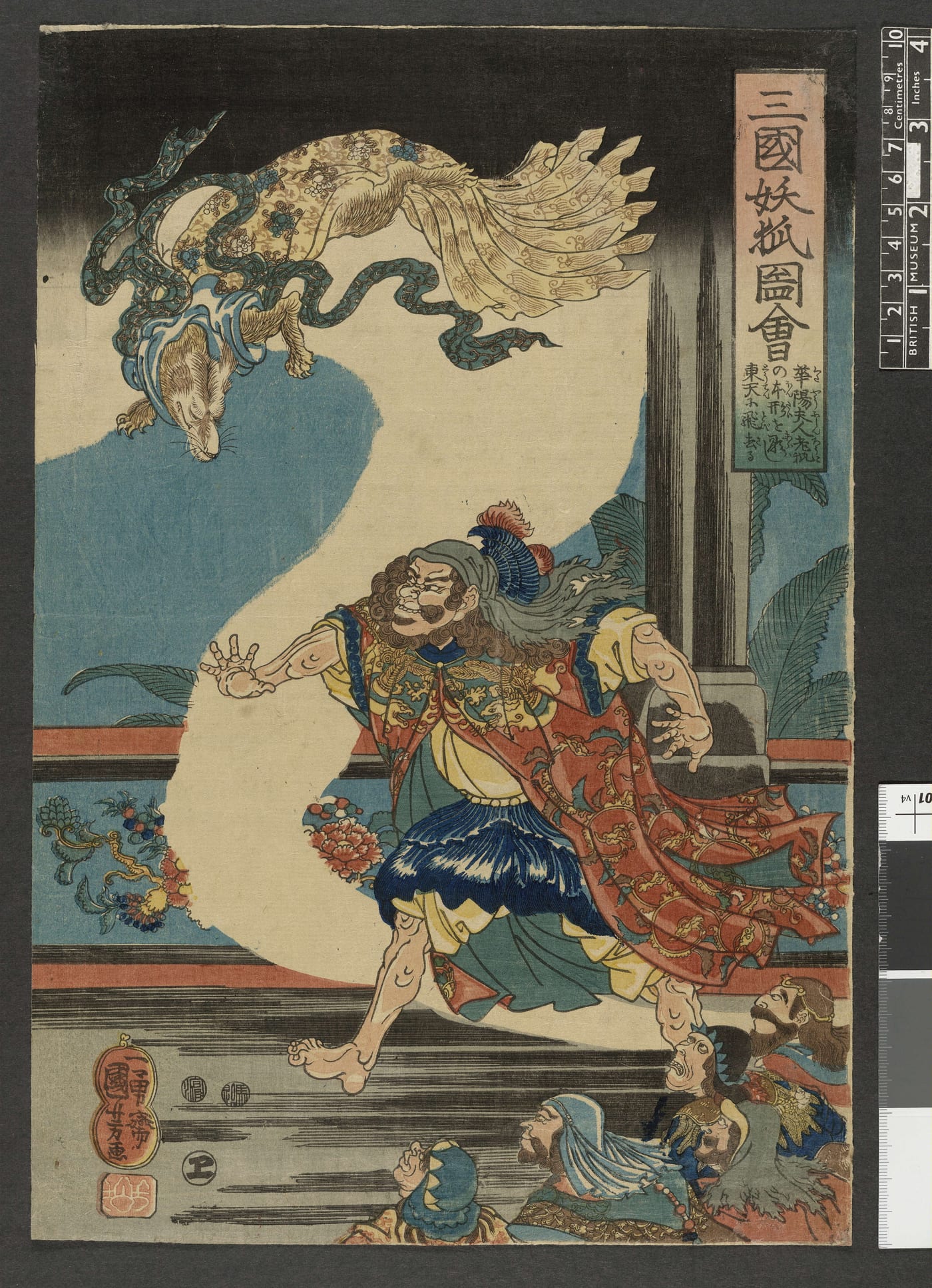
Chinese fox-spirits first. The Shan Hai Jing, compiled between roughly the 4th and 1st century BCE, already describes nine-tailed foxes. Pu Songling’s Liaozhai Zhiyi (1740) turns them into seductive shape-shifters who take scholars as lovers. Sometimes the fox-wife is benevolent. Often she drains the scholar’s qi until he dies. The tradition is old, and it’s the substrate for the Japanese kitsune material that followed.
Japanese kitsune next, through Buddhist tale-collections (Nihon Ryōiki, c. 822 CE), then into the Konjaku Monogatari (c. 1120), then into Noh theater, then into Lafcadio Hearn’s late-19th-century American popularization. The Japanese layer added the Inari-messenger theology, which softened the Chinese seductress image into a protective guardian figure.
Greek Aesop runs on a parallel track: fox as clever pragmatist, from “The Fox and the Grapes” forward. Short fables, memorable, ethical. No theology.
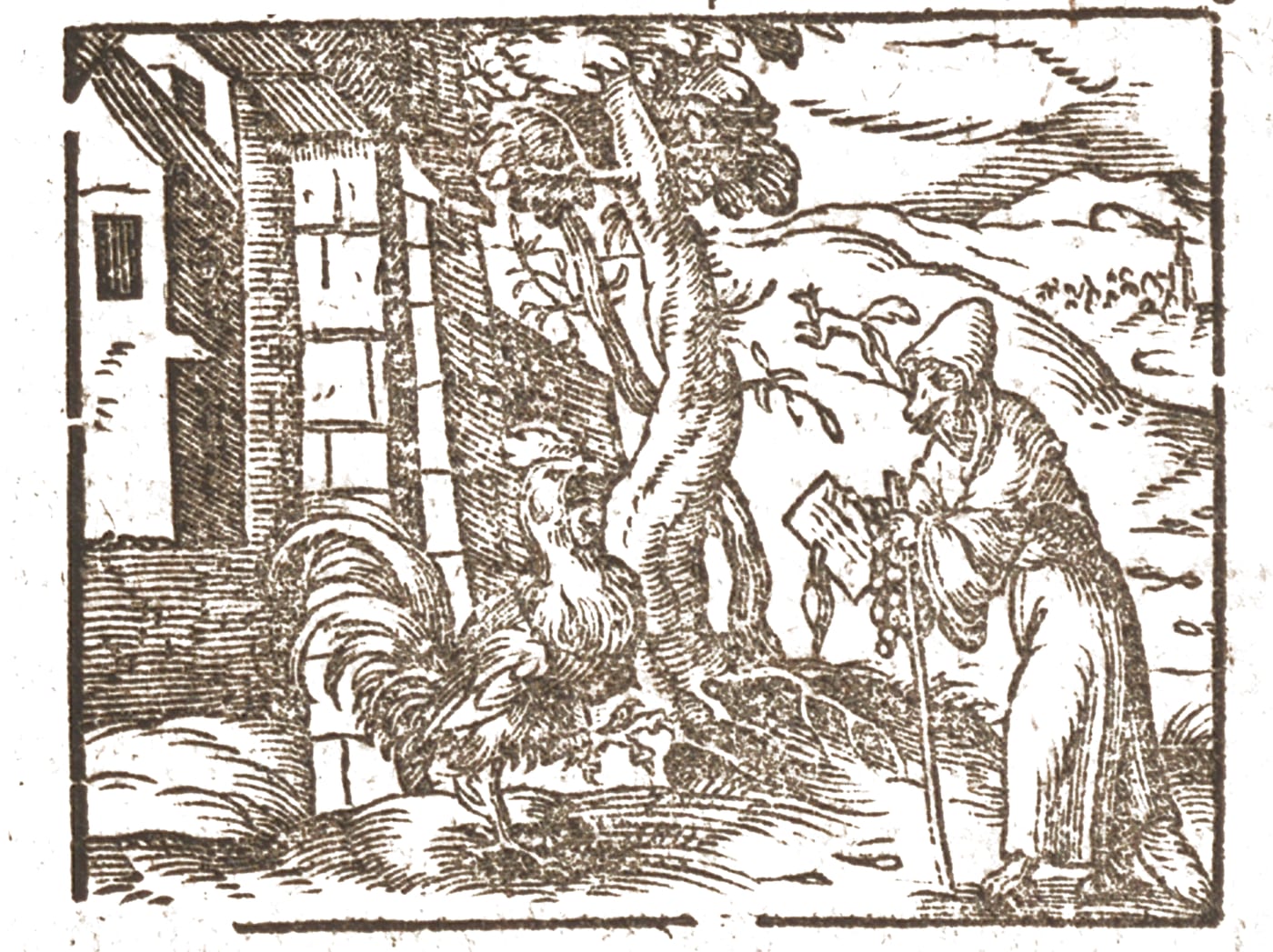
European Reynard in the medieval Roman de Renart stitched Aesopian material into a novel-length cycle in which the fox outwits every other animal at the lion-king’s court. This is where the English-language image of the fox as trickster-politician settled.
What the modern spirit-animal fox inherits
The Ted Andrews 1993 reading, in Animal Speak, is mostly Aesop + Reynard: cleverness, adaptability, the ability to read a room. The Japanese kitsune tradition gets a nod. The Chinese húli jīng tradition, which would complicate the reading considerably, gets dropped. Every popular spirit-animal article about the fox is a rearrangement of those choices.
If you want the full weight of what the fox has meant to people, you have to read the Japanese and Chinese layers. And if you ever find yourself at Fushimi Inari, stop at the stone foxes on the way up. They are why the animal is worth writing about in the first place.
Across traditions
Japanese (kitsune and Inari)
Kitsune (狐) are not just "Japanese foxes." They are semi-divine shape-shifters who serve as messengers of Inari Ōkami, the kami of rice, prosperity, and agriculture. The oldest textual layer is the Nihon Ryōiki (c. 822 CE), a Buddhist miracle-tale collection that opens with a kitsune-wife story; the Konjaku Monogatari (c. 1120) expands the tradition with dozens of kitsune episodes.
Inari shrines are everywhere. Kyoto's Fushimi Inari-taisha (founded 711 CE per shrine tradition) has the famous corridor of ten thousand red torii gates; the shrine network counts more than 30,000 affiliated Inari sanctuaries across Japan. Stone fox statues (myōbu) flank the shrine gates, usually in pairs, often holding a key, a jewel, or a sheaf of rice in the mouth. The reading is protective and fertile, not sly.
The more ambivalent kitsune appears in Lafcadio Hearn's Glimpses of Unfamiliar Japan (1894), where the fox can possess a person (kitsunetsuki) and needs to be exorcised.
- PRIMARY Nihon Ryōiki . Nakamura trans., Harvard-Yenching Institute, 1973.
- PRIMARY Konjaku Monogatari . Ury trans. (selections), University of California Press, 1979.
- PRIMARY Lafcadio Hearn, Glimpses of Unfamiliar Japan . Houghton Mifflin, 1894.
- REFERENCE Fushimi Inari-taisha shrine records
Chinese (húli jīng)
The Chinese fox-spirit, húli jīng (狐狸精), predates the Japanese kitsune tradition and in fact seeded much of it. The Shan Hai Jing (Classic of Mountains and Seas, c. 4th–1st century BCE) mentions nine-tailed foxes. Tang-era tales (collected in the Tai Ping Guang Ji, 978 CE) develop the shape-shifting seductress trope. Pu Songling's Liaozhai Zhiyi (Strange Tales from a Chinese Studio, published posthumously 1740) is the canonical literary treatment: dozens of stories in which a fox-woman takes a scholar as a lover, sometimes benevolently, sometimes draining his qi until he dies.
The modern Chinese colloquial use of húli jīng to mean "home-wrecker" or "seductress" descends directly from this tradition. The fox there is dangerous charm, not honest cleverness.
- PRIMARY Shan Hai Jing (Classic of Mountains and Seas) . Birrell trans., Penguin Classics, 1999.
- PRIMARY Pu Songling, Liaozhai Zhiyi (Strange Tales from a Chinese Studio) . Minford trans., Penguin Classics, 2006.
European medieval (Reynard)
The Roman de Renart, compiled in Old French between c. 1170 and 1250, is the fox-epic of medieval Europe. Renart (Reynard) is the trickster who outwits the lion-king Noble, the wolf Ysengrin, and every other noble animal at court. The cycle was widely translated (Middle Dutch Van den vos Reynaerde, Middle High German Reinhart Fuchs, Middle English The History of Reynard the Fox printed by William Caxton in 1481) and seeded Western literary culture with the fox-as-clever-political-operator still working political cartoons today.
Chaucer's Nun's Priest's Tale (Canterbury Tales, c. 1390) is a fox story inside the Reynard tradition.
- EDITION Roman de Renart . Owen trans., Oxford World's Classics, 1994.
- PRIMARY Geoffrey Chaucer, Canterbury Tales, Nun's Priest's Tale . Benson ed., Riverside Chaucer, 1987.
- EDITION William Caxton (tr.), The History of Reynard the Fox . EETS reprint of 1481 Caxton edition.
Greek (Aesop's fables)
Aesop's fables, preserved mainly through Babrius (Greek, 2nd century CE) and Phaedrus (Latin, 1st century CE) and the Byzantine Aesopica manuscript tradition, gave Western culture the fox as the clever pragmatist. "The Fox and the Grapes" (Perry 15) is the source of "sour grapes." "The Fox and the Crow" (Perry 124) is the fox who flatters the crow into dropping the cheese. "The Fox and the Stork" (Perry 426) is the fox whose trick backfires.
These are short, mnemonic, ethical-political stories, not theology. The fox in Aesop is a personality type.
- PRIMARY Aesop, Fables (Perry Index) . Gibbs trans., Oxford World's Classics, 2002.
- PRIMARY Babrius, Mythiambi Aesopei . Perry trans., Loeb Classical Library.
- PRIMARY Phaedrus, Fabulae Aesopiae . Perry trans., Loeb Classical Library.
Ted Andrews (1993)
Andrews's 1993 fox is mostly the Aesopian-Reynardian fox, reframed for personal-spirit use: cleverness, adaptability, camouflage, the ability to read a situation and find the seam. He nods toward the kitsune tradition without depth.
- REFERENCE Ted Andrews, Animal Speak . Llewellyn, September 1993.
Working with the Fox
If you want a regular practice rather than a one-time read, an oracle deck is the standard tool: you draw a card and sit with whatever animal comes up. Our ranked guide to spirit animal oracle decks compares the field.
Frequently asked
- What does a fox symbolize spiritually?
- In modern pop usage, cleverness, adaptability, and the ability to slip through tight situations, the Andrews 1993 reading. Older traditions split by region. Japanese kitsune are Inari's divine messengers, protective and fertile. Chinese húli jīng are seductive and dangerous. European Reynard is a court trickster. Aesop's fox is a pragmatic personality type.
- What is a kitsune?
- Kitsune (狐) are Japanese fox-spirits, semi-divine shape-shifters who serve as messengers of Inari Ōkami, the kami of rice and prosperity. More than 30,000 Inari shrines exist across Japan. The textual tradition runs from the Nihon Ryōiki (c. 822 CE) through Lafcadio Hearn's 1894 Glimpses of Unfamiliar Japan.
- Why is 'húli jīng' a Chinese insult?
- Because the literary tradition of fox-spirits in China, especially in Pu Songling's Liaozhai Zhiyi (1740), is full of fox-women who seduce men and sometimes drain their life-force. 'Húli jīng' (狐狸精) in modern colloquial use is close to 'home-wrecker' or 'seductress.'
- Where does 'sour grapes' come from?
- From Aesop's fable 'The Fox and the Grapes' (Perry Index 15), preserved in the Greek Babrius collection and the Latin Phaedrus. The fox cannot reach the grapes, so he declares them sour and walks away. The phrase has survived roughly 2,500 years in exactly that meaning.
Sources
- PRIMARY Nihon Ryōiki . Nakamura trans., Harvard-Yenching Institute, 1973.
- PRIMARY Konjaku Monogatari . Ury trans., University of California Press, 1979.
- PRIMARY Lafcadio Hearn, Glimpses of Unfamiliar Japan . Houghton Mifflin, 1894.
- PRIMARY Shan Hai Jing . Birrell trans., Penguin Classics, 1999.
- PRIMARY Pu Songling, Liaozhai Zhiyi . Minford trans., Penguin Classics, 2006.
- EDITION Roman de Renart . Owen trans., Oxford World's Classics, 1994.
- PRIMARY Geoffrey Chaucer, Canterbury Tales . Riverside Chaucer, 1987.
- PRIMARY Aesop, Fables . Gibbs trans., Oxford World's Classics, 2002.
- REFERENCE Fushimi Inari-taisha
- REFERENCE Ted Andrews, Animal Speak . Llewellyn, September 1993.