| Animal | Tradition | Where it is recorded | What it stands for there |
|---|---|---|---|
| Horse | Eurasian steppe | Herodotus, Histories 4.46–82; Public Law 92-195 (1971) | Movement no settled power could control |
| Bald eagle | United States | Great Seal (1782); Public Law 118-206 (2024) | Independence, named in federal law |
| Butterfly | Greek and Roman | psychē; Apuleius, Metamorphoses (c. 150 CE) | The soul released from one form into another |
| Dove | Biblical, then modern | Genesis 8:8–12; Picasso's La Colombe (1949) | Peace after danger, more than liberty |
What "freedom animal" actually means historically
"Freedom" as a concept that animals could symbolize is largely a modern Western idea: it requires a conception of freedom as an independent value, distinct from specific social or political rights, that develops significantly in Enlightenment thought. The animals that contemporary culture associates with freedom carry that association through specific historical moments and specific symbolic uses, not through ancient universal tradition.
The eagle is the clearest case. The Roman military aquila (eagle standard) symbolized Roman power and the legions' invincibility: it was a martial and imperial emblem, not a freedom symbol. In 1782 the United States put an eagle on its Great Seal, and the two men who shaped the design explained it in different terms. William Barton, the Philadelphia lawyer whose design gave the eagle its central place, wrote that "the Eagle displayed is the Symbol of supreme Power and Authority, and signifies the Congress": a power symbol again, now applied to a republic rather than an empire. Charles Thomson, Secretary of Congress, then replaced Barton's small crested eagle with the native American bald eagle, and the explanation Congress adopted on June 20, 1782 says the shield sits on its breast "without any other supporters to denote that the United States of America ought to rely on their own Virtue." The adopted text explains the eagle through self-reliance; it doesn't mention liberty. The freedom association came later, through American iconographic tradition and the Romantic-era equation of the eagle's flight with individual liberty, and in 2024 Congress put it into statute (see below).
The butterfly carries freedom associations primarily through the Greek psyche (soul) identification. The Greek word psychē means both "soul" and "butterfly"; the butterfly became an image of the soul because its life cycle (caterpillar → chrysalis → butterfly) so clearly embodies transformation and liberation from one form. Apuleius's Metamorphoses (c. 150 CE) makes this explicit in the Psyche-and-Eros myth. The modern equation of the butterfly with freedom is a direct inheritance of this Greco-Roman soul imagery.
The horse is the most historically grounded freedom symbol: though again, in a specific context. In Eurasian nomadic cultures (Scythian, Mongol, Hunnic, Central Asian pastoral cultures), the horse was not merely transport; it was the technology that made mobile freedom possible. The ability to move rapidly across vast distances, to be ungoverned by the geography that constrained settled agricultural populations, was literally horse-enabled. Herodotus's description of Scythian horse culture (Histories 4.46–82) captures the sense in which the horse was the enabling condition of a way of life that could not be controlled by external powers. The Romantic-era image of the wild horse as freedom is an inheritance of this historical reality.
The dove carries freedom associations through peace symbolism rather than liberty specifically: the dove of Noah's ark (Genesis 8:8–12) as the signal that the flood has ended; the dove at Jesus's baptism (Matthew 3:16) as the descent of the Holy Spirit; the dove in late antiquity as a peace emblem (Pliny the Elder, Natural History 10.52). Pablo Picasso's lithograph La Colombe (1949, commissioned for the World Peace Congress) gave the dove its current global peace-freedom iconographic weight.
When the freedom reading became law
Two American statutes later put the eagle and the wild horse into official language, and only one of them uses the word freedom.
Wild horses, 1971. The Wild Free-Roaming Horses and Burros Act (Public Law 92-195, December 15, 1971) opens with a finding that reads like a symbolism entry: "Congress finds and declares that wild free-roaming horses and burros are living symbols of the historic and pioneer spirit of the West." The statute then protects that symbol in practical terms, declaring that the animals "shall be protected from capture, branding, harassment, or death" (16 U.S.C. 1331). The statute never says freedom; its symbol is the pioneer West. But protecting the animals from capture and branding keeps them uncaught and unbranded, which is as close as federal law comes to the free-running horse of the Romantic image.
The bald eagle, 2024. For 242 years the eagle sat on the Great Seal without ever being named the national bird. Public Law 118-206, signed December 23, 2024, made it official, and its first finding is the freedom reading in plain words: "bald eagles are a historical symbol of the United States representing independence, strength, and freedom." The same findings note that bald eagles "are integral to the spiritual lives and sacred belief systems of most Indigenous peoples and Tribal communities," a reminder that the eagle's American meaning didn't start in 1782.
Which animal represents true freedom?
It depends which freedom you mean, and the sources split cleanly. If freedom means movement no settled power can control, the horse has the deepest record, from the Scythian steppe to the 1971 Act. If it means political independence, the bald eagle, now so named in federal law. If it means the soul released from one form into another, the butterfly, through the Greek psyche. If it means peace after danger, the dove, from Noah's ark to Picasso. None of them is a freedom animal everywhere. Each became one somewhere, for a reason someone wrote down.
Thematic list
Animals That Symbolize Freedom
What 'freedom animal' actually means, sourced.
The 'freedom animal' concept is mostly a modern Western composite. The strongest historical sources are the eagle, from the Roman military signum to the U.S. national bird that Congress called a symbol of 'independence, strength, and freedom' in 2024, the butterfly through the Greek psyche (soul) association, and the horse in Eurasian nomadic cultures (Mongol, Scythian) where horse-enabled mobility was the literal condition of freedom. None of these is 'freedom' in the generic modern sense; each is culturally specific.
Animals in this list
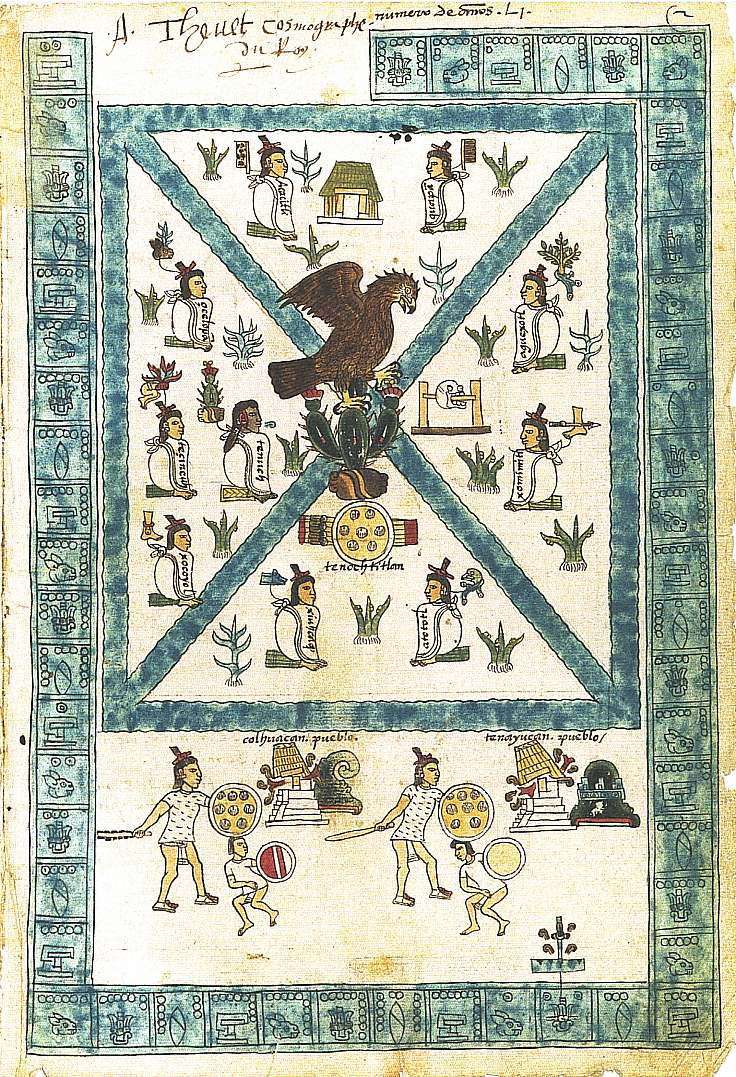
Eagle spirit animal meaning: courage, freedom and leadership. Traced from the modern courage-freedom reading back through Ted Andrews's Animal Speak to Zeus's eagle in Homer, the Roman legionary aquila, the Vedic Garuda, the Mexica founding of Tenochtitlan, and Lakota eagle-feather protocol.
Butterfly spirit animal meaning: transformation, rebirth and soul. From the modern pop-concept back to the Greek psyche, the Mexica goddess Itzpapalotl, the Zhuangzi butterfly dream, the Japanese chō, and Ted Andrews's 1993 synthesis.
Horse spirit animal meaning: freedom, power and speed. Traced from the modern freedom-and-power reading back through Ted Andrews's Animal Speak to the Vedic Aśvamedha, the Greek Pegasus, the Welsh Rhiannon of the Mabinogion, the Gallo-Roman Epona, and the Plains horse cultures that began with the 1680 Pueblo Revolt.
Dove spirit animal meaning: peace, divine descent and love. Traced to the Genesis 8 Noah's flood narrative, Aphrodite-Venus iconography, the Christian Holy Spirit descending at Christ's baptism, Mesopotamian Ishtar attribution, and Picasso's 1949 peace-dove poster.
Hummingbird spirit animal meaning: joy, lightness and agility. Traced from the modern joy-and-lightness reading back through Ted Andrews's Animal Speak to the Aztec war-god Huitzilopochtli, the Nazca hummingbird geoglyph, the Taíno colibrí narrative, and early modern European encounters with the bird.
Hawk spirit animal meaning: vision, focus and messenger. Traced from the modern vision-and-messenger reading back through Ted Andrews's Animal Speak to the Egyptian Horus and Ra-Horakhty tradition, Roman and Etruscan augury, and Lakota hawk imagery documented by Frances Densmore.
Dolphin spirit animal meaning: joy, play and intelligence. Traced from the modern joy-and-intelligence reading back through Ted Andrews's Animal Speak to the Homeric Hymn to Apollo at Delphi, Arion's rescue by a dolphin in Herodotus, the Minoan Knossos dolphin fresco, and the Amazonian boto encantado tradition.