Spirit Animal
Frog Spirit Animal
Frog spirit animal meaning: transformation, cleansing and fertility. Traced from the modern transformation-and-cleansing reading back through Ted Andrews's Animal Speak to the Egyptian goddess Heqet, Aristophanes's 405 BCE comedy Frogs, the Chinese moon-toad Chán Chú in the Huainanzi, and the second plague of Egypt in Exodus 8.
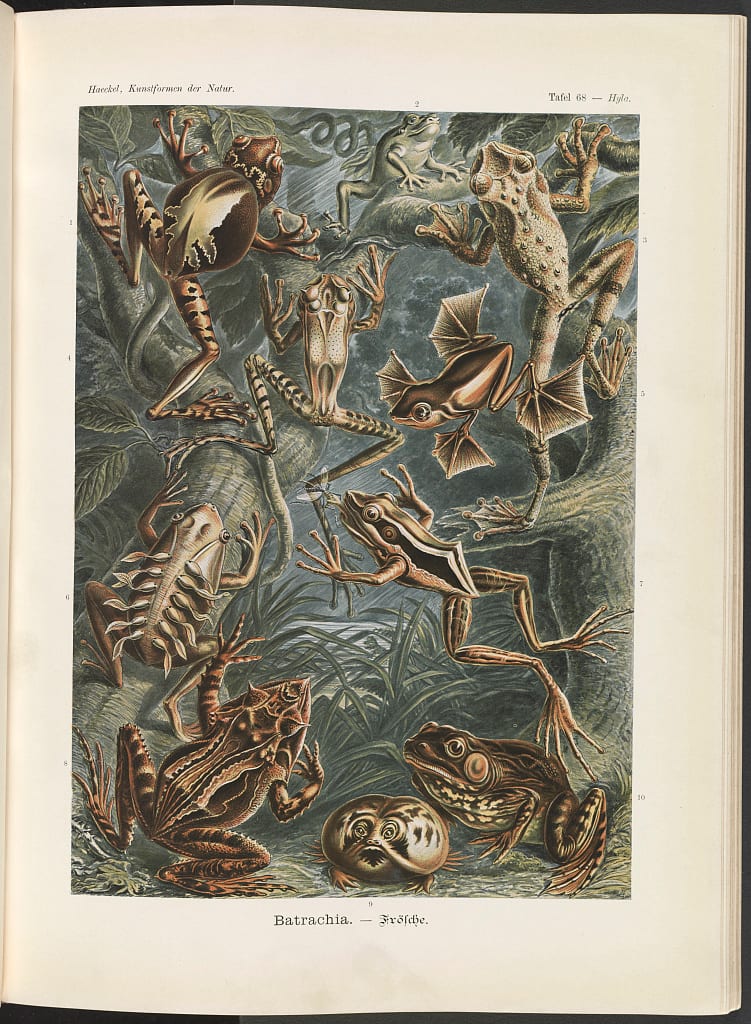
In modern American "spirit animal" usage, the frog stands for transformation, cleansing, fertility, and the emotional weight of water. That reading comes through Ted Andrews's Animal Speak (Llewellyn, 1993). The older traditions are specific. The Egyptian Heqet is the frog-headed goddess of childbirth and the Nile flood, attested from the Old Kingdom Pyramid Texts. Aristophanes's Frogs (405 BCE) stages Dionysus's descent to the underworld accompanied by a chorus of frogs. The Chinese moon-toad Chán Chú (蟾蜍) appears on the moon in the Huainanzi (c. 139 BCE) alongside the moon-rabbit. The second plague of Egypt in Exodus 8 fills the land with frogs. And Mesoamerican Tlaltecuhtli has frog-toad features in some representations.
The frog is the Egyptian creature. The frog’s deepest documented spiritual tradition is singular, geographical, and Nilotic. The goddess Heqet had a cult in Upper Egypt from the Old Kingdom forward. She was frog-headed. She attended royal births. She was in the Pyramid Texts. Her amulets, small faience frogs, survive in the thousands in European and American museum collections. When the God of Israel sent the second plague on Egypt, the creature he sent was the frog, which is to say he sent an overabundance of Heqet herself, the birth-goddess of the land, and turned her into a pestilence. Exodus 8 is an anti-Heqet text.
That is the tradition most modern spirit-animal articles skip.
The four traditions worth knowing
Heqet. Egyptian, frog-headed goddess of birth and the Nile flood. Pyramid Texts Utterance 660. Westcar Papyrus (Middle Kingdom) for the triple-royal-birth narrative. Hundreds of surviving amulets across world museums. The deepest and most substantial frog-deity tradition in documented world religion.
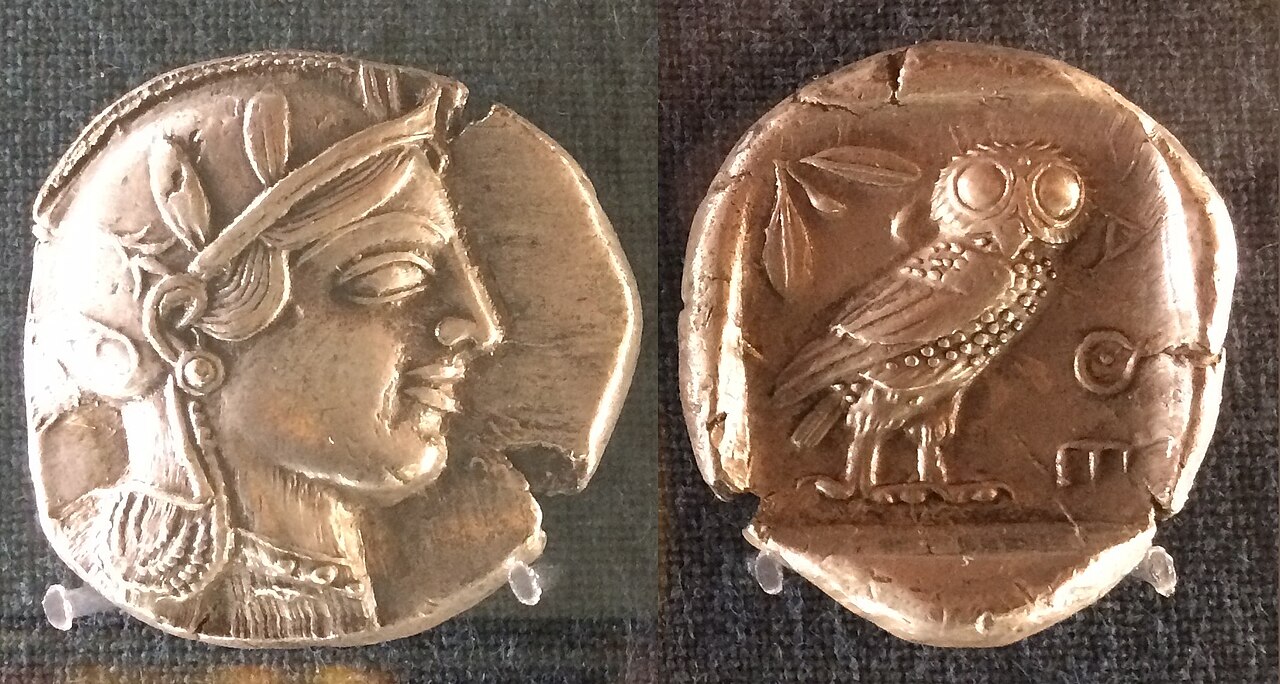
Aristophanes’s Frogs. 405 BCE, Athens, first prize at the Lenaia. Dionysus descends to the underworld. A chorus of frogs chants brekekekex koax koax as Charon rows him across the Acherusian marsh. Kenneth Dover’s 1993 Clarendon edition argues the chorus-frogs are Eleusinian mystery-initiates. The comedy is also the most theologically serious surviving Greek comic drama.
Chán Chú. Chinese, the three-legged moon-toad, Chang’e transformed. Huainanzi c. 139 BCE. The companion to the moon-hare on the lunar disk, from Mawangdui silk banners through Tang painting through modern mooncake imagery. Wealth-toad figurines in contemporary Chinese shops are the direct descendant of the tradition.
The second plague. Exodus 8. Frogs cover the land. The symbolic inversion of Heqet is the theological core. William Propp’s Anchor Bible commentary works through the anti-cult logic of the plagues in detail.
What the Andrews 1993 reading captures and drops
Captures: transformation, cleansing, water, fertility. All real, all tied to the frog’s observable biology (the tadpole-to-adult metamorphosis, the emergence from water).
Drops: the Egyptian royal-birth tradition, the Greek theological-comedy tradition, the Chinese moon-toad continuity of two millennia, the Exodus narrative inversion. Those are the weights that make the frog a genuinely interesting animal rather than a generic “transformation” keyword.
The tradition sections above restore those weights.
Across traditions
Egyptian (Heqet, frog-headed goddess of birth)
Heqet (Egyptian Ḥqt) is the frog-headed goddess of childbirth, the Nile flood, and the fertility of the seasonal inundation. Her cult center was Herwer in Upper Egypt. The Pyramid Texts (Utterance 660) associate her with the resurrection of the deceased king; the Middle Kingdom Westcar Papyrus (Papyrus Berlin 3033) narrates her assisting at the triple royal birth of the first three kings of the Fifth Dynasty.
Heqet-amulets, usually small faience or steatite frogs, appear in Middle and New Kingdom burials by the hundreds; the British Museum, the Louvre, and the Met all hold substantial collections. Modern Coptic Egyptian Christianity preserved the frog as a birth-and-resurrection motif well into the early Islamic period. Barbara Watterson's The Gods of Ancient Egypt (Sutton, 1996) treats Heqet in the context of the broader Egyptian birth-goddess pantheon.
- PRIMARY Pyramid Texts, Utterance 660 (Heqet reference) . Faulkner trans., Oxford, 1969.
- PRIMARY Westcar Papyrus (Papyrus Berlin 3033) . Lichtheim trans., Ancient Egyptian Literature vol. 1, 1973.
- PEER-REVIEWED Barbara Watterson, The Gods of Ancient Egypt . Sutton, 1996.
- MUSEUM British Museum, Heqet frog amulets (multiple)
Greek (Aristophanes's Frogs, 405 BCE)
Aristophanes's Frogs (Greek Batrachoi) was performed at the Lenaia of 405 BCE and won the first prize. The play stages the god Dionysus descending to the underworld to bring back a great tragic poet. As Charon rows him across the Acherusian marsh, a chorus of frogs chants the onomatopoeic refrain brekekekex koax koax (βρεκεκεκὲξ κοὰξ κοάξ), one of the most famous animal choruses in world literature.
The frogs here are initiates: scholars including Kenneth Dover (Aristophanes: Frogs, Oxford, 1993) have argued the frogs represent Eleusinian mystery-initiates rather than mere comic figures, their chant a parodic version of initiate ritual singing. The play remains the most theologically serious comedy from classical Athens.
- PRIMARY Aristophanes, Frogs (Batrachoi) . Henderson trans., Loeb Classical Library.
- PEER-REVIEWED Kenneth Dover, Aristophanes: Frogs . Clarendon Press, 1993.
Chinese (Chán Chú, the moon-toad)
The Chinese Chán Chú (蟾蜍), the three-legged moon-toad, is a companion of the moon-rabbit (see our rabbit page) on the lunar disk. The Huainanzi (c. 139 BCE) narrates the origin: Chang'e, wife of the archer Hou Yi, stole the elixir of immortality her husband had obtained from Xi Wangmu and fled to the moon, where she was transformed into a toad.
The moon-toad has been continuously present in Chinese visual culture from the Han-era Mawangdui silk banner (2nd century BCE, Hunan Provincial Museum) through Tang and Song painting to modern mooncake imagery. Chán Chú amulets (the three-legged gold-coin-holding toad) are a standard Chinese feng-shui object today, placed in shops to attract wealth. The continuity of the image is remarkable.
- PRIMARY Huainanzi (淮南子), c. 139 BCE . Major et al. trans., Columbia University Press, 2010.
- MUSEUM Mawangdui T-shaped silk banner . Hunan Provincial Museum; 2nd c. BCE.
Hebrew Bible (Exodus 8, the second plague)
The second of the ten plagues of Egypt in Exodus 8 is the plague of frogs. Aaron stretches out his rod over the waters, and frogs come up and cover the land. Pharaoh asks Moses to pray to have them removed; Moses does; the frogs die. Psalm 78:45 and Psalm 105:30 return to the image in summary form.
The plague's symbolic weight in Jewish and Christian tradition is tied to the Egyptian Heqet cult: the god of Israel demonstrates sovereignty by sending an overabundance of the very creature Egyptian religion worshipped as a birth-goddess. This inversion of cult-animals is a consistent structural feature of the Exodus plague narrative; William Propp's Exodus 1–18 (Anchor Bible, 1999) treats the point in detail.
- PRIMARY Exodus 8:1–15 . BHS Masoretic text; JPS 1985 English trans.
- PEER-REVIEWED William H.C. Propp, Exodus 1–18 (Anchor Bible) . Yale University Press, 1999.
Ted Andrews (1993)
Andrews's 1993 frog is the transformation-and-cleansing figure, drawn primarily from the frog's observable life-cycle (tadpole to adult) plus vague water-element associations, softened into a personal-spirit keyword. The Heqet, Chán Chú, and Exodus-plague traditions are all absent.
- REFERENCE Ted Andrews, Animal Speak . Llewellyn, September 1993.
Working with the Frog
If you want a regular practice rather than a one-time read, an oracle deck is the standard tool: you draw a card and sit with whatever animal comes up. Our ranked guide to spirit animal oracle decks compares the field.
Frequently asked
- What does a frog symbolize spiritually?
- In modern pop usage, transformation, cleansing, fertility, and the emotional weight of water, the Andrews 1993 reading. Older traditions are specific. Egyptian Heqet is the frog-headed goddess of childbirth and the Nile flood (Pyramid Texts, Westcar Papyrus). Aristophanes's Frogs (405 BCE) stages Dionysus's underworld descent with a chorus of frog-initiates. The Chinese moon-toad Chán Chú is Chang'e transformed, on the moon (Huainanzi). And the second plague of Egypt (Exodus 8) fills the land with frogs as an anti-Heqet reversal.
- Why is there a frog-headed Egyptian goddess?
- Heqet is the Egyptian frog-headed goddess of childbirth, the Nile flood, and the fertility of the seasonal inundation. The connection is biological: frogs emerge in vast numbers from the mud after the annual Nile flood subsides. Heqet's cult center was Herwer in Upper Egypt. Pyramid Texts Utterance 660 associates her with royal resurrection. The Middle Kingdom Westcar Papyrus narrates her assisting at the triple royal birth of the first three Fifth Dynasty kings. Heqet-amulets, small faience frogs, were buried in Egyptian tombs by the hundreds.
- Why is there a toad on the Chinese moon?
- Because of the Huainanzi (c. 139 BCE) narrative: Chang'e, wife of the archer Hou Yi, stole the elixir of immortality and fled to the moon, where she was transformed into a three-legged toad, Chán Chú (蟾蜍). The toad and the moon-rabbit (yùtù) are companion figures on the lunar disk. The image is continuously present from the Han-era Mawangdui silk banner through modern mooncake packaging and feng-shui wealth-toad figurines.
- What was the plague of frogs in the Bible?
- The second of the ten plagues of Egypt in Exodus 8. Aaron stretches out his rod over the waters; frogs come up and cover the land, entering houses, ovens, and kneading bowls. Pharaoh asks for relief; Moses prays; the frogs die in heaps. The symbolic inversion is sharp: the God of Israel sends an overabundance of the very creature Egyptian religion worshipped as the birth-goddess Heqet. William Propp's Anchor Bible Exodus 1–18 (1999) treats the anti-Egyptian-cult logic of the plagues in detail.
Sources
- PRIMARY Pyramid Texts, Utterance 660 . Faulkner trans., Oxford, 1969.
- PRIMARY Westcar Papyrus (Papyrus Berlin 3033) . Lichtheim trans., Ancient Egyptian Literature vol. 1, 1973.
- PEER-REVIEWED Barbara Watterson, The Gods of Ancient Egypt . Sutton, 1996.
- MUSEUM British Museum, Heqet amulets
- PRIMARY Aristophanes, Frogs . Henderson trans., Loeb Classical Library.
- PEER-REVIEWED Kenneth Dover, Aristophanes: Frogs . Clarendon Press, 1993.
- PRIMARY Huainanzi . Major et al. trans., Columbia, 2010.
- MUSEUM Mawangdui silk banner, Hunan Provincial Museum
- PRIMARY Exodus 8:1–15 . BHS / JPS 1985.
- PEER-REVIEWED William H.C. Propp, Exodus 1–18 (Anchor Bible) . Yale, 1999.
- REFERENCE Ted Andrews, Animal Speak . Llewellyn, September 1993.