American folk-belief, sourced
What It Means When a Hawk Visits You: The Sourced Version
Contemporary hawk symbolism is mostly 30 years old. The traditions it borrows from are far older and far more specific.
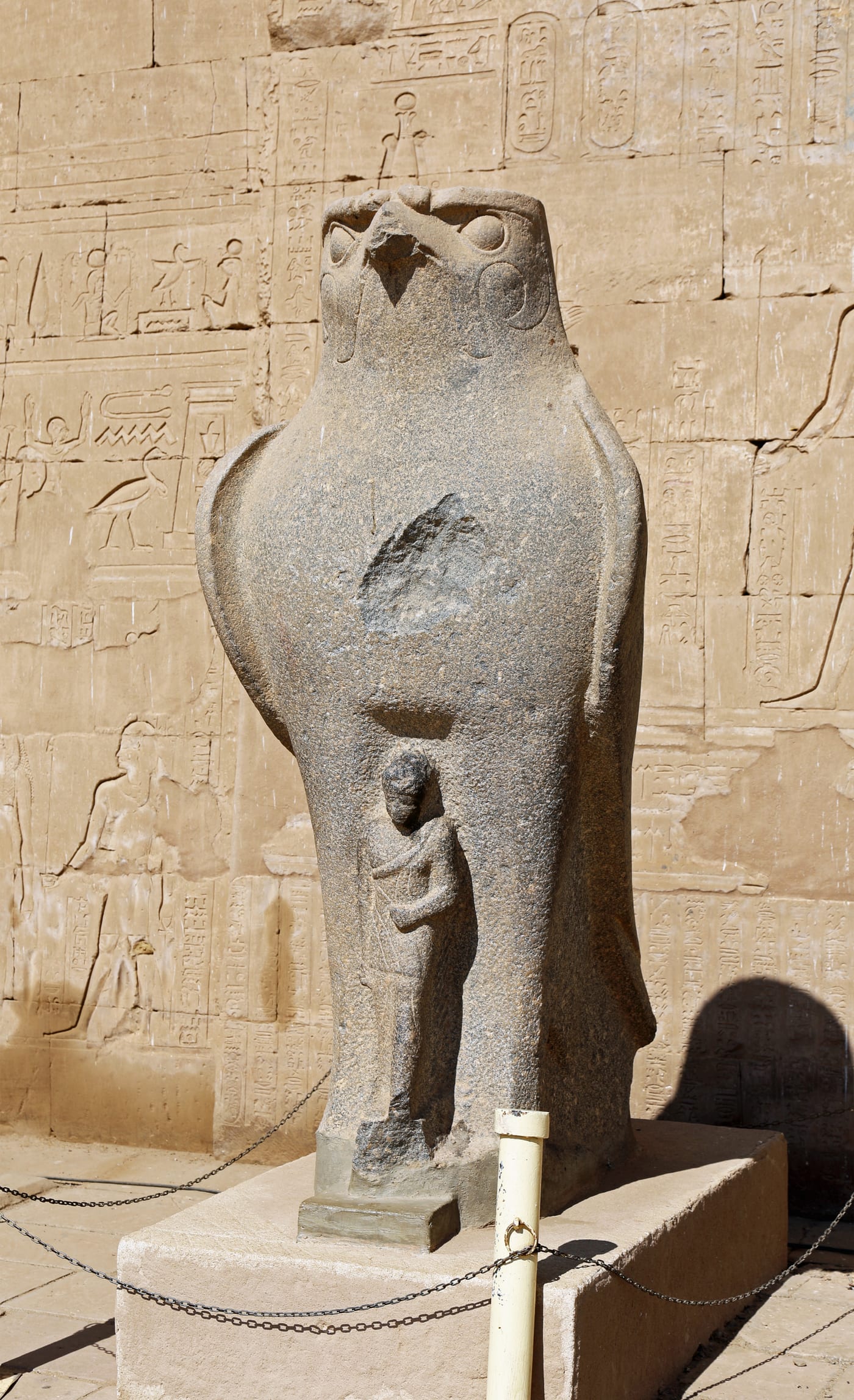
The belief that a hawk sighting is a personal messenger or spiritual sign derives primarily from Ted Andrews's Animal Speak (Llewellyn, September 1993), which blended Lakota and Egyptian hawk imagery into a generalized pop-spiritual framework. The Lakota čhetán tradition documented by Frances Densmore (Smithsonian BAE Bulletin 61, 1918) and James Walker (1896–1914) is specific and ceremonial, not a casual omen. Egyptian hawk symbolism centers Horus the falcon-headed sky deity, not the common buzzard hawk most people encounter in a backyard. Roman augury (Cicero, De Divinatione 1.85) treated hawks as auspicial signs, but with precise rules about species, direction, and quadrant. These traditions deserve to be held separately.
Somewhere around the late 1990s, the hawk joined the cardinal as a fixture of American backyard spirituality. A red-tailed hawk perches on a fence post, and within seconds a dozen websites will tell you it's a call to sharpen your vision, a reminder to see the big picture, a message from the universe or a deceased relative. What none of those websites will tell you is that this reading is very recent, and the ancient traditions it loosely references say something quite different.
What the Lakota and Hopi records actually say
Frances Densmore spent more time in the field documenting Lakota musical and ceremonial life than almost any other ethnomusicologist of her era. Her Teton Sioux Music (Smithsonian Bureau of American Ethnology Bulletin 61, 1918) remains a primary-source benchmark. She documents hawk songs, čhetán wičhóšta, used in specific ceremonial contexts. The hawk in Lakota tradition is associated with the wakinyan cluster (thunder beings), and specific hawk species had specific ceremonial roles. The key word there is "ceremonial." These were not casual omens a person encountered while driving to work.
James Walker's Lakota Belief and Ritual (University of Nebraska Press, 1980) compiles material Walker gathered working with Oglala consultants between 1896 and 1914. The hawk appears as a messenger spirit, but again in contexts involving formal medicine-bundle practice, not spontaneous backyard encounters. Densmore and Walker are the primary-source ceiling here. What you find in most contemporary "hawk symbolism" articles is a smoothed-out synthesis of their material filtered through Andrews 1993, with the ceremonial specificity removed.
The Hopi tradition names a separate hawk figure entirely: the Kisa kachina, documented by ethnologist Jesse Walter Fewkes for the Smithsonian in 1903. Fewkes describes Kisa's appearances in Hopi ceremonial cycles, distinct in name, role, and mythology from the Lakota čhetán tradition above. The two nations didn't share a hawk belief and didn't need to. Folding Lakota and Hopi material into one generic "Native American hawk symbolism" erases exactly the specificity that makes each tradition worth reading in the first place.
Egypt: the falcon-god and the common hawk
Horus, the most hawk-associated figure in Egyptian religion, was specifically a falcon (Falco peregrinus or Falco biarmicus in most scholars' reading), not the buzzard hawk most people see circling suburban skies. Wallis Budge's The Gods of the Egyptians (Methuen, 1904) catalogs the principal Horus forms: Harakhty (Horus of the horizon, the solar falcon), Behdety (Horus of Edfu, the winged disk), Harpokrates (infant Horus). The Pyramid Texts, especially Utterances 467–468, address the Horus-falcon in the context of royal resurrection theology. None of this translates naturally into "a red-tailed hawk flew over your car and means something about your career."
The Egyptian hawk tradition is a specific theology about divine kingship, solar cycles, and the pharaonic soul. A reader who encounters a soaring buteo hawk and reaches for Horus as the interpretive frame is making a large cultural leap across time and geography that neither Budge nor the Pyramid Texts invites.
Rome: augury was a state religion with rules
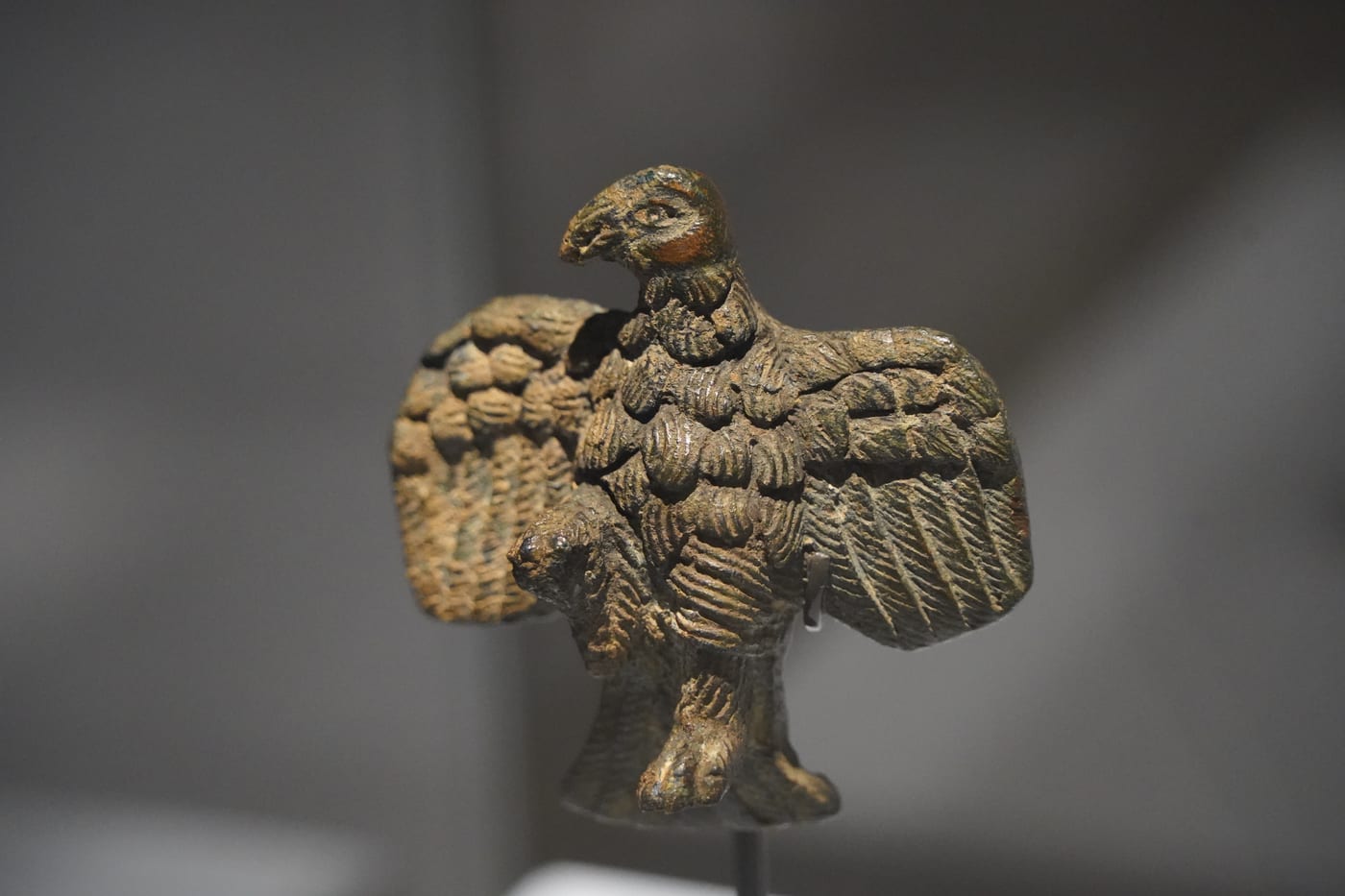
Roman augury is often the unnamed background to contemporary hawk-omen culture, even when no one mentions Rome. Cicero's De Divinatione (1.85) is the primary theoretical text. Augures observed birds from a templum, a consecrated sky-space, and interpreted their behavior against formal rules: which species appeared, from which quadrant, whether it called or flew silently. A hawk (accipiter) observed from the east was favorable, from the west less so; certain species were specifically favorable or unfavorable depending on the context.
But augury was a state function, formally institutionalized, with its own priestly college (collegium augurum). It was not a personal divination practice available to any person who happened to look out the window. The Roman inheritance behind "a hawk means pay attention" is there, but it's been stripped of everything that made it Roman.
What the American folk record says
Wayland Hand's edited Frank C. Brown Collection of North Carolina folklore (Duke University Press, vols. VI–VII, 1961–64) is the same archive that fails to record the cardinal-as-messenger-from-deceased belief. Hawks in that collection appear occasionally as weather signs or general omens of change, but without the specific "hawk = message from beyond" framing that dominates contemporary searches. The detailed personal-visitation meaning seems to post-date that archive by several decades.
Ted Andrews's Animal Speak, published September 1993 by Llewellyn, is the single book most responsible for the modern American hawk-symbolism framework. Andrews treated the hawk as a "messenger" (the book's primary keyword for the species), building on his synthesis of Lakota, Egyptian, and Arthurian material. The book sold well into the tens of thousands. By the late 1990s, its vocabulary was the vocabulary of virtually every hawk-symbolism page on the early internet.
The bird itself
Red-tailed hawks (Buteo jamaicensis) are the default "hawk" for most North Americans. Cornell Lab of Ornithology estimates approximately two million birds across North America. They perch conspicuously on telephone poles, fence posts, and highway signs. They are diurnal and vocal (the scream used in every Hollywood movie featuring any bird of prey is the red-tailed hawk's call, even when the film shows a bald eagle). Their territory size is roughly 0.5–1 square mile in suitable habitat.
All of which means: most people in rural or suburban North America will see a red-tailed hawk on any given clear day, if they look. The frequency of sightings is a function of population density and perch conspicuousness, not spiritual selection. There's also a documented attention-bias effect at work: people register meaningful or emotionally charged stimuli (a hawk overhead during a hard week) more readily than the same bird would register on an ordinary Tuesday. That's a real psychological mechanism, not evidence the hawk timed its appearance. Whether you read a particular sighting as meaningful is a question of your interpretive framework, but the bird's abundance is a useful grounding fact.
Sources
- PRIMARY Frances Densmore, Teton Sioux Music . Smithsonian Bureau of American Ethnology Bulletin 61, 1918. Densmore's fieldwork documented hawk songs (čhetán wičhóšta) used in Lakota ceremonial contexts.
- PRIMARY James R. Walker, Lakota Belief and Ritual . University of Nebraska Press, 1980. Oglala texts compiled 1896–1914; hawks appear as wakinyan-associated messenger spirits.
- PRIMARY Wallis Budge, The Gods of the Egyptians, vol. 1 . Methuen, 1904. Horus as the falcon-headed sky-god; Pyramid Texts Utterances 467–468.
- PRIMARY Cicero, De Divinatione 1.85 . Loeb Classical Library. Roman augury: hawks and eagles as auspicial signs; augures observed flight direction and call from the eastern quadrant.
- PRIMARY Wayland Hand (ed.), Popular Beliefs and Superstitions from North Carolina (Frank C. Brown Collection) . Duke University Press, vols. VI–VII, 1961–64.
- REFERENCE Cornell Lab of Ornithology, Red-tailed Hawk (Buteo jamaicensis) species account
- REFERENCE Ted Andrews, Animal Speak . Llewellyn, September 1993. The primary vector for contemporary New Age hawk-as-messenger readings.