| Animal | Tradition | Where it is recorded | What it stands for there |
|---|---|---|---|
| Serpent | Greek | The rod of Asclepius; Pausanias on Epidaurus | Renewal, from the shedding of skin |
| Bronze serpent | Hebrew Bible | Numbers 21:8–9; 2 Kings 18:4 | Healing from snakebite, later destroyed as an idol |
| Ibis | Egyptian | Thoth; the Ebers Papyrus (c. 1550 BCE) | Medicine as divine knowledge |
| Dolphin | Greek and Roman | Apollo at Delphi | Apollo's animal, god of healing and music |
| Bear | Norse and Ainu | Bear medicine in both traditions | Healing uses of the bear itself |
Where animal-healing symbolism actually comes from
The association between specific animals and healing is not a New Age invention: it has deep and specific roots in named traditions, each with primary-source documentation. The clearest and most continuous thread is the serpent.
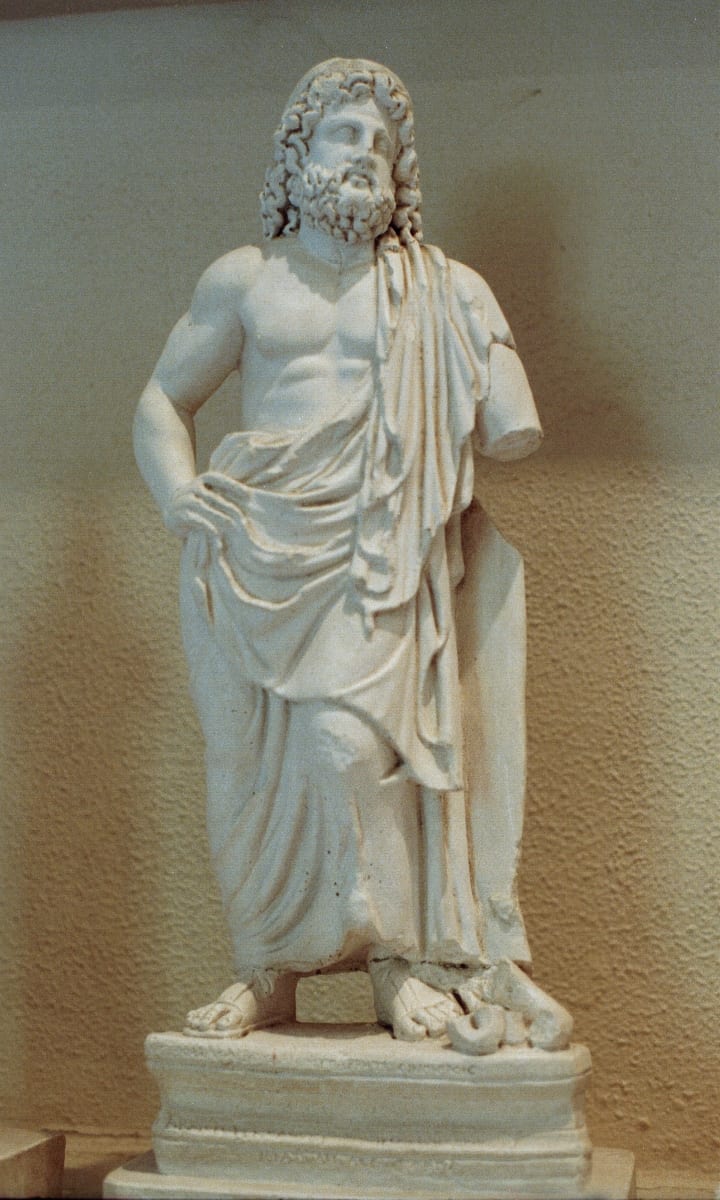
The Greek god Asclepius (son of Apollo, deified physician) is depicted with a rod around which a serpent coils: the rod of Asclepius, which has been the symbol of medicine continuously since at least the 5th century BCE. The serpent's connection to healing in antiquity drew on its most prominent biological characteristic: the shedding of skin. A creature that sloughs its old body and emerges renewed was understood as embodying regeneration. Asclepius's sanctuary at Epidaurus (c. 4th century BCE) kept live serpents as sacred animals; patients slept in the sanctuary seeking healing dreams (incubation). Pausanias's Description of Greece (2nd century CE) documents the practice in detail.
The Egyptian ibis carried healing associations through Thoth: the god of writing, knowledge, and medicine, depicted with an ibis head or as an ibis. Thoth was the divine physician: the Ebers Papyrus (c. 1550 BCE), the most complete surviving Egyptian medical text, was understood to derive from divine wisdom, and Thoth was its patron. The ibis's association with Thoth and medicine persisted through the Ptolemaic period and into Greco-Roman religious syncretism.
The Hindu Dhanvantari, physician of the gods, depicted emerging from the churning of the cosmic ocean holding a pot of amrita (nectar of immortality), is the patron deity of Ayurvedic medicine. His iconographic attributes include the conch shell, the sudarshana chakra, and the amrita pot; his animal connections run through the ocean-churning mythology in the Bhagavata Purana.
The Hebrew Bible's Nehushtan episode (Numbers 21:8–9) is structurally parallel to the Asclepian tradition: Moses makes a bronze serpent, sets it on a pole, and those who look at it are healed of snakebite. The theological complexity (a bronze idol used as a healing instrument, eventually destroyed by King Hezekiah in 2 Kings 18:4 as idolatrous) is part of what makes it one of the more unusual healing narratives in the text.
The dolphin and the bear also carry documented healing associations: the dolphin in Greco-Roman tradition through Apollo (god of both healing and music; the dolphin as his sacred animal at Delphi), and the bear through the Norse and Ainu traditions where bear fat and bear medicine have specific healing applications. These are documented in the individual animal entries below.
Thematic list
Animals That Symbolize Healing
Symbolism only. Nothing on this page is medical advice.
Animal-healing symbolism has its clearest primary-source anchors in the Greek serpent of Asclepius (still on the WHO logo), the Egyptian ibis of Thoth associated with writing and medicine, the Hindu Dhanvantari (depicted with amrita), and the snake in Numbers 21:8–9. For medical concerns, see a licensed physician.
Animals in this list
Snake spirit animal meaning: transformation, rebirth and healing. Traced from the modern transformation-and-rebirth reading back through Ted Andrews's Animal Speak to the serpent in Genesis 3, the Greek Asclepius rod, Indian Nāga and the Buddhist Mucalinda, and Mesoamerican Quetzalcóatl.
Dolphin spirit animal meaning: joy, play and intelligence. Traced from the modern joy-and-intelligence reading back through Ted Andrews's Animal Speak to the Homeric Hymn to Apollo at Delphi, Arion's rescue by a dolphin in Herodotus, the Minoan Knossos dolphin fresco, and the Amazonian boto encantado tradition.
Butterfly spirit animal meaning: transformation, rebirth and soul. From the modern pop-concept back to the Greek psyche, the Mexica goddess Itzpapalotl, the Zhuangzi butterfly dream, the Japanese chō, and Ted Andrews's 1993 synthesis.
Horse spirit animal meaning: freedom, power and speed. Traced from the modern freedom-and-power reading back through Ted Andrews's Animal Speak to the Vedic Aśvamedha, the Greek Pegasus, the Welsh Rhiannon of the Mabinogion, the Gallo-Roman Epona, and the Plains horse cultures that began with the 1680 Pueblo Revolt.
Bear spirit animal meaning: strength, protection and solitude. Traced from the modern strength-protector reading back through Ted Andrews's Animal Speak to Finno-Ugric bear ceremonialism, the Ainu iyomante, the Greek Brauron arkteia, and Anglo-Saxon kenning tradition.
Owl spirit animal meaning: wisdom, intuition and insight. Traced from the modern wisdom-and-intuition reading back through Ted Andrews's Animal Speak to Athena's Little Owl on the Athenian tetradrachm, the Roman strix, Lakshmi's vahana uluka, and Japanese fukurō folklore.
Rabbit spirit animal meaning: fertility, intuition and cleverness. Traced from the modern fertility-and-timidity reading back through Ted Andrews's Animal Speak to the Mesoamerican Four Hundred Rabbits (Centzon Tōtōchtin), the Chinese moon-hare and Japanese Inaba hare, and the African-rooted Br'er Rabbit trickster.