Spirit Animal
Kangaroo Spirit Animal
Kangaroo spirit animal meaning: forward movement, balance and maternal carrying. Traced to Aboriginal Australian Dreamtime narratives documented by T.G.H. Strehlow, W.E.H. Stanner, and contemporary Aboriginal scholars, plus James Cook's 1770 first European encounter and the 1908 Australian Coat of Arms.
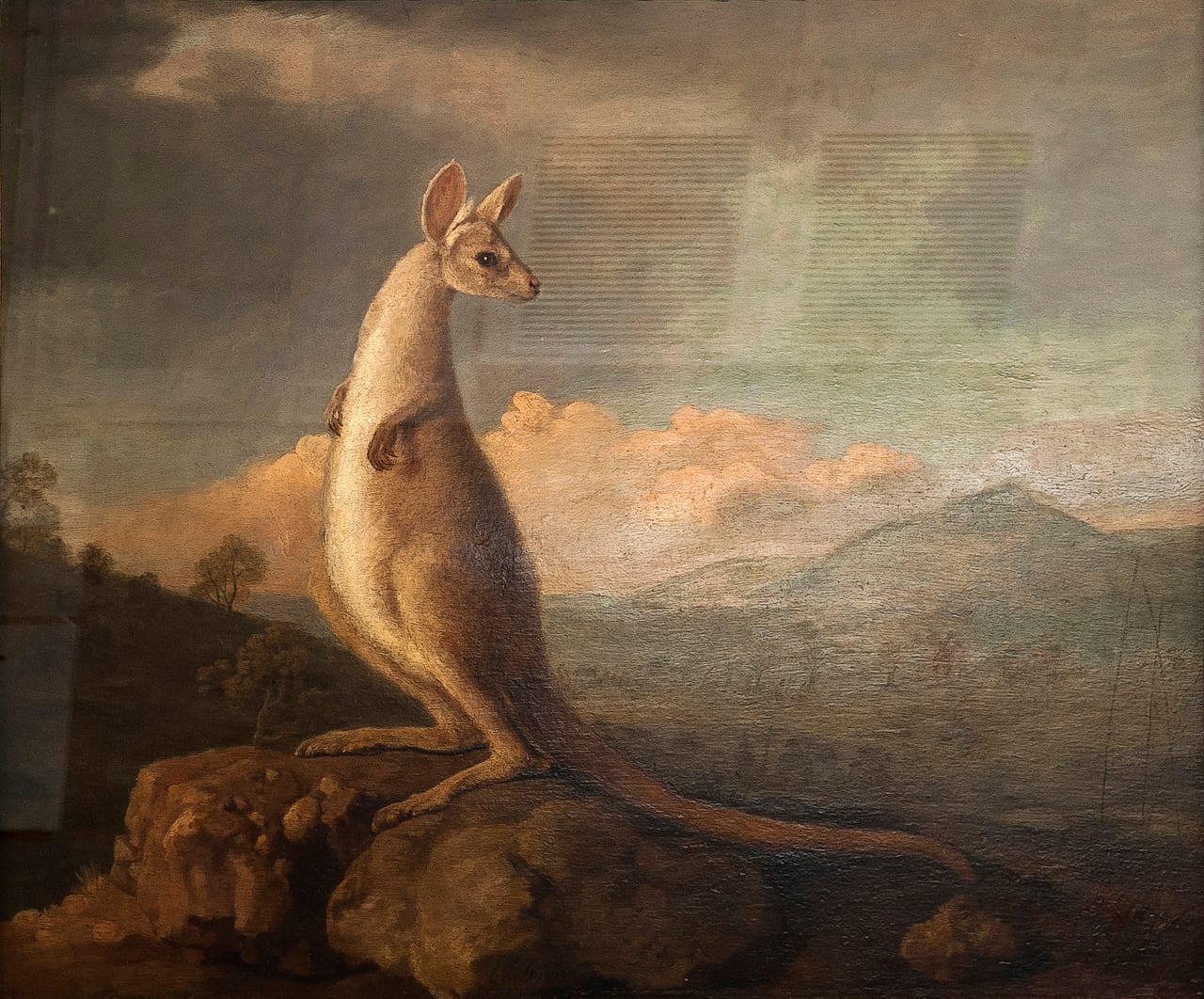
In modern American pop-spiritual usage, the kangaroo stands for forward movement (the animal cannot jump backward), balance, and the careful carrying of young. That reading comes through Ted Andrews's Animal Speak (Llewellyn, 1993). The deepest pre-modern tradition is Aboriginal Australian. Kangaroo Dreaming narratives are documented across many language groups (Arrernte, Yolngu, Tiwi, and dozens of others) in T.G.H. Strehlow's Songs of Central Australia (Angus & Robertson, 1971), W.E.H. Stanner's White Man Got No Dreaming (ANU Press, 1979), and contemporary Aboriginal scholars. James Cook's journal of April 1770 (published 1773) records the first European encounter. The kangaroo appears on the 1908 Australian Commonwealth Coat of Arms.
Aboriginal Australian spiritual traditions are among the oldest continuously-practiced human-animal spiritual traditions on earth. Current archaeological and genetic evidence places the continuous Aboriginal presence in Australia at roughly 60,000 years. That continuity gives kangaroo Dreaming narratives a depth of time that almost no other living tradition can match.
Three specific threads
The Dreaming. T.G.H. Strehlow’s Songs of Central Australia (1971) documents Arrernte kangaroo-ancestor narratives recorded from named elders 1930s–60s. W.E.H. Stanner’s White Man Got No Dreaming (ANU Press, 1979) treats the broader framework. Bill Neidjie’s Story About Feeling (Magabala Books, 1989) and Deborah Bird Rose’s Dingo Makes Us Human (Cambridge, 1992) are essential contemporary scholarship. Each language group’s kangaroo tradition is specific.
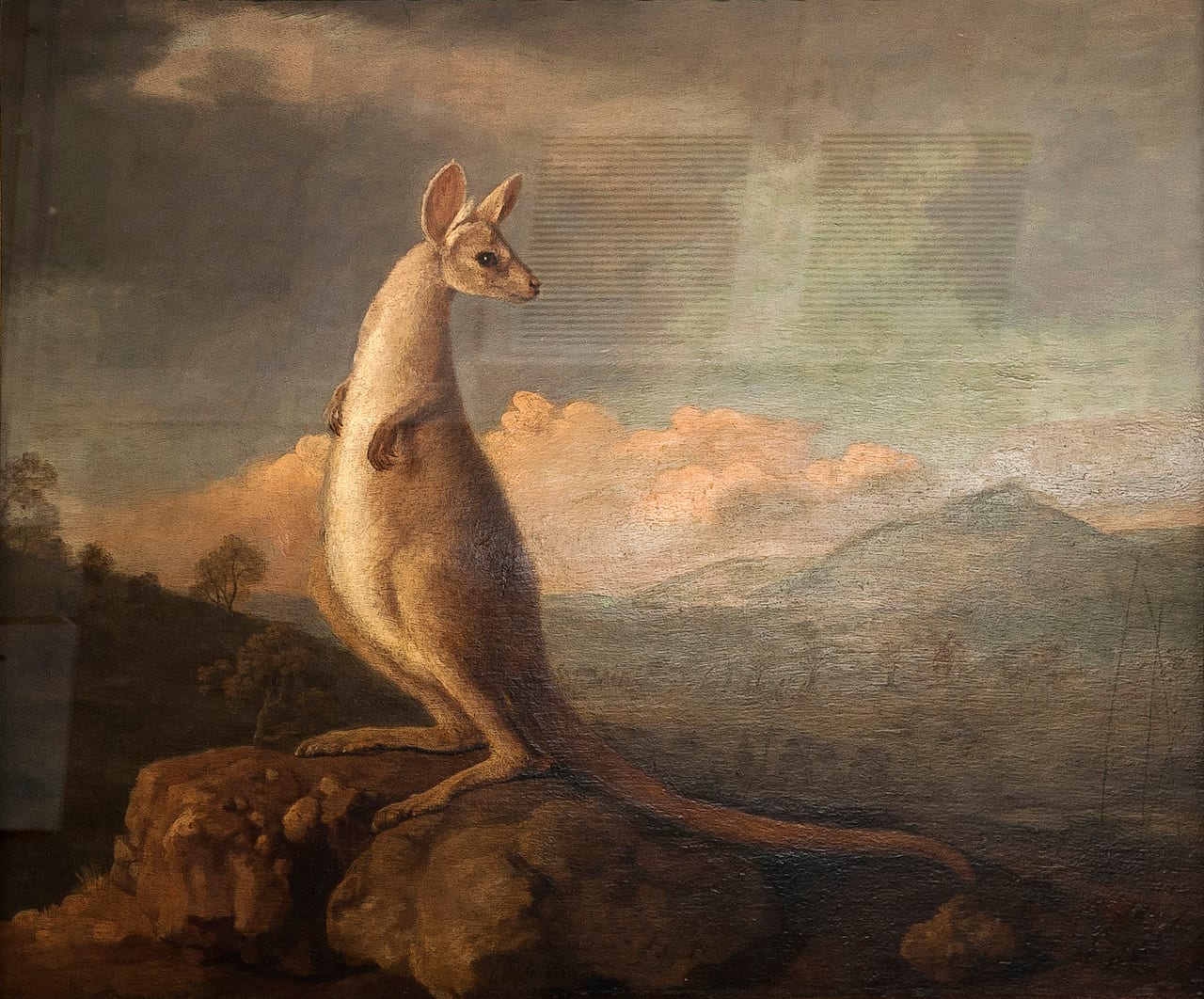
Cook 1770. James Cook’s Journal entry for June 22, 1770, records the first sustained European description of the kangaroo at the Endeavour River. The word is Guugu Yimithirr.
The Coat of Arms. Kangaroo and emu, adopted 1908. Standard civic reading: neither can move backward. The Qantas flying-kangaroo livery dates to 1944.
Andrews 1993
Forward-movement, balance, maternal carrying. Real observations, civic-adjacent reading. The specific Aboriginal Dreaming narratives are absent.
Across traditions
Aboriginal Australian (Arrernte, Yolngu, and specific Dreaming narratives)
Kangaroo Dreaming narratives appear across many Aboriginal Australian language groups. T.G.H. Strehlow's Songs of Central Australia (Angus & Robertson, 1971) documents the Arrernte Malbunka (kangaroo-ancestor) narratives from central Australia, recorded from named Arrernte elders in the 1930s–1960s. W.E.H. Stanner's White Man Got No Dreaming (ANU Press, 1979) treats the broader Dreaming framework.
Contemporary Aboriginal-authored scholarship (Deborah Bird Rose, Marcia Langton, Bill Neidjie's Story About Feeling) extends the documentation. Each language group's kangaroo tradition is specific; flattening them into a generic 'Aboriginal kangaroo symbolism' loses the distinctions that make each tradition meaningful.
- PRIMARY T.G.H. Strehlow, Songs of Central Australia . Angus & Robertson, 1971.
- PEER-REVIEWED W.E.H. Stanner, White Man Got No Dreaming . ANU Press, 1979.
- PRIMARY Bill Neidjie, Story About Feeling . Magabala Books, 1989.
- PEER-REVIEWED Deborah Bird Rose, Dingo Makes Us Human . Cambridge University Press, 1992.
European contact (James Cook, 1770)
James Cook's Journal of the HMS Endeavour voyage, entry for June 22, 1770, records the first sustained European description of the kangaroo, observed at the Endeavour River in north Queensland. Joseph Banks's parallel journal and Sydney Parkinson's sketch provide corroborating observations. The word 'kangaroo' is a Guugu Yimithirr word for a specific large macropod species (later confirmed by John Haviland's 1970s linguistic fieldwork), subsequently generalized in English for the whole family Macropodidae.
- PRIMARY James Cook, Journal of HMS Endeavour voyage (1768–71) . Beaglehole ed., Cambridge University Press / Hakluyt Society, 1955.
- PRIMARY Joseph Banks, Endeavour Journal . Beaglehole ed., Public Library of NSW, 1962.
- PEER-REVIEWED John Haviland, Guugu Yimithirr linguistic work (1970s)
Australian national symbol (1908 Commonwealth Coat of Arms)
The kangaroo and the emu together support the Australian Commonwealth Coat of Arms, adopted September 19, 1908 (redesigned 1912). The choice is sometimes said to reflect the animals' inability to move backward, symbolizing a nation that only moves forward; the official 1908 documentation does not confirm this popular etymology, but the 'cannot move backward' framing has become the standard Australian civic reading.
The kangaroo appears on the Australian 50-cent coin, on the Royal Australian Air Force roundel, and on Qantas aircraft livery (the 'flying kangaroo,' first introduced 1944). The image is one of the most-recognized national emblems in the Southern Hemisphere.
Ted Andrews (1993)
Andrews's 1993 kangaroo is the forward-movement-balance-maternal-carrying figure drawn from the animal's famous biology and from the Australian civic reading, softened for personal-spirit use. Specific Aboriginal Dreaming narratives are absent.
- REFERENCE Ted Andrews, Animal Speak . Llewellyn, September 1993.
Working with the Kangaroo
If you want a regular practice rather than a one-time read, an oracle deck is the standard tool: you draw a card and sit with whatever animal comes up. Our ranked guide to spirit animal oracle decks compares the field.
Frequently asked
- What does a kangaroo symbolize spiritually?
- In modern pop usage, forward movement, balance, and maternal carrying. The deepest pre-modern tradition is Aboriginal Australian. Kangaroo Dreaming narratives appear across many language groups (Arrernte, Yolngu, Tiwi, and others), documented in T.G.H. Strehlow's Songs of Central Australia (1971), W.E.H. Stanner's White Man Got No Dreaming (1979), and contemporary Aboriginal scholarship. Aboriginal traditions are among the oldest continuously-practiced human-animal spiritual traditions on earth. The kangaroo appears on the 1908 Australian Commonwealth Coat of Arms.
- Why is the kangaroo on the Australian Coat of Arms?
- The kangaroo and the emu together support the Australian Commonwealth Coat of Arms, adopted September 19, 1908 (redesigned 1912). The popular etymology says the two animals were chosen because they cannot move backward, symbolizing national forward-progress. The 1908 official documentation does not confirm this framing but it has become the standard Australian civic reading. The kangaroo also appears on the 50-cent coin, the RAAF roundel, and Qantas aircraft (the 'flying kangaroo,' 1944).
- Where does the word 'kangaroo' come from?
- From Guugu Yimithirr, the Aboriginal language of the area around what is now Cooktown, Queensland, where James Cook's Endeavour grounded for seven weeks in 1770. The word refers to a specific large macropod species in Guugu Yimithirr; subsequent English generalized it to the whole family Macropodidae. John Haviland's 1970s linguistic fieldwork with surviving Guugu Yimithirr speakers confirmed the derivation.
Sources
- PRIMARY T.G.H. Strehlow, Songs of Central Australia . Angus & Robertson, 1971.
- PEER-REVIEWED W.E.H. Stanner, White Man Got No Dreaming . ANU Press, 1979.
- PRIMARY Bill Neidjie, Story About Feeling . Magabala Books, 1989.
- PEER-REVIEWED Deborah Bird Rose, Dingo Makes Us Human . Cambridge University Press, 1992.
- PRIMARY James Cook, Journal of HMS Endeavour voyage . Beaglehole ed., Cambridge / Hakluyt, 1955.
- PRIMARY Joseph Banks, Endeavour Journal . Beaglehole ed., Public Library of NSW, 1962.
- REFERENCE Australian Commonwealth Coat of Arms (1908)
- REFERENCE Ted Andrews, Animal Speak . Llewellyn, September 1993.