Spirit Animal
Ladybug Spirit Animal
Ladybug spirit animal meaning: good luck, wish-granting and Marian blessing. Traced to medieval European Marian 'Our Lady's Beetle' etymology, Turkish uğur böceği (luck-beetle), the 'Ladybug, ladybug, fly away home' nursery rhyme, and broader agricultural-beneficial-insect folklore.
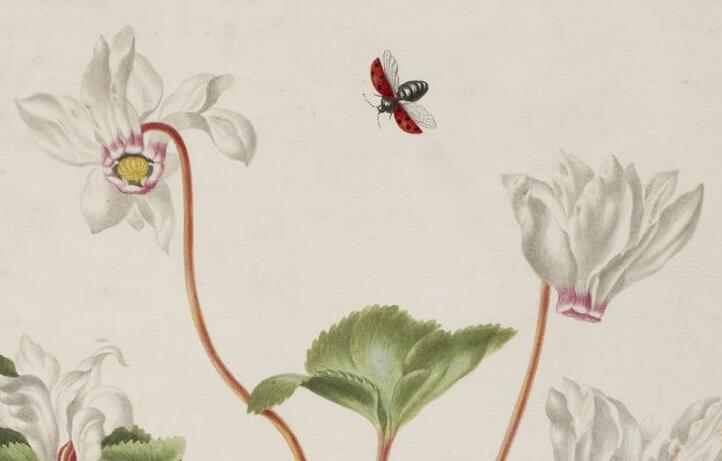
In modern pop-spiritual usage, the ladybug stands for good luck, wishes coming true, and small domestic blessing. That reading draws from multiple European folk layers. The English name 'ladybug' (and the German Marienkäfer, French bête à bon Dieu, Spanish mariquita) all descend from medieval Christian tradition associating the beetle with the Virgin Mary; the seven-spotted ladybug (Coccinella septempunctata) was said to represent the Seven Sorrows or Seven Joys of Mary. Turkish uğur böceği means 'luck-beetle.' The 'Ladybug, ladybug, fly away home' nursery rhyme, recorded by Iona and Peter Opie's Oxford Dictionary of Nursery Rhymes (1951), preserves an older folk invocation.
The ladybug’s deepest documented symbolic tradition is medieval European Christian, and the English word itself carries the evidence: “lady” is a contraction of “Our Lady,” the Virgin Mary. The ladybug was the farmer’s prayer made insect, an invocation for protection of crops from aphids, associated with the maternal goddess figure of medieval Christianity.
Our Lady’s Beetle
The connection between the ladybug and the Virgin Mary runs across European languages in parallel, suggesting an independent convergence rather than a single source. In German it is Marienkäfer (Mary’s beetle). In French, bête à bon Dieu (the creature of the good God). In Spanish, mariquita (Little Mary). In Dutch, lieveheersbeestje (the dear-Lord’s little creature).
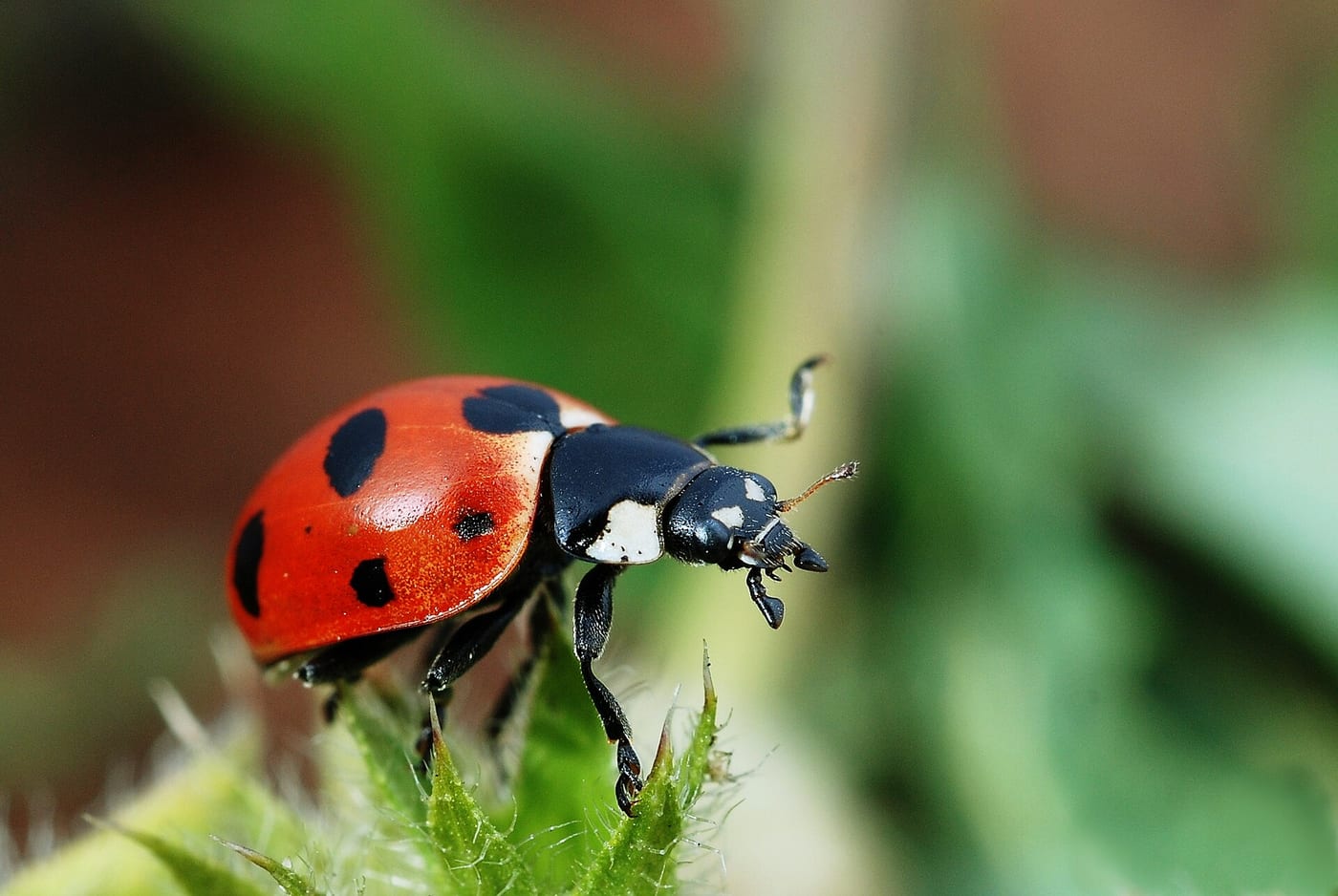
The seven spots of the seven-spotted ladybug (the most common European species, Coccinella septempunctata) were read as the Seven Sorrows or the Seven Joys of Mary, depending on the tradition. The red elytra (the wing-covers) were understood as her red cloak. The medieval farmer who found a ladybug in the fields was finding Mary’s own creature, associated with the Lady’s protection of the harvest from the aphids that ladybugs eat.
The nursery rhyme
“Ladybug, ladybug, fly away home / your house is on fire and your children are gone” is documented from at least the late 18th century in English. Iona and Peter Opie’s The Oxford Dictionary of Nursery Rhymes (1997) traces its history. The rhyme’s specific content (the burning house, the endangered children) may reference hop-field harvesting practice in Kent, where hop-vines were burned after harvest and farm workers recited the verse to warn any resident ladybugs before the burning began. Other interpretations exist; the Opies document the competing hypotheses.
Turkish uğur böceği
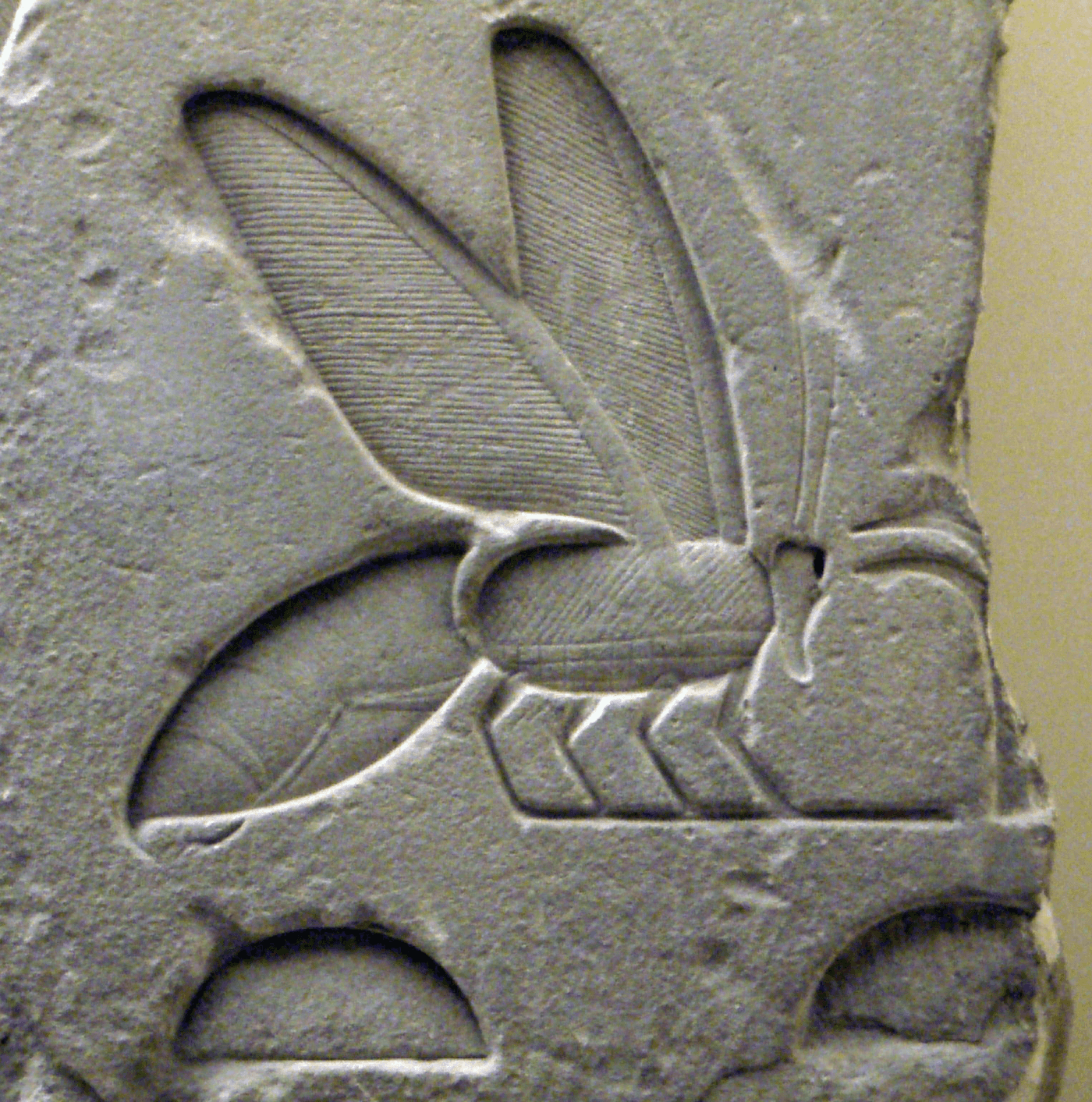
The Turkish name for the ladybug, uğur böceği (“luck-insect” or “fortune-insect”) shows a non-Marian parallel luck-insect tradition running alongside the Western European Marian one. The luck association appears across multiple European and Near Eastern traditions independently. The ladybug’s actual ecological benefit (eating aphids, protecting plants) gives the luck attribution an observable biological foundation.
Andrews 1993
In Animal Speak, Andrews’s ladybug reads good luck, wishes granted, and the fulfillment of desires. This is an honest synthesis of the Marian-luck tradition and the wish-fulfillment folklore that has attached to the ladybug across centuries. Not ancient in any pre-Christian sense, but genuinely documented in multiple independent European and non-European traditions.
Across traditions
Medieval European (Our Lady's Beetle)
The English 'ladybug' (American) / 'ladybird' (British), German Marienkäfer ('Mary's beetle'), French bête à bon Dieu ('Good Lord's beast'), Spanish mariquita (diminutive of María), and Italian coccinella (with Marian-associated regional variants) all descend from medieval Christian tradition associating the seven-spotted ladybug (Coccinella septempunctata) with the Virgin Mary. The seven black spots were said to represent the Seven Sorrows or Seven Joys of Mary; the red elytra represented her cloak. Medieval farmers invoked Mary's protection against crop-pests through the ladybug, which preys on aphids.
The Oxford English Dictionary records 'ladybird' in English from 1674. Iona and Peter Opie's The Oxford Dictionary of Nursery Rhymes (Oxford University Press, 1951, revised 1997) treats the broader folk-inheritance.
- REFERENCE Oxford English Dictionary, 'ladybird' / 'ladybug'
- PEER-REVIEWED Iona and Peter Opie, The Oxford Dictionary of Nursery Rhymes . Oxford University Press, revised 1997.
The 'Ladybug, ladybug, fly away home' rhyme
The rhyme 'Ladybug, ladybug, fly away home / Your house is on fire and your children will burn' is recorded in English from at least the late 18th century; Opie's Oxford Dictionary of Nursery Rhymes collects the variants. The rhyme is sometimes interpreted as preserving an earlier folk-invocation associated with the burning of hop-vines after harvest (ladybugs overwintering in the vines would need to fly away); other scholars connect it to more ominous medieval associations.
- PEER-REVIEWED Iona and Peter Opie, Oxford Dictionary of Nursery Rhymes . Oxford University Press, 1997.
- PRIMARY James Orchard Halliwell-Phillipps, The Nursery Rhymes of England . Percy Society, 1842.
Turkish (uğur böceği, luck-beetle)
Turkish uğur böceği ('luck-beetle') preserves a non-Marian parallel folk-tradition of the ladybug as a luck-omen. Ziyaeddin Fahri Fındıkoğlu's 20th-century Turkish-folklore work documents regional variants. The Turkish and Balkan traditions are distinct from the Western European Marian strand.
- PEER-REVIEWED Ziyaeddin Fahri Fındıkoğlu, Turkish folklore collected works . Türk Tarih Kurumu, various vols., 1940s–70s.
Ted Andrews (1993)
Andrews's 1993 ladybug is the good-luck-wishes-granted figure drawing from the broader European folk-luck tradition, softened for personal-spirit use. The specific medieval Marian etymology is acknowledged.
- REFERENCE Ted Andrews, Animal Speak . Llewellyn, September 1993.
Working with the Ladybug
If you want a regular practice rather than a one-time read, an oracle deck is the standard tool: you draw a card and sit with whatever animal comes up. Our ranked guide to spirit animal oracle decks compares the field.
Frequently asked
- What does a ladybug symbolize spiritually?
- In modern pop usage, good luck, wishes coming true, and small domestic blessing. The tradition is primarily medieval European Christian: 'ladybug' and its European-language equivalents ('Marienkäfer,' 'bête à bon Dieu,' 'mariquita') descend from Marian association with the seven-spotted ladybug, whose spots were said to represent Mary's Seven Sorrows or Joys. Turkish uğur böceği ('luck-beetle') preserves a parallel non-Marian folk-tradition. The 'Ladybug, ladybug, fly away home' nursery rhyme is recorded from at least the late 18th century.
- Why are they called ladybugs?
- Because of medieval Christian tradition associating the seven-spotted ladybug (Coccinella septempunctata) with the Virgin Mary. The English 'ladybird' / 'ladybug,' German Marienkäfer ('Mary's beetle'), French bête à bon Dieu ('Good Lord's beast'), and Spanish mariquita (diminutive of María) all share this etymology. The seven black spots were said to represent Mary's Seven Sorrows or Seven Joys; medieval farmers invoked her protection against crop-pests through the ladybug, which preys on aphids.
- What is the origin of the 'Ladybug fly away home' rhyme?
- The rhyme is recorded in English from at least the late 18th century (James Orchard Halliwell-Phillipps's Nursery Rhymes of England, Percy Society, 1842). One common interpretation connects it to the burning of hop-vines after harvest, when ladybugs overwintering in the vines would need to fly away. Other scholars connect it to more ominous medieval associations. Iona and Peter Opie's Oxford Dictionary of Nursery Rhymes (revised 1997) collects the variants.
Sources
- REFERENCE Oxford English Dictionary, 'ladybird' / 'ladybug'
- PEER-REVIEWED Iona and Peter Opie, Oxford Dictionary of Nursery Rhymes . Oxford University Press, 1997.
- PRIMARY James Orchard Halliwell-Phillipps, The Nursery Rhymes of England . Percy Society, 1842.
- PEER-REVIEWED Ziyaeddin Fahri Fındıkoğlu, Turkish folklore works
- REFERENCE Ted Andrews, Animal Speak . Llewellyn, September 1993.