Mythical creatures, sourced
Mythical Creatures
Every tradition that has produced a mythological animal has left primary-source traces. Here is where to find them.
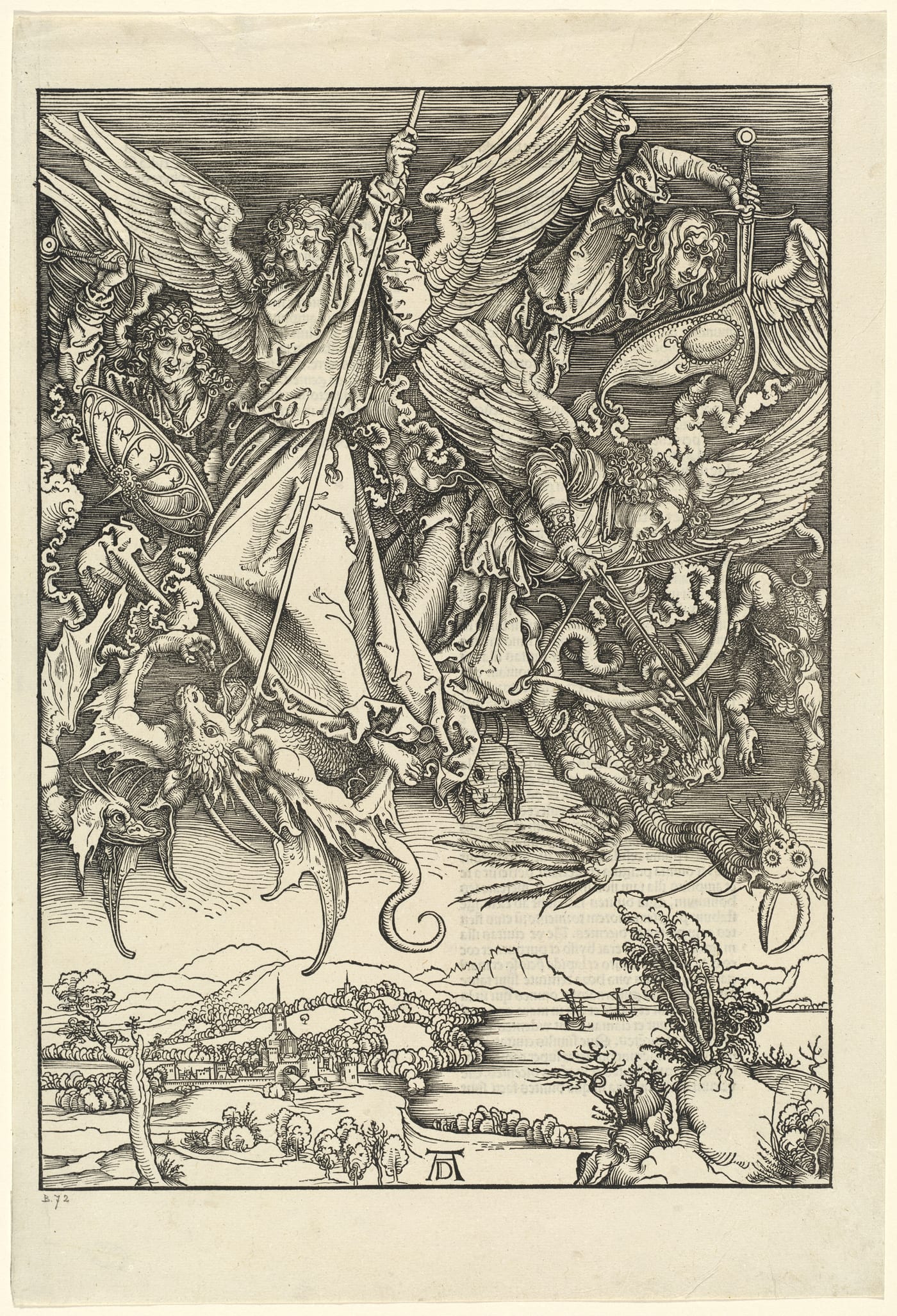
Mythical creatures are documented in primary texts that give them historical depth and specific meaning. The Japanese kitsune (fox spirit) appears in Toriyama Sekien's 1776 illustrated compendium and in the Nihon Shoki (720 CE). The Scottish kelpie is documented in J.F. Campbell's Popular Tales of the West Highlands (1860). The griffin appears in Herodotus 4.13 (5th century BCE) and Aeschylus's Prometheus Bound. The Thunderbird is documented in J.N.B. Hewitt's Iroquoian Cosmology (1903). Each creature carries specific cultural work in its tradition that is lost when it is flattened into a generic 'spirit animal' category.
Jorge Luis Borges published his Manual de zoología fantástica in 1957. It is still the best short comparative guide to mythological animals. Borges's method, take each creature seriously on its own terms, find the primary texts, note the variations, is exactly the approach this site tries to apply to real animals and their traditions. The mythical creatures below are treated the same way: find the earliest source, note what it actually says, mark where the popular image diverges from the documented tradition.
The line between "mythical" and "real" is not always clean. The griffin's eagle-and-lion body may trace back to Protoceratops fossil beds encountered by nomadic prospectors in Scythian territory, Adrienne Mayor's fossil-discovery hypothesis from The First Fossil Hunters (2000). The kelpie may be folk memory processing the real danger horses posed near Highland lochs and rivers. The dragon looks less like one invention than several independent ones, arrived at separately in different traditions. None of these creatures are simple inventions with no basis in anything: each is doing real cultural work in the tradition that produced it, which is why the primary sources below matter more than the pop-culture shorthand.
The creatures
- Kitsune. The Japanese fox spirit. Nine tails, shape-shifting, and the Fushimi Inari tradition. Documented in Nihon Shoki (720 CE) and Sekien (1776).
- Thunderbird. The storm-being of the Great Plains and Plateau. Haudenosaunee, Anishinaabe, and Lakota traditions. Hewitt (1903), Densmore (1918).
- Griffin. Eagle-head, lion-body. Classical Mediterranean: Herodotus 4.13, Aeschylus, Pliny. Adrienne Mayor's fossil-discovery hypothesis.
- Kelpie. The Scottish water-horse. J.F. Campbell's primary documentation. Why it always comes in black.
- Dragon. The Chinese lóng vs. the European drakōn. Two opposite traditions with one English name. Full spoke article in the dictionary.
- Phoenix. Egyptian Bennu, Ovidian firebird, Chinese fenghuang. Three distinct traditions. Full spoke article.
- Unicorn. The re'em → monokerōs → KJV "unicorn" translation chain. Ctesias, Physiologus, the Met Cloisters tapestries. Full spoke article.
One name on that list is doing double duty. The Chinese dragon (lóng) is a water-associated, auspicious creature bound up with sovereignty and fertility; the European dragon, descended from the Greek drakōn, is a hoarding, destructive force tied to chaos and evil in Christian tradition. English translation flattened both into a single word, which is one of the more consequential conflation errors in world mythology and the reason the dragon gets its own full spoke article rather than a shared entry here.
Sources
- REFERENCE Jorge Luis Borges and Margarita Guerrero, The Book of Imaginary Beings (Manual de zoología fantástica) . Originally 1957; expanded English edition trans. Norman Thomas di Giovanni, E.P. Dutton, 1969. The most literary and concise comparative guide to mythological creatures across traditions.
- PEER-REVIEWED Daniel Ogden, Dragons, Serpents, and Slayers in the Classical and Early Christian Worlds . Oxford University Press, 2013. Primary source-based treatment of drakōn in classical antiquity.
- PEER-REVIEWED Adrienne Mayor, The First Fossil Hunters: Paleontology in Greek and Roman Times . Princeton University Press, 2000. Argues that many classical mythological animals (griffins, giants) were inspired by fossil discoveries.
- PRIMARY Toriyama Sekien, Gazu Hyakki Yagyō (Illustrated Night Parade of One Hundred Demons) . 1776. The foundational illustrated yōkai taxonomy; kitsune and other supernatural animals documented with illustrations and commentary.