Mythical creatures
Kelpie: The Scottish Water-Horse
It appears as a black horse at the edge of a loch or river. If you mount it, it dives and drowns you. The kelpie's appeal is entirely its beauty, and that is the trap.
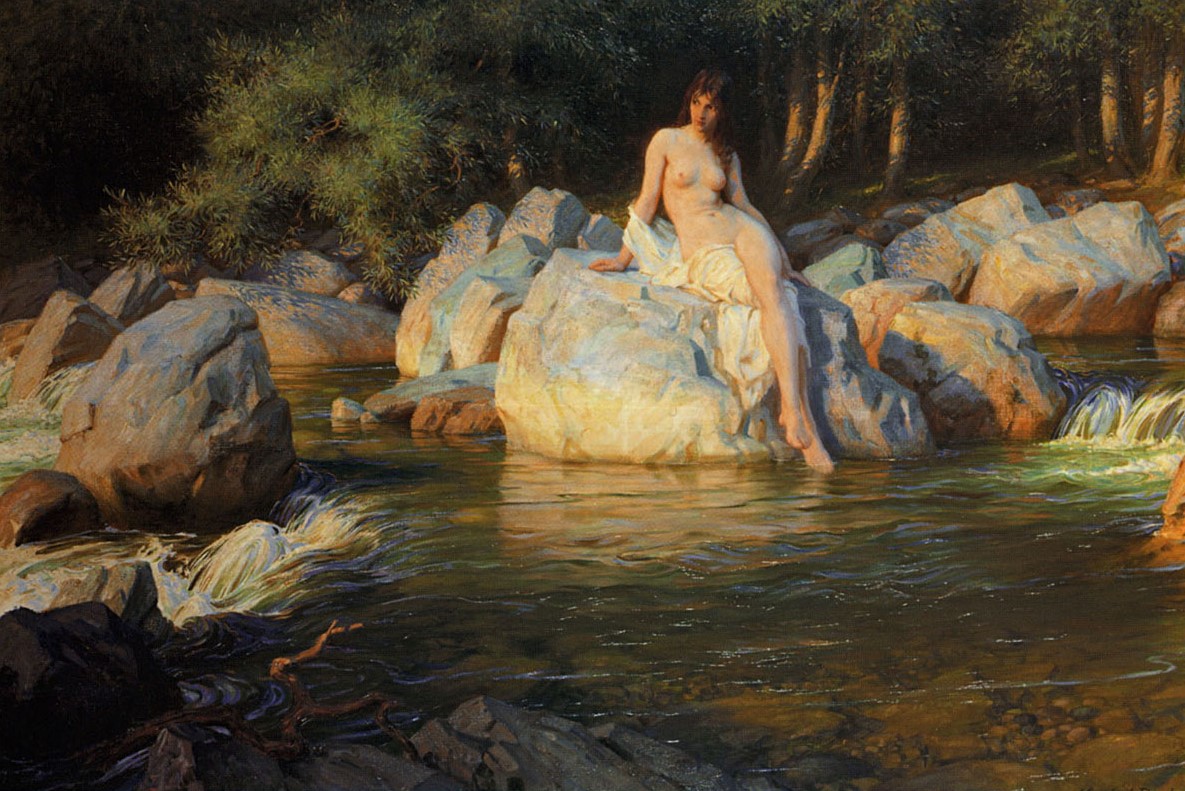
The kelpie is a shape-shifting predatory water-horse documented in Scottish Gaelic folk tradition by J.F. Campbell in Popular Tales of the West Highlands (1862) and John Gregorson Campbell in Superstitions of the Highlands and Islands of Scotland (1900). It appears as a horse, typically black and strikingly beautiful, at the edge of water. When a person mounts it, it dives into the water and drowns and devours its victim. The related each-uisge (water horse) is sometimes distinguished as a loch and sea entity; both are fundamentally predatory. Katherine Briggs's Encyclopedia of Fairies (1976) documents all major regional variants.
The kelpie is notable in the mythological-horse tradition for being unambiguously dangerous. There is no benevolent version. The horse that appears at the water's edge is not offering transportation; it is setting a trap using its own beauty as the lure. J.F. Campbell spent years traveling the Scottish Highlands and Islands recording oral literature from Gaelic-speaking informants; his 1860–62 collection is one of the great primary-source archives of Scottish folklore, and the kelpie narratives he documented are among its most consistent and geographically widespread entries.
J.F. Campbell's fieldwork and the primary documentation
John Francis Campbell (1822–1885) collected Popular Tales of the West Highlands between 1860 and 1862, working with informants across the Highlands and Islands. The collection (4 vols., Edmonston and Douglas) is the foundational primary source for Scottish Gaelic oral literature. Campbell was unusually rigorous for his era: he recorded where each story came from, who told it, and in what circumstances. His kelpie and each-uisge entries represent genuine oral-tradition documentation rather than literary reconstruction.
The core kelpie narrative structure, as Campbell documents it: a beautiful black horse appears near water. A traveler, drawn by the horse's quality and apparently calm temperament, mounts it. Immediately the horse plunges into the water. The rider cannot dismount, their hands stick to the horse's mane. The horse dives, drowning the rider, and then devours the body. In some variants, a young person who suspects the creature's nature tears off a finger or hand to escape; in others, the only escape is naming the creature, which breaks the spell. The black coloring itself holds remarkably steady across regional variants. Katherine Briggs's Encyclopedia of Fairies flags it as one of the kelpie's few genuinely reliable identifying features in a folk record that otherwise shifts a great deal from parish to parish.
Robert Kirk's earlier record
Robert Kirk (1644–1692) was a Scottish Episcopal minister who wrote The Secret Commonwealth of Elves, Fauns and Fairies around 1691 (first published 1815). Kirk was a native Gaelic speaker and his account of Highland supernatural beliefs is an earlier primary document than Campbell's fieldwork. He documents water-horse entities among the Highland supernatural folk without using the word "kelpie" consistently, but the entities he describes share the basic water-horse behavior pattern. Kirk died under mysterious circumstances in 1692, local tradition holds that he was taken by the fairies, which gives his document an additional layer of folklore significance.
The each-uisge distinction
John Gregorson Campbell's Superstitions of the Highlands and Islands of Scotland (1900) attempts to distinguish the each-uisge (water horse, Scottish Gaelic pronunciation approximately "ech-ooshkya") from the kelpie. In his taxonomy: the each-uisge inhabits salt water and freshwater lochs and is generally more dangerous than the river-haunting kelpie. The each-uisge can also take human form to seduce victims before revealing its nature. Both share the adhesive-back property (once you mount, you cannot dismount) and the drowning-and-devouring outcome. Katherine Briggs's Encyclopedia of Fairies (1976) documents all major regional variants of both entities across Scotland, noting that local folk taxonomy was not always consistent on the distinction.
The Celtic water-horse family
The kelpie belongs to a broadly distributed family of water-horse supernatural entities across the Celtic world. The Irish each uisce, the Welsh ceffyl dŵr, and the Manx cabbyl-ushtey share the same basic pattern: a beautiful horse near water, predatory intent, drowning outcome. Ireland also has the púca, a shape-shifting trickster that sometimes takes horse form and shares the kelpie's habit of luring people onto its back, though it ranges further from the water's edge and isn't confined to the strict drowning-and-devouring script the each uisce follows. The Scandinavian bäckahäst (stream horse) in Swedish folklore is a parallel development outside the Celtic region. The distribution suggests either a common ancient origin or an independently recurring mythological response to the danger of water for horse-riding people, rivers and lochs that look calm and safe are among the most dangerous hazards of pre-modern Highland travel.
Sources
- PRIMARY J.F. Campbell, Popular Tales of the West Highlands (Orally Collected), vol. 4 . Edmonston and Douglas, 1862. The foundational primary-source collection of Scottish Gaelic folk narrative, including the each-uisge (water-horse) and kelpie traditions from Campbell's fieldwork.
- PRIMARY Robert Kirk, The Secret Commonwealth of Elves, Fauns and Fairies . Written c. 1691, first published 1815 (ed. Andrew Lang, 1893). Kirk, a Scottish minister, documents Highland supernatural beliefs including water-horse entities.
- PRIMARY Alexander Carmichael, Carmina Gadelica, vol. 1 . T. and A. Constable, 1900. Carmichael's fieldwork corpus across the Scottish Gaelic world; includes references to each-uisge and supernatural horses.
- PRIMARY John Gregorson Campbell, Superstitions of the Highlands and Islands of Scotland . James MacLehose, 1900. Campbell (a different Campbell from J.F.) documents the each-uisge and kelpie traditions with regional variants.
- PRIMARY Donald Mackenzie, Scottish Folk-Lore and Folk Life . Blackie and Son, 1935. Regional kelpie traditions documented across lowland and highland Scotland.
- REFERENCE Katherine Briggs, An Encyclopedia of Fairies . Pantheon Books, 1976. The standard English-language reference for British and Irish supernatural beings, including the kelpie and each-uisge entries with full variant documentation.