Spirit Animal
Panda Spirit Animal
Panda spirit animal meaning: gentleness, peace and balance. An unusually honest treatment. The giant panda is barely attested in classical Chinese religious and literary sources, was 'discovered' by the West via Armand David in 1869, and became a global symbol only after Mao's 1950s–70s panda diplomacy and the WWF's 1961 adoption of the image.
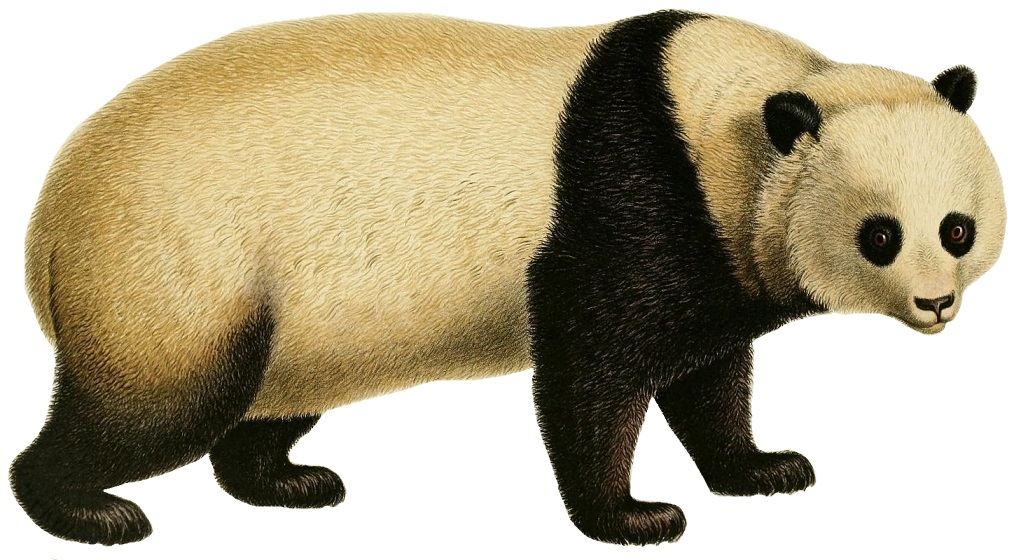
In modern pop-spiritual usage, the panda stands for gentleness, peace, balance (the yin-yang coloring reading), and slow careful living. That reading is almost entirely 20th-century and is not grounded in any deep ancient tradition. The honest facts: the giant panda (Ailuropoda melanoleuca) is barely attested in classical Chinese religious or literary sources before Armand David's 1869 'discovery' in Sichuan (Nouvelles Archives du Muséum, 1869). The 'bear-cat' (xiongmao, 熊貓) Chinese name is itself modern. The panda became a global symbol through Mao's panda diplomacy (1957–1982), the WWF's adoption of the image as its logo in 1961 (designer Sir Peter Scott), and the 1972 gift of Ling-Ling and Hsing-Hsing to the Smithsonian National Zoo following Nixon's China visit.
The giant panda is the clearest case of a “spiritual animal” with no deep ancient tradition. The animal is endemic to the Chinese montane bamboo forests of Sichuan, Shaanxi, and Gansu, and has been there for millions of years. Classical Chinese religious and literary sources, despite covering virtually every other endemic Chinese animal of cultural interest, pass over the panda in near-silence. The Shijing doesn’t mention it. The Shan Hai Jing doesn’t. The Confucian classics don’t. No imperial dragon-robe pairs the panda with the dragon the way the phoenix is paired; no canopic-jar-equivalent protects it the way the crane does in Chinese tomb art.
The modern iconic status of the panda is, in historical terms, very recent. And that is an interesting fact on its own.
The 1869 pivot
Armand David, a French Lazarist missionary and naturalist posted to Sichuan, obtained the first Western-science specimen of the giant panda from local hunters on March 11, 1869. He published the description in Nouvelles Archives du Muséum (Paris, 1869) as Ursus melanoleucus. Alphonse Milne-Edwards reclassified the species the following year. Before that moment, the panda was known to local Sichuan communities and was not an object of global cultural attention. After it, the panda progressively became one.
The “discovery” framing is a translation choice. Local Sichuan people had known the animal perfectly well. What David did was introduce it to Western-science taxonomic publication. Henry Nicholls’s The Way of the Panda (Pegasus, 2011) treats the 19th-century context in detail.

Mao, Nixon, and the WWF
Panda diplomacy began formally with Mao Zedong’s 1957 gift of a pair of pandas to the Soviet Union. The practice accelerated through the 1970s, most famously with the 1972 gift of Ling-Ling and Hsing-Hsing to the Smithsonian National Zoo in Washington, following Nixon’s February 1972 diplomatic opening to China. Post-1982, the Chinese state shifted from gifts to long-term loans with cub-repatriation clauses. Buckingham and Jepson’s 2013 article in Environment and History documents the shift.
The World Wildlife Fund adopted the panda as its international logo in 1961, the year of the organization’s founding. The designer was Sir Peter Scott, British ornithologist and WWF co-founder. The current refined design dates from 1986. The WWF logo, combined with Mao’s panda diplomacy, produced the modern global panda as the single most-recognizable conservation symbol on earth.
What the pop-spiritual panda is actually reading from
Ted Andrews’s 1993 Animal Speak panda is the gentleness-peace-balance figure, often paired with a yin-yang reading based on the black-and-white coloring. The reading has genuine emotional appeal and real behavioral grounding (the panda is slow, peaceful, bamboo-eating). It has no ancient textual tradition behind it. The yin-yang framing is a 20th-century Western interpretation rather than a Chinese classical one; classical yin-yang iconography uses the taijitu symbol (☯), not the panda.
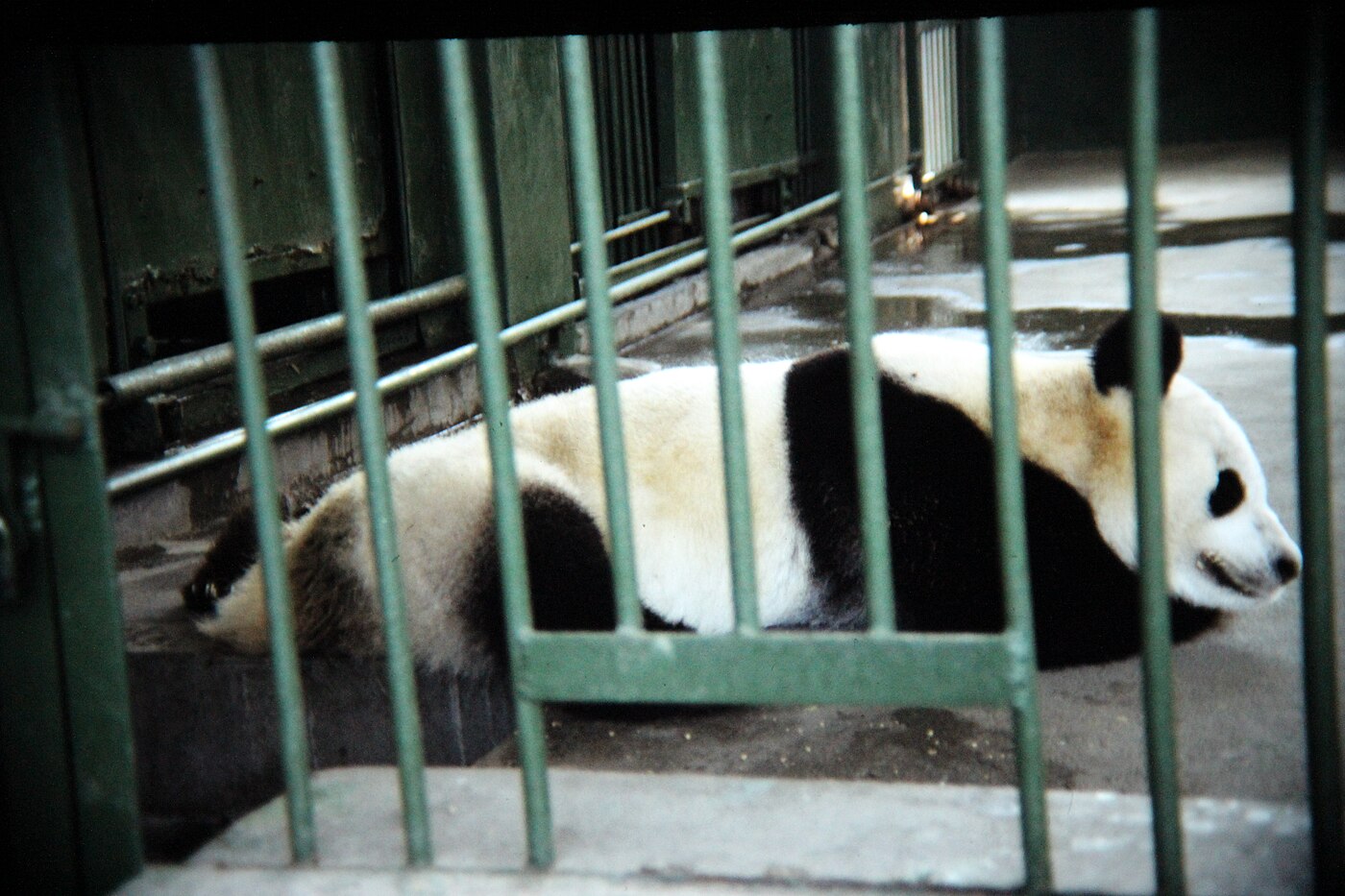
Why the modern story matters
Precisely because the modern panda tradition is 20th-century, naming that honestly is the right editorial move. Pretending an ancient tradition existed where none does would fail basic source integrity. The panda is a genuine modern symbol, and its recent history (Armand David 1869, WWF 1961, Ling-Ling 1972) is worth reading in its own terms.
Sometimes the honest answer is: the tradition is new. And the newness is part of the story.
Across traditions
Classical Chinese sources (the surprising near-absence)
The giant panda, despite its endemicity to China and its modern iconic status there, is barely attested in classical Chinese religious or literary sources. The Shijing (Book of Odes), the Shan Hai Jing (Classic of Mountains and Seas), the Confucian Classics, and the canonical Chinese dynastic histories contain no unambiguous panda references. Some scholars have proposed identifying classical terms like mo (貘, usually glossed as tapir or a related composite beast) with the panda, but this identification is contested and not consensus.
George Schaller's The Last Panda (University of Chicago Press, 1993) treats the historiographic problem directly: a species endemic to Chinese mountain forests for millions of years, culturally prominent for no ancient Chinese religious tradition. The Chinese name xiongmao (熊貓, "bear-cat") or da xiongmao (大熊貓, "giant bear-cat") is a 20th-century coinage. The modern animal's Chinese cultural status is entirely post-1869.
- PEER-REVIEWED George B. Schaller, The Last Panda . University of Chicago Press, 1993.
- PEER-REVIEWED Henry Nicholls, The Way of the Panda: The Curious History of China's Political Animal . Pegasus, 2011.
Armand David's 1869 'discovery'
Armand David (1826–1900), a French Lazarist missionary and naturalist posted to the Baoxing County region of Sichuan, obtained the first Western-science specimen of the giant panda from local hunters on March 11, 1869. David published the description in Nouvelles Archives du Muséum (Paris, 1869) as Ursus melanoleucus, a species of bear. The skin and skeleton arrived in Paris and were subsequently moved to the appropriate Linnean classification as Ailuropoda melanoleuca by Alphonse Milne-Edwards in 1870.
'Discovery' is a translation choice: local Sichuan communities knew the animal perfectly well. What David did was introduce it to Western-science taxonomic publication. Every subsequent Western cultural reception of the panda descends from this 1869 moment. The French colonial-missionary network that made David's specimen-collection possible is part of the story; Nicholls's The Way of the Panda (Pegasus, 2011) treats the context.
- PRIMARY Armand David, 'Ursus melanoleucus', Nouvelles Archives du Muséum d'Histoire Naturelle . Paris, vol. 5, 1869.
- PEER-REVIEWED Alphonse Milne-Edwards, reclassification as Ailuropoda melanoleuca . Comptes Rendus de l'Académie des Sciences, Paris, 1870.
- PEER-REVIEWED Henry Nicholls, The Way of the Panda . Pegasus, 2011.
Panda diplomacy (Mao, Nixon, and the WWF)
Panda diplomacy, the Chinese state practice of gifting or long-term-loaning pandas to foreign governments, began formally in 1957 with Mao Zedong's gift of a pair of pandas to the Soviet Union. The practice accelerated through the 1970s and 1980s. The most famous instance was the 1972 gift of Ling-Ling and Hsing-Hsing to the Smithsonian National Zoo in Washington, D.C., following Richard Nixon's diplomatic opening to China in February 1972. Falin Chen and Kathleen Buckingham's 2013 Diplomacy article documents the post-1982 shift to long-term loans with cub-repatriation clauses.
The WWF's 1961 adoption of the panda as its international logo, designed by the British ornithologist and conservation artist Sir Peter Scott, gave the animal its globally-recognized symbolic role. The logo was refined through several iterations and formally copyrighted by WWF; the current design dates from 1986. Together, Mao's diplomacy and the WWF's logo produced the modern global panda as the single most-recognizable conservation symbol on earth.
- REFERENCE WWF (World Wildlife Fund) logo adoption, 1961 (designer Sir Peter Scott)
- PEER-REVIEWED Kathleen Buckingham and Paul Jepson, 'Environmental Diplomacy and Its Historic Development: The Case of Panda Diplomacy' . Environment and History 19:1, 2013.
- PEER-REVIEWED Henry Nicholls, The Way of the Panda . Pegasus, 2011.
- REFERENCE National Zoo, Washington, D.C., Ling-Ling and Hsing-Hsing arrival (April 16, 1972)
Ted Andrews (1993) and the modern yin-yang reading
Andrews's 1993 Animal Speak post-dates the WWF adoption by three decades and the Ling-Ling gift by two. His panda is the gentleness-peace-balance figure, often coupled with a yin-yang reading based on the black-and-white coloration. The reading is genuine in its emotional appeal and in its basis in the animal's real behavior (slow, peaceful, bamboo-eating), but it has no ancient textual or religious tradition behind it. The yin-yang framing is a Western 20th-century interpretation rather than a Chinese classical one; classical yin-yang iconography uses the taijitu symbol, not the panda.
- REFERENCE Ted Andrews, Animal Speak . Llewellyn, September 1993.
Working with the Panda
If you want a regular practice rather than a one-time read, an oracle deck is the standard tool: you draw a card and sit with whatever animal comes up. Our ranked guide to spirit animal oracle decks compares the field.
Frequently asked
- Is the panda a Chinese spiritual symbol?
- In the modern sense, yes; in the classical or ancient sense, no. The giant panda is barely attested in classical Chinese religious or literary sources, and the Chinese name xiongmao ('bear-cat') is itself a 20th-century coinage. The modern symbolic status descends from Armand David's 1869 'discovery' for Western science, Mao Zedong's panda diplomacy beginning in 1957, and the WWF's 1961 adoption of the panda as its international logo (designer Sir Peter Scott). George Schaller's The Last Panda (University of Chicago Press, 1993) and Henry Nicholls's The Way of the Panda (Pegasus, 2011) treat the historiographic absence.
- Did ancient Chinese writers know about pandas?
- Possibly, but they did not write about them in any systematic way. The Shijing, Shan Hai Jing, Confucian Classics, and canonical Chinese dynastic histories contain no unambiguous panda references. Some scholars have proposed identifying classical terms like mo (貘) with the panda, but the identification is contested and not scholarly consensus. The Chinese-endemic species's absence from ancient Chinese religious tradition is a genuine historiographic puzzle, addressed most directly by George Schaller and Henry Nicholls.
- Who discovered the panda?
- For Western science, Armand David (1826–1900), a French Lazarist missionary and naturalist posted to Sichuan, obtained the first specimen on March 11, 1869. He published the description in Nouvelles Archives du Muséum (Paris, 1869) as Ursus melanoleucus. Alphonse Milne-Edwards reclassified the species as Ailuropoda melanoleuca in 1870. Local Sichuan communities, of course, knew the animal perfectly well before 1869; 'discovery' here means introduction to Western-science taxonomic publication.
- Why is the panda the WWF logo?
- The WWF (World Wildlife Fund) adopted the panda as its international logo in 1961, the year of the organization's founding. The designer was Sir Peter Scott, British ornithologist, conservation artist, and WWF co-founder. The current refined design dates from 1986. The panda was chosen partly for its aesthetic simplicity in black-and-white logo reproduction and partly for its symbolic resonance as an endangered large mammal. The WWF logo and Mao Zedong's contemporaneous panda diplomacy together produced the modern global panda as the single most-recognizable conservation symbol on earth.
Sources
- PRIMARY Armand David, Nouvelles Archives du Muséum d'Histoire Naturelle . Paris, vol. 5, 1869.
- PEER-REVIEWED Alphonse Milne-Edwards, Comptes Rendus de l'Académie des Sciences . Paris, 1870.
- PEER-REVIEWED George B. Schaller, The Last Panda . University of Chicago Press, 1993.
- PEER-REVIEWED Henry Nicholls, The Way of the Panda . Pegasus, 2011.
- PEER-REVIEWED Kathleen Buckingham and Paul Jepson, 'Environmental Diplomacy and Its Historic Development' . Environment and History 19:1, 2013.
- REFERENCE WWF logo adoption, 1961
- REFERENCE National Zoo, Ling-Ling and Hsing-Hsing (arrival April 16, 1972)
- REFERENCE Ted Andrews, Animal Speak . Llewellyn, September 1993.