Spirit Animal
Phoenix Spirit Animal
Phoenix spirit animal meaning: resurrection, renewal and transformation. Traced from the modern resurrection reading back through Ted Andrews's Animal Speak to the Egyptian Bennu of the Pyramid Texts, Herodotus 2.73, Ovid's Metamorphoses 15.391–407, the Chinese fenghuang, and 1 Clement 25's early Christian appropriation.
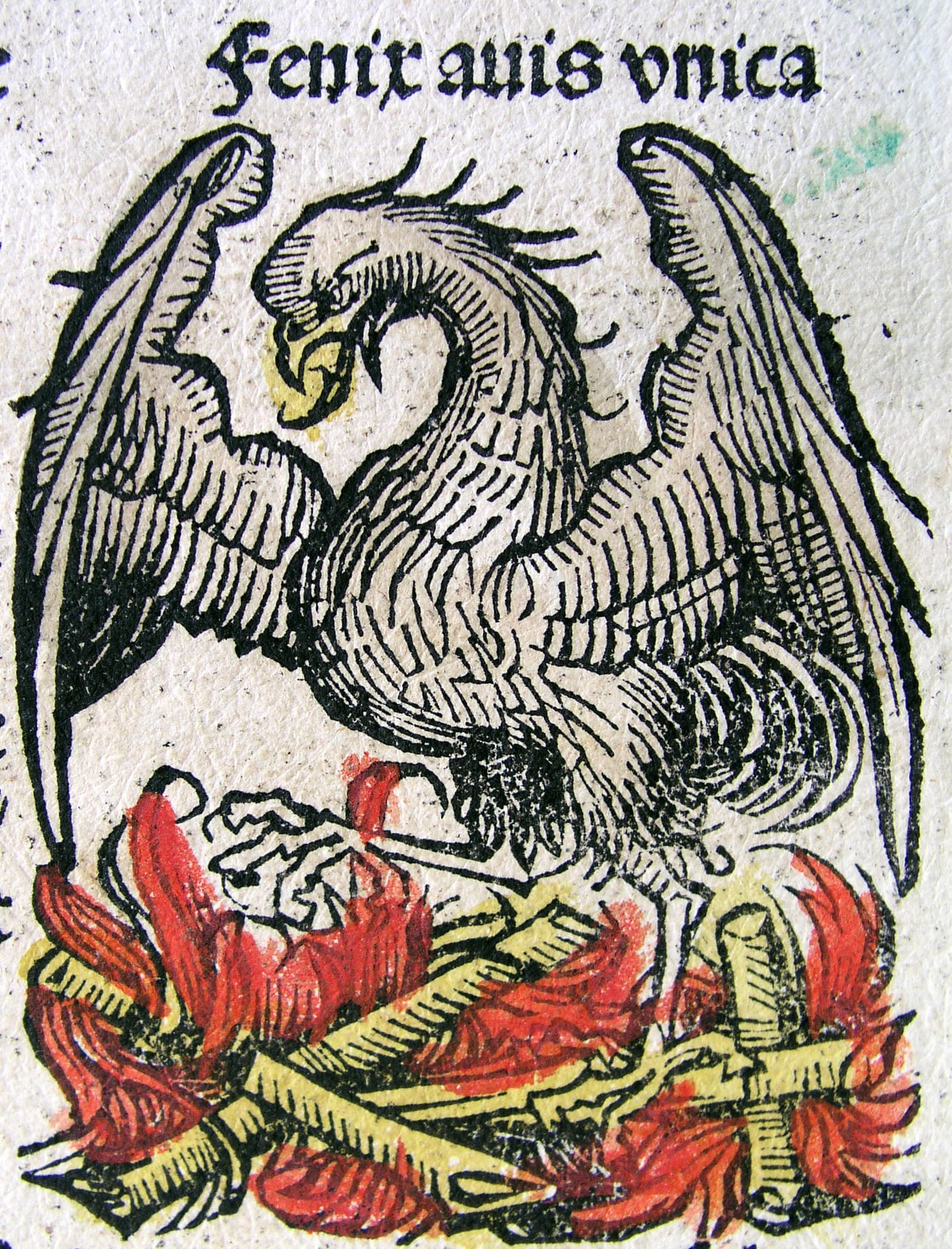
In modern American "spirit animal" usage, the phoenix stands for resurrection, renewal, and the self who rises from her own ashes. That reading comes through Ted Andrews's Animal Speak (Llewellyn, 1993) and the longer Western literary tradition that shaped it. The older traditions are specific. The Egyptian Bennu, the heron-bird of Heliopolis, appears in the Pyramid Texts (Utterance 600) and the Book of the Dead (Chapter 83, 'Transformation into a Bennu'). Herodotus 2.73 (c. 440 BCE) is the earliest Greek description of a bird returning to Heliopolis every 500 years. Ovid's Metamorphoses 15.391–407 canonized the self-immolation-and-rebirth version the West inherited. The Chinese fenghuang (鳳凰) is a completely separate bird, a feminine-consort symbol paired with the long dragon. And 1 Clement 25 (c. 96 CE) was the first Christian appropriation of the phoenix as a proof of resurrection.
Herodotus, Book 2, chapter 73, roughly 440 BCE. He has traveled to Heliopolis in the Egyptian delta. The priests tell him about a bird called the phoinix. It lives 500 years. Every 500 years, the old one dies, and the new one carries the body of the old one in a myrrh-egg back to the temple at Heliopolis and buries it there. Herodotus, who is careful with his sources throughout the Histories, writes that he did not see the bird and does not believe the more extraordinary claims but reports what the priests said.
Two and a half millennia later, almost every popular article about the phoenix begins, implicitly, with that Herodotus passage. The details have mutated. Ovid added the death-in-spice-nest-and-rebirth-from-ashes version. 1 Clement 25 made the bird a proof of Christian resurrection. Medieval bestiaries made it an allegory for Christ. Ted Andrews, in Animal Speak, made it a personal-spiritual keyword: rise from your ashes. But the chain is continuous, and Herodotus is where it starts for Western readers.
The four traditions
The Bennu. Egyptian. Not the firebird. A heron, sacred to Ra at Heliopolis, the bird that landed on the primordial mound at the moment of creation, documented in the Pyramid Texts (c. 2400 BCE). The deepest source, the one Herodotus translated into Greek as the phoinix. Book of the Dead Chapter 83 is the spell for the deceased to transform into a Bennu.

The Greek phoenix. Herodotus’s report, softened by Ovid into the death-in-spice-nest image, further elaborated by Pliny in the Natural History. Five-hundred-year cycle. Birth from the corpse of the parent. Return to Heliopolis. This is the firebird the West inherited.
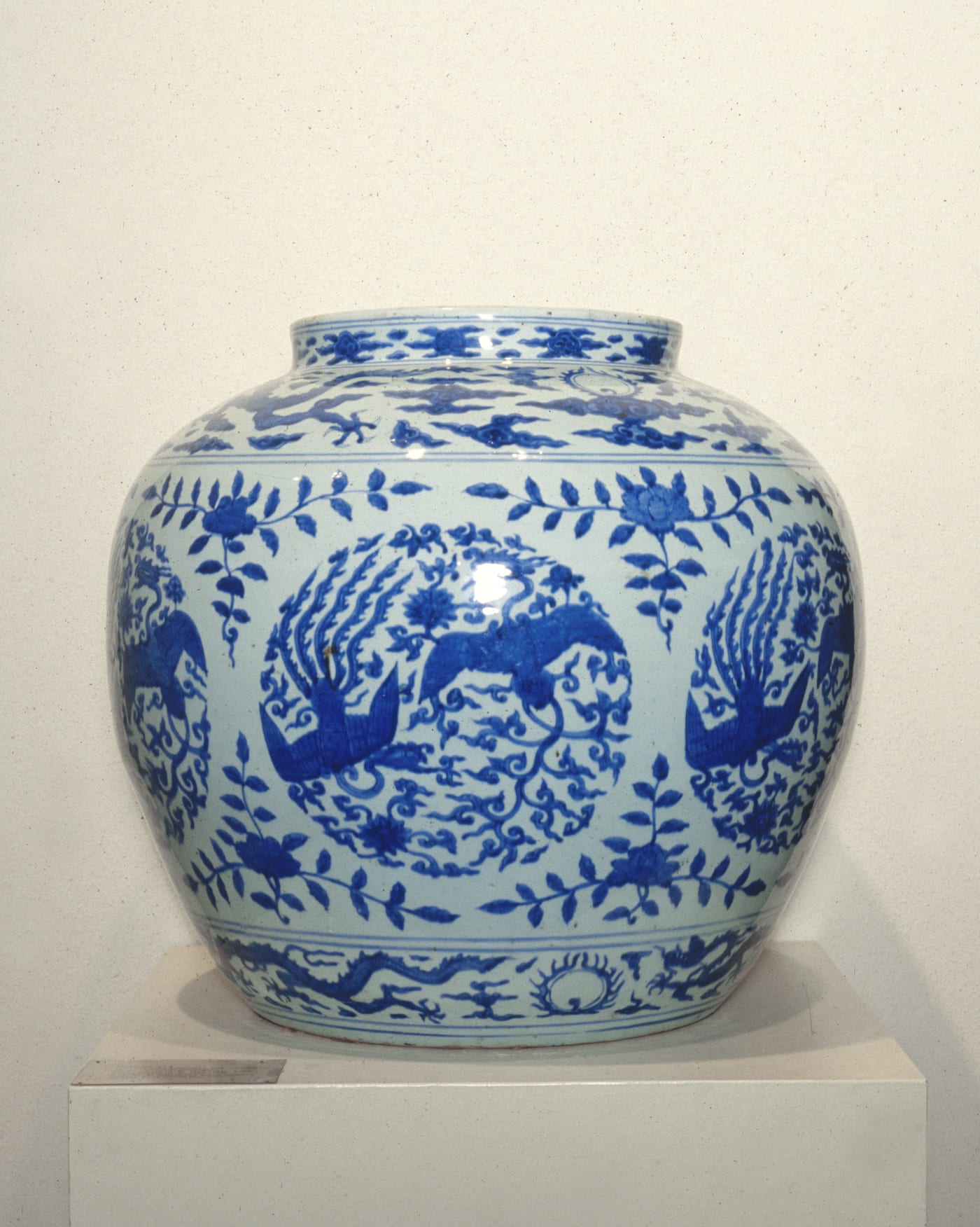
The fenghuang. Chinese. Completely different bird. Paired with the long dragon as empress-and-emperor symbolism. Described in the Shan Hai Jing and Han-era tomb murals. Five cardinal virtues. Qing-dynasty empress regalia. Modern Chinese wedding iconography. Does not die and return from ashes. Calling it “Chinese phoenix” in English is a lazy shorthand.
The Christian appropriation. 1 Clement 25, written by the bishop of Rome to the church at Corinth c. 96 CE, is the first Christian use of the phoenix as a proof of resurrection. The Physiologus and the medieval bestiaries extended the allegory. The Anglo-Saxon Phoenix poem in the Exeter Book is one of the finest medieval English treatments. Every subsequent Western “rise from the ashes” image runs through this channel.
The pop reading
Ted Andrews’s 1993 phoenix is the Ovid-to-Clement-to-bestiary figure compressed into a personal-spirit keywords: rebirth, resurrection, transformation. It is a real reading and a useful one. It is also the last stage in a two-thousand-year-old translation chain that started with a heron-bird in Heliopolis, passed through Herodotus, through Ovid, through the early Christians, through the medieval English poets, and through Victorian-era pop-occultism before landing in a Llewellyn paperback.
Knowing the chain is part of reading the bird.
Across traditions
Egyptian (Bennu, the heron of Heliopolis)
The Bennu (Egyptian bjn, "to rise, to shine") is the heron-bird sacred to Ra at Heliopolis. It appears in the Pyramid Texts (Utterance 600, c. 2400 BCE) as the bird that alighted on the primordial mound at the creation of the world. The Book of the Dead Chapter 83 is titled "Spell for taking the form of a Bennu-bird," used by the deceased to move through the afterlife as a Bennu.
The Bennu is associated with the sun, with the rising Nile flood, and with the 1,461-year Sothic cycle (the period between heliacal risings of Sirius that coincide with the Egyptian civil calendar's New Year). Greek writers from Herodotus onward identified the Bennu with their phoenix, but the identification is a translation choice; the Egyptian bird is iconographically a heron, not the firebird of later Western tradition.
- PRIMARY Pyramid Texts, Utterance 600 . Faulkner trans., Oxford, 1969.
- PRIMARY Book of the Dead, Chapter 83 (Bennu transformation spell) . Allen trans., SAOC 37, University of Chicago, 1974.
- PEER-REVIEWED R.T. Rundle Clark, Myth and Symbol in Ancient Egypt . Thames & Hudson, 1959.
Greek (Herodotus, Ovid)
Herodotus's Histories 2.73 (c. 440 BCE) is the earliest sustained Greek description of the phoinix (φοῖνιξ). Herodotus visited Heliopolis and was told about a bird that returned every 500 years, carrying the body of its parent in a myrrh-egg to the temple of the sun. Herodotus is careful to say he did not see the bird and did not believe the more extraordinary claims, but the Greek tradition was established.
Ovid's Metamorphoses 15.391–407 (c. 8 CE) gave the phoenix its canonical Western shape: a bird that lives 500 years, builds a nest of spices at the end of its life, dies in the nest, and is reborn from the corpse as a new phoenix that carries the old nest to Heliopolis. Pliny's Natural History 10.2 repeats and slightly modifies the account. The Ovid-Pliny synthesis is the source of essentially every later Western phoenix image.
- PRIMARY Herodotus, Histories 2.73 . Godley trans., Loeb Classical Library.
- PRIMARY Ovid, Metamorphoses 15.391–407 . Miller trans., Loeb Classical Library.
- PRIMARY Pliny the Elder, Natural History 10.2 . Rackham trans., Loeb Classical Library.
Chinese (fenghuang, 鳳凰)
The Chinese fenghuang (鳳凰) is not a phoenix in the Mediterranean sense. It is a composite bird of Chinese cosmological tradition, paired with the long (dragon) as empress-and-emperor symbolism, and associated with the five cardinal virtues (benevolence, righteousness, propriety, wisdom, sincerity). The Shan Hai Jing (c. 4th–1st century BCE) describes it; Han-dynasty tomb murals at Mawangdui and elsewhere pair it consistently with the dragon.
The fenghuang does not die and return from ashes. That is a Mediterranean story. The fenghuang is a pan-symbol of harmony, virtue, and feminine-imperial authority, appearing on Qing-dynasty empress regalia and surviving in modern Chinese wedding iconography. Calling it "Chinese phoenix" in English translation is a shorthand that obscures how different the two birds are.
- PRIMARY Shan Hai Jing (Classic of Mountains and Seas) . Birrell trans., Penguin Classics, 1999.
- MUSEUM Han-era tomb murals (Mawangdui and related sites) . Hunan Provincial Museum.
- PEER-REVIEWED Patricia Berger, Empire of Emptiness: Buddhist Art and Political Authority in Qing China . University of Hawai'i Press, 2003.
Early Christian (1 Clement 25 and the Physiologus)
1 Clement 25, a letter from the bishop of Rome to the church at Corinth c. 96 CE, is the earliest surviving Christian invocation of the phoenix. Clement cites the bird's Ovidian cycle (500-year lifespan, death in spice-nest, rebirth from corpse) as a demonstration of divine providence proving the doctrine of the resurrection. The Christian Physiologus (2nd century CE) extends the allegorical reading; medieval bestiaries from the Anglo-Saxon Phoenix poem (c. 9th century, Exeter Book) forward depict the phoenix as a figure for Christ.
This is where the Western pop-spiritual phoenix, the one Ted Andrews inherited, comes from. The Christian appropriation layered onto the Ovidian image produced the standard Western resurrection-bird, reduced over the centuries to a generic inspirational keyword.
- PRIMARY 1 Clement 25 . Ehrman trans., Loeb Classical Library (Apostolic Fathers vol. 1), 2003.
- PRIMARY Physiologus, chapter on the phoenix . Curley trans., University of Chicago Press, 2009.
- PRIMARY The Phoenix (Old English poem, Exeter Book, c. 10th c.) . Bradley trans., Anglo-Saxon Poetry, Everyman, 1982.
Ted Andrews (1993)
Andrews's 1993 phoenix is the Ovid + Clement + medieval bestiary figure softened into a personal-spirit keyword: resurrection, rebirth, rising from ashes. He gestures at the Chinese fenghuang as a parallel without naming the substantial differences. The Egyptian Bennu, the deepest source and the heron-bird the Greeks misidentified, is essentially absent from his treatment.
- REFERENCE Ted Andrews, Animal Speak . Llewellyn, September 1993.
Working with the Phoenix
If you want a regular practice rather than a one-time read, an oracle deck is the standard tool: you draw a card and sit with whatever animal comes up. Our ranked guide to spirit animal oracle decks compares the field.
Frequently asked
- What does a phoenix symbolize spiritually?
- In modern pop usage, resurrection and rising from ashes, the reading shaped by Ovid, 1 Clement 25, and Andrews 1993. Older traditions are specific. The Egyptian Bennu is a heron-bird of Heliopolis, associated with the sun and the Nile flood (Pyramid Texts Utterance 600, Book of the Dead Chapter 83). Herodotus 2.73 is the earliest Greek description. Ovid's Metamorphoses 15.391–407 canonized the death-in-spice-nest-and-rebirth version. The Chinese fenghuang is a completely different bird, paired with the long dragon as empress-and-emperor symbolism.
- Is the Chinese phoenix the same as the Greek phoenix?
- No. The Chinese fenghuang (鳳凰) is a composite bird paired with the dragon as empress-and-emperor symbolism, associated with the five cardinal virtues, described in the Shan Hai Jing and Han-era tomb murals. It does not die and return from ashes. The Mediterranean death-and-rebirth cycle is an Egyptian-Greek tradition (Bennu, Herodotus, Ovid) quite distinct. Calling both 'phoenix' in English is a translation choice that obscures how different they are.
- What is the Egyptian Bennu?
- The Bennu (Egyptian bjn, 'to rise') is the heron-bird sacred to Ra at Heliopolis. Pyramid Texts Utterance 600 describes the bird alighting on the primordial mound at creation. Book of the Dead Chapter 83 is the spell for the deceased to transform into a Bennu. Herodotus 2.73 and subsequent Greek writers identified the Bennu with their phoinix, but the Egyptian bird is iconographically a heron, not the firebird of later Western tradition.
- How old is the 'rising from ashes' phoenix image?
- Ovid's Metamorphoses 15.391–407 (c. 8 CE) is the canonical Western source. 1 Clement 25 (c. 96 CE) applied the image to the Christian resurrection. The medieval Physiologus and the Anglo-Saxon Phoenix poem in the Exeter Book (c. 10th century) extended the allegory. Every modern popular 'rise from the ashes' image descends from this Ovid-to-Clement-to-bestiary line, roughly two thousand years old in its current specific form.
Sources
- PRIMARY Pyramid Texts, Utterance 600 . Faulkner trans., Oxford, 1969.
- PRIMARY Book of the Dead, Chapter 83 . Allen trans., University of Chicago, 1974.
- PEER-REVIEWED R.T. Rundle Clark, Myth and Symbol in Ancient Egypt . Thames & Hudson, 1959.
- PRIMARY Herodotus, Histories 2.73 . Loeb Classical Library.
- PRIMARY Ovid, Metamorphoses 15.391–407 . Loeb Classical Library.
- PRIMARY Pliny the Elder, Natural History 10.2 . Loeb Classical Library.
- PRIMARY Shan Hai Jing . Birrell trans., Penguin, 1999.
- PRIMARY 1 Clement 25 . Ehrman trans., Loeb Apostolic Fathers vol. 1, 2003.
- PRIMARY Physiologus . Curley trans., University of Chicago, 2009.
- PRIMARY The Phoenix (Old English, Exeter Book) . Bradley trans., Anglo-Saxon Poetry, Everyman, 1982.
- REFERENCE Ted Andrews, Animal Speak . Llewellyn, September 1993.