Spirit Animal
Scorpion Spirit Animal
Scorpion spirit animal meaning: defense, boundary and transformation. Traced from the modern defense-and-transformation reading back through Ted Andrews's Animal Speak to the Egyptian goddess Serqet, the scorpion-men of the Epic of Gilgamesh Tablet IX, the Orion-and-Scorpio star myth, and the Isis-and-seven-scorpions narrative.
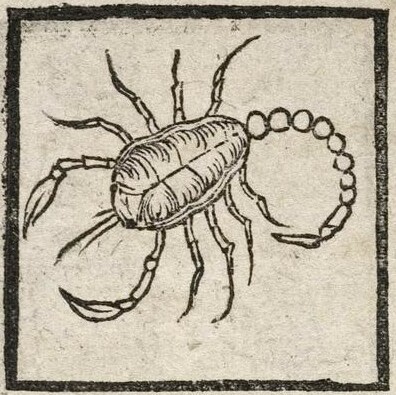
In modern American "spirit animal" usage, the scorpion stands for defense, boundary-setting, transformation through hardship, and the sometimes-necessary sting. That reading comes through Ted Andrews's Animal Speak (Llewellyn, 1993). The older traditions are specific. The Egyptian goddess Serqet (Selkis) is scorpion-crowned, patron of the dead and of those bitten by venomous creatures; Isis traveled with seven scorpion-bodyguards in the Metternich Stela narrative. Tablet IX of the Epic of Gilgamesh (c. 1800 BCE) places scorpion-men at the gates of Mount Mashu, guarding the path to the land of the sun. Hesiod and Ovid narrate how the boastful hunter Orion was killed by a giant scorpion sent by Gaia, both then catasterized into the constellations Orion and Scorpio.
The Metternich Stela sits in the Metropolitan Museum of Art’s Egyptian galleries, a slab of greywacke just under a meter tall, carved in relief in the 4th century BCE. It is one of the great surviving Egyptian magical objects. The central image shows the infant Horus trampling crocodiles and clutching serpents, flanked by Bes and other protective figures. Inscribed around him are spells, including the full narrative of Isis and the seven scorpions.
In the narrative, Isis flees Seth with the infant Horus, accompanied by seven named scorpions as bodyguards. A rich woman refuses them shelter. Offended, the scorpions combine their venoms into a single sting that enters the woman’s own child. The child nearly dies. Isis, hearing the mother’s cries, takes pity, speaks the names of the seven scorpions one by one to revoke the sting, and heals the child. The stela records the names and the healing-spell.
For centuries after it was carved, the Metternich Stela was used in ritual cure for scorpion-stings: water was poured over it and drunk. That is the depth of the Egyptian scorpion tradition.
The pre-modern traditions
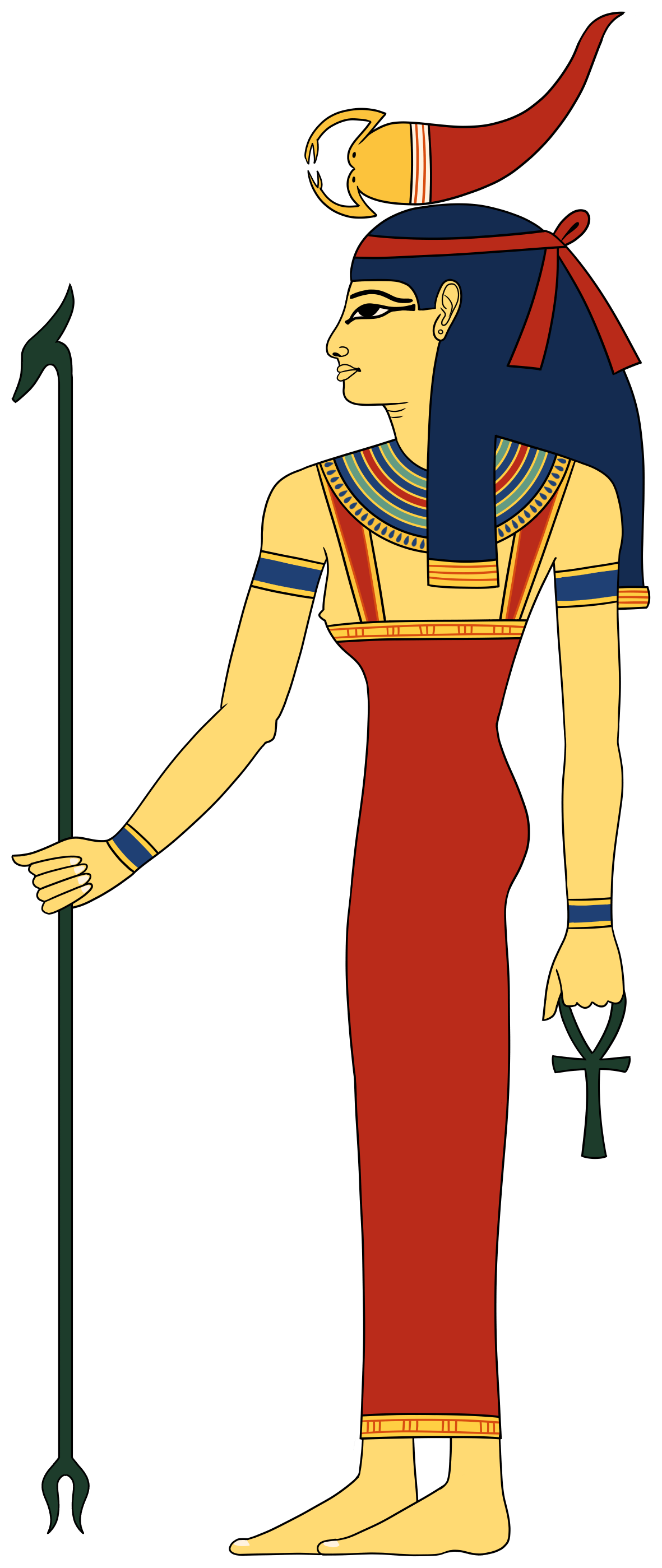
Serqet. One of the four Egyptian tutelary goddesses of the canopic jars, protecting specifically the intestines of the mummified deceased. Pyramid Texts Utterance 210 and others. Depicted crowned with a scorpion. Barbara Watterson’s The Gods of Ancient Egypt treats the canopic-goddess set.
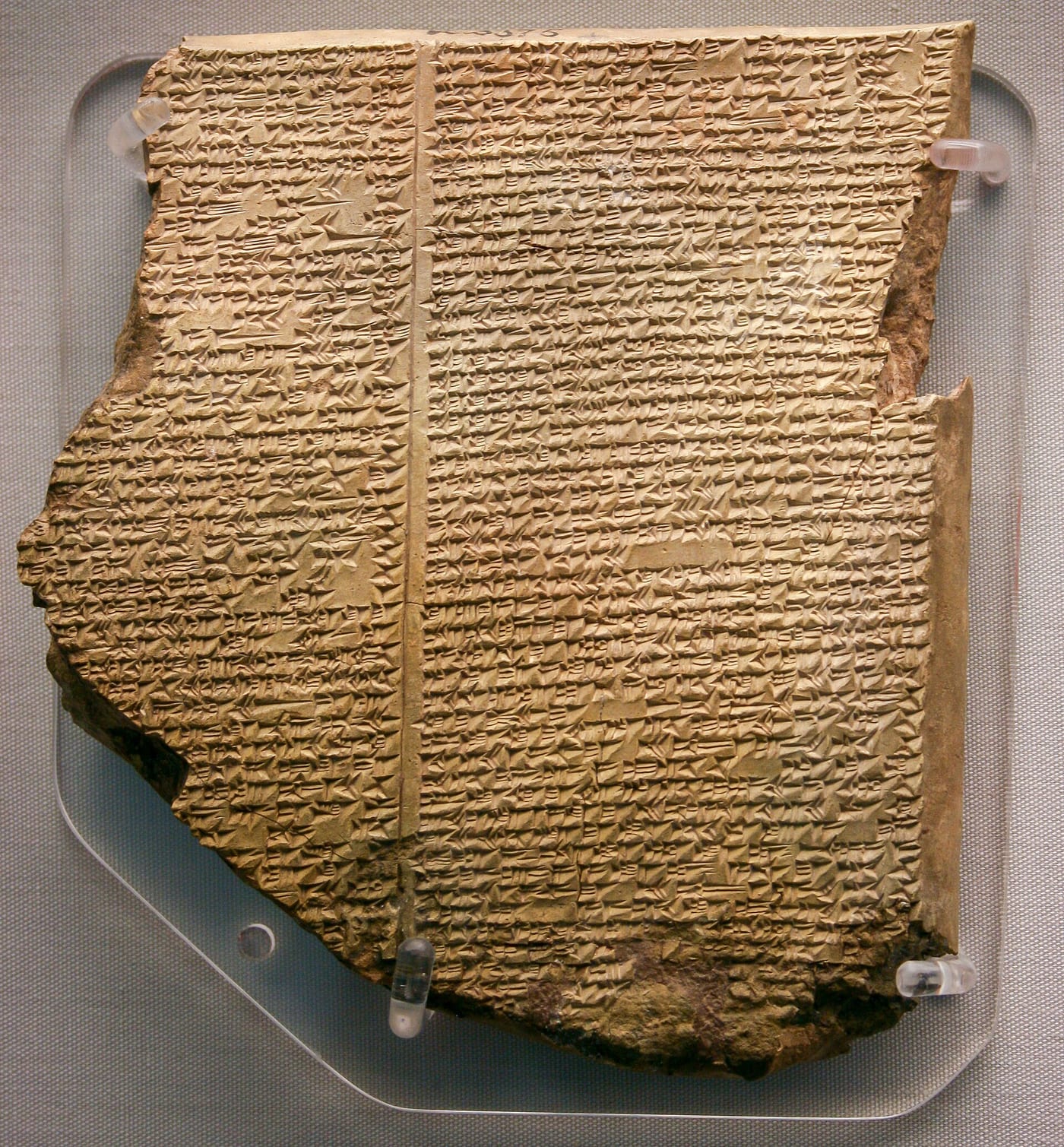
The Gilgamesh scorpion-men. Tablet IX. Guardians at Mount Mashu. Andrew George’s 2003 Oxford critical edition preserves the text. The scorpion-man motif appears in Mesopotamian art on cylinder seals and boundary stones from the mid-3rd millennium BCE onward.
Orion and Scorpio. Greek-Roman. The hunter too proud. Gaia’s scorpion. Catasterism into opposing constellations still visible in the sky tonight. Hesiod’s Astronomia, Ovid’s Fasti 5, Aratus’s Phaenomena. The astronomical opposition is what makes the myth last.
Why the modern reading is thin
Andrews’s 1993 Animal Speak gives you “defense and transformation.” The actual ancient traditions give you Serqet at the canopic jar, Isis reciting seven names, Gilgamesh at the gate of the sun, and the proud hunter dying by a scorpion’s sting in a story still visible overhead.
That is a lot more weight than a paperback keyword can hold.
Across traditions
Egyptian (Serqet / Selkis)
Serqet (also Selket or Selkis, Egyptian Srqt) is the scorpion-goddess of the Egyptian pantheon, one of the four tutelary goddesses of the canopic jars (alongside Isis, Nephthys, and Neith) and a protector of the dead. She is usually depicted as a woman with a scorpion on her head, arms outstretched. Her Pyramid Texts attestations (Utterance 210 and others) show her as both protector and healer.
The Metternich Stela, a magical stele now in the Metropolitan Museum of Art (MMA 50.85), preserves the Isis-and-seven-scorpions narrative: as Isis flees with the infant Horus, she is accompanied by seven scorpion-bodyguards. When a rich woman refuses them shelter, the scorpions combine their venoms into a single sting that nearly kills the woman's son; Isis heals the child to demonstrate her power. The stela was used ritually for generations to cure scorpion-stings.
- PRIMARY Pyramid Texts, Utterance 210 (Serqet references) . Faulkner trans., Oxford, 1969.
- MUSEUM Metternich Stela (MMA 50.85) . Metropolitan Museum of Art, c. 380–342 BCE.
- PEER-REVIEWED Barbara Watterson, The Gods of Ancient Egypt . Sutton, 1996.
Mesopotamian (scorpion-men at Mount Mashu)
Tablet IX of the Standard Babylonian Epic of Gilgamesh (c. 1800 BCE in its early forms, standardized c. 1300 BCE) places scorpion-men (girtablullu) and their wives as guardians at the gate of Mount Mashu, where the sun rises and sets. Gilgamesh encounters them on his journey to Uta-napishti. The scorpion-men test him, find his quest legitimate, and let him through.
The scorpion-man motif appears in Mesopotamian art from the mid-3rd millennium BCE onward, on cylinder seals, boundary stones (kudurru), and reliefs. Black and Green's Gods, Demons and Symbols of Ancient Mesopotamia (British Museum Press, 1992) documents the iconographic range. Andrew George's The Babylonian Gilgamesh Epic (Oxford, 2003) is the standard critical edition.
- PRIMARY Epic of Gilgamesh, Tablet IX . Andrew George ed., Oxford University Press, 2003.
- PEER-REVIEWED Jeremy Black and Anthony Green, Gods, Demons and Symbols of Ancient Mesopotamia . British Museum Press, 1992.
Greek / Roman (Orion and Scorpio)
The hunter Orion, in the Greek mythic tradition, boasted that he could kill any creature on earth. Gaia (or Artemis, depending on the variant) sent a giant scorpion to kill him. Both Orion and the scorpion were then placed among the stars as constellations, set opposite each other so that Scorpio rises as Orion sets. Hesiod's Astronomia (fragmentary, preserved in Pseudo-Eratosthenes's Catasterismi) and Ovid's Fasti 5.539–544 preserve the myth.
The opposition of the two constellations is astronomically real: they lie on opposite sides of the celestial sphere, which is why the myth has such staying power. Aratus's Phaenomena (c. 270 BCE) is the oldest surviving systematic astronomical poem describing the pairing.
- PRIMARY Hesiod, Astronomia (fragments in Pseudo-Eratosthenes, Catasterismi) . Most ed., Loeb Classical Library (Hesiod: Other Fragments).
- PRIMARY Ovid, Fasti 5.539–544 . Frazer trans., Loeb Classical Library.
- PRIMARY Aratus, Phaenomena . Kidd trans., Cambridge University Press, 1997.
Ted Andrews (1993)
Andrews's 1993 scorpion is the "defense and boundary" personal-spirit reading, drawn generically from the scorpion's sting-defense capability and from vague references to Egyptian and astrological material. The Serqet theology, the Gilgamesh scorpion-men, the Metternich Stela Isis-narrative, and the Orion-Scorpio catasterism are all absent in any specific form.
- REFERENCE Ted Andrews, Animal Speak . Llewellyn, September 1993.
Working with the Scorpion
If you want a regular practice rather than a one-time read, an oracle deck is the standard tool: you draw a card and sit with whatever animal comes up. Our ranked guide to spirit animal oracle decks compares the field.
Frequently asked
- What does a scorpion symbolize spiritually?
- In modern pop usage, defense, boundary-setting, and transformation through hardship, the Andrews 1993 reading. Older traditions are specific. Egyptian Serqet is the scorpion-goddess, tutelary of the dead and healer of scorpion-stings (Metropolitan Museum of Art Metternich Stela). Gilgamesh Tablet IX places scorpion-men at Mount Mashu. The Greek-Roman Orion-and-Scorpio myth catasterizes both figures into opposing constellations. And Isis traveled with seven scorpion-bodyguards in the Metternich Stela narrative.
- Who is Serqet?
- Serqet (also Selket or Selkis, Egyptian Srqt) is the scorpion-goddess of the Egyptian pantheon, one of the four tutelary goddesses of the canopic jars (alongside Isis, Nephthys, and Neith). She is a protector of the dead and a healer of scorpion-stings, usually depicted as a woman with a scorpion on her head. Pyramid Texts Utterance 210 and others attest her. The Metternich Stela at the Metropolitan Museum of Art preserves the Isis-and-seven-scorpions narrative.
- What are the scorpion-men in Gilgamesh?
- In Tablet IX of the Standard Babylonian Epic of Gilgamesh (c. 1300 BCE), scorpion-men (girtablullu) and their wives guard the gate of Mount Mashu, where the sun rises and sets. When Gilgamesh arrives on his quest to Uta-napishti (the Flood-survivor), they test him, find his quest legitimate, and let him through. The scorpion-man motif appears in Mesopotamian art from the mid-3rd millennium BCE onward. Andrew George's Babylonian Gilgamesh Epic (Oxford, 2003) is the critical edition.
- What is the Orion and Scorpio myth?
- In Greek myth, the hunter Orion boasted he could kill any creature on earth, and Gaia (or Artemis) sent a giant scorpion that killed him. Both were placed among the stars as the constellations Orion and Scorpio, positioned opposite each other so that Scorpio rises as Orion sets. Hesiod's Astronomia (fragmentary) and Ovid's Fasti 5.539–544 preserve the myth. The astronomical opposition of the two constellations is real, which is why the myth has lasted.
Sources
- PRIMARY Pyramid Texts, Utterance 210 . Faulkner trans., Oxford, 1969.
- MUSEUM Metternich Stela (MMA 50.85)
- PEER-REVIEWED Barbara Watterson, The Gods of Ancient Egypt . Sutton, 1996.
- PRIMARY Epic of Gilgamesh, Tablet IX . Andrew George ed., Oxford University Press, 2003.
- PEER-REVIEWED Jeremy Black and Anthony Green, Gods, Demons and Symbols of Ancient Mesopotamia . British Museum Press, 1992.
- PRIMARY Hesiod, Astronomia (fragments) . Loeb Classical Library.
- PRIMARY Ovid, Fasti 5.539–544 . Loeb Classical Library.
- PRIMARY Aratus, Phaenomena . Cambridge University Press, 1997.
- REFERENCE Ted Andrews, Animal Speak . Llewellyn, September 1993.