Spirit Animal
Sea Turtle Spirit Animal
Sea turtle spirit animal meaning: ancient journey, ancestral guardian and oceanic wisdom. Distinguished from the broader turtle page and focused on Pacific traditions: Hawaiian honu 'aumakua, the Japanese Urashima Tarō tale, and Māori whai and related Polynesian practices.
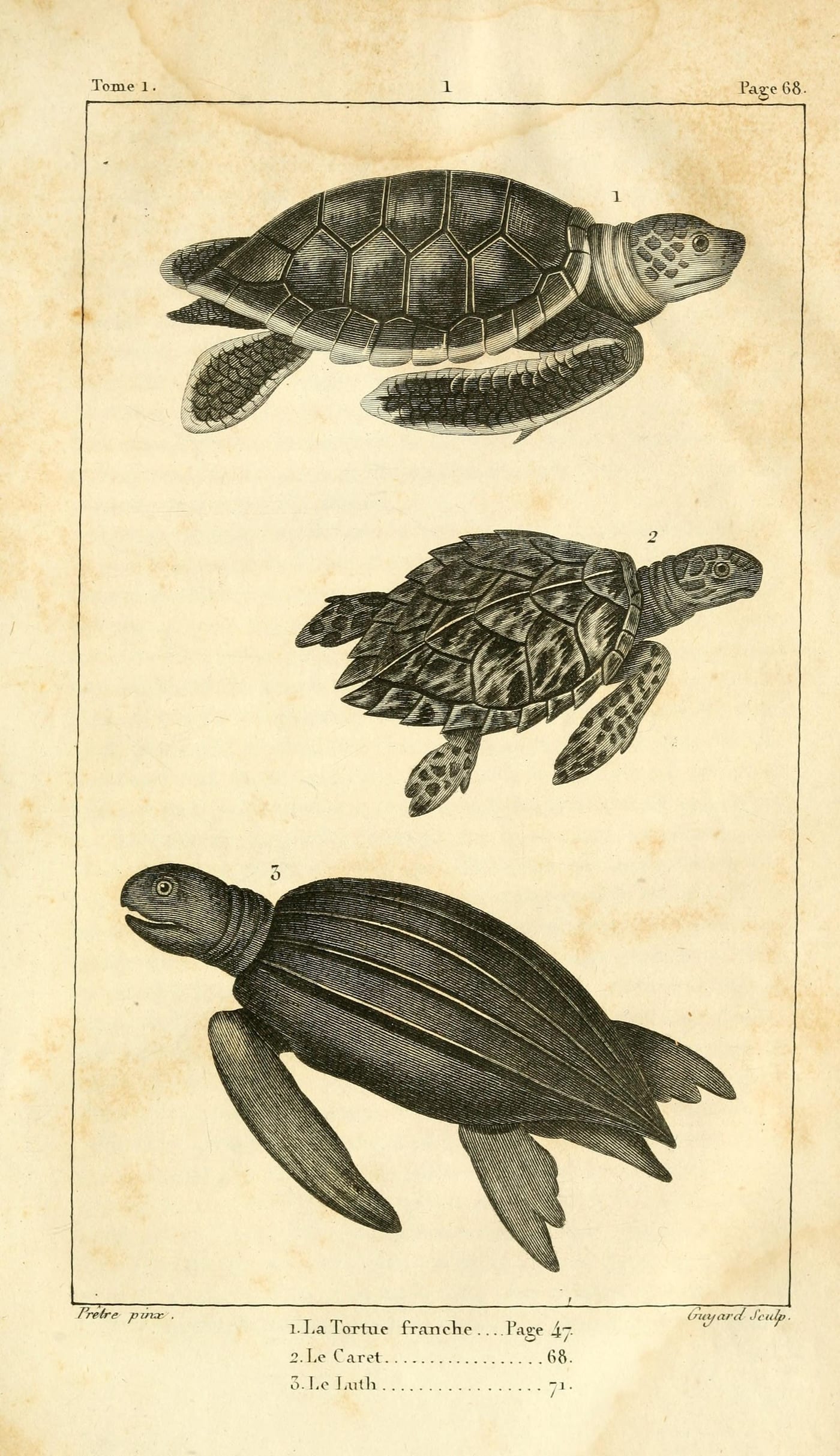
Sea turtles have distinct Pacific spiritual traditions separate from the broader turtle traditions on our turtle page. The Hawaiian honu is an 'aumakua for specific families, documented by Martha Beckwith and Mary Kawena Pukui. The Japanese Urashima Tarō folk-tale (Nihon Shoki, Man'yōshū) has a fisherman rescue a sea turtle that is revealed as a transformed princess of the Dragon-Palace. Māori whai (sea turtle) traditions preserve specific iwi narratives, and Samoan/Tongan oral tradition includes sea-turtle-creation material. All seven sea turtle species are IUCN-listed Vulnerable to Critically Endangered.
The sea turtle and the land turtle carry different symbolic weight, and the traditions behind them reflect that distinction. Land-turtle traditions tend toward cosmological endurance, the turtle’s shell as the world-foundation, as in Haudenosaunee Turtle Island cosmology and Hindu Kurma. Sea-turtle traditions are oceanic: navigation, the vast Pacific, the long migratory voyages, and the ancestor-connection that Pacific Islander cultures built around creatures that, like their own canoe-voyaging ancestors, crossed thousands of miles of open ocean.
Hawaiian honu
The Hawaiian green sea turtle, honu (Chelonia mydas), is among the most personally-significant animals in Hawaiian tradition. For specific families, the honu was an ’aumakua, a personal or family guardian deity, an ancestor in animal form who watches over and protects the family across generations. Martha Beckwith’s Hawaiian Mythology (University of Hawaii Press, 1940) and Mary Kawena Pukui’s Hawaiian Dictionary (University of Hawaii Press, 1972) document the honu-as-’aumakua tradition across multiple accounts.
The Pu’uloa petroglyph field on the south flank of Kīlauea (now within Hawai’i Volcanoes National Park) contains hundreds of sea-turtle carvings. Pu’uloa was a place where Hawaiians came to record births, deposit piko (umbilical cords) in certain rock formations, and maintain connection between the living and their ’aumakua. The sea turtle petroglyphs at Pu’uloa represent specific family relationships, not generic good-luck symbols.
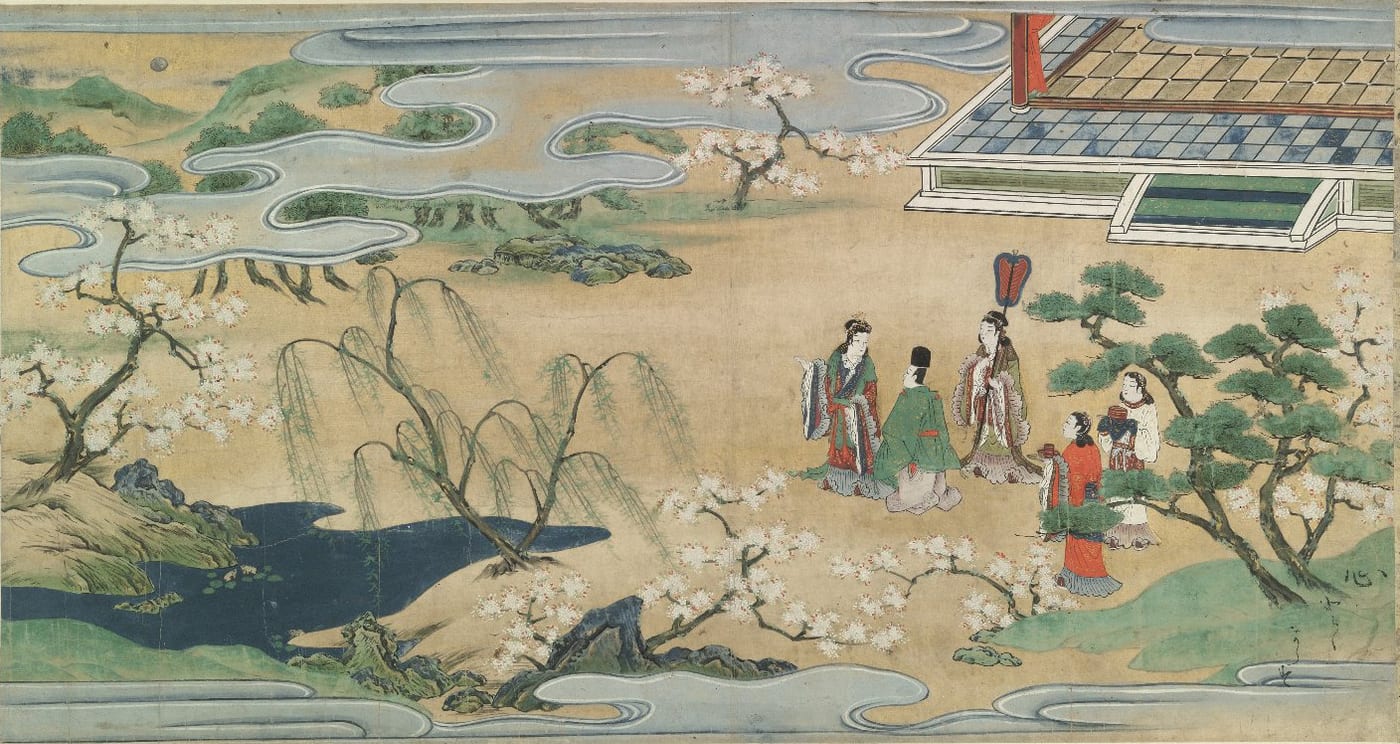
Urashima Tarō
The Japanese legend of Urashima Tarō is one of the oldest continuous sea-turtle narratives in Japanese literature. The core narrative: a fisherman rescues a sea turtle from children tormenting it on the beach. The turtle brings him to Ryūgū-jō, the Dragon Palace at the bottom of the sea, where the princess Otohime rewards him with a feast. When he returns to the surface, he finds that what felt like three days in the Dragon Palace was three hundred years on land.
The legend appears in the Nihon Shoki (720 CE) and in the Man’yōshū (c. 759 CE) in early forms; later Muromachi-period literary versions added the decorated box that Urashima is told never to open, which when opened releases his accumulated three-hundred-year age and turns him instantly old. The time-dislocation motif (time moving differently in the otherworld) connects to fairy-ring and fairy-hill folklore across multiple cultures.
Māori and Polynesian traditions
Te Rangi Hīroa’s The Coming of the Maori (Māori Purposes Fund Board, 1949) preserves Māori sea-turtle traditions in the context of Polynesian voyaging. The sea turtle (Māori whai, Samoan laumei, Tongan fonu) was a navigational companion and a creature whose range and migrations the long-distance voyagers of the Pacific tracked and understood. The Polynesian voyaging tradition, which populated the Pacific over two thousand years of canoe navigation, included specific knowledge about the sea turtle’s behavior as part of oceanic navigation practice.
Andrews 1993
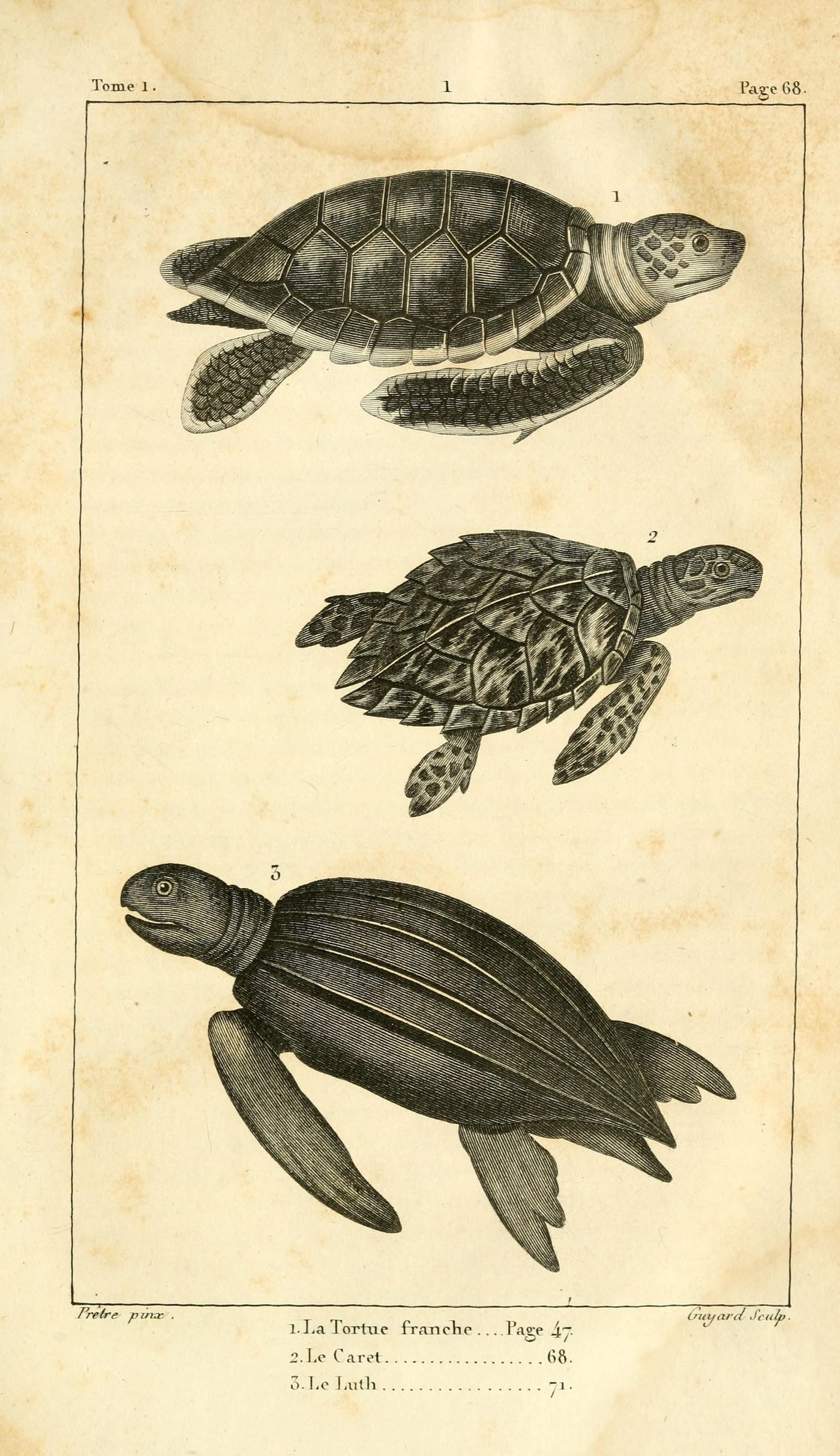
Andrews, in Animal Speak, reads the sea turtle as ancient journey, longevity, and oceanic wisdom. These are honest observations (sea turtles have been unchanged for roughly 200 million years, navigate thousands of miles using geomagnetic fields, and live for decades) but they are thin compared to the specificity of the Pacific traditions above.
Across traditions
Hawaiian (honu 'aumakua)
See our turtle page for the foundational Hawaiian honu treatment. Specific to sea turtles: the honu ('aumakua for specific families) is the green sea turtle Chelonia mydas, documented by Martha Beckwith's Hawaiian Mythology (University of Hawai'i Press, 1940) and Mary Kawena Pukui's Nānā I Ke Kumu (Queen Liliʻuokalani Children's Center, 1972).
The Pu'uloa petroglyph field in Hawai'i Volcanoes National Park contains thousands of honu carvings, one of the largest petroglyph concentrations in the Pacific.
- PEER-REVIEWED Martha Beckwith, Hawaiian Mythology . University of Hawai'i Press, 1940.
- PRIMARY Mary Kawena Pukui, Nānā I Ke Kumu . Queen Liliʻuokalani Children's Center, 1972.
- MUSEUM Pu'uloa petroglyph field
Japanese (Urashima Tarō)
The Urashima Tarō tale, one of the oldest Japanese folk-narratives, appears in fragmentary form in the Nihon Shoki (720 CE) and in the Man'yōshū (c. 759 CE). A fisherman named Urashima Tarō rescues a sea turtle being tormented by children; the turtle is revealed as a princess of the Dragon-Palace of the sea-god, who takes Urashima to her palace. When he returns to the land after what he thinks is three days, three hundred years have passed.
Donald Keene's Anthology of Japanese Literature (Grove Press, 1955) and subsequent Japanese-folklore scholarship preserve the variants. The tale is one of the most-recognized Japanese folk-stories and has been adapted across centuries of Japanese visual culture.
- PRIMARY Nihon Shoki (720 CE), Urashima references . Aston trans., Tuttle, 1896/1972.
- PRIMARY Man'yōshū (c. 759 CE) . Honda trans., Hokuseido Press, 1967.
- PEER-REVIEWED Donald Keene, Anthology of Japanese Literature . Grove Press, 1955.
Māori and Polynesian (whai, fonu)
Māori whai (sea turtle) traditions are documented in Te Rangi Hīroa's The Coming of the Maori (Māori Purposes Fund Board, 1949) and in specific iwi (tribal) narratives. Samoan laumei and Tongan fonu preserve parallel Polynesian sea-turtle material. Across the Pacific the sea turtle is a navigator-animal, an ancestor-figure, and sometimes a transformed human.
- PRIMARY Te Rangi Hīroa, The Coming of the Maori . Māori Purposes Fund Board, 1949.
- PRIMARY Elsdon Best, The Maori . 1924.
Ted Andrews (1993)
Andrews's 1993 sea turtle is the ancient-journey-oceanic-wisdom figure drawn generically. The Pacific specific traditions are gestured at without named sources.
- REFERENCE Ted Andrews, Animal Speak . Llewellyn, September 1993.
Working with the Sea Turtle
If you want a regular practice rather than a one-time read, an oracle deck is the standard tool: you draw a card and sit with whatever animal comes up. Our ranked guide to spirit animal oracle decks compares the field.
Frequently asked
- What does a sea turtle symbolize spiritually?
- In modern pop usage, ancient journey, oceanic wisdom, and long-lived patience. Pacific traditions are most substantive. Hawaiian honu is an 'aumakua for specific families (Beckwith 1940, Pukui 1972). The Japanese Urashima Tarō folk-tale (Nihon Shoki, Man'yōshū) has a fisherman rescue a sea turtle revealed as a princess of the Dragon-Palace. Māori whai and Samoan/Tongan fonu preserve parallel Polynesian sea-turtle material.
- What is the Urashima Tarō story?
- One of the oldest Japanese folk-narratives. A fisherman named Urashima Tarō rescues a sea turtle being tormented by children; the turtle is revealed as a princess of the Dragon-Palace of the sea-god, who takes Urashima to her palace. When he returns to the land after what he thinks is three days, three hundred years have passed. Fragments appear in the Nihon Shoki (720 CE) and Man'yōshū (c. 759 CE); Donald Keene's Anthology of Japanese Literature (Grove Press, 1955) preserves the variants.
- How is the sea turtle different from the regular turtle spiritually?
- Sea turtles have distinct Pacific-ocean traditions (Hawaiian honu, Japanese Urashima, Māori whai, Samoan laumei) separate from the freshwater and land-turtle traditions on our turtle page (Haudenosaunee Turtle Island, Hindu Kurma, Chinese Xuanwu). The two overlap but are documented in different primary sources.
Sources
- PEER-REVIEWED Martha Beckwith, Hawaiian Mythology . UH Press, 1940.
- PRIMARY Mary Kawena Pukui, Nānā I Ke Kumu . Queen Liliʻuokalani Children's Center, 1972.
- MUSEUM Pu'uloa petroglyph field
- PRIMARY Nihon Shoki (720 CE) . Aston trans., Tuttle, 1972.
- PRIMARY Man'yōshū . Honda trans., 1967.
- PEER-REVIEWED Donald Keene, Anthology of Japanese Literature . Grove Press, 1955.
- PRIMARY Te Rangi Hīroa, The Coming of the Maori . Māori Purposes Fund Board, 1949.
- REFERENCE Ted Andrews, Animal Speak . Llewellyn, September 1993.