Spirit Animal
Snake Spirit Animal
Snake spirit animal meaning: transformation, rebirth and healing. Traced from the modern transformation-and-rebirth reading back through Ted Andrews's Animal Speak to the serpent in Genesis 3, the Greek Asclepius rod, Indian Nāga and the Buddhist Mucalinda, and Mesoamerican Quetzalcóatl.
In modern American "spirit animal" usage, the snake most often signals transformation, rebirth, and the shedding of what no longer fits. That reading comes through Ted Andrews's Animal Speak (Llewellyn, 1993). The older traditions are more interesting and more divided. Genesis 3 casts the serpent as the deceiver in the garden. Greek medicine put the snake on Asclepius's rod, still the logo on pharmacies and the WHO flag. Indian tradition keeps the nāga as a protective cosmic being; the Buddhist Mucalinda shelters the Buddha at Bodh Gaya. Mesoamerican Quetzalcóatl is the plumed serpent, a creator deity. The serpent is one of the few animals whose meaning genuinely splits along civilizational lines.
The snake is the one animal you cannot flatten into a single spiritual reading without lying. The reason, once you see it, is stark: the civilizations that shaped most of the Western imagination split on the snake roughly down the middle. One side, rooted in Genesis 3, made the snake the deceiver of humankind. The other side, running from Greek medicine through Vedic and Buddhist cosmology to Mesoamerican theology, made the snake a healer, a protector, or a god.
Both readings are ancient. Both are load-bearing. And a twenty-first century “spirit animal” article that tells you the snake means transformation, full stop, is quietly picking one side and hiding the other.
The split
Genesis 3 is roughly 2,700 years old as a redacted text. Its serpent tells Eve that eating the fruit will not kill her, and for that the Lord curses him above all beasts. Every negative snake image in Jewish, Christian, and Islamic tradition descends from those four verses. The Dragon of Revelation. The “old serpent” of Christian exegesis. The Qur’anic Iblīs tradition. The habit of imagining Satan as a snake is biblical, specifically.
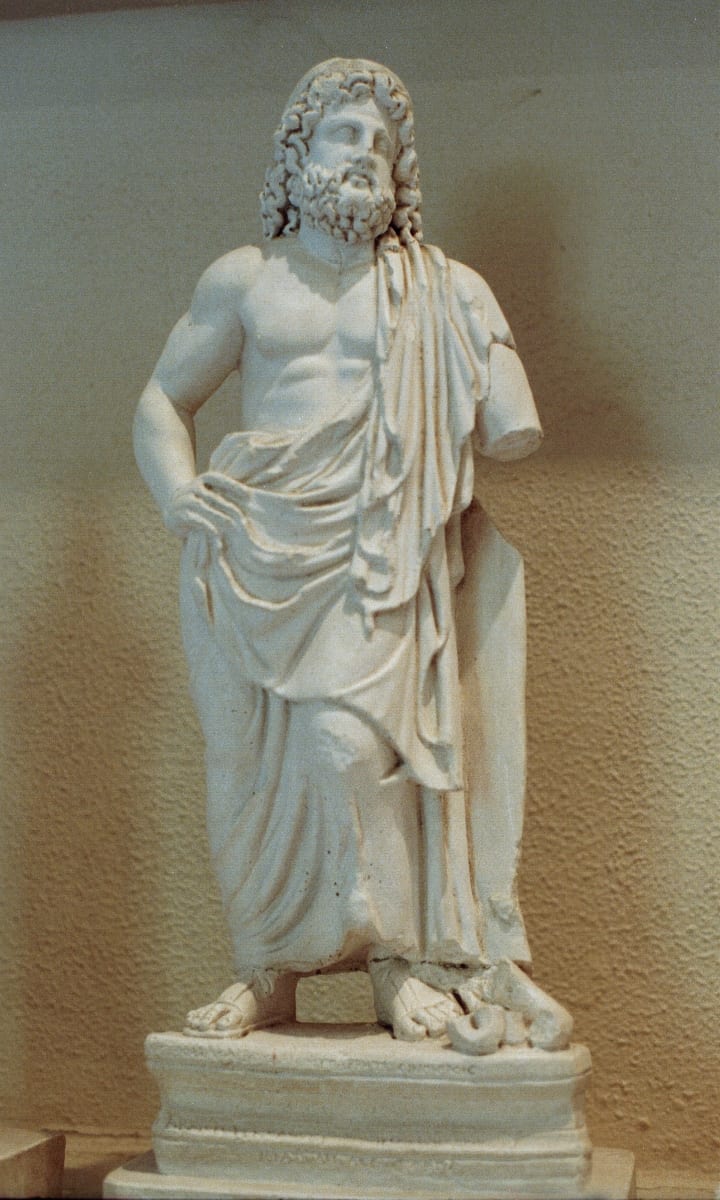
At the same time, the Greek god of medicine carried a staff with a serpent wrapped around it, and the Epidaurus sanctuary used live non-venomous snakes in its dream-incubation cures (Pausanias 2.27.1). This is not decoration. The snake was, in Greek medical practice, the animal whose presence you wanted in the room when you were sick.
And the Indian nāga tradition goes further still. The cobra king Mucalinda wraps himself around the Buddha to shelter him from a week-long storm just after the Awakening. That image stands in every Theravada temple across Sri Lanka, Thailand, Cambodia, Myanmar. The snake is the one who protects the one who saves everyone.
Which snake shows up in a modern “spirit animal” article
The pre-Christian one. Ted Andrews’s 1993 Animal Speak reads the snake as the animal that sheds its old skin and emerges renewed. Transformation. Rebirth. Letting go of what no longer fits. This is the Asclepian and nāga snake, rebranded for the Llewellyn catalog. The Genesis snake is nowhere in that synthesis, which is partly why the modern reading can feel like it’s quietly contradicting every Sunday school lesson a reader grew up with. It is.
What Quetzalcóatl was doing
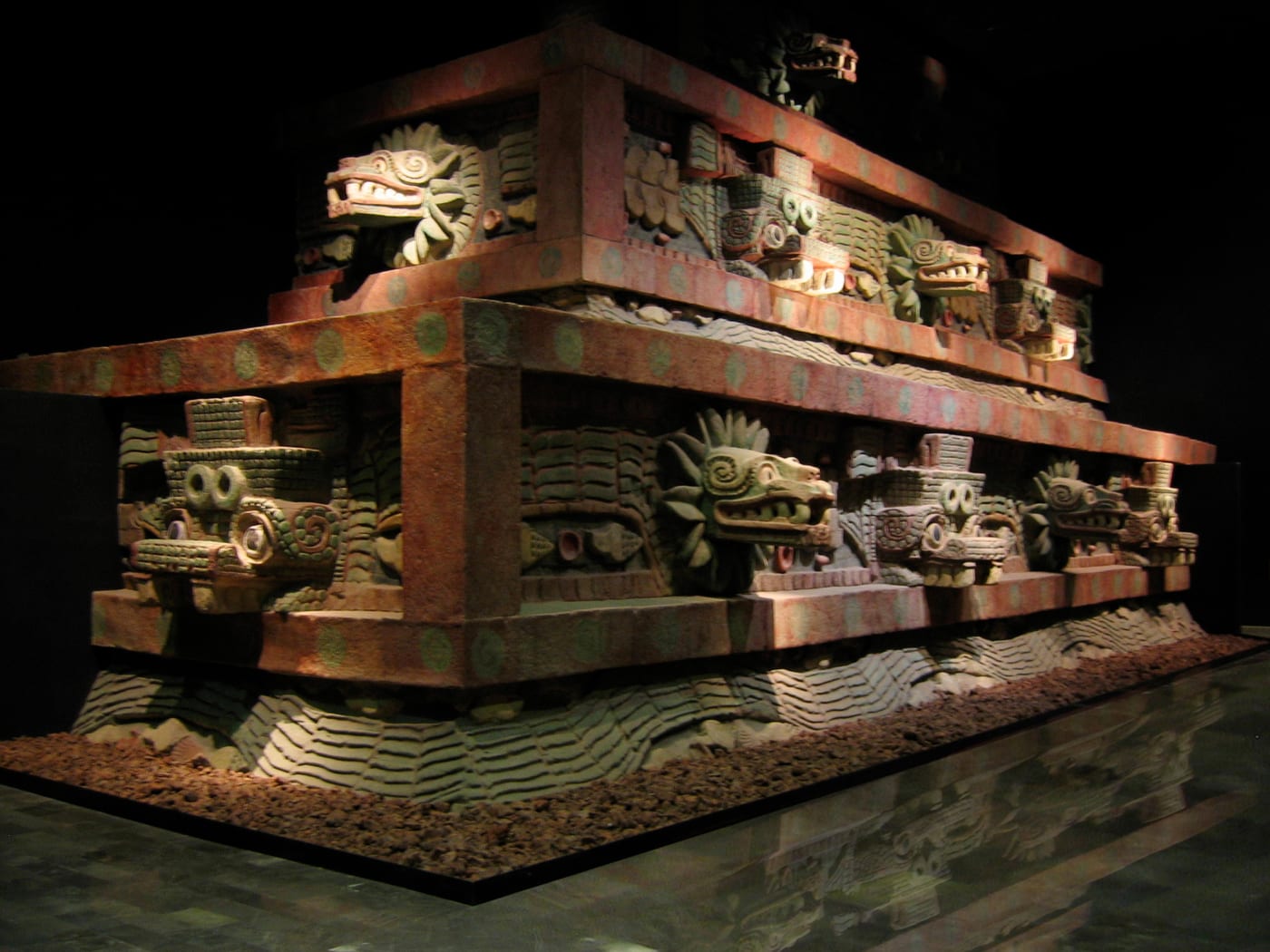
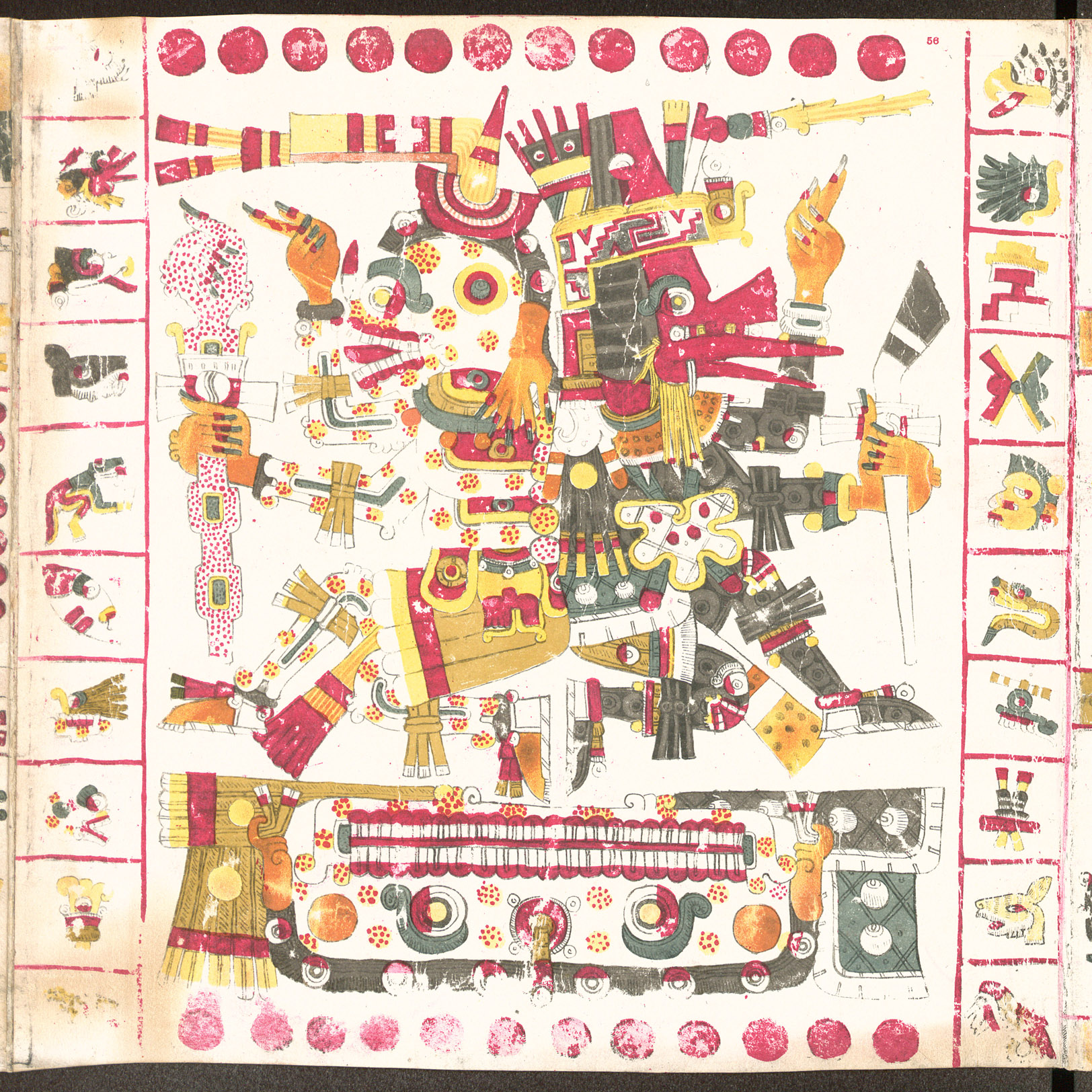
It’s worth one more paragraph on the Mesoamerican side because it’s the one most under-read in North American spirit-animal writing. The Feathered Serpent pyramid at Teotihuacan was built around 200 CE, roughly twelve hundred years before the Aztecs/Mexica took the god into their pantheon. Quetzalcóatl is a creator deity. He brings agriculture, writing, and civilization, per Sahagún’s Florentine Codex Book 3. If you asked an Aztec priest in 1520 what the serpent meant, the answer would not have been “transformation.” The answer would have been closer to: “the god who made us people.”
That answer and the Genesis answer cannot be reconciled into a single keyword. That irresolvable split is the substance.
Across traditions
Hebrew Bible (Genesis 3)
The serpent of Genesis 3 is the animal that tells Eve she will not die if she eats from the tree of the knowledge of good and evil. For this the Lord curses the serpent above all beasts to crawl on its belly. The text is terse: four verses of dialogue, three of curse. This is the source passage for virtually every negative reading of the snake in the Jewish, Christian, and Islamic traditions that follow.
The serpent is not explicitly identified with Satan in Genesis 3 itself; that identification develops later in the Second Temple period (see Wisdom of Solomon 2:24) and becomes standard in Christian exegesis from Tertullian forward. But the image, the snake as deceiver, goes back to the earliest redacted layer of the Hebrew Bible.
- PRIMARY Genesis 3:1–15 (Hebrew Bible) . BHS Masoretic text; JPS 1985 English trans.
- PRIMARY Wisdom of Solomon 2:24 . NRSV trans., Oxford Annotated Apocrypha, 1977.
Greek (Asclepius and medicine)
The Greek snake is a healer's animal. Asclepius, the god of medicine, is depicted leaning on a staff with a single serpent twined around it. Pausanias, Description of Greece 2.27.1, describes the Epidaurus sanctuary where dream-incubation cures involved actual live snakes (non-venomous Elaphe longissima, now called the Aesculapian snake) sliding through the dormitories. Pindar, Pythian 3.1–58, gives the Asclepius origin story.
That single-serpent rod is still the official emblem of the World Health Organization, the American Medical Association, and dozens of national medical associations. The caduceus (two snakes, winged, carried by Hermes) is a messenger's staff, not a medical one; its common use in US medical iconography since the 19th century is, strictly speaking, an error.
- PRIMARY Pausanias, Description of Greece 2.27.1 . Jones trans., Loeb Classical Library.
- PRIMARY Pindar, Pythian 3.1–58 . Race trans., Loeb Classical Library.
- REFERENCE World Health Organization, emblem documentation
Indian (nāga, Mucalinda)
The nāga in Hindu and Buddhist tradition is not a snake-as-symbol. It is a class of semi-divine serpent beings who live in underworld palaces and control rain and fertility. The Mahābhārata and the Rāmāyaṇa both feature nāga kings (Vasuki, Takshaka) as major characters. In the Buddhist Vinaya-piṭaka and the Mahāvagga, the nāga king Mucalinda shelters the Buddha under his seven-fold hood for seven days of storm at Bodh Gaya, right after the Awakening.
Temple architecture from Angkor to Nepal uses nāga figures as guardians flanking staircases and gateways. The reading is protective, fertile, and cosmic. Nowhere in the classical South Asian record is the serpent the animal you have to crush underfoot.
- PRIMARY Mahābhārata, Book 1 (Ādiparva), Astikaparva 1.20–1.58 . van Buitenen trans., University of Chicago Press, 1973.
- PRIMARY Mahāvagga 1.3 (Vinaya-piṭaka, Mucalinda episode) . Horner trans., Pali Text Society, 1951.
Mesoamerican (Quetzalcóatl)
Quetzalcóatl, the plumed serpent, is a major creator deity across Mesoamerican religions, from the Teotihuacan Feathered Serpent pyramid (built c. 200 CE) through the Toltec city of Tula, into Mexica theology at the Spanish contact. Bernardino de Sahagún's Florentine Codex (Book 3, Chapters 3–14) narrates the Quetzalcóatl mythic cycle; the Codex Chimalpopoca (Annals of Cuauhtitlan) preserves a parallel version. The deity appears associated with wind, priesthood, the morning star, the introduction of agriculture and learning.
This is not a serpent as threat or seducer. It is a serpent as giver of civilization, mirror-image of the Genesis serpent in almost every way that matters.
- PRIMARY Bernardino de Sahagún, Florentine Codex (Book 3) . Anderson & Dibble trans., University of Utah Press, 1950–82.
- PRIMARY Codex Chimalpopoca (Annals of Cuauhtitlan) . Bierhorst trans., University of Arizona Press, 1992.
Ted Andrews (1993)
Andrews's 1993 snake is the pre-Christian snake cleaned up for the trade-paperback audience: shedding, rebirth, transformation, the wisdom of letting the old skin go. He aligns with the Asclepius and nāga side of the split and sidesteps the Genesis side almost entirely, which is one reason the modern pop-spiritual reading can feel at odds with the deeply-rooted Christian associations readers grew up with.
- REFERENCE Ted Andrews, Animal Speak . Llewellyn, September 1993.
Working with the Snake
If you want a regular practice rather than a one-time read, an oracle deck is the standard tool: you draw a card and sit with whatever animal comes up. Our ranked guide to spirit animal oracle decks compares the field.
Frequently asked
- Is the snake a good or bad spiritual symbol?
- Depends which tradition you stand inside. Genesis 3 makes the snake the deceiver. Greek medicine and South Asian nāga tradition make it healing or divine. Mesoamerican Quetzalcóatl is a creator god. The modern pop reading, via Ted Andrews's Animal Speak (1993), goes with transformation and rebirth, aligning with the pre-Christian traditions. There is no universal meaning.
- What is the symbol with the snake on a stick?
- The Rod of Asclepius, one serpent on a single staff, the Greek god of medicine's attribute. Pausanias 2.27.1 describes the Epidaurus sanctuary where live non-venomous snakes were part of the cure. It's the official emblem of the World Health Organization and the American Medical Association. The two-snake-with-wings caduceus, often confused with it, is Hermes's messenger staff and has nothing to do with medicine.
- Why did the cobra shelter the Buddha?
- In the Mahāvagga (Pāli Vinaya, 1.3), the nāga king Mucalinda wraps himself seven times around the Buddha and raises his seven-fold hood over him during a storm that breaks out in the week after the Awakening at Bodh Gaya. The episode is a standard image in Buddhist art across South and Southeast Asia. The nāga is protective, not threatening.
- Why is the snake both feared and worshipped?
- Because it moves the way few other animals move, sheds its skin and appears renewed, can kill and can heal depending on species, and lives between earth and underworld in most mythic geographies. Different civilizations settled those facts into different theologies. Genesis 3 settled them into a story of deception. Greek medicine settled them into a story of cure. South Asian tradition settled them into cosmic beings who control rain. Mesoamerican tradition settled them into a creator deity. The animal is the same. The decision about what to do with it is not.
Sources
- PRIMARY Genesis 3:1–15 . BHS Masoretic text; JPS 1985 trans.
- PRIMARY Wisdom of Solomon 2:24 . NRSV trans., 1977.
- PRIMARY Pausanias, Description of Greece 2.27.1 . Loeb Classical Library.
- PRIMARY Pindar, Pythian 3.1–58 . Loeb Classical Library.
- PRIMARY Mahābhārata 1.20–1.58 . van Buitenen trans., University of Chicago Press, 1973.
- PRIMARY Mahāvagga 1.3 (Vinaya-piṭaka) . Horner trans., Pali Text Society, 1951.
- PRIMARY Bernardino de Sahagún, Florentine Codex (Book 3) . Anderson & Dibble trans.
- PRIMARY Codex Chimalpopoca (Annals of Cuauhtitlan) . Bierhorst trans., University of Arizona Press, 1992.
- REFERENCE World Health Organization emblem
- REFERENCE Ted Andrews, Animal Speak . Llewellyn, September 1993.