Spirit Animal
Butterfly Spirit Animal
Butterfly spirit animal meaning, from the modern pop-concept back to the Greek psyche, the Mexica goddess Itzpapalotl, the Zhuangzi butterfly dream, the Japanese chō, and Ted Andrews's 1993 synthesis.
In modern American 'spirit animal' usage, the butterfly signals transformation, rebirth, and the fragility-and-resilience pair that metamorphosis embodies. That reading pulls from four older sources: the Greek psyche (the word means both 'soul' and 'butterfly'), the Mexica goddess Itzpapalotl ('Obsidian Butterfly'), the Zhuangzi butterfly-dream koan from 4th-century-BCE China, and Japanese Edo-period associations of chō (butterflies) with spirits of the dead. The synthesis is again most directly Ted Andrews's Animal Speak (Llewellyn, 1993).
The butterfly’s transformation meaning is genuinely ancient and genuinely cross-cultural. But the four specific traditions that anchor it are different enough from each other that collapsing them into “transformation” loses most of what makes each one interesting.
Greek psyche
The Greek word psyche (ψυχή) means both “soul” and “butterfly,” and that dual meaning is not coincidental or metaphorical, it is an ancient Greek observation that the butterfly’s lifecycle mapped the soul’s experience. The egg is the body. The chrysalis is death. The butterfly’s emergence is the soul’s liberation.
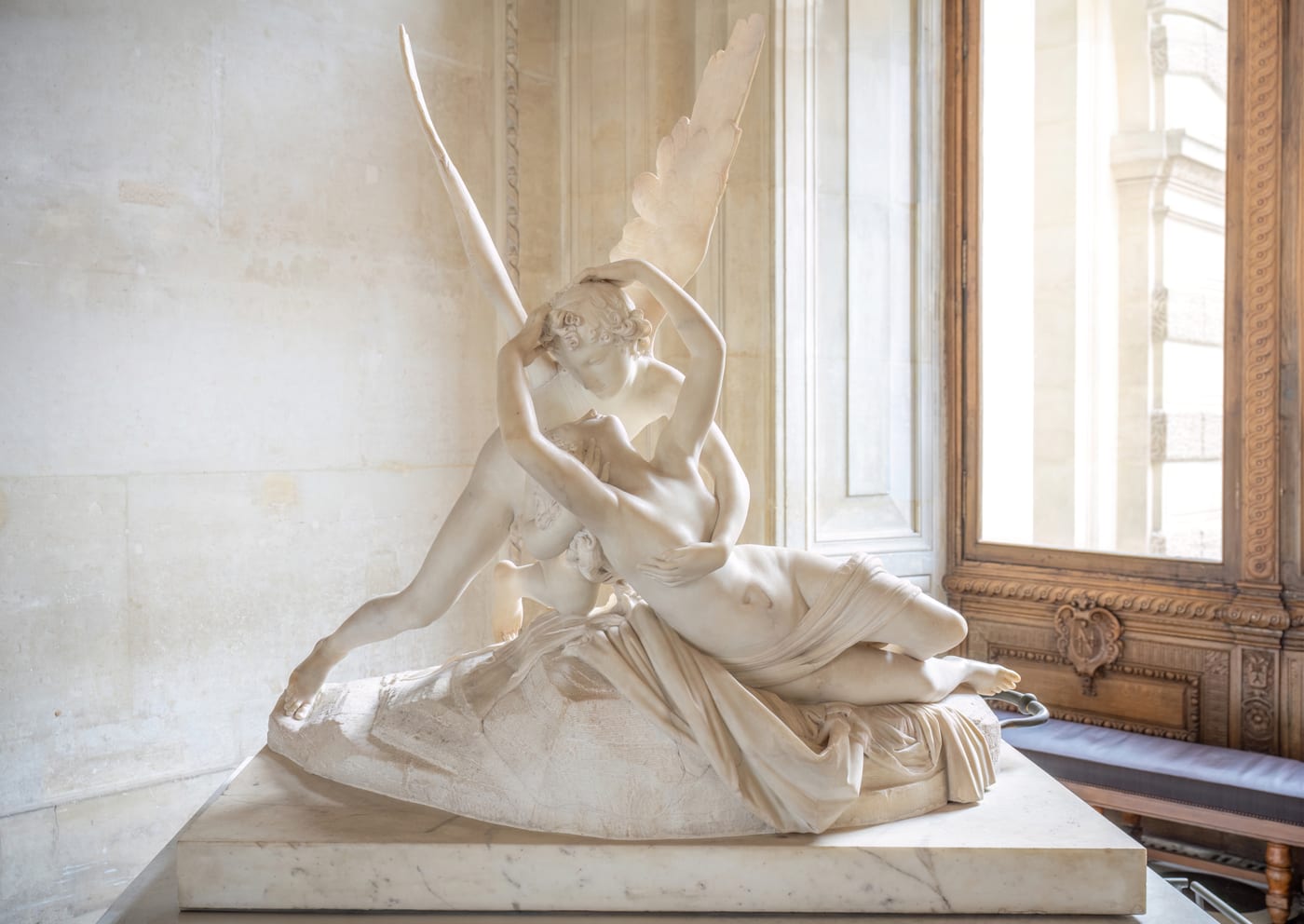
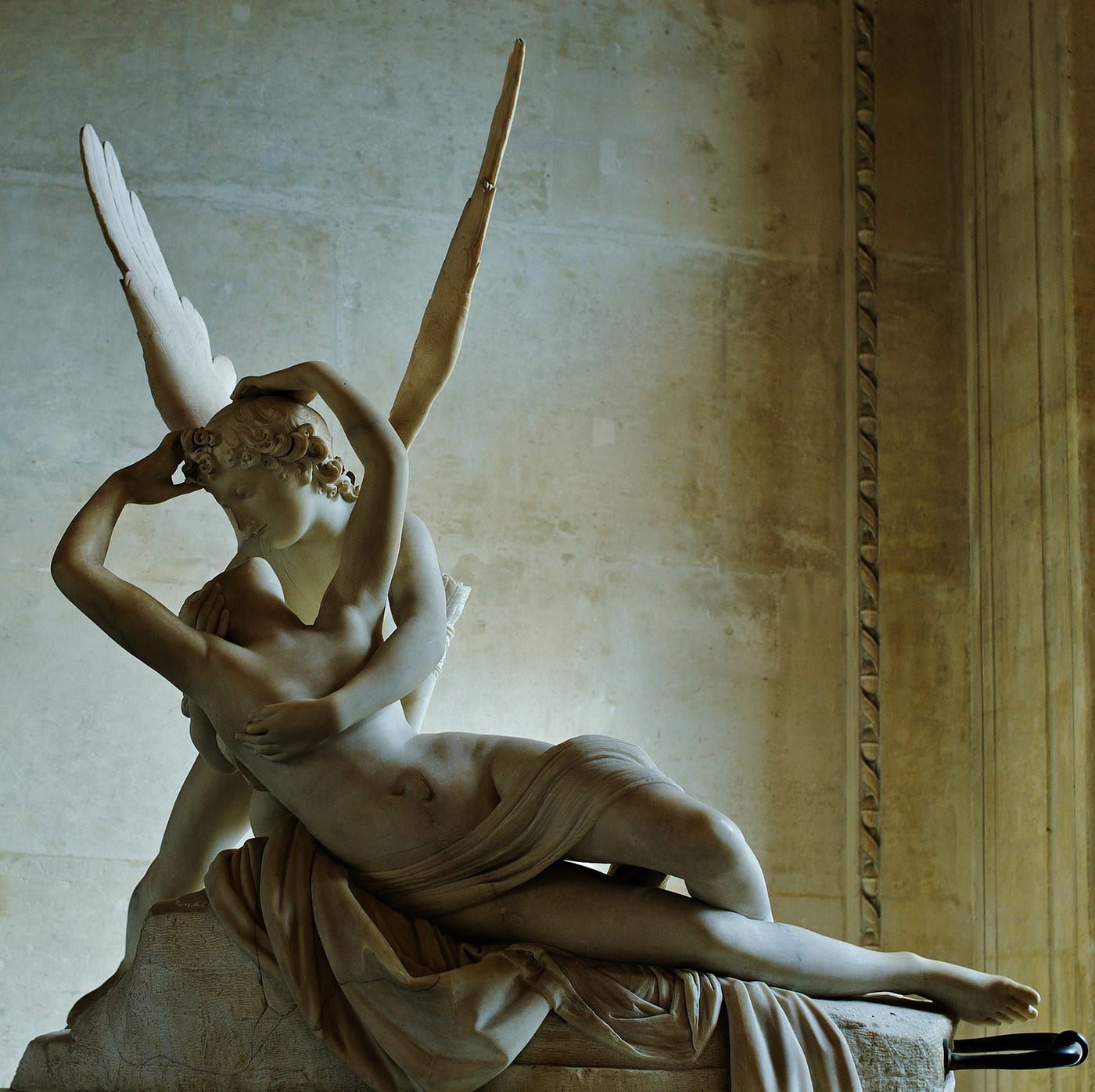
Plato’s Phaedo uses the image of the soul as a winged being in its discussion of the soul’s immortality, one of the foundational arguments in Western philosophy. Apuleius’s Metamorphoses (The Golden Ass, 2nd century CE) makes Psyche a full narrative: the mortal girl whose name is “soul” undergoes labors, dies and is resurrected, and achieves divine status. The butterfly-wings on depictions of Psyche, seen most famously in Canova’s 1793 sculpture Psyche Revived by Cupid’s Kiss (Louvre), are the direct visual embodiment of this etymology.
Mexica Itzpapalotl
The Mexica (Aztec) goddess Itzpapalotl (Obsidian Butterfly) is documented in Sahagún’s Florentine Codex. She is a warrior-goddess, covered in knife-edges, who guards the souls of women who died in childbirth and the children who died in infancy. She is not a gentle transformation figure; she is dangerous, razor-edged, associated with sacrifice and the boundary between the living and the dead. Her butterfly iconography connects to the belief that warriors killed in battle and women who died in childbirth became hummingbirds and butterflies, accompanying the sun across the sky.
The Day-of-the-Dead monarch butterfly tradition is a related but distinct folk-level development, not the same figure as Itzpapalotl.
Zhuangzi’s dream
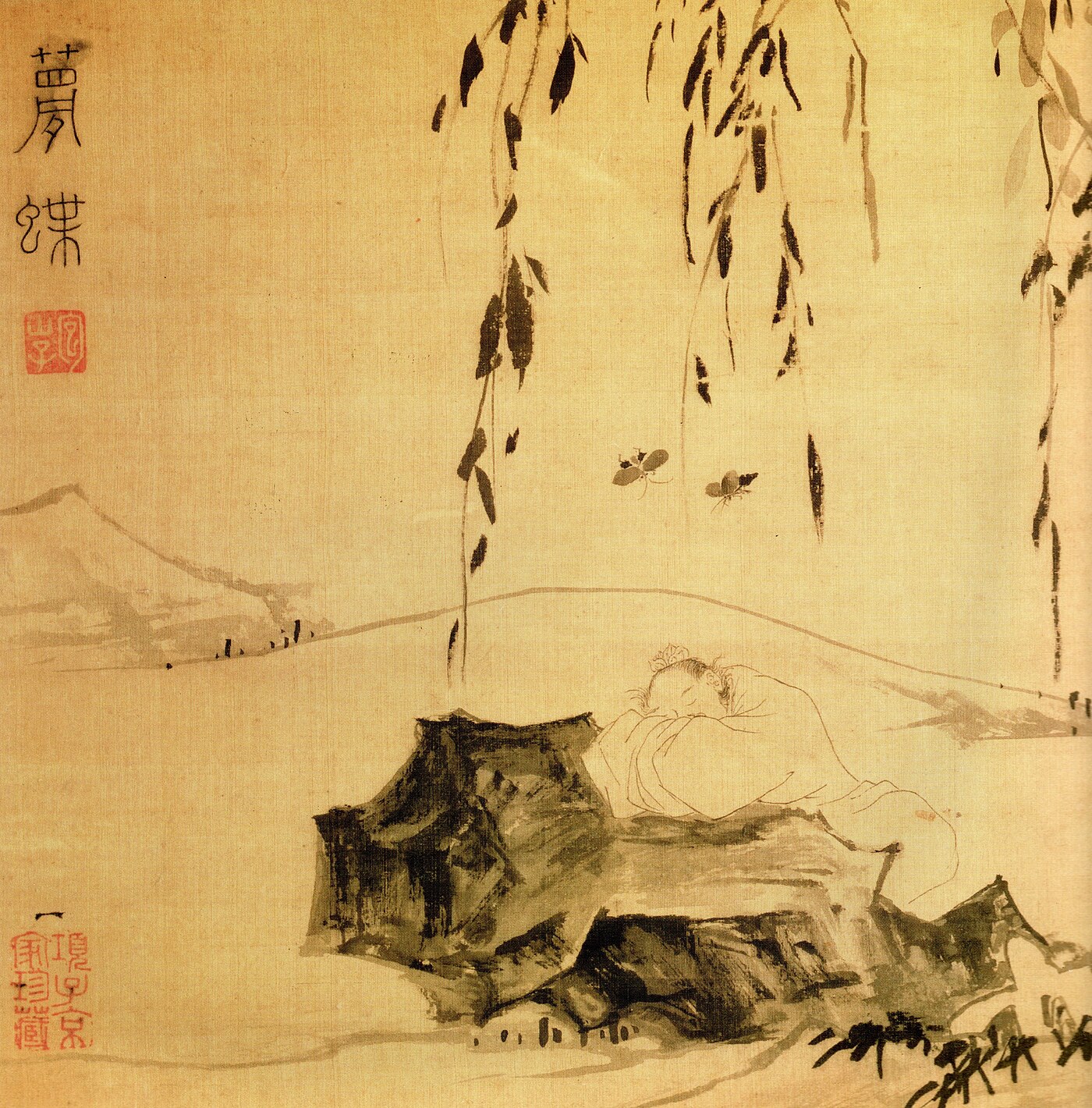
The fourth chapter of the Zhuangzi (c. 4th century BCE, Watson trans., Columbia, 2013) contains the most celebrated butterfly passage in Chinese literature. The philosopher Zhuang Zhou dreams that he is a butterfly, fluttering freely, with no awareness of being a man. On waking, he cannot determine whether he is a man who dreamed he was a butterfly, or a butterfly now dreaming he is a man. The barrier between man and butterfly is what he calls the Great Change.
This is a philosophical argument about the instability of fixed identity, not a symbolic reading of the butterfly as transformation. The butterfly does not “represent” transformation; it is a vehicle for demonstrating that the boundaries between self and other, between one state and another, are less stable than they appear. That is a more radical claim than the pop-spiritual transformation reading.
Japanese chō
In Heian court aesthetics, the butterfly (chō, 蝶) was associated with ephemerality (the falling flower, the passing moment, the transience of everything beautiful. This aesthetic is directly connected to the Buddhist concept of impermanence. Lafcadio Hearn’s Kwaidan (1904) preserves the ghost-butterfly tradition from Edo Japan: the butterfly as the spirit of the dead, returning in the form of a fragile winged creature. The two registers) Heian elegance and Edo ghost-story, coexist in Japanese butterfly iconography.
Andrews 1993
In Animal Speak, Andrews fused these traditions into transformation, soul, and metamorphosis. The synthesis is not wrong, all four traditions do connect to change, transition, and the relationship between life and death. It is modern. The specific sources are older, more various, and more interesting than the portable summary.
Across traditions
Greek
In Greek, the word psyche (ψυχή) means both 'soul' and 'butterfly.' That dual meaning is the foundational Western source of the butterfly-as-soul image. Psyche is the mortal lover of Eros (Cupid) in Apuleius's Metamorphoses (also called The Golden Ass, 2nd century CE), and her cult statue is winged. Plato, in Phaedo, uses the image of the soul freed from the body as a winged creature.
The Greek butterfly is soul. Not transformation in the emotional-growth sense, soul, literally.
- PRIMARY Apuleius, Metamorphoses (The Golden Ass) . Kenney trans., Penguin Classics, 1998.
- PRIMARY Plato, Phaedo . Grube trans., Hackett, 2002.
Mexica (Aztec)
Itzpapalotl, 'Obsidian Butterfly,' is a Mexica goddess attested in the Florentine Codex (Sahagún, 1575–1577) and in the Codex Borgia. She is a warrior-skeleton-butterfly figure, patroness of women who died in childbirth (the cihuateteo). This is not a soft butterfly. Her wings are flint blades.
The modern Mexican association of the monarch butterfly with returning souls on Día de los Muertos is a separate, later strand, monarchs arrive in Mexican overwintering grounds in late October through early November, and the folk association of their arrival with the souls of the dead is attested in ethnographic work by Patricia Medellín and others. Do not conflate Itzpapalotl with the Day-of-the-Dead monarch.
- PRIMARY Bernardino de Sahagún, Florentine Codex (Historia General de las Cosas de Nueva España) . Dibble & Anderson trans., University of Utah Press.
- PRIMARY Codex Borgia
Chinese
The Zhuangzi butterfly-dream is the most famous single paragraph in Chinese philosophical literature. In the Zhuangzi (4th century BCE), chapter 2, Zhuangzi dreams he is a butterfly, and on waking cannot tell whether he is a man who dreamed he was a butterfly or a butterfly now dreaming he is a man.
This is not the butterfly-as-transformation of the pop-concept. It is the butterfly as an epistemological fulcrum in classical Daoist thought. The translation most English readers use is Burton Watson's (Columbia University Press, 1968, reissued 2013).
- PRIMARY Zhuangzi . Watson trans., Columbia University Press, 2013 reissue.
Japanese
In Edo-period Japanese sources, chō (butterflies) are often associated with the spirits of the dead. Lafcadio Hearn's Kwaidan (1904) gathers several of these tales. The Noh play Kochō treats a dream-butterfly as the spirit of a flower. The association with souls is present, but it's specifically a post-medieval Japanese form.
On the other side, butterfly imagery appears in Heian-era Japanese aesthetic contexts (court kimonos, ikebana) as a straightforward symbol of grace and ephemerality. The Japanese chō is many things in a way the pop-concept's 'butterfly means transformation' flattens.
- ARCHIVE Lafcadio Hearn, Kwaidan: Stories and Studies of Strange Things . Houghton Mifflin, 1904.
Ted Andrews (1993)
Andrews, in Animal Speak, pulls Psyche, Itzpapalotl, Zhuangzi, and chō together and produces the modern symbol: butterfly as transformation, soul, metamorphosis. That reading is what dominates pop-spirit-animal writing now. Naming the older sources lets the reader choose which strand actually speaks to them.
- REFERENCE Ted Andrews, Animal Speak . Llewellyn, September 1993.
Wearing the Butterfly
Some people want something to hold rather than something to read: a small pendant that keeps the meaning present through an ordinary day. Butterfly pendants are the most widely made piece in this category: a small, wearable stand-in for the transformation the butterfly represents.
Butterfly Spirit Animal Pendant
Butterfly pendants are the most widely made piece in this category: a small, wearable stand-in for the transformation the butterfly represents.
Working with the Butterfly
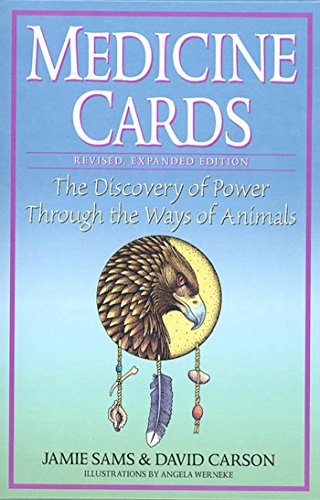
If you want a regular practice rather than a one-time read, an oracle deck is the standard tool: you draw a card and sit with whatever animal comes up. The foundational modern spirit-animal oracle: 44 cards drawn from Sams's Seneca and other Indigenous teachings, with a guidebook that actually explains its sources. The deck most later ones are imitating.
Medicine Cards
The foundational modern spirit-animal oracle: 44 cards drawn from Sams's Seneca and other Indigenous teachings, with a guidebook that actually explains its sources. The deck most later ones are imitating.
Compare the field in our ranked guide to spirit animal oracle decks, or browse decks, crystals, and journals in spirit animal gifts & tools.
Frequently asked
- Why is the butterfly a symbol of the soul in Greek thought?
- The Greek word psyche (ψυχή) means both 'soul' and 'butterfly.' That dual meaning shows up in Apuleius's Metamorphoses (The Golden Ass), where the mortal Psyche is depicted with wings, and in Plato's Phaedo, which uses the image of the soul as a winged being freed from the body.
- What does the monarch butterfly mean in Mexican tradition?
- Monarchs arrive in their Mexican overwintering grounds in late October through early November, overlapping with Día de los Muertos (November 1–2). A folk association developed identifying the arriving butterflies with the souls of the returning dead. This is a distinct strand from the pre-contact Mexica goddess Itzpapalotl (Obsidian Butterfly), who is attested in Sahagún's Florentine Codex.
- What is the Zhuangzi butterfly dream?
- In chapter 2 of the Zhuangzi (4th century BCE), the philosopher Zhuangzi dreams he is a butterfly and, on waking, cannot tell whether he is a man who dreamed he was a butterfly or a butterfly now dreaming he is a man. It is a canonical passage in classical Chinese thought about the permeability of identity.
- Does the yellow butterfly mean anything specific?
- In modern pop-spirit-animal writing, yellow butterflies are often read as joy, hope, or a departed loved one's greeting. That reading is not attested in any of the older primary traditions covered here; it is a contemporary folk layer, most prominently shaped by internet-era spirituality blogs. Treat it as modern, not ancient.
Sources
- PRIMARY Apuleius, Metamorphoses (The Golden Ass) . Kenney trans., Penguin Classics, 1998.
- PRIMARY Plato, Phaedo . Grube trans., Hackett, 2002.
- PRIMARY Bernardino de Sahagún, Florentine Codex . Dibble & Anderson trans., University of Utah Press.
- PRIMARY Zhuangzi . Watson trans., Columbia University Press, 2013.
- ARCHIVE Lafcadio Hearn, Kwaidan . Houghton Mifflin, 1904.
- REFERENCE Ted Andrews, Animal Speak . Llewellyn, 1993.