Spirit Animal
Swan Spirit Animal
Swan spirit animal meaning: grace, transformation and fidelity. Traced from the modern grace-and-transformation reading back through Ted Andrews's Animal Speak to the Hindu hamsa of Saraswati and Brahma, the Greek Zeus-as-swan seduction of Leda, the Finnish Swan of Tuonela in the Kalevala, and the Irish Children of Lir.
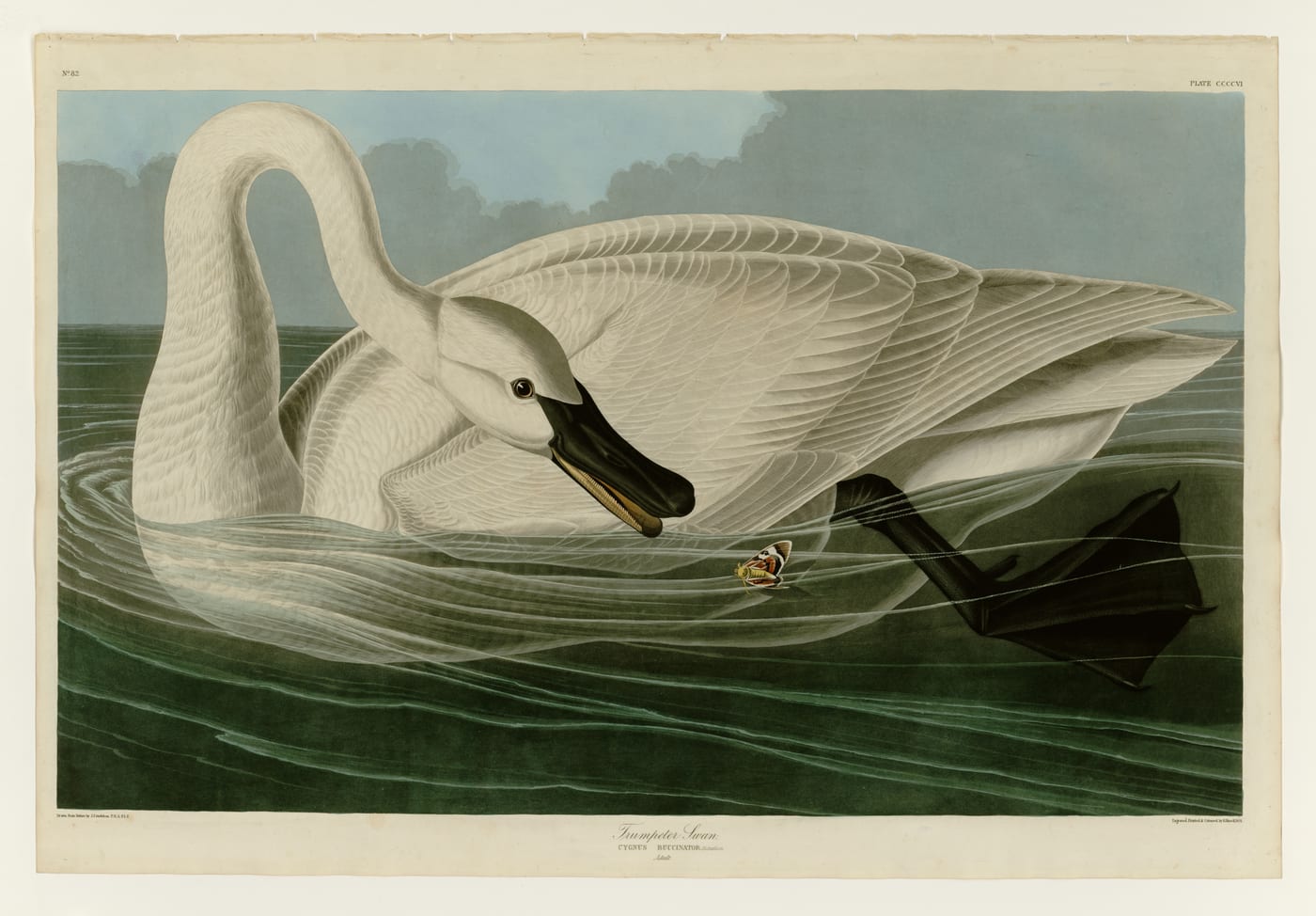
In modern American "spirit animal" usage, the swan stands for grace, beauty, long partnership, and transformation from ordinary to extraordinary (the ugly-duckling reading). That synthesis comes through Ted Andrews's Animal Speak (Llewellyn, 1993) and Hans Christian Andersen's 1843 tale. The older traditions are darker and more specific. The Hindu hamsa is the swan-or-goose vahana of both Brahma and Saraswati, a figure of discernment documented in the Upanishads and across Sanskrit literature. Zeus transforms into a swan to seduce (or rape) Leda in Ovid's Metamorphoses 6.109 and Euripides's Helen. The Finnish Kalevala (Elias Lönnrot, 1849 extended edition) features the Swan of Tuonela swimming in the river of the dead. And the Irish Oidheadh Chloinne Lir (Fate of the Children of Lir) turns four royal siblings into swans for nine hundred years.
The swan that most modern American readers carry in their heads was born in 1843, in Copenhagen. Hans Christian Andersen published “The Ugly Duckling” as one of his New Fairy Tales, and within a generation the story had entered English-speaking children’s libraries, where it has not left. The duckling grows up to be a swan. The transformation-to-beauty reading is Andersen’s, softened further by a century and a half of swan-lake ballet imagery and children’s-book illustration.
Almost none of this is what the ancient swan actually carried.
The four pre-1843 swans
The hamsa. Hindu. The swan-or-goose mount of both Brahma and Saraswati. In the Mundaka Upaniṣad 3.1.1 and the Shvetashvatara Upaniṣad 6.15, the hamsa is the discerning soul that can separate milk from water, a metaphor for spiritual discrimination. The Hamsa Upaniṣad extends the idea into breath-practice: the syllable HA-SA is the inhale-exhale cycle, the eternal hamsa inside every living creature. Saraswati’s hamsa is her inseparable attribute across every major temple tradition.
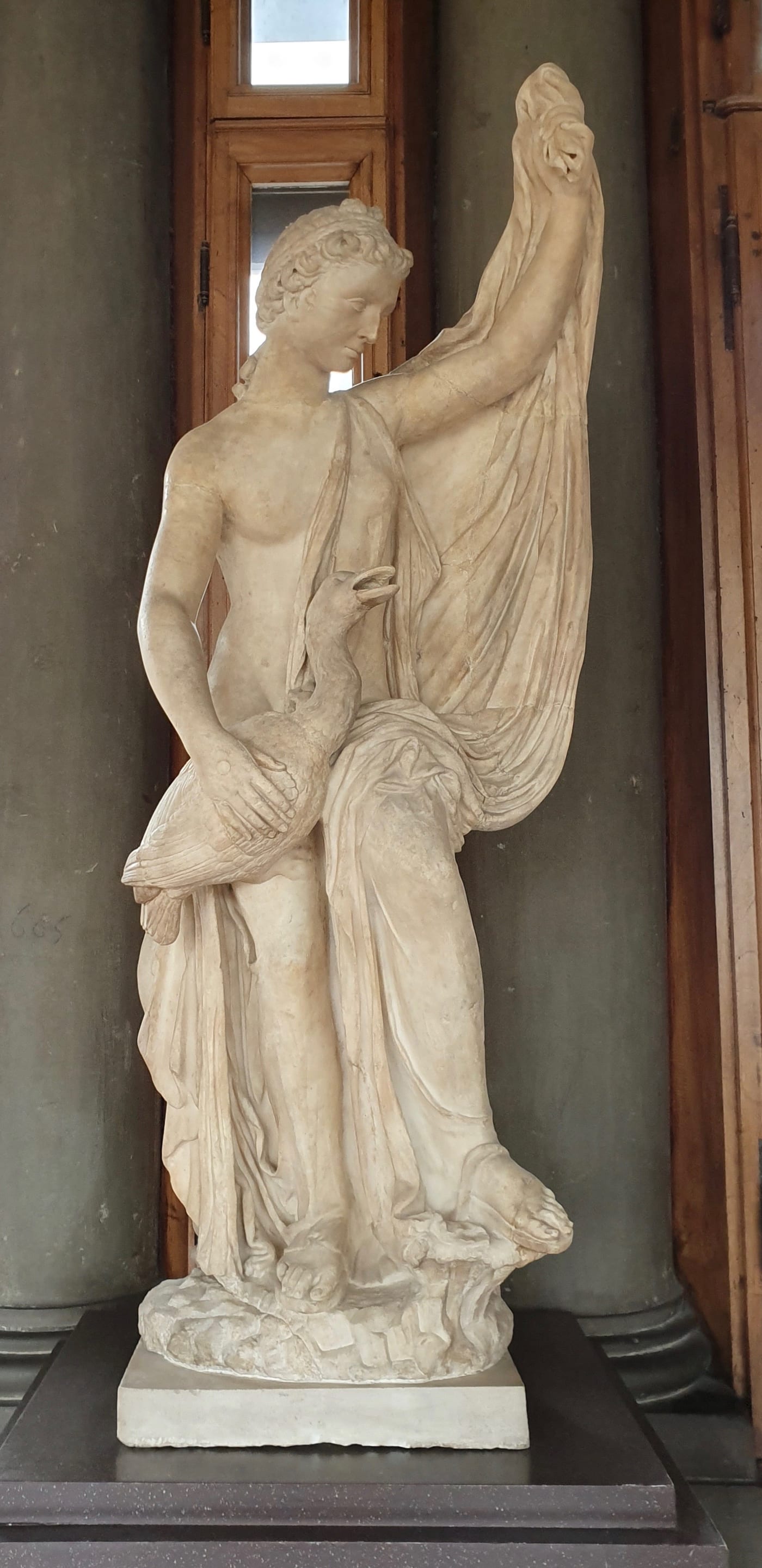
Zeus and Leda. Greek. Zeus transforms into a swan to approach Leda. The union produces Helen of Troy (and/or Castor and Pollux, depending on the variant). Ovid and Euripides preserve the ancient sources. Modern classical scholarship has named the coercive dimension that art-historical tradition long softened. This is not a grace-figure. It is a god in animal form making a mortal woman into the mother of a war.
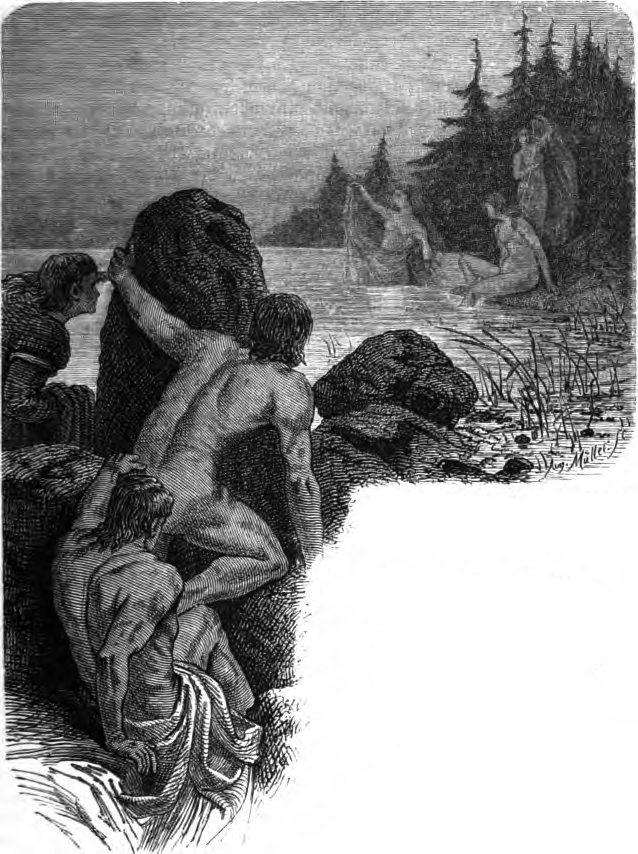
The Swan of Tuonela. Finnish. The Kalevala, Elias Lönnrot’s 1849 compilation of Karelian oral tradition, has Lemminkäinen sent to kill the sacred swan in the black river of the dead as a bridal task. He fails. He is killed. His mother resurrects him piece by piece. Sibelius’s 1895 tone poem The Swan of Tuonela made this swan internationally famous. Threshold-animal. Not ugly duckling.
The Children of Lir. Irish. Four royal children are turned into swans by their stepmother’s curse and spend nine hundred years on three Irish lakes, keeping their human voices. One of the Three Sorrows of Irish storytelling. Oisín Kelly’s 1971 bronze sculpture of the transformation is the central figure of Ireland’s Garden of Remembrance in Dublin, the national memorial to those who died for Irish independence.
What all four share
A swan at a liminal boundary. Between knowledge and ignorance (the hamsa sorting milk and water). Between god and human (Zeus and Leda). Between the living world and the land of the dead (Tuonela). Between human and animal, time and eternity (the Children of Lir).
The swan in the ancient record is a threshold-animal. It is almost exactly what the Andersen-era reading is not.
Why this matters
Writing a spirit-animal article about the swan that offers only “grace, transformation, long partnership” is giving the reader a reading that is roughly 180 years old. Giving them the hamsa or the Swan of Tuonela or the Children of Lir is giving them readings that are ten or twenty times older, and that carry considerably more weight. That is the work this catalog is trying to do.
Across traditions
Hindu (hamsa, the swan of Saraswati and Brahma)
The hamsa (Sanskrit हंस, often translated "swan" but also covering the bar-headed goose Anser indicus and sometimes the flamingo) is the vahana of both Brahma, the creator, and Saraswati, the goddess of knowledge, music, and the arts. The earliest Upaniṣadic references (notably the Mundaka Upaniṣad 3.1.1 and the Shvetashvatara Upaniṣad 6.15, c. 800–500 BCE) use the hamsa metaphorically for the discerning soul that separates milk from water, an image that becomes foundational in later Vedanta.
The Hamsa Upaniṣad (a minor Yoga upaniṣad) treats the hamsa as the eternal breath-sound (hamsa = HA + SA, the inhale and exhale). Iconographically, Saraswati's hamsa is depicted across every major temple tradition from the Gupta period forward. Diana Eck's India: A Sacred Geography (Harmony, 2012) treats the bird's cultural weight; the Lothal (Harappan) seal evidence for early goose-and-swan iconography predates any Vedic text.
- PRIMARY Mundaka Upaniṣad 3.1.1, Shvetashvatara Upaniṣad 6.15 . Olivelle trans., Oxford World's Classics, 1996.
- PRIMARY Hamsa Upaniṣad . In Paul Deussen, Sixty Upanishads of the Veda, Motilal Banarsidass, 1980.
- PEER-REVIEWED Diana L. Eck, India: A Sacred Geography . Harmony, 2012.
Greek (Zeus and Leda)
Zeus took the form of a swan to approach Leda, wife of King Tyndareus of Sparta. The encounter is narrated in Ovid's Metamorphoses 6.109 (c. 8 CE) and in Euripides's Helen (412 BCE), and referenced across Greek lyric and tragic literature. From the union came two sets of twins: Helen and Clytemnestra in one version; Castor and Pollux in another. The episode is depicted on thousands of surviving Greek and Roman vases, gems, and later paintings, most famously in Leonardo's lost Leda and the Swan and the Michelangelo version now surviving only in copies.
Modern scholarship including Mary Beard's Women & Power: A Manifesto (Liveright, 2017) has foregrounded the coercive dimension of the story, which earlier art-historical tradition often softened as a romance. Both readings are in the ancient text.
- PRIMARY Ovid, Metamorphoses 6.109 . Miller trans., Loeb Classical Library.
- PRIMARY Euripides, Helen . Kovacs trans., Loeb Classical Library.
- PEER-REVIEWED Mary Beard, Women & Power: A Manifesto . Liveright, 2017.
Finnish (the Swan of Tuonela, Kalevala)
The Kalevala, the Finnish national epic compiled by Elias Lönnrot from Karelian oral tradition and published in its definitive 1849 edition, features the Swan of Tuonela (Tuonelan joutsen), a sacred swan swimming in the black river that encircles Tuonela, the land of the dead. The hero Lemminkäinen is tasked with killing the swan as part of his quest for the hand of the Maid of Pohjola; he fails, is killed, and is resurrected by his mother in one of the epic's most famous scenes (Runo 14–15).
Jean Sibelius's tone poem The Swan of Tuonela (Op. 22 No. 2, 1895) carried the image into 20th-century Western musical culture. The Finnish tradition treats the swan as a threshold-animal between the living world and the dead, closer to Anubis or Charon than to a grace-figure.
- PRIMARY Elias Lönnrot (compiler), Kalevala (1849 definitive edition) . Bosley trans., Oxford World's Classics, 1989.
- REFERENCE Jean Sibelius, The Swan of Tuonela, Op. 22 No. 2 (1895)
- PEER-REVIEWED Juha Pentikäinen, Kalevala Mythology . Indiana University Press, 1989.
Irish (Oidheadh Chloinne Lir, Fate of the Children of Lir)
The Oidheadh Chloinne Lir ("The Fate of the Children of Lir") is one of the "Three Sorrows of Irish Storytelling," preserved in late medieval Irish manuscripts including Trinity College Dublin MS 1340 (H.3.18). The four children of Lir are transformed into swans by their stepmother Aoife's curse and condemned to spend nine hundred years on three Irish lakes (Lough Dairbhreach, the Sea of Moyle, and Irrus Domnann), keeping their human voices and ability to sing and reason. The Christian coda to the medieval version has them restored to human form only to die immediately, and be baptized in death.
The tale was popularized in English by Lady Augusta Gregory's Gods and Fighting Men (John Murray, 1904) and has been continuously present in Irish cultural memory since. Charles Dickens's circle knew it; the Children of Lir statue by Oisín Kelly in the Garden of Remembrance in Dublin (1971) is Ireland's national memorial to those who died for Irish freedom.
- PRIMARY Oidheadh Chloinne Lir (Trinity College Dublin MS 1340, H.3.18)
- PRIMARY Lady Augusta Gregory, Gods and Fighting Men . John Murray, 1904.
- PEER-REVIEWED Proinsias Mac Cana, Celtic Mythology . Hamlyn, 1970.
Ted Andrews (1993)
Andrews's 1993 swan is mostly an Andersen 'Ugly Duckling' figure plus vague romantic imagery, reduced to transformation-and-grace keywords. He gestures at the Leda story briefly. The Hindu hamsa, the Finnish Tuonela-swan, and the Irish Children of Lir are largely absent. The resulting reading is a pretty swan on a pond, which is a long way from a threshold-animal on the river of the dead.
- REFERENCE Ted Andrews, Animal Speak . Llewellyn, September 1993.
Working with the Swan
If you want a regular practice rather than a one-time read, an oracle deck is the standard tool: you draw a card and sit with whatever animal comes up. Our ranked guide to spirit animal oracle decks compares the field.
Frequently asked
- What does a swan symbolize spiritually?
- In modern pop usage, grace, beauty, transformation, and long partnership, the reading set by Andersen's 1843 Ugly Duckling plus Andrews 1993. Older traditions are more specific. The Hindu hamsa is the vahana of Saraswati and Brahma, a figure of discernment in the Upanishads. Zeus took the form of a swan to approach Leda (Ovid, Metamorphoses 6.109). The Finnish Swan of Tuonela swims in the river of the dead (Kalevala). And the Irish Children of Lir spend 900 years as swans by a stepmother's curse.
- What is the hamsa in Hinduism?
- The hamsa (हंस) is a swan-or-goose bird, the vahana of both Brahma and Saraswati. Upaniṣadic sources including the Mundaka Upaniṣad 3.1.1 and the Shvetashvatara Upaniṣad 6.15 use the hamsa metaphorically for the discerning soul, the one capable of separating milk from water. The Hamsa Upaniṣad extends this into yoga theory: the breath-sound HA-SA is the eternal hamsa cycling inhale and exhale. Saraswati is iconographically inseparable from her hamsa across every major Hindu temple tradition.
- Is the Leda and the Swan story a rape?
- The ancient Greek and Roman sources (Euripides Helen, Ovid Metamorphoses 6.109) are ambiguous but the core scene is a god transforming into an animal and taking a mortal woman without her full informed consent. Earlier art-historical and literary tradition, up through the Renaissance, often romanticized the scene. Modern classical scholarship including Mary Beard's Women & Power (2017) has foregrounded the coercive reading. The coercive dimension is in the ancient text and deserves to be named.
- What is the Swan of Tuonela?
- Tuonelan joutsen, the Swan of Tuonela, is a sacred swan swimming in the black river that encircles Tuonela, the Finnish land of the dead. The Kalevala (Elias Lönnrot's compilation of Karelian oral tradition, 1849 definitive edition) recounts Lemminkäinen's failed attempt to kill the swan as part of a bridal quest. Jean Sibelius's 1895 tone poem of the same name carried the image into Western classical music.
Sources
- PRIMARY Mundaka Upaniṣad 3.1.1, Shvetashvatara Upaniṣad 6.15 . Olivelle trans., Oxford World's Classics, 1996.
- PRIMARY Hamsa Upaniṣad . Deussen, Sixty Upanishads of the Veda, 1897/1980.
- PEER-REVIEWED Diana L. Eck, India: A Sacred Geography . Harmony, 2012.
- PRIMARY Ovid, Metamorphoses 6.109 . Loeb Classical Library.
- PRIMARY Euripides, Helen . Loeb Classical Library.
- PEER-REVIEWED Mary Beard, Women & Power . Liveright, 2017.
- PRIMARY Elias Lönnrot, Kalevala (1849) . Bosley trans., Oxford World's Classics, 1989.
- PEER-REVIEWED Juha Pentikäinen, Kalevala Mythology . Indiana University Press, 1989.
- PRIMARY Oidheadh Chloinne Lir (TCD MS 1340)
- PRIMARY Lady Augusta Gregory, Gods and Fighting Men . John Murray, 1904.
- PEER-REVIEWED Proinsias Mac Cana, Celtic Mythology . Hamlyn, 1970.
- REFERENCE Ted Andrews, Animal Speak . Llewellyn, September 1993.