Tattoo Meaning
Black Panther Tattoo Meaning: American Traditional, Sailor Jerry, and Political Symbolism
Black panther tattoo meaning: American traditional 'panther crawl' design lineage from Sailor Jerry, 1960s-70s Black Panther Party political symbolism, and the distinction from other big-cat tattoos.
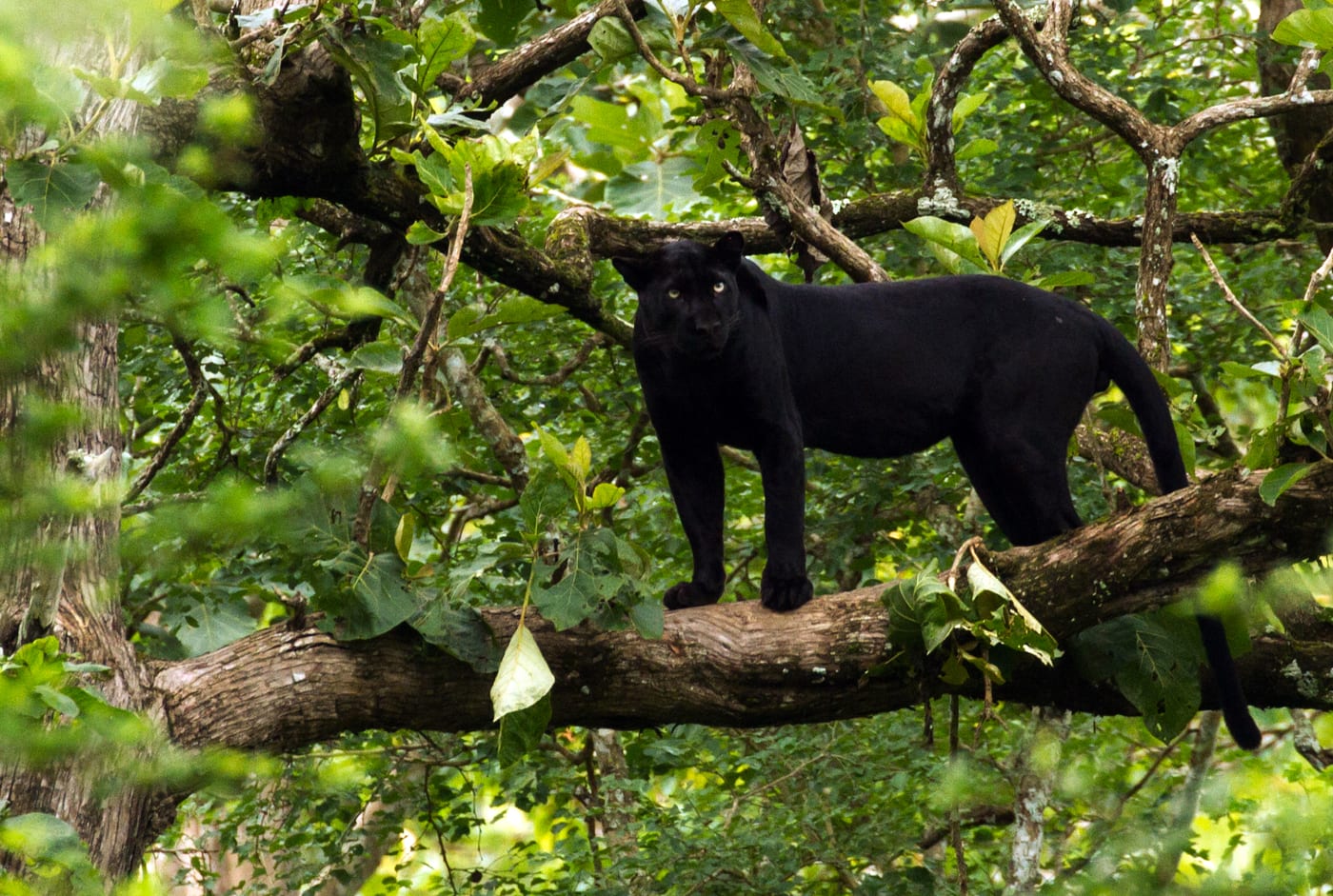
The black panther (a melanistic leopard or jaguar, not a separate species) became one of the most iconic American traditional tattoo designs via Sailor Jerry Collins's mid-20th-century 'panther crawl' design. The image became standard American-tattoo-traditional iconography from roughly 1940 forward. Secondary symbolic associations: the 1966–82 Black Panther Party political symbolism (Huey Newton, Bobby Seale).
First, the biology: the black panther is not a separate species. It is a melanistic individual of either the leopard (Panthera pardus) or the jaguar (Panthera onca), the same species with a genetic variant that produces excess dark pigment, making the spots visible only under direct light. In most lighting conditions they read as pure black. The name “black panther” is vernacular, not taxonomic.
The Sailor Jerry panther-crawl
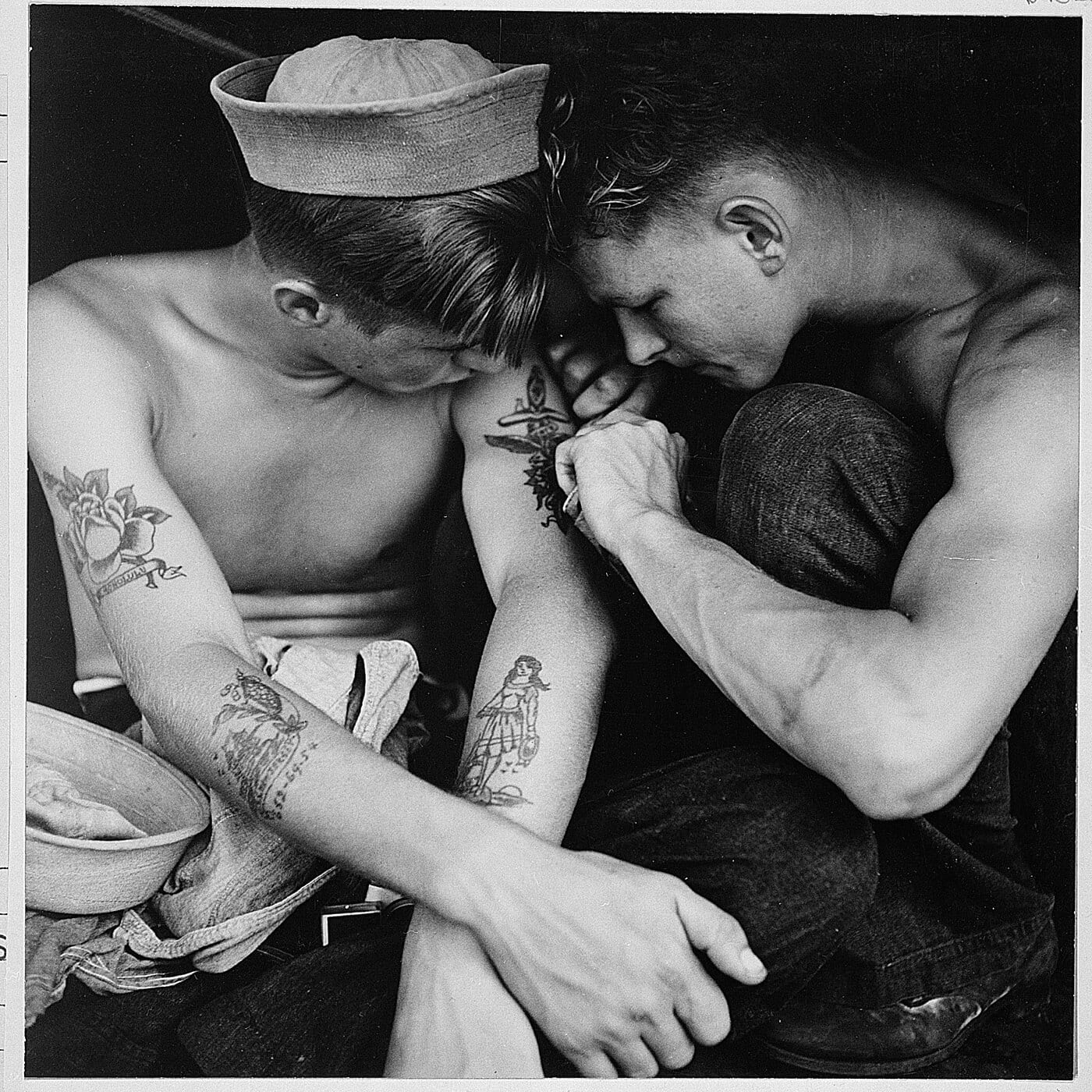
The canonical American traditional black panther tattoo is the “panther crawl”, the cat in a low, coiled, forward-reaching crawl posture, typically occupying the forearm or upper arm in a long horizontal composition. Sailor Jerry Collins (Norman Collins, 1911–1973), working from his Honolulu studio, popularized this design from the late 1930s through the 1960s. His panther was bold-outlined, high-contrast black field, with the anatomical exaggeration characteristic of old-school American flash: long sleek body, oversized paws, compressed but dynamic posture.
The panther-crawl became one of the most frequently requested designs in mid-20th-century American tattooing and remained a canonical flash-sheet image for decades. The design reads as power, stealth, and contained menace, the predator that can move invisibly until it chooses not to.
Political symbolism: the Black Panther Party
The Black Panther Party for Self-Defense, founded in Oakland in 1966 by Huey Newton and Bobby Seale, adopted the black panther as its logo. The design (a crouching black panther in profile) was originally drawn by Dorothy Zellner and Lisa Lyons from existing photography. The Party was active from 1966 to 1982 and remains a significant reference point in American political history.
Black panther tattoos with explicit BPP-referencing design elements (the specific logo form, or combined with Black Power iconography) carry this political inheritance. The design means something specific in that context, and not just stealth or power.
Melanistic jaguar in Mesoamerican tradition
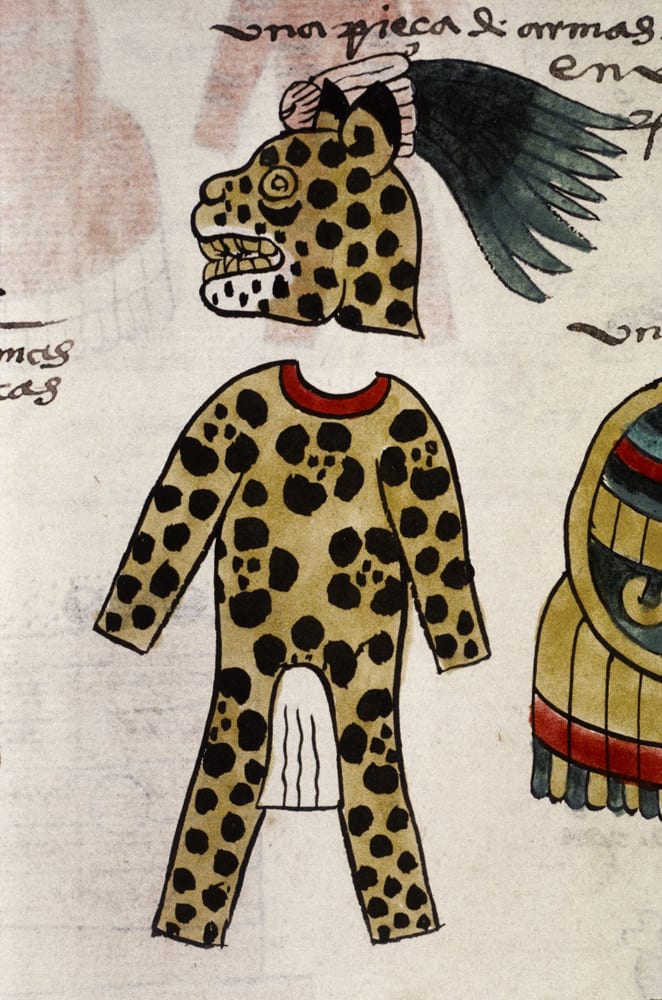
The melanistic jaguar (the black jaguar) held specific cosmological significance in Mesoamerican traditions. The jaguar as the ruler of the night, the underworld, and rain, combined with the black jaguar’s invisible-in-darkness quality, made the black jaguar a specific power-object. Jaguar-warrior societies in Aztec culture (the Ocelōtl) wore jaguar pelts. Black panther tattoos with specifically Mesoamerican iconographic framing occupy this register rather than the American traditional or political registers.
Placement
The forearm panther-crawl is the classic placement, the design’s horizontal orientation and the forearm’s natural tube shape work together. Upper-arm and chest placements allow larger compositions. Back placements allow full-body realistic designs.
See the full spirit-animal meaning: Black Panther Spirit Animal .
Frequently asked
- What does a black panther tattoo mean?
- In American traditional tattooing, the panther-crawl is a canonical design from the mid-20th century forward, associated with strength and stealth but primarily an aesthetic-traditional form. Political associations with the Black Panther Party (1966–1982) are a distinct inheritance. The black panther itself is a melanistic leopard or jaguar, not a separate species.
- Is a black panther tattoo Sailor Jerry?
- The crawling black panther is Norman "Sailor Jerry" Collins's most-imitated American Traditional design, sometimes called a "panther crawler." Collins worked from his Honolulu shop on Smith Street in Chinatown from 1934 until his death in 1973. The composition draws on Japanese tiger imagery (which Collins studied from Japanese tattoo artists via his Pacific naval service) translated into the bold-line, limited-palette American Traditional vocabulary. Don Ed Hardy's Tattooing the Invisible Man traces the lineage.
- What does a black panther mean culturally beyond Sailor Jerry?
- In the broader American context after 1966, the black panther also references the Black Panther Party for Self-Defense. The Party's ten-point program, founded by Huey Newton and Bobby Seale in Oakland, used the black panther as a visual emblem of self-defense and political resistance. A black panther tattoo can carry this political register depending on the wearer's context and the artist's framing.
Sources
- REFERENCE Sailor Jerry Collins, American traditional flash . 1940s–60s Hawaiian studio.
- PEER-REVIEWED Takahiro Kitamura and Katie Kitamura, Tattoos of the Floating World . Hotei, 2003.
- PRIMARY Don Ed Hardy, Tattooing the Invisible Man . Smart Art Press, 2000.
- PRIMARY Norman Collins, Sailor Jerry Tattoo Flash (collected) . Bill Tipping (ed.), Hardy Marks, 1994.
- PRIMARY Huey Newton, Revolutionary Suicide . Harcourt Brace Jovanovich, 1973.