Tattoo Meaning
Koi Fish Tattoo Meaning: Japanese Irezumi, the Dragon Gate Legend, and Direction of Swimming
Koi fish tattoo meaning: Japanese irezumi tradition, the dragon-gate (Longmen) legend of the koi that becomes a dragon, and the traditional reading of swimming-upstream versus swimming-downstream as encoding struggle-or-completion.
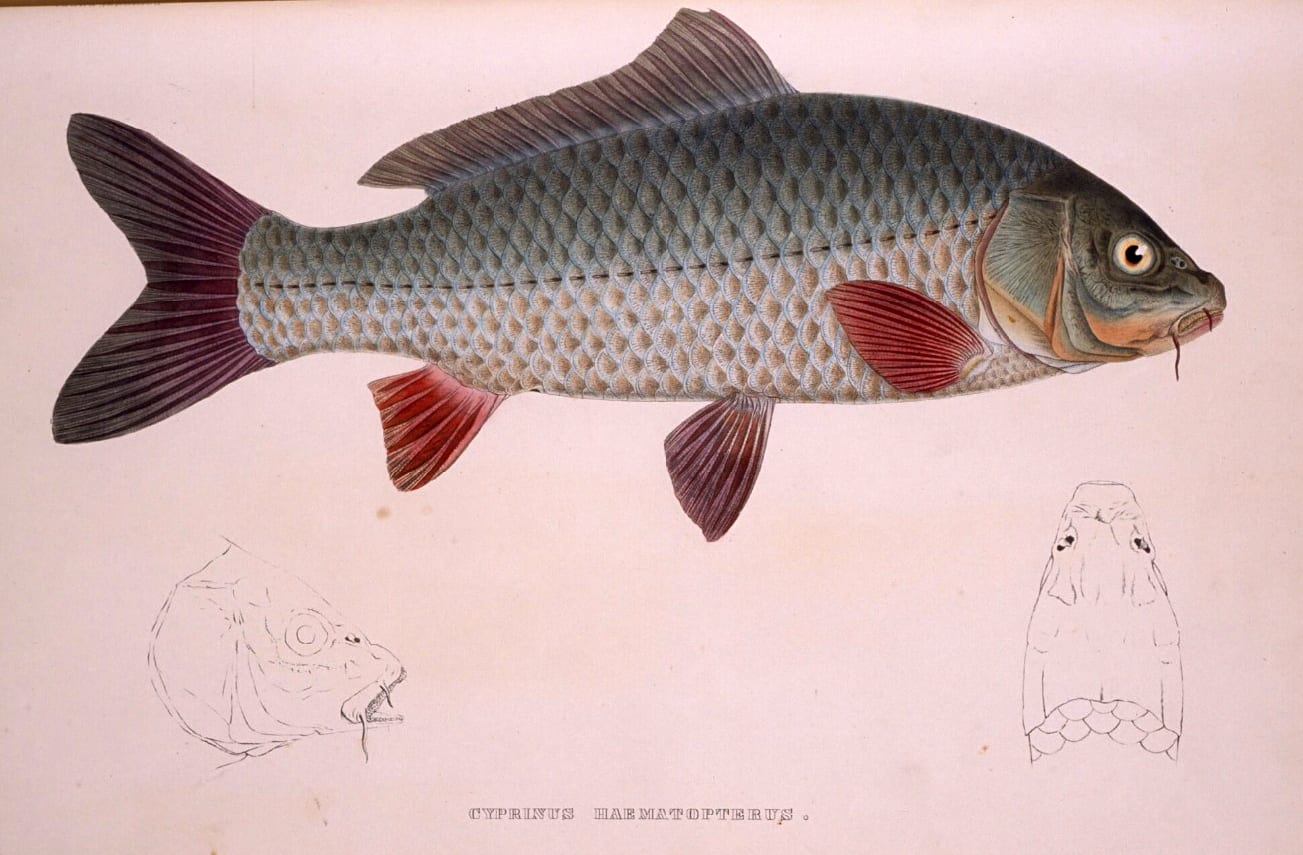
Koi fish are one of the canonical Japanese irezumi designs. The foundational narrative is the Dragon Gate (Longmen) legend: a koi that swims upstream through the Yellow River's Dragon Gate waterfall transforms into a dragon. The tradition descends through Utagawa Kuniyoshi's 1827–30 '108 Heroes of the Suikoden' tattooed-hero woodblock prints. Traditional irezumi convention: koi swimming upstream = struggle-in-progress; koi swimming downstream = goal-achieved or completion. Colors (black kuro, red aka, gold ōgon) carry specific secondary meanings.
The koi is one of the canonical Japanese irezumi subjects, and it’s worth knowing why. The design isn’t popular because koi are aesthetically convenient (though they are). It’s popular because the Dragon Gate legend earns the design. A fish that becomes a dragon through will and perseverance is a tattoo that means something before it even hits your skin.
The Dragon Gate legend
The foundational narrative behind koi fish tattoos is the Dragon Gate (Longmen, 龍門) legend, a Chinese literary tradition that entered Japanese tattooing through Edo-period woodblock print culture. The legend: a waterfall on the Yellow River called the Dragon Gate is so powerful that no fish can ascend it. Except the koi. A koi that swims upstream against the current, reaches the Dragon Gate, and passes through it transforms into a dragon. The legend appears in the Shiji (Records of the Grand Historian, c. 94 BCE) by Sima Qian and in the Hou Hanshu (Book of the Later Han, c. 445 CE).
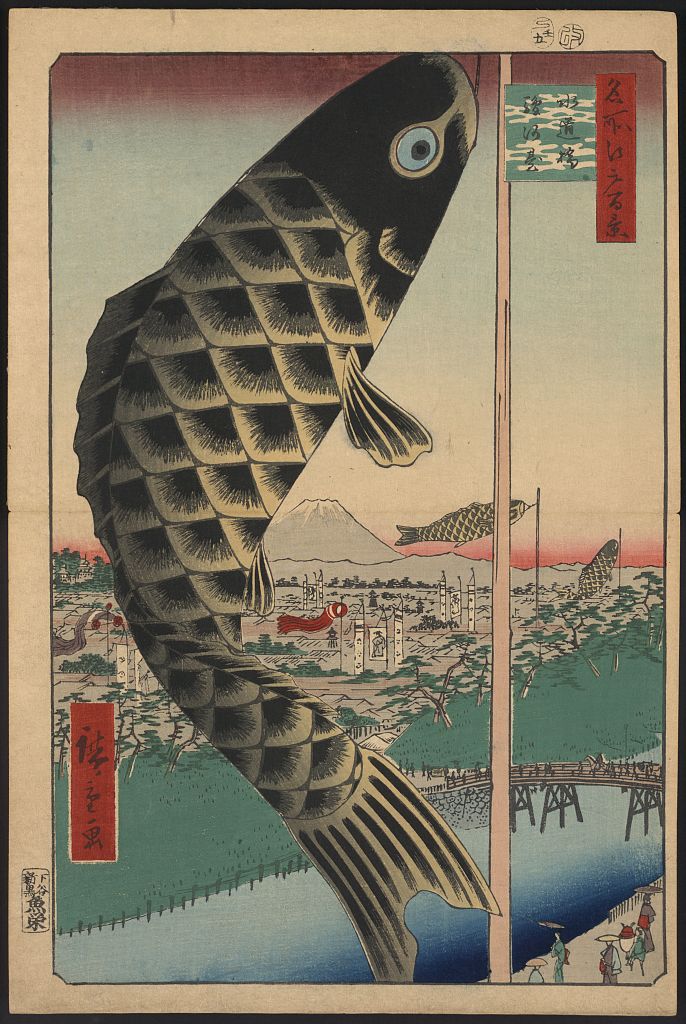
The transformation (fish becoming dragon through sheer will and effort) made the koi a natural symbol for perseverance, achievement, and transformation in Chinese and Japanese literary tradition. The carp streamers (koinobori) flown on Tango no Sekku (Children’s Day, formerly Boys’ Day, May 5 in Japan) are documented from the Edo period and carry the same symbolic weight: the child will become the dragon.
The directional convention
Traditional Japanese irezumi establishes a strong convention around the direction the koi swims. Koi swimming upstream (toward the head in a sleeve composition, or toward the heart in a chest design) represents the struggle in progress, the fish still fighting toward the Dragon Gate. Koi swimming downstream represents goal achieved, the battle over. This convention is not universal across tattoo culture, but it is the traditional irezumi reading and is the one a Japanese-trained artist will apply.
Utagawa Kuniyoshi and the tattooed heroes
The 1827–30 woodblock print series 108 Heroes of the Suikoden by Utagawa Kuniyoshi depicted tattooed Chinese heroes with large, elaborate body-suit designs. The series became the primary visual reference library for Japanese tattoo aesthetics for the next century. Koi in these prints (combined with waves, cherry blossoms, and peonies) established the compositional conventions that persist in irezumi today.
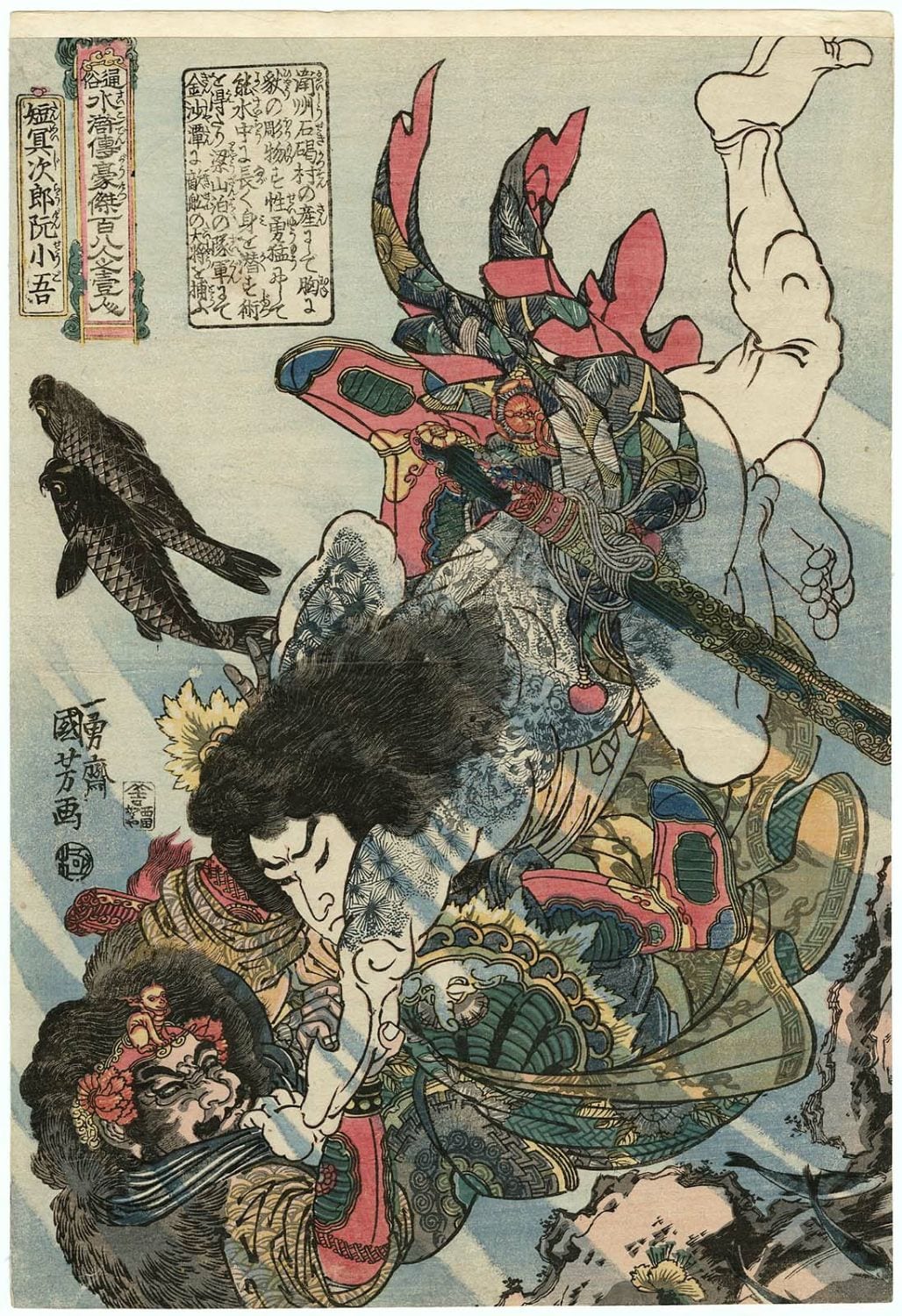
Color meaning
Colors carry secondary meanings in the irezumi koi tradition. Black kuro koi: overcome adversity, specifically in the face of family loss or challenges. Red or orange aka koi: love, maternal strength. Gold ōgon koi: wealth, prosperity, good fortune. Blue kohaku: tranquility. These are working conventions in the irezumi tradition; they matter for design collaboration with an irezumi artist but are not enforced rules.
Placement
The koi’s elongated body makes it a natural full-sleeve or thigh composition subject. The Dragon Gate composition (koi ascending through churning water with cherry blossom or lotus elements) is the canonical full-sleeve design. Chest panels allow the fish to rise toward the collarbone. Smaller thigh placements are common for single-fish compositions without the full ascending-water backdrop.
See the full spirit-animal meaning: Koi Fish Spirit Animal .
Frequently asked
- What does a koi fish tattoo mean?
- Perseverance, goal-achievement, and transformation, from the Chinese-origin Dragon Gate (Longmen) legend in which a koi that swims upstream through the Yellow River's waterfall becomes a dragon. Irezumi convention: upstream = struggle-in-progress, downstream = completion.
- Does the direction the koi is swimming matter?
- Yes, in traditional Japanese irezumi. Koi swimming upstream = struggle, goal not yet achieved, active striving. Koi swimming downstream = completion, goal achieved, coming home.
- What does koi-no-takinobori actually mean?
- Koi-no-takinobori (鯉の滝登り, "the koi climbing the waterfall") refers to a Chinese legend in which a koi who successfully ascends the Longmen Waterfall is transformed into a dragon. The Japanese irezumi adoption of this motif (the koi swimming upstream against the current) encodes perseverance through structural obstacles. Kuniyoshi's Suikoden series (c. 1827–30) established the compositional vocabulary still followed by traditional irezumi practitioners.
- Does the direction the koi faces matter?
- In traditional Japanese irezumi, yes. A koi swimming upstream (head pointing up the body, against gravity) reads as active perseverance, the climb still in progress. A koi swimming downstream (head pointing down) reads as completion: the trial already won, the dragon-transformation already happened. Black-ink koi vs colorful koi also carry distinct readings traceable to the Edo-period woodblock conventions.
Sources
- PEER-REVIEWED Takahiro Kitamura, Tattoos of the Floating World . Hotei, 2003.
- PRIMARY Utagawa Kuniyoshi, 108 Heroes of the Suikoden (1827–30)
- PRIMARY Horiyoshi III (Yoshihito Nakano), Japanese Tattoos: History, Culture, Design . Tuttle, 2017.
- PRIMARY Utagawa Kuniyoshi, Suikoden series (c. 1827–1830) . Woodblock prints.
- PEER-REVIEWED Christine Guth, Hokusai's Great Wave: Biography of a Global Icon . University of Hawaii Press, 2015.