Tattoo Meaning
Wolf Tattoo Meaning: Styles, Placements, and Cultural Sources
Wolf tattoo meaning across neo-traditional American, Japanese irezumi, Native-American-inspired styles (with cultural-sensitivity notes), and minimalist-linework variants. Cross-references our wolf spirit-animal page.
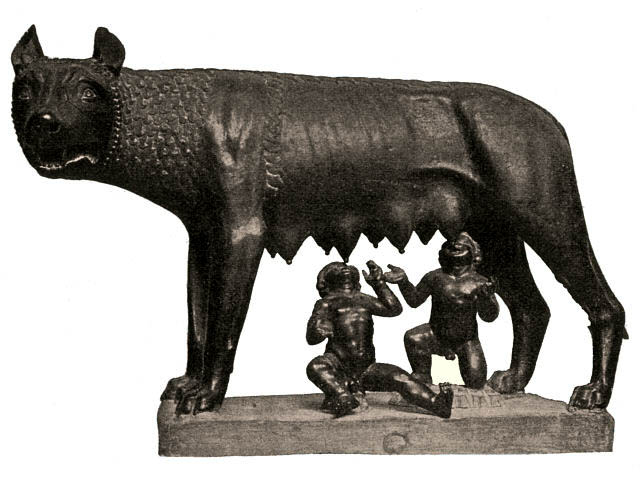
Wolf tattoos most commonly mean loyalty, family, teaching, and pack-instinct. That reading descends from Ted Andrews's 1993 Animal Speak synthesis filtered through twenty-first-century American tattoo culture. Specific tattoo-style contexts: neo-traditional American wolves (bold outlines, limited palette, Sailor Jerry aesthetic); Japanese irezumi ōkami (狼) in Edo-period woodblock-derived body-suit designs, particularly for the Japanese wolf (Canis lupus hodophilax, extinct since 1905); Norse Fenrir and Geri-Freki imagery; and Native-American-inspired designs (which raise cultural-appropriation concerns depending on design elements and artist connection).
Wolf tattoos mean loyalty, family, and pack-instinct in most contemporary American tattoo culture. That reading comes from Ted Andrews’s 1993 Animal Speak synthesis filtered through two decades of neo-traditional and realism flash. It’s a coherent reading, and it’s honest to the wolf’s actual biology. But the traditions underneath it are older and more varied, and each one produces a visually distinct design.
Neo-traditional American
The neo-traditional wolf is the most widely-gotten version: bold black outlines, limited palette, the wolf’s face forward-facing with visible eyes. The design works in almost any scale. Forearm and upper-arm placements dominate. The wolf’s face, with its direct gaze and asymmetrical fur detail, is the visual anchor; most neo-traditional wolf designs are face compositions rather than full-body.
Sailor Jerry-era American flash included wolves alongside Pacific Northwest fauna, and the mid-20th-century conventions are visible in the stylized ear placement and simplified musculature that persist in neo-traditional work today. But the neo-traditional wolf has developed its own conventions since the 2000s, heavier fills, more dramatic negative space, eye treatments that make the wolf look more like itself and less like a photo reference.
Japanese irezumi ōkami
The Japanese wolf (ōkami, 狼) is a distinct design tradition with a specific animal behind it. The Japanese wolf (Canis lupus hodophilax) went extinct in 1905, the last confirmed individual killed in Nara Prefecture. In Edo-period woodblock print culture, wolves were associated with both danger and protection: guardians of mountain travelers, particularly at Mitsumine Shrine in Saitama Prefecture, where ōkami amulets were sold to protect against wolves, fire, and theft.
Takahiro Kitamura’s Tattoos of the Floating World (Hotei, 2003) documents ōkami in full body-suit irezumi compositions, typically combined with mountain pine, autumn leaves, and the Edo visual vocabulary of mist and negative space. The design is different from a Western neo-traditional wolf in everything except the animal depicted.
Norse Fenrir and Geri-Freki
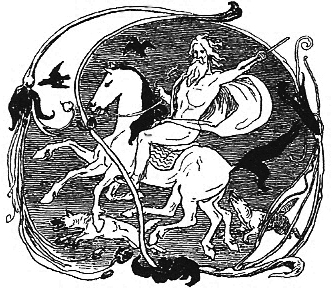
Norse mythology gives wolves two completely opposite roles. Fenrir is the monstrous wolf who swallows Odin at Ragnarök, bound by the magical ribbon Gleipnir until the world ends, growing enormous in captivity. Geri and Freki are Odin’s loyal companion wolves, named Greedy and Ravenous, who receive all the food from Odin’s table while he subsists on wine alone.
The same god keeps the apocalyptic wolf chained and the loyal wolves at his side. That range is the Norse wolf: threat and companion, destruction and devotion, at full extremes. Grímnismál 19 (Poetic Edda, Larrington trans.) names Geri and Freki. Völuspá 53 describes Fenrir swallowing the sun.
Norse-inspired wolf tattoo designs typically take one pole or the other: dramatic Fenrir compositions (chains, runes, scale) or loyal-companion designs (paired wolves, runic patterns, Odin-adjacent imagery). The two feel different because they are different animals, mythologically speaking.
Placement
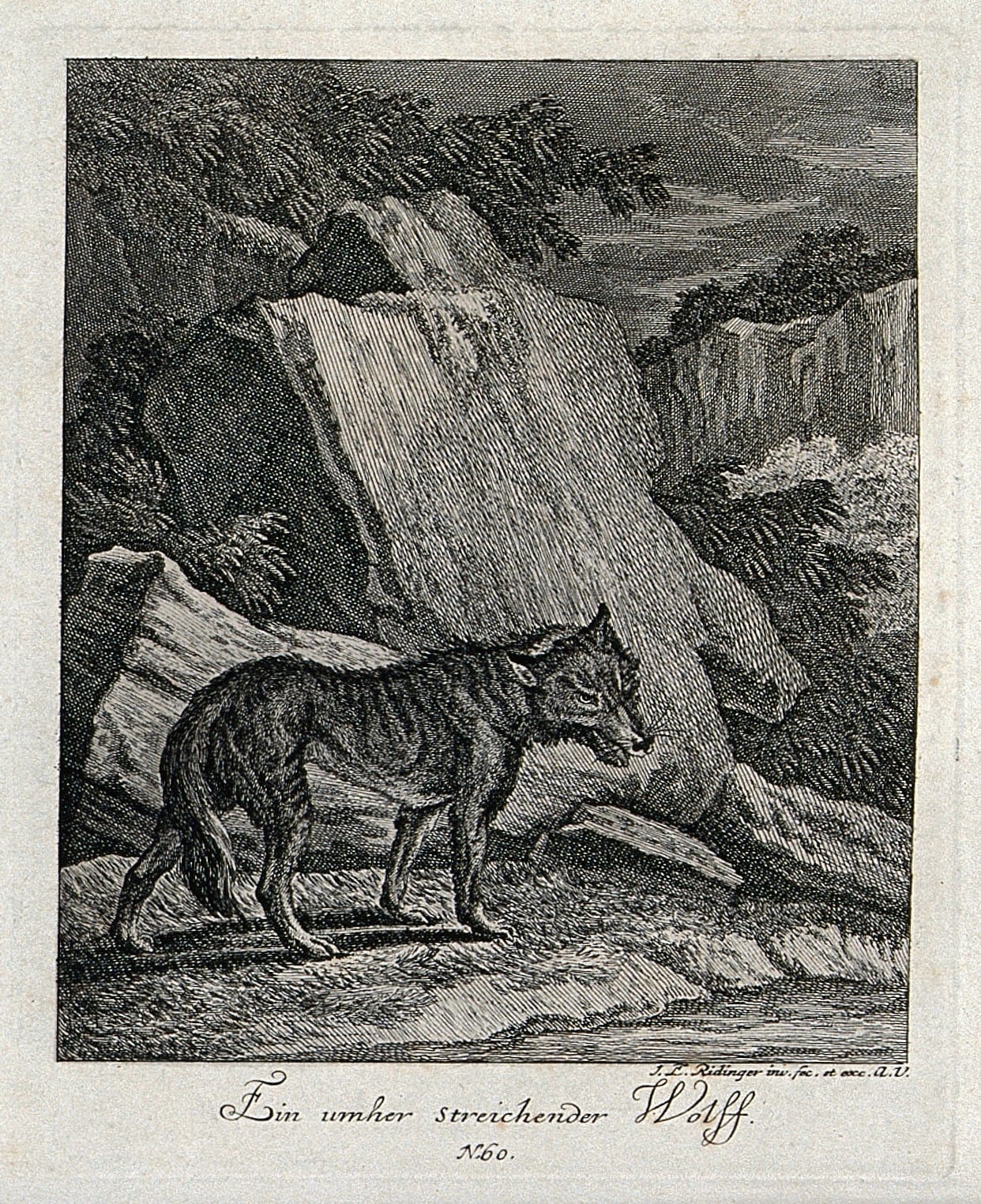
The wolf’s face is the design’s visual anchor in most compositions. Chest and forearm placements dominate for face-forward designs. Full-body compositions, the running wolf silhouette, the howling wolf against a moon, work on the back or thigh where the longer form has room. Minimalist single-line wolves scale down to forearm, inner bicep, or ankle. The sleeve wolf (part of a larger nature or Norse scene) builds toward the shoulder and upper arm.
See the full spirit-animal meaning: Wolf Spirit Animal .
Frequently asked
- What does a wolf tattoo mean?
- Most commonly loyalty, family, teaching, and pack-instinct, the Andrews 1993 synthesis filtered through American tattoo culture. Specific traditions: Japanese irezumi ōkami (the extinct Japanese wolf, Canis lupus hodophilax), Norse Fenrir/Geri-Freki imagery, and Native-American-inspired designs (which raise cultural-appropriation concerns depending on design elements).
- Are wolf tattoos culturally appropriative?
- It depends on the specific design and context. Generic wolf portraits in neo-traditional or Japanese irezumi styles are their own artistic traditions. Native-American-inspired wolf tattoos with war-bonnets, dreamcatchers, or eagle feathers draw on specific Indigenous traditions that often have protocol restrictions and can be appropriated when worn by non-Indigenous people without connection to a specific nation or artist.
- Where should a wolf tattoo be placed?
- Common placements include the upper arm (sleeve component), forearm, chest, back, and thigh. Full-body Japanese irezumi traditionally covers the torso and upper arms. Minimalist linework wolves are typically smaller-scale on the forearm or inner bicep. The choice is aesthetic; no traditional placement-requirement applies to most modern wolf-tattoo styles.
Sources
- PEER-REVIEWED Takahiro Kitamura and Katie Kitamura, Tattoos of the Floating World . Hotei, 2003.
- PRIMARY Poetic Edda (Völuspá, Grímnismál) . Larrington trans., Oxford World's Classics, 2014.
- REFERENCE Ted Andrews, Animal Speak . Llewellyn, 1993.
- PRIMARY Norman Collins, Sailor Jerry Tattoo Flash (collected, ed. Bill Tipping) . Hardy Marks, 1994.
- PRIMARY Don Ed Hardy, Tattooing the Invisible Man . Smart Art Press, 2000.