Hub · Traditions
Traditions
Eight distinct frameworks for the human-animal relationship. Named, sourced, not interchangeable.
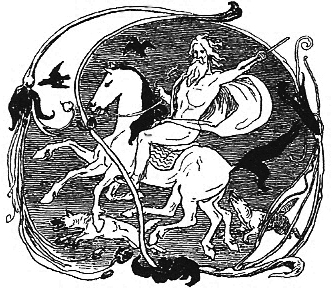
Animal symbolism is not one tradition. The Anishinaabe doodem (a hereditary clan system), the Old Norse fylgja (a soul-companion in saga literature), the Hindu vāhana (a specific deity's mount), the Japanese kitsune (a documented shrine messenger), the Egyptian theriomorphic pantheon, the Buddhist Jataka (stories of the Buddha's animal past lives), and the modern American pop-culture term 'spirit animal' are categorically different things, from different times, different cultures, and different textual traditions.
Why they are not interchangeable
The most common failure in popular animal-symbolism writing is the flattening move: the wolf means loyalty and pack, across "many cultures," across "indigenous traditions," across "shamanic practice." The wolf in Old Norse saga literature (the wolf as Odin's companion Geri and Freki, the wolf Fenrir who swallows the sun at Ragnarök, the úlfheðnar who fought in wolf-skins) is not the same wolf as the wolf in Anishinaabe oral tradition, which is not the same wolf as the wolf in the Buddhist Jataka tales, which is not the same wolf that Ted Andrews describes in Animal Speak. Collapsing them into a single "wolf symbolism" entry produces something that is accurate to none of them.
Each tradition below has its own textual record, its own named scholars, and its own claims about what animals mean and why. The entries on this site hold those distinctions.
The traditions at a glance
Anishinaabe doodem
The doodem is the Anishinaabe/Ojibwe clan system: a patrilineal kinship structure in which membership is inherited at birth, the clan animal defines social role and ceremonial responsibility, and same-clan marriage is prohibited. It is collective and structural, not individual and personal. Primary sources: Basil Johnston's Ojibway Heritage (University of Nebraska Press, 1976); Frances Densmore's field reports for the Bureau of American Ethnology. See the Anishinaabe doodem entry.
Old Norse fylgja
The fylgja (plural: fylgjur) is a personal guardian spirit in animal form documented in Old Norse saga literature and Eddic poetry. It is not chosen; it accompanies a person from birth, typically invisible except at moments of crisis or to those with the second sight. The saga literature describes fylgjur as bears, wolves, eagles, and oxen, the animal form often reflecting the person's character. Primary sources: Snorri Sturluson's Prose Edda (c. 1220); the Poetic Edda; sagas including Njáls saga and Vatnsdæla saga. See the Norse fylgja entry.
Hindu vāhanas
A vāhana is a deity's mount: a specific animal that carries a specific god or goddess, encoded in iconographic convention. Vishnu's is the eagle Garuda. Shiva's is the bull Nandi. Lakshmi's is the owl or elephant depending on the regional tradition. Saraswati's is the swan or peacock. Each vāhana is theologically functional, not symbolically decorative: the mount encodes the deity's qualities and cosmological role. Primary sources: Puranic literature; the Vishnu Purana; the Shiva Purana; P.K. Gode's iconographic studies. See the Hindu vāhanas entry.
Egyptian theriomorphic deities
Egyptian religion produced a theriomorphic pantheon of exceptional richness and specificity: Horus the falcon, Thoth the ibis, Bastet the cat, Sekhmet the lioness, Sobek the crocodile, Anubis the jackal. These are not "animal symbols" in the Western sense, they are gods who appear in animal form or hybrid form as expressions of specific cosmological functions. Horus-as-falcon is the king's divine nature; Thoth-as-ibis is the scribe of the gods; Anubis-as-jackal is the guide of the dead. Primary sources: the Egyptian Book of the Dead; the Pyramid Texts; Erik Hornung's Conceptions of God in Ancient Egypt (Cornell, 1982).
Buddhist Jataka tales
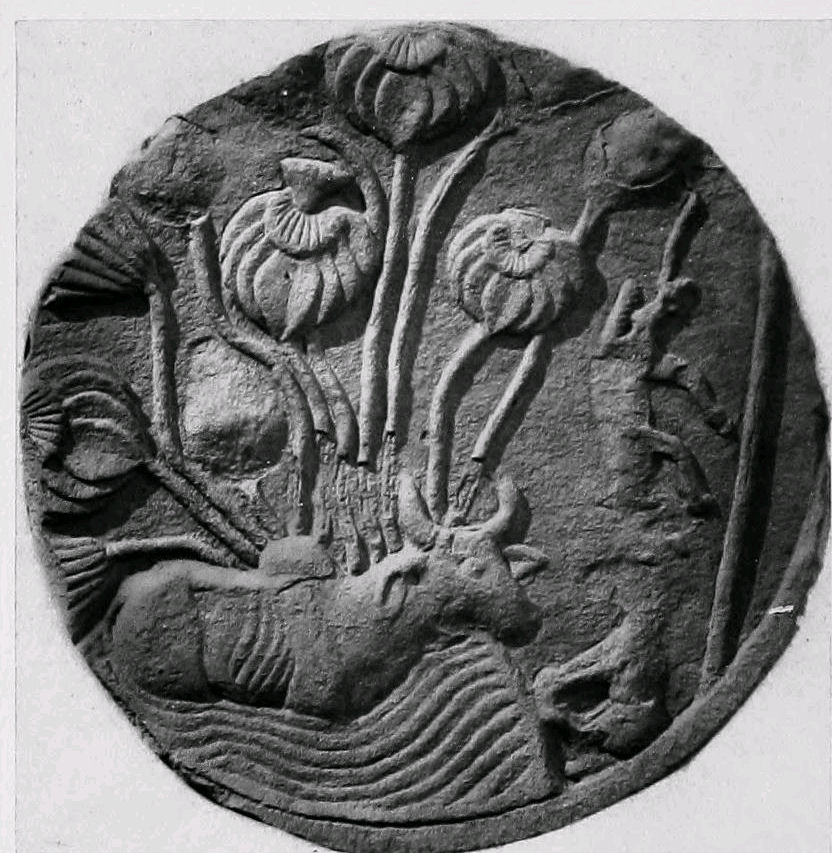
The Jataka collection (547 canonical stories of the Buddha's previous lives) includes hundreds of births in animal form: elephant, deer, monkey, parrot, lion, fish, crow. Each animal birth is an episode in the Bodhisattva's long accumulation of merit across countless lifetimes. The stories use animal behavior as the vehicle for ethical teaching: the generous elephant, the patient deer, the clever monkey. Primary sources: the Pali Jataka (Cowell translation, Cambridge University Press, 1895–1907); Bhikkhu Ñāṇamoli's translations of the Pali canon. See the Buddhist Jataka entry.
Japanese yōkai and shrine messengers
Japanese tradition encompasses two related but distinct categories of animal-spirit: the yōkai (supernatural creatures, often mischievous or threatening) and the shrine messenger (shinshi), a divine animal associated with a specific Shinto deity. The fox (kitsune) serves Inari, the deity of rice and commerce; the deer serves Kasuga Shrine in Nara; the crow (yatagarasu, the three-legged crow) guides the sun goddess Amaterasu's descendant. These have documented iconographic and literary records going back to the Nara period (8th century CE). Primary sources: Toriyama Sekien's illustrated bestiaries (18th century); Michael Dylan Foster's The Book of Yokai (University of California Press, 2015).
Celtic animism
Celtic animal symbolism is reconstructed from a combination of archaeological evidence (the Gundestrup Cauldron, votive deposits, coins), Gallo-Roman inscriptions, and medieval Irish and Welsh manuscript literature, most of it recorded centuries after Christianization. The result is fragmentary but consistent: the stag as Cernunnos's animal, the raven as battle-goddess Morrigan's form, the salmon as the oldest and wisest creature in the Irish tradition (the Salmon of Knowledge in the Fenian cycle). Primary sources: Miranda Green's Animals in Celtic Life and Myth (Routledge, 2000); the Mabinogion (Davies translation); the Lebor na hUidre. See the Celtic animism entry.
The modern pop synthesis
Ted Andrews's Animal Speak (Llewellyn, 1993) and Michael Harner's core-shamanism framework (1979–1980) are the direct sources for what most English-language internet articles describe as "spirit animal" symbolism. Both are modern Western syntheses, not direct continuations of any named tradition. Understanding them is the necessary starting point for understanding what most readers already know, and for appreciating what each of the older traditions above adds that the synthesis lacks.
Tradition deep-dives
Great Lakes, North America · Pre-contact to present
South and East Asia · 4th century BCE onward
Ireland, Britain, Gaul · c. 700 BCE onward (archaeology); 7th c. CE onward (manuscripts)
Southeastern North America (Appalachian Mountains and adjacent valleys) · Pre-contact through present; primary textual documentation 1887–1902
East and Southeast Asia · Han dynasty onward (2nd century BCE formalization; earlier Warring States antecedents)
Colorado Plateau and surrounding region (present-day Arizona, New Mexico, Utah, Colorado) · Pre-contact through present; primary textual documentation 1887–1950
Ancient Egypt · Old Kingdom (c. 2700 BCE) through Ptolemaic period (30 BCE)
Mediterranean world · 8th century BCE (Homer) through 5th century CE
Great Lakes and St. Lawrence Valley region (present-day upstate New York, southern Ontario, Quebec) · Pre-contact through present; primary textual documentation 1851–1910
South Asia · Vedic period (c. 1500 BCE) through the present
Japan · 8th century CE (Kojiki, Nihon Shoki) through present
Great Plains (present-day Dakotas, Nebraska, Wyoming, Montana) · Pre-contact through present; primary textual documentation 1896–1918
Scandinavia · Viking Age, 8th–13th century sagas
United States (commercial publication) · September 1993 onward