Tradition · Great Lakes, North America
Anishinaabe Doodem: Clan Identity, Not Spirit Animal
The Anishinaabe doodem (clan) system is a hereditary, nation-specific kinship institution, not a personal spirit animal. A close read of Basil Johnston, Eddie Benton-Banai, William Warren, and the Midewiwin teachings that carry it.
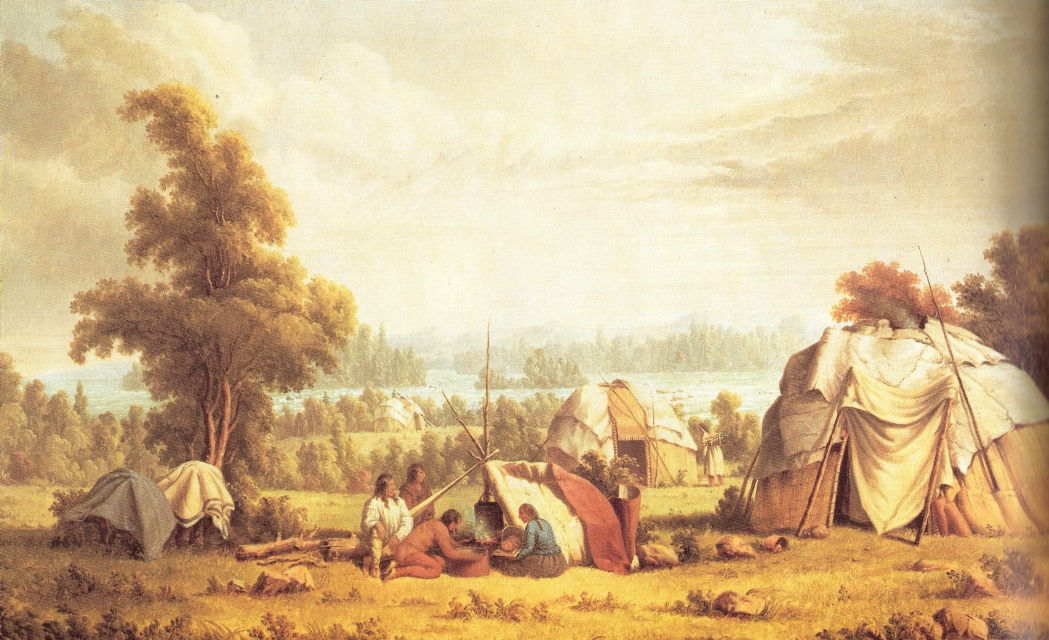
A doodem (often anglicized as 'totem,' the English word descends from the Ojibwe word through early trader borrowings) is the hereditary animal clan that every Anishinaabe person is born into through the father's line. It is a kinship institution, not a personal spirit guide. The classical authorities are Basil Johnston (Ojibway Heritage, 1976), Eddie Benton-Banai (The Mishomis Book), and the 19th-century Ojibwe historian William W. Warren (History of the Ojibways, 1885). Contemporary Anishinaabe scholars including Heidi Bohaker (Doodem and Council Fire, University of Toronto Press, 2020) have built a full scholarly literature around it. Confusing a doodem with a spirit animal is a category error.
Two of the most widely-used English words for “spirit animal” trace straight back to Anishinaabe languages. “Totem” is an anglicization of doodem, from the Ojibwe. “Manitou” is an anglicization of manidoo. Neither, in its original language, means what it has come to mean in a modern pop-spiritual article. Both words were borrowed early, flattened quickly, and have been used since as generic containers for ideas that have almost nothing to do with what the words originally carried.
What follows is the actual record, with sources.
What a doodem actually is
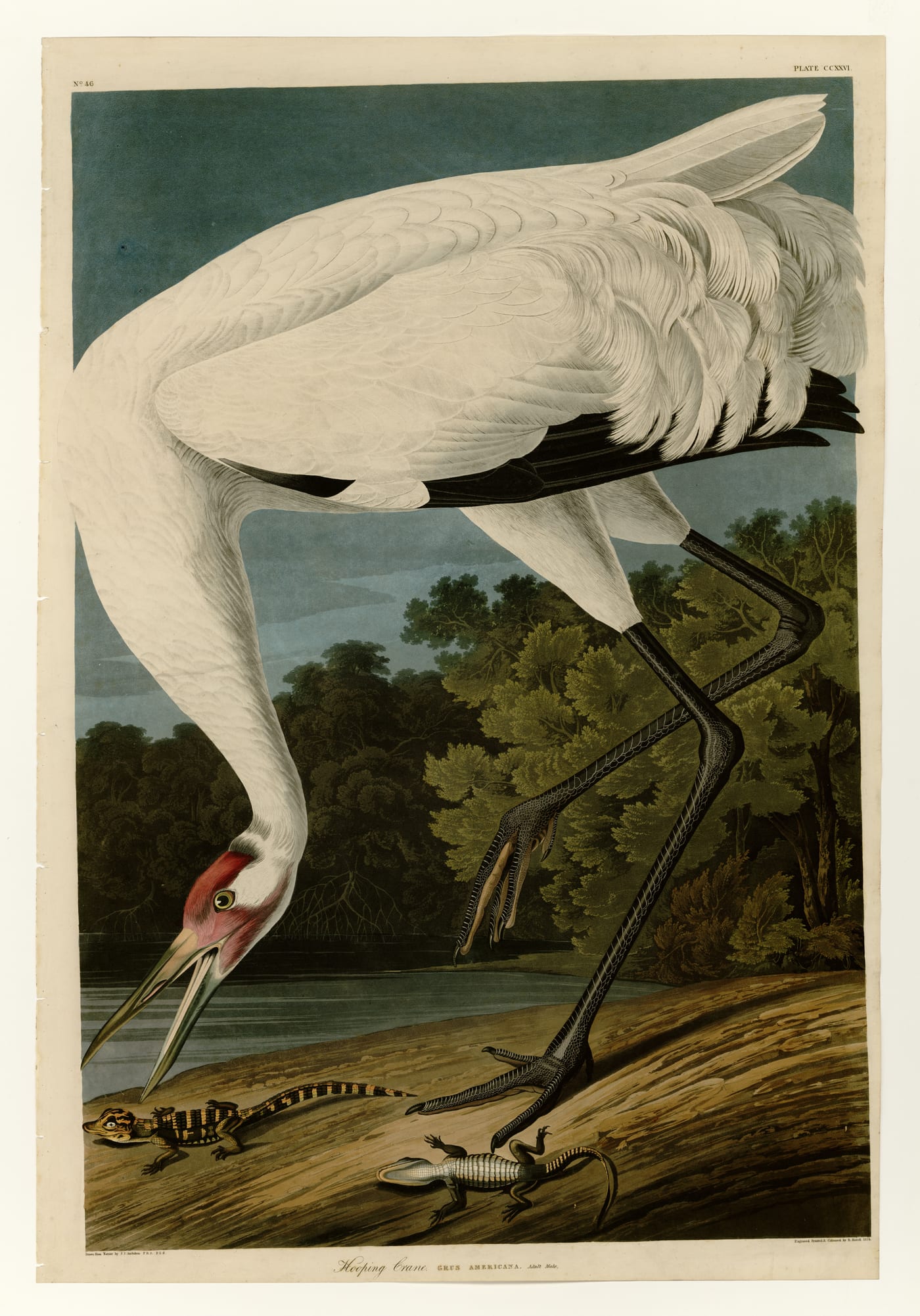
Every Anishinaabe person inherits a doodem through their father’s line. The doodem is an animal clan. The five original Ojibwe clans, per William Warren’s History of the Ojibway People (1885), are Crane (Ajijaak), Catfish (Maanameg), Loon (Maang), Bear (Makwa), and Moose (Mooz). Later scholarship, drawing on a wider body of 17th- and 18th-century diplomatic records (pictographic “doodem signatures” on treaties and petitions), documents dozens of doodemag across the Anishinaabe political world. Heidi Bohaker’s Doodem and Council Fire (University of Toronto Press, 2020) is the definitive recent treatment.
The doodem governs kinship. It determines who you can marry (exogamy between clans was the rule). It determines your role in councils. It historically governed hospitality and alliance relationships across Anishinaabe communities. It is, in a word, social. It is the opposite of a personal spiritual assignment.
How the confusion happened
Pierre-Charles Le Sueur, a French trader active in the upper Mississippi in the 1690s, and later English traders, picked up the word ototeman (a third-person singular possessive form: “his/her clan”) and carried it back to Europe as “totem.” By the time John Long used it in his Voyages and Travels of an Indian Interpreter and Trader (1791), the word had lost most of its original grammatical and social meaning and had become a generic label for any animal-as-symbol. Nineteenth-century anthropology, up through Frazer and beyond, compounded the flattening by using “totemism” as a theoretical category covering any culture with a ritual connection to animals.
The New Age pop-spiritual “spirit animal,” a 1990s construction, inherited that flattening wholesale, stripped the last of the social content, and resold the word as a consumer-spiritual category. If you bought a “find your totem” online quiz in 2026, you were, linguistically, participating in three centuries of accumulated mistranslation.
The doodem and the wolf
The Anishinaabe relationship with Ma’iingan, the wolf, is one of the best-documented cases of how a specific Indigenous tradition reads a specific animal. Basil Johnston’s Ojibway Heritage (1976) narrates the origin story in which Ma’iingan walks the earth alongside Nanabozho, the first-man, and names every plant and animal with him. When their journey ends, Gichi-Manidoo (the Great Spirit) tells them their fates will be bound: what happens to the wolves will happen to the Anishinaabe. Eddie Benton-Banai’s The Mishomis Book carries the same teaching.
That teaching has contemporary political force. Anishinaabe elders and the Great Lakes Indian Fish and Wildlife Commission have cited it in opposition to Great Lakes wolf hunts, arguing that wolf-population management is not simply a wildlife matter but a treaty-and-relations matter with direct bearing on Anishinaabe well-being. This is what a living animal tradition looks like. It is not a quiz result.
What respectful engagement looks like
Reading Basil Johnston. Reading Eddie Benton-Banai. Reading Heidi Bohaker’s recent scholarship. Taking the word “totem” out of a personal-spiritual context and putting it back where it came from. Understanding that the doodemag are an Anishinaabe kinship institution that a non-member cannot acquire by quiz, ceremony, or purchase. And, when writing about animals and meaning in a general audience context, naming the Anishinaabe tradition specifically rather than as a blurred “Native American” backdrop. Every one of those moves is a small correction. Added together they are the difference between borrowing and respect.
Key terms
- doodem
- (also doodaim, dodem, odoodem). The hereditary animal clan a person inherits through the father's line. The English word 'totem' is an anglicized borrowing of this Ojibwe word.
- anishinaabeg
- The self-designation of the Ojibwe, Odawa, Potawatomi, and related Algonquian peoples of the Great Lakes; means 'the people' or 'first people.'
- Midewiwin
- The Grand Medicine Society; the principal Anishinaabe religious institution, carrier of the sacred teachings including those around the doodemag.
- manidoo
- A spirit, often translated 'spirit being.' Distinct from doodem. Not every animal in Anishinaabe thought is a clan ancestor; the doodem animals are a specific set.
Frequently asked
- Is 'totem' the same as 'spirit animal'?
- No. 'Totem' is an English anglicization of the Ojibwe word doodem. A doodem is a hereditary clan identity, inherited patrilineally among the Anishinaabeg, governing kinship relationships and historically governing political and diplomatic relationships as well. A 'spirit animal' in the New Age pop sense is a personal symbolic figure an individual chooses or is assigned by a practitioner. The two concepts are almost opposite in their social function.
- How many doodemag are there?
- The traditional list varies by community and by era. William Warren's History of the Ojibways (1885) lists five original doodemag: Crane, Catfish, Loon, Bear, and Moose (some accounts give Marten instead of Moose). Basil Johnston and later scholars document dozens of regional and subsidiary clans including Wolf, Turtle, Deer, Sturgeon, and others. Heidi Bohaker's Doodem and Council Fire (2020) traces their distribution across 17th- and 18th-century diplomatic records.
- Can a non-Anishinaabe person 'have' a doodem?
- No. The doodem is inherited through the patrilineal line of an Anishinaabe family; it is not something a non-member can acquire by ceremony, adoption, or choice. This is a point Basil Johnston, Eddie Benton-Banai, and contemporary Anishinaabe educators have made repeatedly. A non-Anishinaabe person interested in the teachings can read and respect them; claiming a doodem is a different matter.
- What does the wolf doodem mean?
- Historically the Wolf (Ma'iingan) clan was associated with pathfinding, teaching, and the forging of intertribal relationships. But the doodem isn't a 'meaning' in the way a pop spirit-animal article uses the word; it is a kinship identity that governs who you are related to and how you relate to other clans. Read Basil Johnston's Ojibway Heritage (1976) for the substantive treatment.
Sources
- PRIMARY Basil Johnston, Ojibway Heritage . University of Nebraska Press, 1976.
- PRIMARY Basil Johnston, The Manitous: The Spiritual World of the Ojibway . HarperCollins, 1995.
- PRIMARY Eddie Benton-Banai, The Mishomis Book: The Voice of the Ojibway . Indian Country Communications; 2010 University of Minnesota Press reissue.
- PRIMARY William W. Warren, History of the Ojibway People . Minnesota Historical Society, 1885 (reissued 2009).
- PEER-REVIEWED Heidi Bohaker, Doodem and Council Fire: Anishinaabe Governance through Alliance . University of Toronto Press, 2020.
- PEER-REVIEWED Theresa Smith, The Island of the Anishnaabeg: Thunderers and Water Monsters in the Traditional Ojibwe Life-World . University of Idaho Press, 1995.
- REFERENCE Great Lakes Indian Fish & Wildlife Commission (GLIFWC)