Tradition · Colorado Plateau and surrounding region (present-day Arizona, New Mexico, Utah, Colorado)
Diné (Navajo) Animal Traditions: Coyote, Sacred Horses, and the Beings of the First World
Diné (Navajo) animal traditions as documented by Washington Matthews (1897), Gladys Reichard (1950), and Paul Zolbrod's critical edition of Diné Bahane' (1984). Coyote (Ma'ii) as transformer, the First World animals, and why Diné animal traditions are not the same as generic 'Navajo spirit animals.'
Diné (Navajo) animal traditions are documented in Washington Matthews's Navaho Legends (Memoirs of the American Folklore Society 5, 1897), Gladys Reichard's Navaho Religion (Bollingen Series XVIII, 1950), and Paul Zolbrod's critical Diné Bahane': The Navajo Creation Story (1984). Central figures: Coyote (Ma'ii) as the irreducible transformer and trickster whose interference pervades the creation narrative; the First World Holy People who exist as both animals and spiritual beings; the sacred horse (łį́į́') introduced through supernatural means and tied to prosperity and power. Diné animal tradition is cosmologically specific and not reducible to generic 'spirit animal' categories.
The creation narrative of the Diné people (Diné Bahane’, “the story of the people”) is one of the most complex and carefully structured oral literary works in North America. Paul Zolbrod’s 1984 critical edition, Diné Bahane’, at the University of New Mexico Press is the starting point for anyone who wants to engage it seriously. Zolbrod spent years working with Diné consultants and with Washington Matthews’s earlier transcriptions to produce an edition that respects the narrative’s literary structure.
The core of what makes Diné animal tradition distinct from the generic “Navajo spirit animals” of internet culture is its cosmological specificity. Animals in Diné tradition are not symbols or guides attached to individual personalities; they are entities within a specific cosmology that connects the First World, successive underworlds, and the present world through a creation narrative with a plot, causation, and consequences.
Coyote: the necessary disruptor
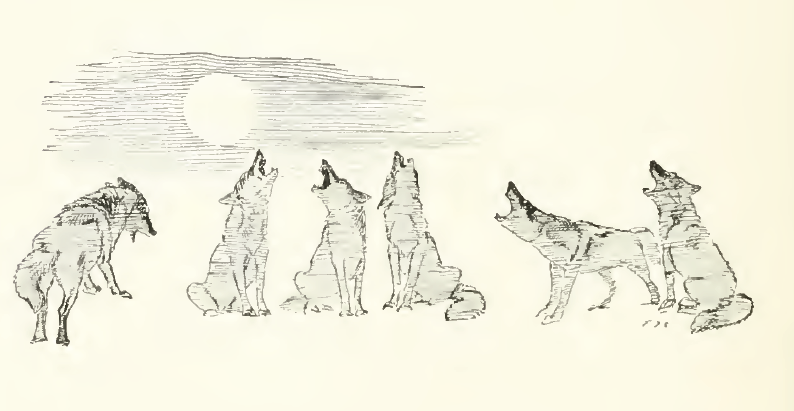
Ma’ii (Coyote) appears in Diné Bahane’ from the First World onward. He is, as Zolbrod demonstrates through close reading, structurally necessary to the narrative: without his interference, the Holy People would not have been driven upward through the successive worlds that lead to the present world. Coyote steals the baby of the Water Monster. The resulting Flood forces the Holy People to climb to the next world. When it is discovered that Coyote is carrying the stolen child under his blanket, the Flood recedes, but the Holy People have reached a new world because of the episode.
Gary Witherspoon’s Language and Art in the Navajo Universe (1977) provides the essential framework for understanding how Ma’ii’s disruptive power functions within Diné aesthetics: beauty (hózhó) is not achieved by eliminating chaos but by maintaining the dynamic tension between order and disruption. Coyote is the agent of disruption that makes hózhó possible by contrast and by necessity.
The First World animals and Holy People
Gladys Reichard’s Navaho Religion (1950) is the most systematic account of Diné religious categories. The Diyin Dine’é (Holy People) exist in both human and animal forms; they are not dead ancestors or personal guides but distinct supernatural entities with specific ceremonial relationships to the living Diné. Specific animals (Bear, Snake, Lizard, Porcupine, and others) appear in ceremonial sandpainting designs that Reichard documents in detail. The designs are not decorative; they are operational, created within specific healing ceremonies and destroyed at the ceremony’s conclusion.
Washington Matthews’s Navaho Legends (1897) is the foundational text for the origin stories. Matthews documented specific animal figures including the eagle (as messenger between humans and Holy People), the snake (which appears in the Snake People traditions and in sandpaintings), and the bear (which in some ceremonial contexts is associated with healing medicine).
Sacred horses and the łį́į́’ tradition
The horse entered Diné life dramatically with the acquisition of horses from Spanish settlements, accelerating dramatically after the Pueblo Revolt of 1680. But the Diné creation narrative incorporated the horse as a supernatural gift from the Holy People, not a foreign import but a restoration of an animal that belonged to the Diné world. Matthews documents horse-related ceremonial songs. Reichard’s work places the horse within the broader hózhó ceremonial complex.
The treaty of 1868, which ended the Diné’s imprisonment at Bosque Redondo and allowed them to return to the Dinétah, specifically guaranteed the right to keep horses and sheep. The Diné negotiators understood the horse not only as an economic asset but as a culturally constitutive animal whose possession was part of what it meant to live in right relationship with the land.
Reading Diné traditions respectfully
The Navajo Nation’s Historic Preservation Department and cultural programs are the authoritative contemporary sources. Multiple Diné scholars have written about the appropriation of Diné spiritual practices, including Vine Deloria Jr. and more recently Diné academics who have published on the specific harm of “Navajo spirit animal” content that removes Diné traditions from their cosmological context and packages them as individual personality accessories. The core objection: a cosmology with specific actors, specific consequences, and specific ongoing ceremonial relationships cannot be meaningfully converted into a personal-identity quiz result.
Key terms
- Ma'ii
- Coyote in Diné cosmology. Not a mere trickster but a necessary transformer whose disruptive interference drives the creation narrative forward. Present from the First World through the present. Documented by Zolbrod (1984) and Gary Witherspoon's Language and Art in the Navajo Universe (1977).
- Holy People (Diyin Dine'é)
- The supernatural beings of Diné cosmology who exist in both human and animal forms. They are not dead ancestors or personal guides; they are distinct supernatural entities with specific ceremonial relationships to the living Diné.
- łį́į́'
- Horse. In the Diné creation account, horses were given to the Diné people by the Holy People; they arrived through supernatural means from the underworld. The horse's introduction transformed Plains and Plateau economics and was incorporated into Diné cosmology as a sacred gift.
- Blessing Way (Hózhóójí)
- One of the core Diné ceremonial complexes. Establishes and restores hózhó (beauty, harmony, balance). Many Blessing Way ceremonies involve specific animal figures and songs.
Frequently asked
- What are the primary sources for Diné animal traditions?
- Washington Matthews's Navaho Legends (Memoirs of the American Folklore Society 5, 1897) is the foundational primary-source collection of Diné oral literature. Matthews, a US Army surgeon stationed at Fort Wingate, worked with Diné consultants from the late 1870s through the 1890s. Gladys Reichard's Navaho Religion (Bollingen Series XVIII, 2 vols., 1950) is the most systematic scholarly account of Diné religious practice and cosmology. Paul Zolbrod's Diné Bahane' (University of New Mexico Press, 1984) is the most accessible critical edition of the creation narrative. Gary Witherspoon's Language and Art in the Navajo Universe (University of Michigan Press, 1977) provides essential context for understanding Diné cosmological thinking.
- Who is Coyote (Ma'ii) in Diné tradition?
- Ma'ii (Coyote) in Diné cosmology is not simply a trickster in the Western literary sense. In the creation narrative (Diné Bahane'), Coyote is present from the First World and his interference is both disruptive and necessary. He steals the baby of the Water Monster, causing the Flood that drives the Holy People upward through successive worlds. He is responsible for death being permanent rather than temporary. He introduces stars into the night sky in a haphazard arrangement. Zolbrod's critical edition demonstrates that Ma'ii's role is structural: the creation narrative could not proceed without him, but his participation always introduces unpredictability. This is not the cute trickster of children's book versions.
- What is the Diné tradition regarding eagles and eagle feathers?
- Eagle feathers are sacred in Diné ceremonial practice and their collection, use, and trade are regulated under the Eagle Feather Law (50 CFR Part 22), which restricts possession of eagle feathers to federally recognized tribal members for religious purposes. Diné ceremonial practitioners have specific protocols for obtaining and using eagle feathers. The feathers appear in multiple ceremonial complexes documented by Reichard (1950). The casual discussion of eagle feathers as personal spiritual objects in New Age culture runs directly counter to the restricted ceremonial context in which eagle feathers function in Diné practice.
- What does the horse mean in Diné tradition?
- The horse (łį́į́') holds a specific cosmological role in Diné tradition. The creation narrative accounts for the horse's introduction to the Diné people as a gift from the Holy People, connected to the underworld origins. Washington Matthews's work documents horse-related ceremonial songs and prayers. The 1868 Long Walk, in which the US government forced the Diné on a 300-mile march to Bosque Redondo and later allowed them to return to their homeland, was partly negotiated around the right to maintain horses and sheep. The horse is both cosmologically foundational and historically central to Diné identity in ways that have no equivalent in a generic 'spirit animal' framework.
Sources
- PRIMARY Washington Matthews, Navaho Legends . Memoirs of the American Folklore Society 5, 1897.
- PEER-REVIEWED Gladys Reichard, Navaho Religion: A Study of Symbolism . Bollingen Series XVIII, 2 vols., Pantheon Books, 1950.
- EDITION Paul G. Zolbrod, Diné Bahane': The Navajo Creation Story . University of New Mexico Press, 1984. Critical edition of the creation narrative.
- PEER-REVIEWED Gary Witherspoon, Language and Art in the Navajo Universe . University of Michigan Press, 1977.
- PRIMARY Aileen O'Bryan, The Dîné: Origin Myths of the Navaho Indians . Smithsonian Bureau of American Ethnology Bulletin 163, 1956.
- REFERENCE Navajo Nation Historic Preservation Department . https://www.navajonation.gov, the authoritative contemporary source.