Tradition · Great Plains (present-day Dakotas, Nebraska, Wyoming, Montana)
Lakota Animal Traditions: What Densmore, Walker, and DeMallie's Primary Sources Record
Lakota animal traditions as documented by Frances Densmore (Smithsonian, 1918), James Walker's Oglala texts (1896–1914), and Raymond DeMallie's edition of the Black Elk interviews (1984). The vision quest, Wakan Tanka, the White Buffalo Calf Woman, and animal guardian spirits in specific ceremonial context.
Lakota animal traditions are documented in Frances Densmore's Teton Sioux Music (Smithsonian BAE Bulletin 61, 1918), James Walker's Lakota Belief and Ritual (University of Nebraska Press, 1980, compiled 1896–1914), and Raymond DeMallie's edition of Black Elk's interviews in The Sixth Grandfather (University of Nebraska Press, 1984). Animal guardian spirits (wotawe) appear in Lakota ceremonial life in specific vision-quest and medicine-bundle contexts. The White Buffalo Calf Woman brought the sacred pipe and the seven sacred rites. The dragonfly, hawk, and eagle carry specific warrior-medicine functions, not the generalized 'spirit animal guide' reading of contemporary pop culture.
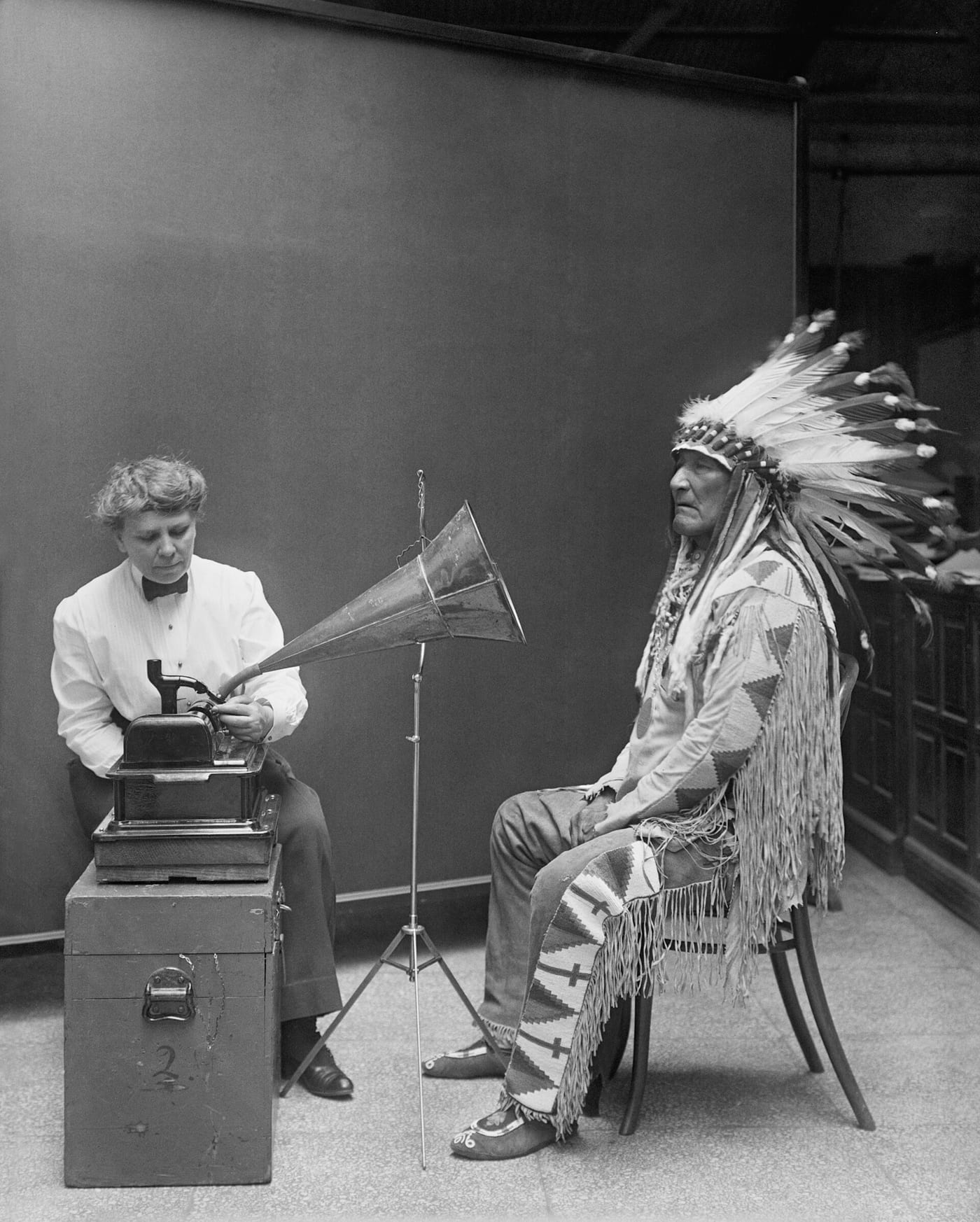
Frances Densmore was fifty years old when she compiled Teton Sioux Music. She had been doing fieldwork on Smithsonian contracts since 1907, recording Indigenous music on a wax cylinder phonograph, and she had learned to work with patience and respect for the people who shared their knowledge with her. Teton Sioux Music (BAE Bulletin 61, 1918) documents over 240 songs from Lakota consultants including Red Bird, Eagle Shield, and Lone Man. It is one of the most detailed primary-source archives of Lakota ceremonial music available.
James Walker was the physician at the Pine Ridge Agency from 1896 to 1914. His unusual access to Oglala consultants (including men named Sword, Short Bull, Bad Wound, and others who were trained in the older ceremonial knowledge) produced materials that were edited and published posthumously as Lakota Belief and Ritual (University of Nebraska Press, 1980). Walker understood that he was recording knowledge that was under pressure from assimilation policies; his consultants understood the same thing and chose, in some cases, to share material they might otherwise have kept within the community.
These are the foundational primary sources. Not Black Elk Speaks (1932, John Neihardt’s literary adaptation), but The Sixth Grandfather (Raymond DeMallie’s 1984 edition of the actual 1931 interview transcripts). Neihardt is valuable as literature; DeMallie is the primary document.
Animal guardian spirits and the vision quest
The Lakota vision quest (hanbleceya, “crying for a vision”) is one of the Seven Sacred Rites described in Joseph Brown’s The Sacred Pipe (1953) and Walker’s Lakota Belief and Ritual. A person seeking a vision (typically a young man, with specific protocols for women’s visions) would go to an isolated hill for a period of fasting and prayer, sometimes for up to four days. The experience might include an encounter with an animal or supernatural being that conveyed knowledge, power, or a specific medicine role.
The resulting wotawe (guardian spirit or medicine) was specific and personal, not generic. Walker’s consultants were careful to distinguish between different kinds of animal medicine and their specific ceremonial applications. A man who received hawk medicine did not thereby “have the hawk as his spirit animal” in the New Age retail sense; he had a specific wotawe that came with specific responsibilities, protocols for maintenance, and ceremonial applications. The relationship required ongoing practice to sustain.
Specific animal medicines
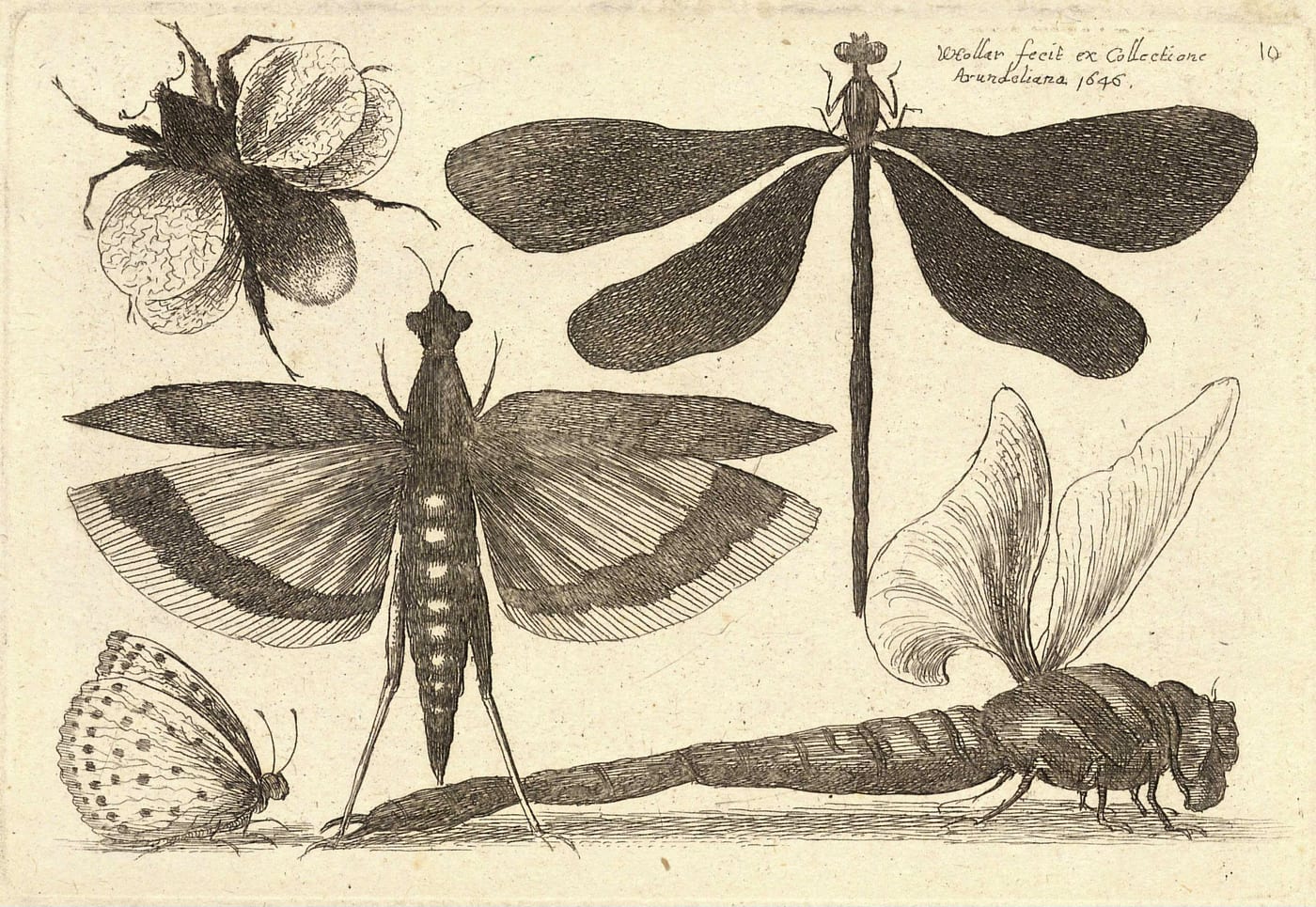
Densmore’s 1918 work documents animal-specific ceremonial songs. The hawk (čhetán) is associated with the wakinyan (thunder beings) and carries warrior medicine. Densmore documents hawk songs used in battle preparation. The dragonfly (tȟašíyagnunpa) is associated with invulnerability, warriors painted dragonflies on horses and shields. The eagle (waŋbli) is among the most sacred birds, associated with the highest spiritual power; eagle feathers are used in the sacred pipe ceremony and in war bonnet construction.
The buffalo (tȟatȟáŋka) is not just an animal in Lakota cosmology; it is the foundational creature of Plains life, the source of food, clothing, shelter, and tools, and a sacred presence in its own right. The White Buffalo Calf Woman narrative, recorded by Walker and by Joseph Brown (from Black Elk’s account), frames the entire relationship between the Lakota people and the sacred pipe in terms of a buffalo-woman transformation.
Mitákuye oyásʼiŋ: all my relations
The concept of mitákuye oyásʼiŋ (a phrase spoken at the beginning and end of many Lakota ceremonies, often translated as “all my relations”) expresses a foundational kinship with all living beings, including animals, plants, rocks, and the earth itself. DeMallie’s Sixth Grandfather preserves Black Elk’s own articulation of this concept. Vine Deloria Jr.’s God Is Red (1973) provides the most accessible contemporary scholarly discussion of how this ecological kinship concept differs from both Western Christian dominion theology and New Age “nature spirituality.”
The practical expression of this concept in traditional Lakota life included specific hunting protocols, respect practices when taking animal life, and an understanding that the hunter and the hunted stood in a reciprocal rather than hierarchical relationship.
Engaging these traditions respectfully
The Oglala Sioux Tribe and the other Lakota bands have living cultural preservation programs and their own scholars, educators, and publications. Vine Deloria Jr.’s Custer Died for Your Sins (1969) and God Is Red (1973) remain the essential texts for understanding how Lakota people themselves have framed the question of who speaks for their traditions. Deloria was unambiguous about the “plastic shaman” industry and the appropriation of Lakota spiritual practices for commercial sale. His argument (that non-Indigenous people buying Indigenous ceremony are participating in a final form of colonial dispossession) has not lost force in the fifty years since he made it.
Key terms
- wotawe
- Lakota guardian spirit or medicine; often acquired through vision quest (hanbleceya). Not equivalent to 'spirit animal' as a permanent personal totem; more specific and ceremonially contextual.
- Wakan Tanka
- 'Great Mystery' or 'Great Spirit.' The encompassing divine power in Lakota theology. Not a personal deity in the Western sense but the quality of the sacred that permeates all things.
- hanbleceya
- 'Crying for a vision.' The Lakota vision quest: a period of fasting and prayer, typically on an isolated hill, seeking a vision or encounter with a guardian spirit. One of the Seven Sacred Rites.
- čhetán
- Hawk. Associated with the wakinyan (thunder beings) cluster; warrior medicine. Densmore 1918 documents hawk songs used in ceremonial contexts.
Frequently asked
- What are the primary sources for Lakota animal traditions?
- Three primary-source collections are foundational. Frances Densmore's Teton Sioux Music (BAE Bulletin 61, 1918) documents Lakota ceremonial music including animal-specific songs. James Walker's Lakota Belief and Ritual (University of Nebraska Press, 1980) compiles material gathered from Oglala consultants 1896–1914; Walker was the Pine Ridge Agency physician and worked with named consultants including Sword, Short Bull, and Bad Wound. Raymond DeMallie's The Sixth Grandfather (University of Nebraska Press, 1984) provides Black Elk's actual interview transcripts from 1931, the source material for John Neihardt's Black Elk Speaks (1932). DeMallie's edition is the primary document; Neihardt's literary adaptation is secondary.
- What is the White Buffalo Calf Woman?
- The White Buffalo Calf Woman (Ptehíŋčala Ska Wiŋ) is the supernatural figure who, according to Lakota tradition, brought the sacred pipe (čhaŋnúŋpa) and the Seven Sacred Rites to the Lakota people. She appeared as a beautiful young woman, was recognized as a sacred being by one of two scouts (the other attempted to violate her and was destroyed), delivered the pipe and instructions for its ceremonial use, and transformed into a white buffalo calf as she departed. The account is documented in Walker's Lakota Belief and Ritual and in Joseph Brown's The Sacred Pipe (1953), which records Black Elk's account of the seven rites.
- How do Lakota animal guardian spirits work?
- Animal guardian spirits (wotawe) in Lakota practice are acquired through the vision quest (hanbleceya), a period of fasting and prayer seeking a vision. A vision might involve a specific animal that conveys power or knowledge. This is not a permanent universal relationship; it is specific, earned, and ceremonially maintained through practice. Walker's Oglala texts document the specifics of how wotawe functioned in 19th-century practice. The hawk and the eagle carry specific warrior-medicine associations (Densmore 1918); the dragonfly carries invulnerability medicine. These are specific functional roles, not a generic 'spirit animal guide' framework.
- What is the Lakota teaching about animals and respect?
- Lakota tradition emphasizes the concept of mitákuye oyásʼiŋ ('all my relations') which acknowledges kinship with all living beings. This is documented in Walker's materials and in Black Elk's accounts. The practical application in traditional life included specific protocols for hunting: acknowledging the animal's spirit, using the whole animal, and recognizing the reciprocal relationship between human and animal peoples. The broader concept of animal respect in Lakota cosmology is not equivalent to the New Age 'spirit animal as personal accessory' framework.
Sources
- PRIMARY Frances Densmore, Teton Sioux Music . Smithsonian Bureau of American Ethnology Bulletin 61, 1918.
- PRIMARY James Walker, Lakota Belief and Ritual . Ed. Raymond DeMallie and Elaine Jahner, University of Nebraska Press, 1980. Compiled 1896–1914 from Oglala consultants.
- PRIMARY Raymond DeMallie (ed.), The Sixth Grandfather: Black Elk's Teachings Given to John G. Neihardt . University of Nebraska Press, 1984. Black Elk's actual 1931 interview transcripts.
- PRIMARY Joseph Epes Brown, The Sacred Pipe: Black Elk's Account of the Seven Rites of the Oglala Sioux . University of Oklahoma Press, 1953.
- PRIMARY Ella Deloria, Dakota Texts . Publications of the American Ethnological Society 14, 1932. Ella Deloria was a Dakota/Lakota linguist and ethnographer who worked with Franz Boas.
- REFERENCE Oglala Sioux Tribe (OST) Cultural Preservation Program . https://www.oglalalakotanation.org, the authoritative contemporary source.