Color symbolism, sourced
White Butterfly Meaning: Japanese Ancestor-Souls, Mexica Warriors, and American Folk-Belief
White means "soul" and "death" in some traditions, "warrior heaven" in another, and "purity" in the contemporary synthesis. The distinctions matter.
In Japanese folk tradition (Yanagita Kunio, About Our Ancestors, 1946; Lafcadio Hearn, Kwaidan, 1904), white butterflies are specifically the returning souls of elderly male ancestors. In Mexica (Aztec) tradition (Sahagún Florentine Codex Book 3), white and yellow butterflies carried the souls of warriors who died in battle. In Southern US folk-belief (Puckett 1926), a white butterfly near the house was a death-sign. The contemporary 'white butterfly = purity and spiritual communication' reading is a synthesis that blurs these specific meanings into a single positive valence.
White butterfly meaning is one of the most searched color-animal queries in American folk-spiritual culture. And the answers most people find are wrong in a specific way: they are not false, exactly, but they are flattened. The Japanese tradition is specific about whose soul: older male ancestors. The Mexica tradition is specific about which dead: warriors fallen in the flower wars. These specifics vanish when you turn both into "white butterfly = spiritual messenger."
Japan: the white butterfly and the ancestor-soul
Yanagita Kunio (1875–1962) is arguably the founder of modern Japanese folklore studies. His About Our Ancestors (Senzo no hanashi, 1946; English translation 1970) is a systematic exploration of Japanese ancestor-veneration belief compiled from regional fieldwork across the archipelago. Yanagita documents the white butterfly (shiro-chō) as a widespread folk-figure for the soul of an ancestor, particularly an elderly man, returning to visit the family home. The specificity is important: not any deceased person, not a general spiritual sign, but specifically an elderly male ancestor.
Lafcadio Hearn's Kwaidan (Houghton Mifflin, 1904) includes a story called "The White Butterfly": an elderly man dies shortly after his wife; for several days, a white butterfly circles around his grave and returns to hover at the doorway of his former house. The household understands it as the old man's soul. Hearn was a collector, not an inventor — he was recording existing tradition. His Kwaidan is a literary primary source for late-Meiji Japanese folk-belief rather than a scholarly monograph, but it confirms the tradition Yanagita later documented systematically.
This tradition is specific to the white butterfly. In Japanese folk belief, different butterfly species and colors carry different associations. The shiro-chō ancestor-reading does not apply to orange, black, or yellow butterflies automatically.
Mexica: the white butterfly and the warrior heaven
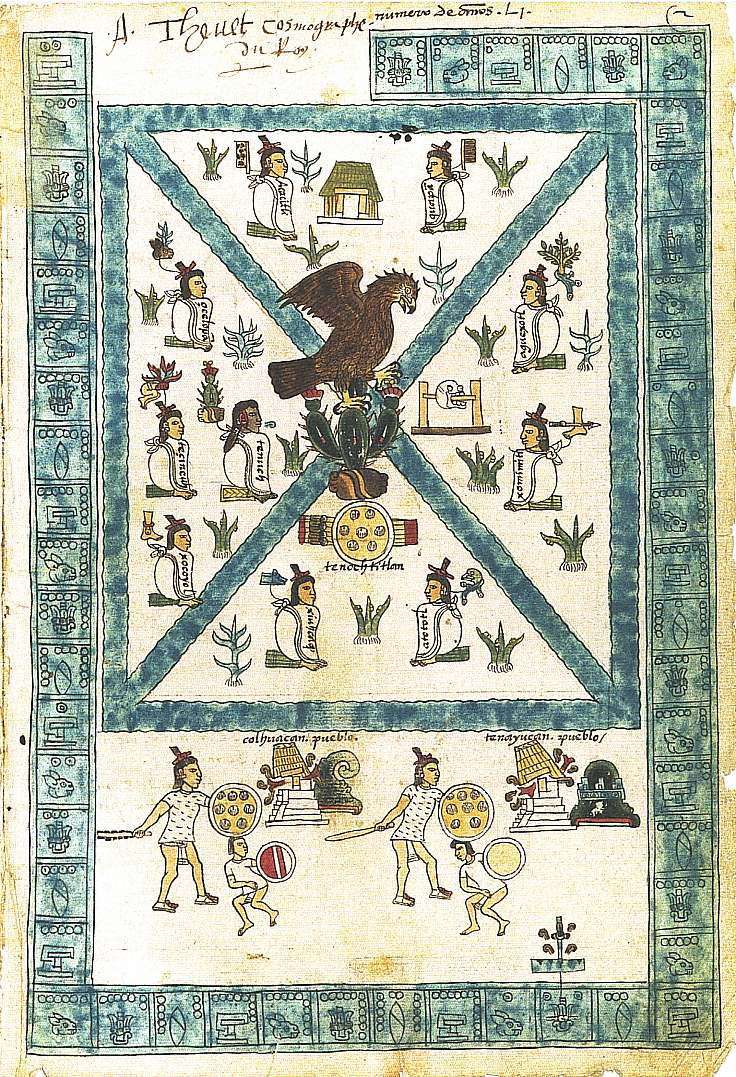
Fray Bernardino de Sahagún's Florentine Codex (Historia general de las cosas de Nueva España, compiled roughly 1540–1585, translated by Anderson and Dibble in 12 volumes from 1950–1982) is the foundational primary source for Mexica religious belief. Book 3 describes the fates of the dead: warriors who died in battle or on the sacrificial stone became companions of the sun for four years, then were transformed into hummingbirds and butterflies. The specific butterflies are white and yellow (chichitl and related terms). They drink from flowers and hover in the living world as visible presences of the honored dead.
This is a strikingly different reading from the Japanese one. In the Mexica tradition, the white butterfly is specifically the soul of a warrior who died an honored death — it is not a general ancestor figure. A farmer who died of old age did not become a butterfly. The specificity is theological: Mexica afterlife destinations were determined by cause and manner of death, not by virtue or individual merit in the Western sense.
Southern US folk tradition
Puckett's 1926 folk-belief archive includes white butterfly entries in the bird-and-insect omen section. In Southern tradition documented in that archive, a white butterfly entering the house or hovering near a sick person was interpreted as a death-warning or soul-visiting sign. This reading is ambiguous in its valence — not a comforting ancestor visit but an ominous presence, closer to the death-sign reading of the owl in the same tradition. The white butterfly's association with death derives here from the white-equals-death color coding in some African-American folk traditions, where white is the color of bones and funerals rather than the Western-Christian white-equals-purity equation.
The Greek-Latin psychē tradition
The word psychē in ancient Greek means both "soul" and "butterfly." This double meaning is attested in Aristotle (Historia Animalium 5.19) and in the visual art of the period: deceased souls in Greek funerary imagery are sometimes shown as winged figures similar to butterflies. Ovid's Metamorphoses does not focus on color in its butterfly-soul passages, and the classical psychē tradition does not distinguish white butterflies from other colors. The contemporary white-butterfly-as-soul reading is not primarily a Greek inheritance; it is more specifically Japanese and Mexica.
The contemporary synthesis and what it loses
Ted Andrews's Animal Speak (1993) treats the butterfly generally as transformation without specifying color-meanings at length. The current "white butterfly = purity, spirit communication, angelic presence" formula appears to have synthesized the Japanese ancestor-soul reading with the Western-Christian white-equals-purity color code, smoothing over the Mexica warrior-heaven specificity and the Southern death-sign tradition. The synthesis is not wrong, but it loses the distinctions that make each tradition interesting.
The actual butterfly
The most common white butterfly in North America is Pieris rapae, the cabbage white, introduced from Europe sometime around 1860 and now one of the most widespread butterfly species on the continent. It breeds three to four generations per year in most of its range. You will see one on almost any sunny day anywhere in North America below the 60th parallel. Its abundance is why it ended up in folk tradition: familiarity plus conspicuousness plus white coloring against a green garden background produces a memorable and recurring encounter.