Spirit Animal
Wolf Spirit Animal
Wolf spirit animal meaning: loyalty, family and teaching. Traced from the modern pop-concept back through Ted Andrews's Animal Speak (1993) to Old Norse sagas, Anishinaabe doodem tradition, and the Roman foundation myth. Named-nation specific. No pan-tribal framing.
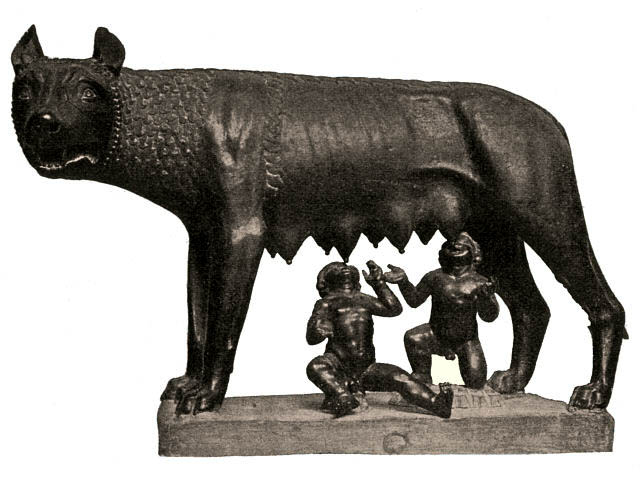
In modern American "spirit animal" usage, the wolf most often signals loyalty, family, teaching, and a working balance between intuition and strategy. That reading descends most directly from Ted Andrews's Animal Speak (Llewellyn, 1993). Older traditions are more specific: in Old Norse sources the wolf (Fenrir, Odin's Geri and Freki) is an ambivalent figure of destruction and companionship; in Anishinaabe tradition ma'iingan is a brother-figure in the origin narrative recorded by Basil Johnston and Eddie Benton-Banai; in Roman founding myth the she-wolf who suckled Romulus and Remus is origin, not guidance.
A wolf in a saga is not the same animal as a wolf in a clan origin story. A wolf at the foot of a 15th-century Italian bronze is not the same as a wolf in a Llewellyn paperback from 1993. When sites flatten all of them into one reassuring icon of loyalty and family instinct, they lose what made each version worth keeping.
What most people mean by “wolf spirit animal”
The loyalty-family-intuition reading is the default. When a reader clicks on a spirit-animal article about the wolf in 2026, they come expecting that reading, and they come expecting it because it has been the dominant pop-spiritual take on the animal since the early 1990s. The reading is not wrong. It is also not ancient.
Ted Andrews’s Animal Speak, published through Llewellyn in September 1993, is the clearest commercial source. Andrews collected the wolf’s pack behavior, the Anishinaabe bond between ma’iingan and the people, the Norse Odin-and-his-companions imagery, and the Roman Capitoline Wolf, and he synthesized them into a single portable figure: the wolf as teacher, loyal, family-centered, balancing individual instinct and group discipline. That synthesis is the ancestor of nearly every popular spirit-animal article about the wolf since.
Naming Andrews as the source is not a criticism. It’s the minimum honest act of attribution. If a reader wants the older material behind the synthesis, they need to know where to dig.
What the older traditions actually recorded
The tradition sections below treat each source on its own terms. The Norse wolf is ambivalent, companion and destroyer, sometimes both at once. The Anishinaabe wolf is a brother in a specific origin narrative, with specific political force today. The Roman wolf is civic and foundational. None of these three, on its own, is the Andrews 1993 synthesis. None of them, on its own, is what a reader means when they ask about their spirit animal.
Reading the sections below in sequence is the best way to see the differences. The bibliography at the foot lists the exact editions we drew from.
Across traditions
Old Norse
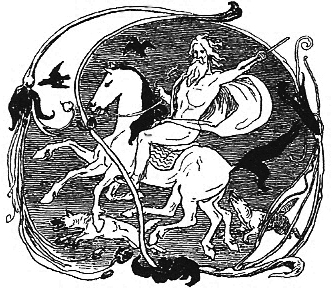
The wolf in Old Norse material is not one thing. Fenrir is the cosmic wolf who, in the Prose Edda's Gylfaginning and in the Poetic Edda's Völuspá, will break free at Ragnarök and kill Odin. Odin's own companions are a pair of wolves, Geri and Freki ('greedy' and 'ravenous'), who eat the meat set before him while he lives on wine alone, per Grímnismál 20 in the Poetic Edda. The figure is companion and destroyer at once.
Neil Price, The Viking Way (2019 revised edition), reads the wolf symbolism as bound up with the úlfheðnar warrior cult, men in wolf-skins who appear in Ynglinga saga 6 and in skaldic references. That's the warband-wolf, not the personal-spirit-animal wolf.
- EDITION Snorri Sturluson, Prose Edda (Gylfaginning) . Faulkes trans., Everyman, 1995.
- EDITION Poetic Edda (Völuspá, Grímnismál) . Larrington trans., Oxford World's Classics, 2014.
- PEER-REVIEWED Neil Price, The Viking Way: Magic and Mind in Late Iron Age Scandinavia . Oxbow, 2019 revised edition.
Anishinaabe
The wolf is not a personal spirit guide in Anishinaabe tradition. Ma'iingan (the wolf) appears in the origin narrative of Anishinaabe first-man Nanabozho as a brother who walks the earth beside him and names it, recorded in Basil Johnston's Ojibway Heritage (1976) and Eddie Benton-Banai's The Mishomis Book. When Nanabozho's journey ends, the two are told their fates will be bound: what happens to one will happen to the other.
That teaching has concrete contemporary force. Anishinaabe elders cite it in opposition to wolf hunts in the Great Lakes region, arguing that the fate of the wolf population is tied to the fate of the people. This is not a pan-tribal idea. It is Anishinaabe, with specific textual and oral sources, and it is being invoked in live policy discussions today.
- PRIMARY Basil Johnston, Ojibway Heritage . University of Nebraska Press, 1976.
- PRIMARY Eddie Benton-Banai, The Mishomis Book: The Voice of the Ojibway . Indian Country Communications.
- ARCHIVE Great Lakes Indian Fish & Wildlife Commission, ma'iingan (wolf) resources
Roman
The Capitoline Wolf, the she-wolf who suckled Romulus and Remus, is the founding image of Rome. Livy, Ab Urbe Condita 1.4 (Foster trans., Loeb Classical Library), gives the canonical account: the twins, set to drown on the Tiber, are washed ashore and found by a she-wolf. The bronze statue in the Capitoline Museums has been Rome's civic emblem for two millennia; the figure itself is medieval (the twins were added in the late 15th century), as shown by thermoluminescence testing in Anna Maria Carruba's 2006 study.
The Roman wolf is therefore origin rather than guidance. She founds a city. She doesn't counsel a person.
- PRIMARY Livy, Ab Urbe Condita 1.4 . Foster trans., Loeb Classical Library.
- PEER-REVIEWED Anna Maria Carruba, La Lupa Capitolina: un bronzo medievale . De Luca, 2006.
Ted Andrews (1993, the pop-concept's source)
The modern pop-spirit-animal wolf (loyalty, family, pack instinct, the teacher who leads from intuition) is most directly Ted Andrews's reading in Animal Speak (Llewellyn, September 1993). Andrews pulled from a mix of Anishinaabe and broadly pan-Native imagery, Roman founding myth, and contemporary wildlife science popularized by writers like Barry Lopez (Of Wolves and Men, 1978).
Every site in this niche that writes about the wolf as a loyalty-and-family symbol is, knowingly or not, paraphrasing that synthesis. Saying so plainly is not a criticism of the reading. It is sourcing.
- REFERENCE Ted Andrews, Animal Speak: The Spiritual & Magical Powers of Creatures Great and Small . Llewellyn, September 1993.
- REFERENCE Barry Lopez, Of Wolves and Men . Scribner, 1978.
Working with the Wolf
If you want a regular practice rather than a one-time read, an oracle deck is the standard tool: you draw a card and sit with whatever animal comes up. Our ranked guide to spirit animal oracle decks compares the field.
Frequently asked
- Is the wolf a traditional Native American spirit animal?
- Not as a pan-tribal symbol. In Anishinaabe tradition specifically, ma'iingan (the wolf) is a brother-figure whose fate is tied to the people's fate, recorded in Basil Johnston's Ojibway Heritage and Eddie Benton-Banai's The Mishomis Book. That is a teaching from a specific nation, with specific primary sources. There is no single 'Native American' wolf meaning that applies across all Indigenous nations.
- What does the wolf symbolize in Norse mythology?
- It's ambivalent. Fenrir, the cosmic wolf bound by the gods, will kill Odin at Ragnarök (Prose Edda, Gylfaginning). Odin also keeps two wolves, Geri and Freki, as companions at his table (Grímnismál 20). And the úlfheðnar warriors fought in wolf-skins per Ynglinga saga 6. The wolf is companion, destroyer, and war-figure at once.
- Where does the 'wolf spirit animal means loyalty' idea come from?
- Most directly from Ted Andrews, Animal Speak (Llewellyn, 1993). Andrews drew on Anishinaabe teaching, Roman founding myth, and contemporary wildlife writing by Barry Lopez. Every popular spirit-animal site that writes about the wolf as loyal-and-pack-minded is paraphrasing that 1993 synthesis, often at a remove.
- Did the Romans worship the wolf?
- The she-wolf who suckled Romulus and Remus is Rome's founding image, per Livy's Ab Urbe Condita 1.4. She isn't a deity in the way Mars or Minerva are. She's a foundational animal of the city's origin story, and her image, the Capitoline Wolf, is civic rather than cultic.
Sources
- EDITION Snorri Sturluson, Prose Edda . Faulkes trans., Everyman, 1995.
- EDITION Poetic Edda . Larrington trans., Oxford World's Classics, 2014.
- PEER-REVIEWED Neil Price, The Viking Way . Oxbow, 2019 revised edition.
- PRIMARY Basil Johnston, Ojibway Heritage . University of Nebraska Press, 1976.
- PRIMARY Eddie Benton-Banai, The Mishomis Book . Indian Country Communications.
- PRIMARY Livy, Ab Urbe Condita 1.4 . Foster trans., Loeb Classical Library.
- PEER-REVIEWED Anna Maria Carruba, La Lupa Capitolina: un bronzo medievale . De Luca, 2006.
- REFERENCE Ted Andrews, Animal Speak . Llewellyn, September 1993.
- REFERENCE Barry Lopez, Of Wolves and Men . Scribner, 1978.
- ARCHIVE Great Lakes Indian Fish & Wildlife Commission, ma'iingan resources