Dream Meaning
Dreams of Butterflies: Zhuangzi's Identity Paradox, Psyche, and Itzpapalotl
Dreams of butterflies: Zhuangzi's butterfly-dream paradox (c. 4th century BCE), the Greek Psyche/soul etymology, and Itzpapalotl the Aztec Obsidian Butterfly goddess of transformation and death.
Butterfly dreams have three incompatible cultural frames. The oldest documented one is Zhuangzi's butterfly dream (Chapter 2 of the Zhuangzi, c. 4th century BCE), which poses the question: am I a man who dreamed he was a butterfly, or a butterfly now dreaming I am a man? The Greek frame equates butterfly with psyche (soul), so butterfly-dreams carry the soul's transformative charge (Apuleius, The Golden Ass, c. 160 CE). The Aztec frame is darker: Itzpapalotl (Obsidian Butterfly) is a terrifying goddess of transformation and death, associated with deceased warriors. The Western modern 'butterfly = beautiful transformation' is a simplification of the Greek frame.
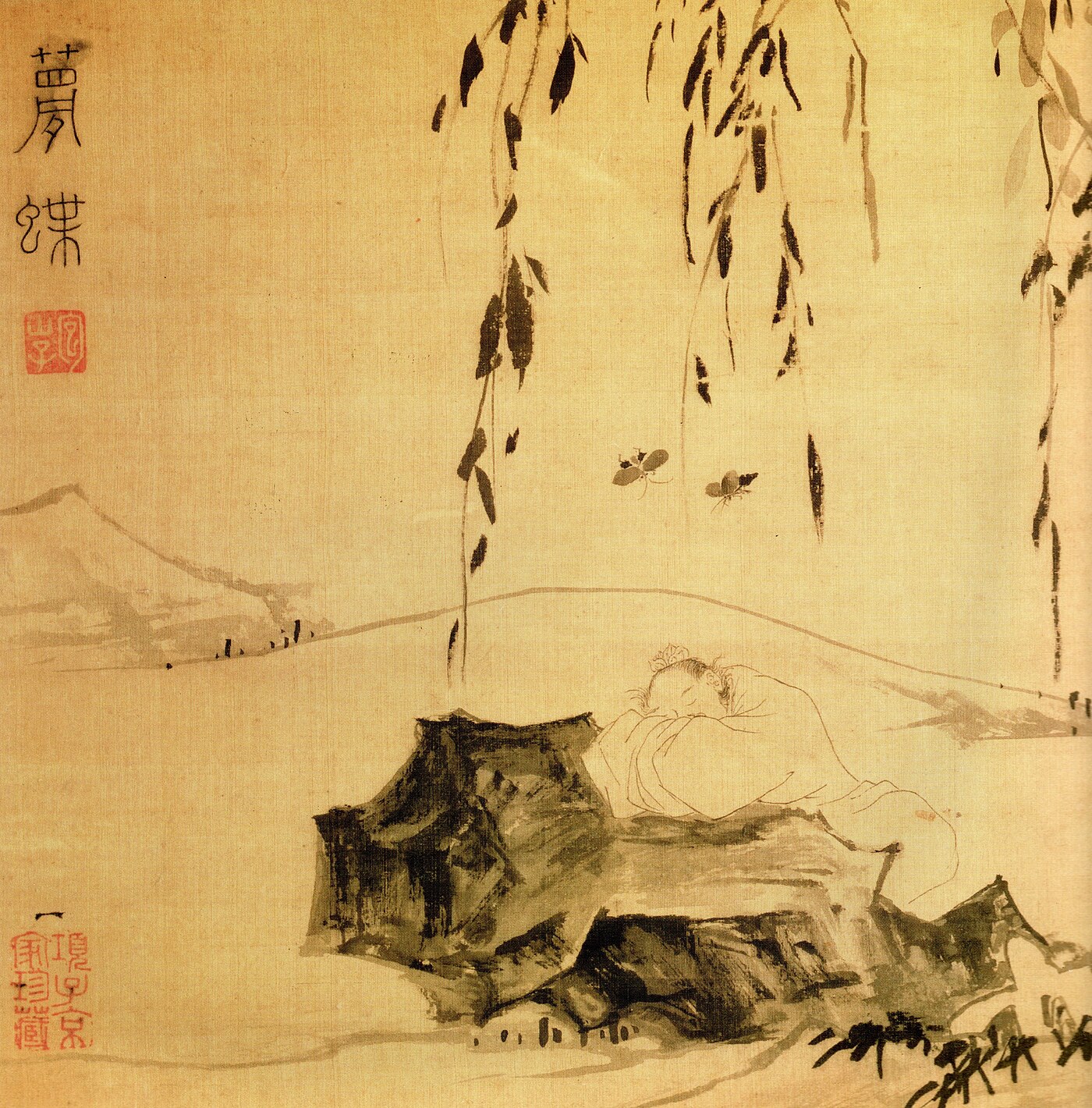
There is one butterfly dream in the Western record that everyone has read, and it belongs to a Chinese Daoist philosopher who died around 286 BCE. Zhuangzi’s butterfly dream, in Chapter 2 of the Zhuangzi (the text named for him, of uncertain authorship), poses the question that no subsequent butterfly-dream can escape: was he a man who dreamed he was a butterfly, or is he now a butterfly dreaming he is a man? The ji hua (the transformation of things) is the philosophical crux. The two states are real, and the boundary between them is exactly as permeable as a dream.
That is not the Western frame for butterfly dreams. The Western frame is Greek and it is simpler: psyche in ancient Greek meant both soul and butterfly. Aristotle uses psyche as the standard biological term for the butterfly in the Historia Animalium (5.19.551a). Plato exploits the pun in the Phaedo and elsewhere. The Greeks didn’t treat that as coincidence. The butterfly’s metamorphosis from larva to pupa to winged creature maps the soul’s movement from one form to another, and dream butterflies in this tradition carry the soul’s own charge.
Apuleius and the Psyche narrative
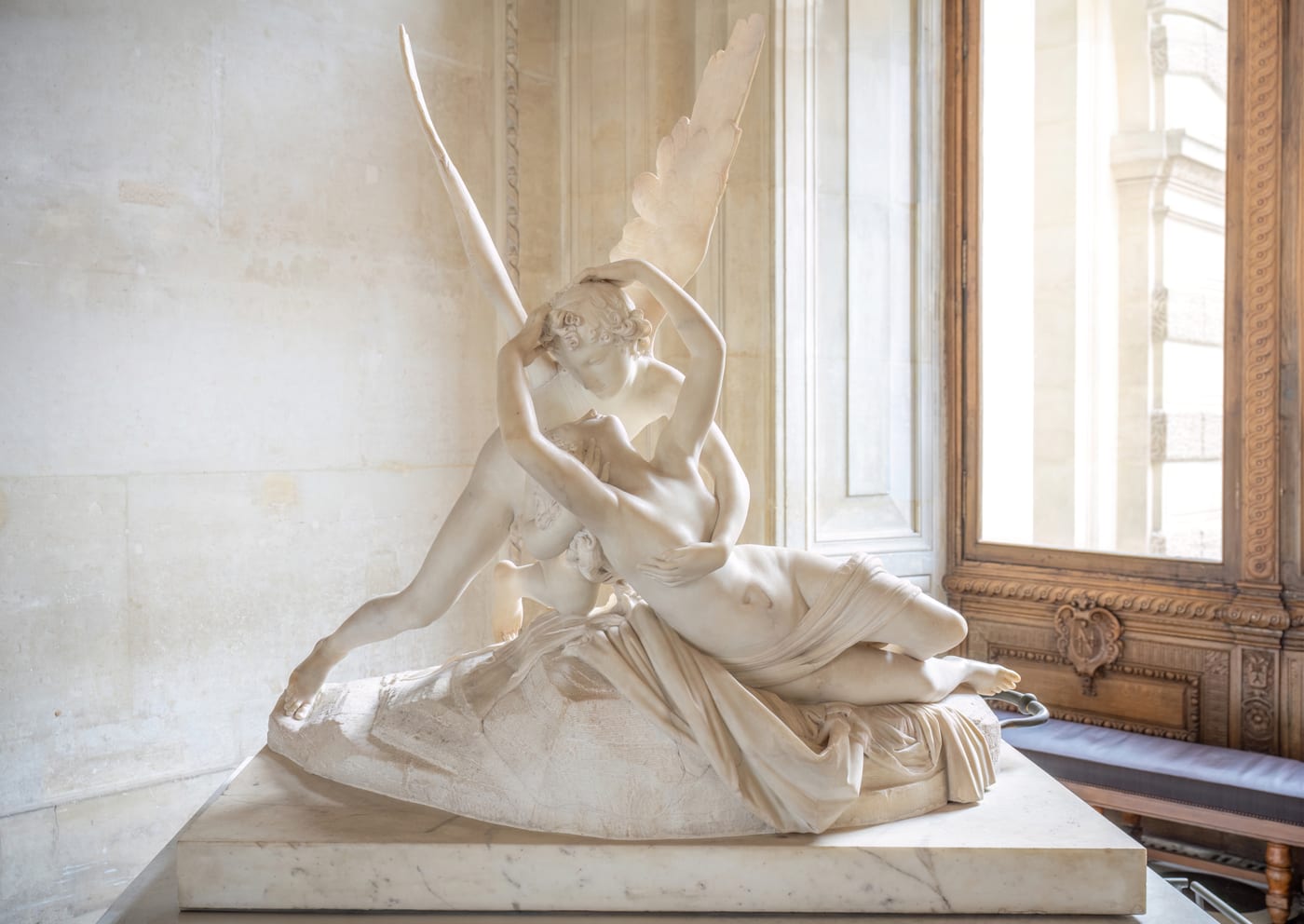
Apuleius’s The Golden Ass (Metamorphoses, c. 160 CE) builds the Psyche pun into the most elaborate butterfly narrative in classical literature. Psyche, the beautiful mortal who becomes Eros’s wife, undergoes a series of trials before achieving immortality. In visual art from the Hellenistic period forward, Psyche is depicted with butterfly wings, making her soul-status visible. Canova’s Psyché ranimée par le baiser de l’Amour (1793, Louvre) captures the moment after her last trial. Psyche’s wings are open. She’s done.
In the Greek frame, a butterfly dream carries weight. Something is mid-transformation, not finished yet.
Itzpapalotl and the warrior butterfly
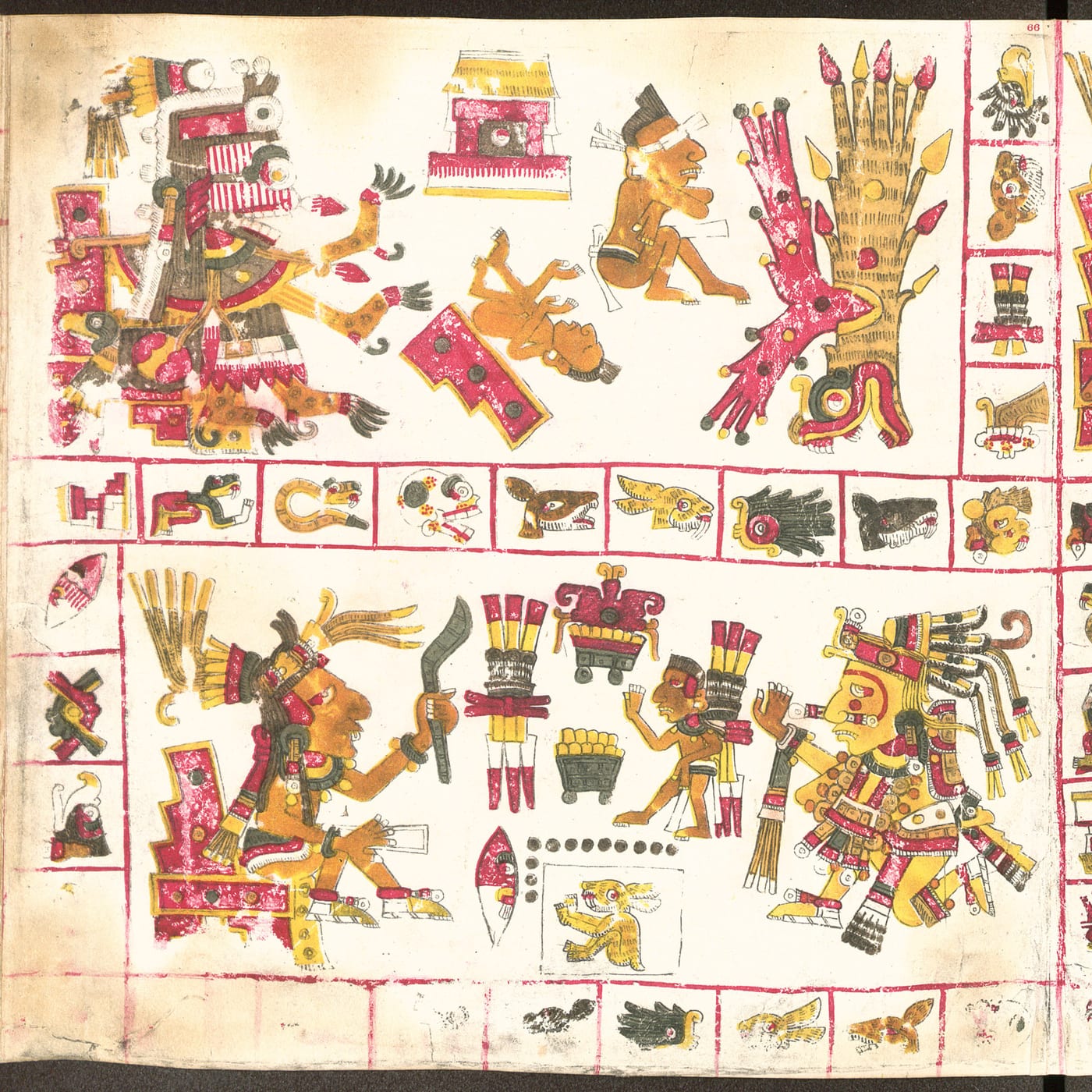
The Aztec tradition produces the sharpest contrast to the Western “beautiful transformation” reading. Itzpapalotl (Obsidian Butterfly) is an Aztec deity whose domain is transformation and death, specifically the death of warriors and the souls of women who died in childbirth. She is depicted with obsidian-edged butterfly wings and deer hooves, carrying the duality of beauty and weaponry that obsidian embodies: the most perfect cutting edge that pre-industrial technology produced, the material of both mirrors and sacrificial blades.
She rules Tamoanchan, the paradise-realm for souls who died in infancy and those killed violently. The warrior-butterfly identification runs through Sahagún’s Florentine Codex (Book 6): male solar warriors who died in battle became hummingbirds or butterflies after death, feeding on flowers in an eternal celestial garden. Not the quiet transformation of the chrysalis. The warrior’s afterlife in beautiful, aggressive form.
Kay Read’s Time and Sacrifice in the Aztec Cosmos (Indiana University Press, 1998) is the standard English scholarly treatment of Itzpapalotl’s role in the Aztec sacrificial calendar. The Codex Borgia imagery places her explicitly among the most powerful and dangerous deities in the Aztec pantheon, a figure who demands respect rather than sentimental interpretation.
Jung and transformation
C.G. Jung treats the butterfly as a soul-image in Symbols of Transformation (Collected Works 5, 1956) and returns to it in Mysterium Coniunctionis (CW 14, 1963), where the butterfly appears in alchemical symbolism as the anima. The Jungian reading synthesizes the Greek psyche-etymology with the European alchemical tradition: the butterfly emerging from the opus as the purified soul-substance.
In clinical dream-analysis, a butterfly dream that carries a sense of emergence, something finally hatching, typically maps onto a transformation process already underway. Some long-suppressed potential is becoming visible. This is consistent with the Greek-Jungian frame.
The Zhuangzi frame asks a harder question. Not what is transforming, but whether the distinction between your current state and the butterfly state is as fixed as you assumed. The dream in this reading is not showing you a future state. It’s asking whether you can still identify which state you’re currently in.
Frequently asked
- What does it mean to dream of a butterfly?
- The three main cultural frameworks give incompatible readings. Zhuangzi's tradition (c. 4th century BCE, Burton Watson trans.) frames the butterfly-dream as an identity question: is the human dreaming the butterfly, or the butterfly dreaming the human? Greek tradition equates butterfly with psyche/soul, so a butterfly in a dream carries the soul's transformative quality. The Aztec Itzpapalotl tradition treats the butterfly as a death-warrior symbol. The Western modern 'butterfly = positive transformation' is a simplified synthesis of the Greek frame.
- What is Zhuangzi's butterfly dream?
- Chapter 2 of the Zhuangzi (c. 4th century BCE), translated by Burton Watson in The Complete Works of Chuang Tzu (Columbia University Press, 1968): 'Once upon a time, I, Chuang Tzu, dreamt I was a butterfly... Suddenly I awoke and lay there, myself again. Now I do not know whether I was then a man dreaming I was a butterfly, or whether I am now a butterfly dreaming I am a man.' The passage introduces the concept ji hua (transformation of things), the permeable boundary between apparently fixed states of being.
- Who is Itzpapalotl?
- Itzpapalotl (Obsidian Butterfly) is an Aztec goddess of transformation, death, and warrior souls. She rules Tamoanchan (a paradise realm for souls who died in infancy and those killed violently) and is depicted with obsidian-edged butterfly wings and deer hooves. Kay Read's Time and Sacrifice in the Aztec Cosmos (Indiana University Press, 1998) and Karl Taube's Aztec and Maya Myths (British Museum Press, 1993) are the primary scholarly treatments in English.
Sources
- PRIMARY Zhuangzi, Chapter 2 (Qiwulun) . Burton Watson trans., Columbia University Press, 1968.
- PRIMARY Apuleius, The Golden Ass (Metamorphoses) . Hanson trans., Loeb Classical Library, 1989.
- PEER-REVIEWED Kay Read, Time and Sacrifice in the Aztec Cosmos . Indiana University Press, 1998.
- PEER-REVIEWED C.G. Jung, Symbols of Transformation . Collected Works Vol. 5, Princeton, 1956.
- PEER-REVIEWED J. Allan Hobson, Dreaming: An Introduction to the Science of Sleep . Oxford University Press, 2002.
- PRIMARY Plato, Phaedo . Grube trans., Hackett, 1977.
- PRIMARY Bernardino de Sahagún, Florentine Codex, Book 6 . Anderson and Dibble trans., School of American Research, 1950–82.