Hub · Tattoos
Animal Tattoo Meanings
What each symbol means in the culture it came from, and where contemporary tattoo practice has diverged from those sources.
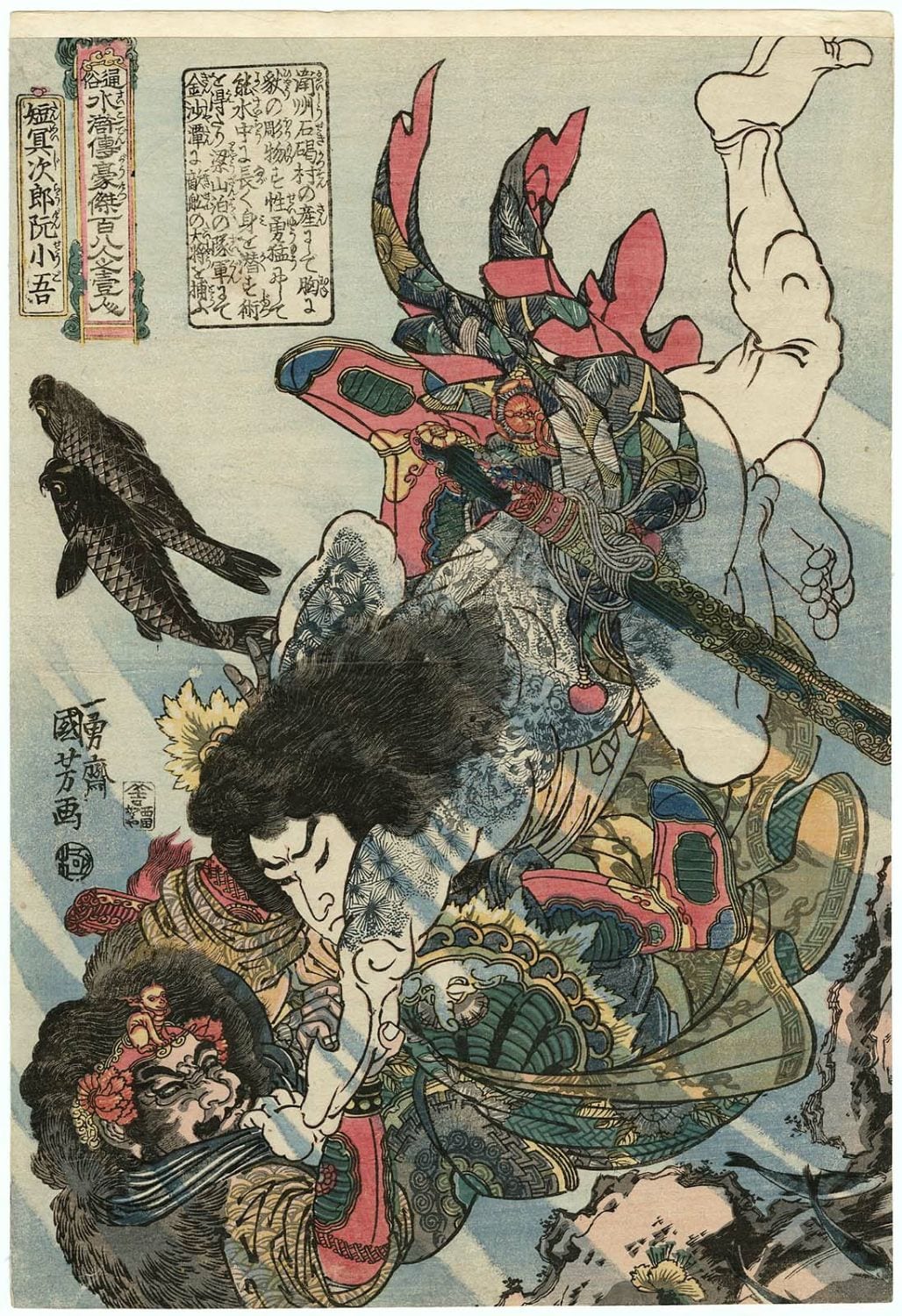
Animal tattoos carry different meanings in different tattoo traditions. Japanese irezumi pulls from Edo-period woodblock iconography with specific rules about animal pairing, placement, and seasonal association. Polynesian tatau (Māori tā moko, Samoan pe'a, Marquesan tattooing) encodes genealogical and cosmological identity rather than symbolic meanings in the Western sense. Western neo-traditional and American traditional draw from sailor culture and individual artists' inventions. These traditions are not interchangeable: a dragon means different things in irezumi, in Western fantasy tattooing, and in Polynesian cosmology.
The four major animal tattoo traditions
Japanese irezumi
Japanese irezumi is the most fully developed coherent system for animal tattoo meaning in the world. Its visual vocabulary derives primarily from Edo-period woodblock art, especially Utagawa Kuniyoshi's Suikoden series (c. 1827–1830), which depicted the 108 tattooed heroes of the Chinese classic Water Margin and established the compositional conventions still in use. Katsushika Hokusai's wave prints, especially The Great Wave off Kanagawa, supply much of irezumi's water iconography, the same rolling foam and negative space that surrounds koi and dragon designs. Specific animals appear with specific companion elements: the dragon (ryu) with clouds and water; the tiger (tora) with bamboo, wind, and often snow; the koi (koi-no-takinobori, ascending the waterfall) with water and cherry blossoms; the phoenix (hō-ō) with paulownia.
The Japanese dragon (ryu) should not be confused with the Chinese dragon (lóng) or the European dragon (draco). The ryu is a water deity, associated with rain, rivers, and the sea: benevolent, powerful, and specifically Japanese in its iconographic tradition. It has three claws (Chinese imperial dragons have five). Its meaning in irezumi is distinct from its meaning in Chinese tattooing and entirely different from the treasure-hoarding Western dragon.
Placement in traditional irezumi is not arbitrary. Full-body suits (donburi) follow specific compositional rules; the back-piece (sōhon) is the primary canvas; sleeves (sode) extend the back composition. An irezumi practitioner who knows the tradition will read placement as part of the meaning.
Polynesian tatau
Polynesian tattooing (Māori tā moko, Samoan pe'a, Hawaiian kakau, Marquesan tatau) is less a system of symbolic animal meanings and more a system of identity encoding. Alfred Gell's Wrapping in Images: Tattooing in Polynesia (Oxford, 1993) is the primary anthropological treatment. Gell's central argument: the Polynesian body is "wrapped" in cosmological and genealogical identity through tattooing; the design is biographical rather than symbolic in the Western sense.
In Marquesan tattooing, specific geometric forms carry meanings within the cosmological system: the tiki (anthropomorphic figure), the centipede, and the shark tooth each signify specific things. In Māori tā moko, the spiraling lines of the face encode the person's genealogical connections, tribal affiliations, and social rank, each person's moko is unique to them. The Samoan pe'a, the traditional male full-body tattoo, works the same way: earned through ceremony across multiple sessions, it marks the wearer's social standing and lineage rather than functioning as decoration chosen off a flash sheet. These systems are not interchangeable with generic "tribal" designs, which typically strip the cultural encoding and reduce the forms to pure decoration.
Western neo-traditional and American traditional
American traditional tattooing developed in sailor culture through the 19th and early 20th centuries. Its primary practitioner was Norman "Sailor Jerry" Collins (1911–1973), who synthesized Japanese woodblock influence with American iconography: bold black outlines, limited palette, flat color fills. The animal meanings in American traditional are largely the inventions of specific artists rather than traditional systems: an eagle means patriotism; a panther means ferocity; a rose-and-snake combination means temptation. Don Ed Hardy systematized and elevated the form in the 1970s–80s.
Neo-traditional builds on American traditional with heavier line weight, more saturated color, and more elaborate shading. Its animal symbolism draws freely from multiple traditions without systematic coherence: a neo-traditional wolf tattoo might draw from Norse mythology, Anishinaabe teaching, Ted Andrews, and pop culture simultaneously, without the practitioner necessarily distinguishing which reading they intend. This is neither wrong nor right; it is the nature of the tradition.
Why the source tradition matters
The most common question people bring to animal tattoo research is "what does X animal mean?", as if the answer were fixed and universal. It isn't. A koi ascending a waterfall in irezumi carries a specific meaning (perseverance against obstacles, the aspiration to overcome); a koi in a neo-traditional tattoo may carry a similar meaning, or may simply be an attractive composition, or may carry a different meaning the client and artist invented together. Both are valid. They are not the same thing.
Strength runs into the same problem. Ask which animal tattoo means strength and the answer splits three ways depending on where you're standing. In Japanese irezumi, that's the tiger (tora), read as courage and a ward against evil, cast as the dragon's natural rival. In Western neo-traditional work, it's the lion, carrying strength through an entirely different lineage: heraldry, Aslan, the MGM logo. In Polynesian tatau, it's the shark (niuhi), tied to strength and protection through a culture built around ocean navigation. Three animals, three histories, one overlapping English word.
Wolf tattoos split the same way. In American tattoo culture the wolf reads as loyalty, pack, and instinct, a meaning that traces mostly to Ted Andrews's Animal Speak (1993) filtered through Hollywood. In Japanese irezumi, the wolf (ōkami) belongs to a mountain-deity tradition and a reputation for ferocity in battle, a different animal from the naturalistic Western wolf even when the linework looks similar (our wolf tattoo guide goes deeper on both). In Norse-inspired work it splits again: Fenrir, chaos and inevitable destruction, or Geri and Freki, Odin's loyal wartime companions. None of these readings is wrong. They're just not interchangeable.
Knowing the source tradition matters most when the tattoo is designed to carry specific meaning: when you want the image to function as a statement within a coherent symbolic system, not just as personal decoration. The entries below provide the primary-source reading for each animal within the major traditions that have treated it, so that decision can be made with full information.
Animal tattoo index
Alligator and crocodile tattoo meaning across Florida Seminole traditional imagery, Egyptian Sobek-inspired designs, and modern American traditional styles.
Bat tattoo meaning across Chinese good-fortune fú iconography, Gothic and vampire-bat imagery, Halloween/horror styles, and American traditional.
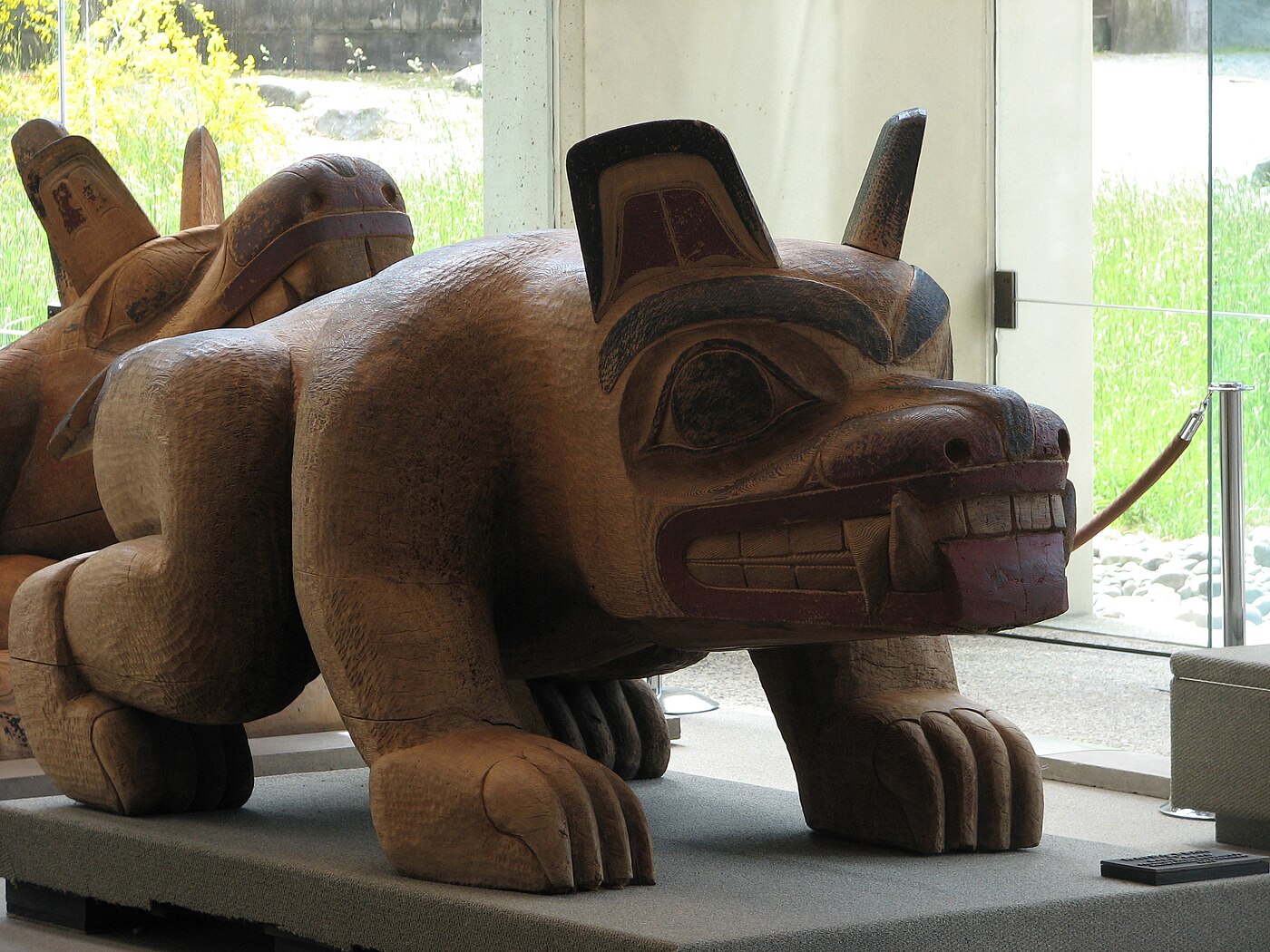
Bear tattoo meaning across Native-American-inspired styles (with cultural-sensitivity notes), Haida-influenced Northwest Coast formline imagery, California-state-bear civic imagery, and American traditional.
Black panther tattoo meaning: American traditional 'panther crawl' design lineage from Sailor Jerry, 1960s-70s Black Panther Party political symbolism, and the distinction from other big-cat tattoos.
Butterfly tattoo meaning: Japanese chō (蝶) traditional irezumi, Mexican monarch-butterfly Día de los Muertos imagery, 1990s-2000s femme-pop lower-back revival, and Greek psyche allegorical designs.
Dragon tattoo meaning: Japanese irezumi ryū traditions, Chinese long imperial imagery, Welsh Y Ddraig Goch national identity, Western fantasy dragons.
Hummingbird tattoo meaning: the modern Americana joy-and-lightness reading, Aztec Huitzilopochtli warrior imagery, and the watercolor-style contemporary revival.
Koi fish tattoo meaning: Japanese irezumi tradition, the dragon-gate (Longmen) legend of the koi that becomes a dragon, and the traditional reading of swimming-upstream versus swimming-downstream as encoding struggle-or-completion.
Lion tattoo meaning: Lion of Judah Rastafari inheritance from the Ethiopian Solomonic dynasty, English and Scottish heraldic lions, Zodiac Leo, and American traditional.
Lioness tattoo meaning: Egyptian Sekhmet lioness-goddess imagery, the modern 'maternal warrior' reading, and the matriarchal-hunter pride-social-structure biology.
Owl tattoo meaning across Greek Athena imagery, Japanese fukurō good-luck designs, Hindu Lakshmi uluka, and American traditional.
Panda tattoo meaning: modern cute-peace imagery, WWF conservation symbolism, and the honest absence of ancient Chinese panda tradition.
Phoenix tattoo meaning: Japanese hō-ō (鳳凰) irezumi body-suit companion to the dragon, Chinese fenghuang imperial-consort symbolism, and the Western rising-from-ashes resurrection reading from Ovid and 1 Clement.
Raven tattoo meaning: Norse Odin-Huginn-Muninn imagery, Haida Northwest Coast formline (cultural-sensitivity notes), Edgar Allan Poe's 1845 poem, Gothic-blackwork.
Snake tattoo meaning: Japanese irezumi hebi (蛇) body-suit designs, Ouroboros (self-consuming snake), medical Rod of Asclepius and caduceus, American traditional snake-and-dagger.
Wolf tattoo meaning across neo-traditional American, Japanese irezumi, Native-American-inspired styles (with cultural-sensitivity notes), and minimalist-linework variants. Cross-references our wolf spirit-animal page.