Dream Meaning
Dreams of Foxes: Kitsune Contact, Reynard the Trickster, and Pu Songling's Fox Spirits
Dreams of foxes: Japanese kitsune dream-contact traditions, Reynard the Fox as medieval European trickster substrate, and Pu Songling's Liaozhai Zhiyi fox-spirit literature (c. 1679).
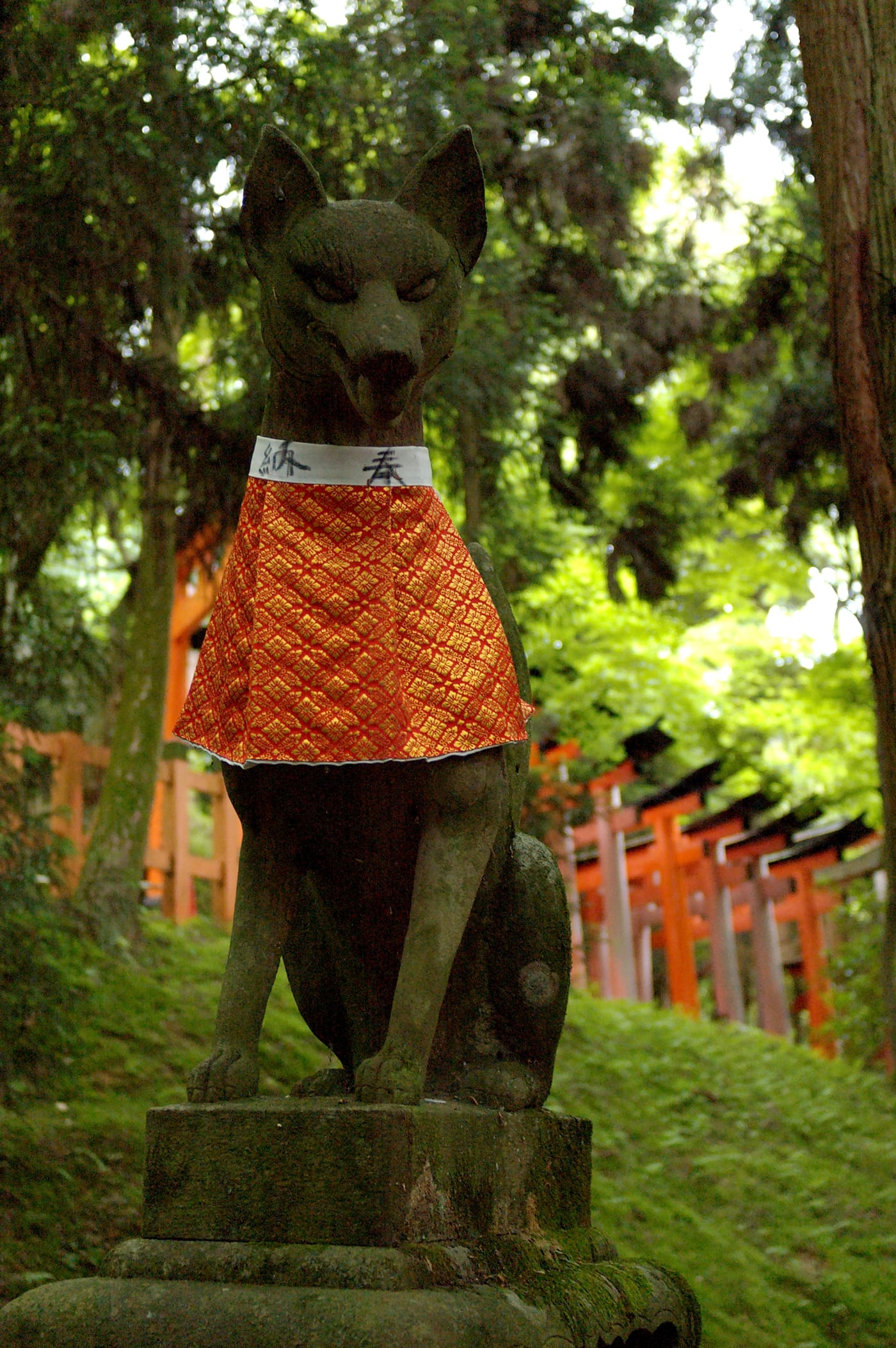
Fox dreams work differently depending on which tradition you're reading through. Japanese kitsune tradition treats a fox appearing in a dream as specific supernatural contact, either a messenger of the harvest deity Inari Ōkami or a shape-shifting fox-spirit with its own agenda. Chinese húli jīng tradition (Pu Songling, Liaozhai Zhiyi, c. 1679) presents fox-spirits as seductive, ambivalent, sometimes dangerous, sometimes kind. European tradition through Reynard the Fox (Roman de Renart, c. 1175–1250) frames the fox as trickster: clever, unreliable, perpetually outsmarting the powerful. In Jung, the fox typically represents the trickster archetype.
The Japanese tradition is unambiguous: a fox appearing in a dream is not a metaphor. The kitsune is a supernatural being. Toriyama Sekien’s Gazu Hyakki Yakō (1776), the foundational illustrated catalogue of Japanese supernatural entities, includes the kitsune among the serious yokai, beings with their own intentions and their own reasons for making contact. If one came to you in a dream, the question was what it wanted, not what it symbolized. Lafcadio Hearn’s Kwaidan (1904) collected the popular fox-spirit traditions into English; his romanticism softens some of the edge, but the underlying folk-conception remains: the fox in the dream is a contact.
The Inari messenger and the shape-shifter
The kitsune serves two distinct functions in Japanese folk religion. As Inari Ōkami’s messenger, the fox is sacred. The white foxes that flank Inari shrine entrances across Japan (more than 30,000 shrines, with Fushimi Inari-taisha in Kyoto as the head) are divine intermediaries. A dream of a white fox in this tradition could carry auspicious content: the harvest deity’s blessing, a communication from a protective spirit.
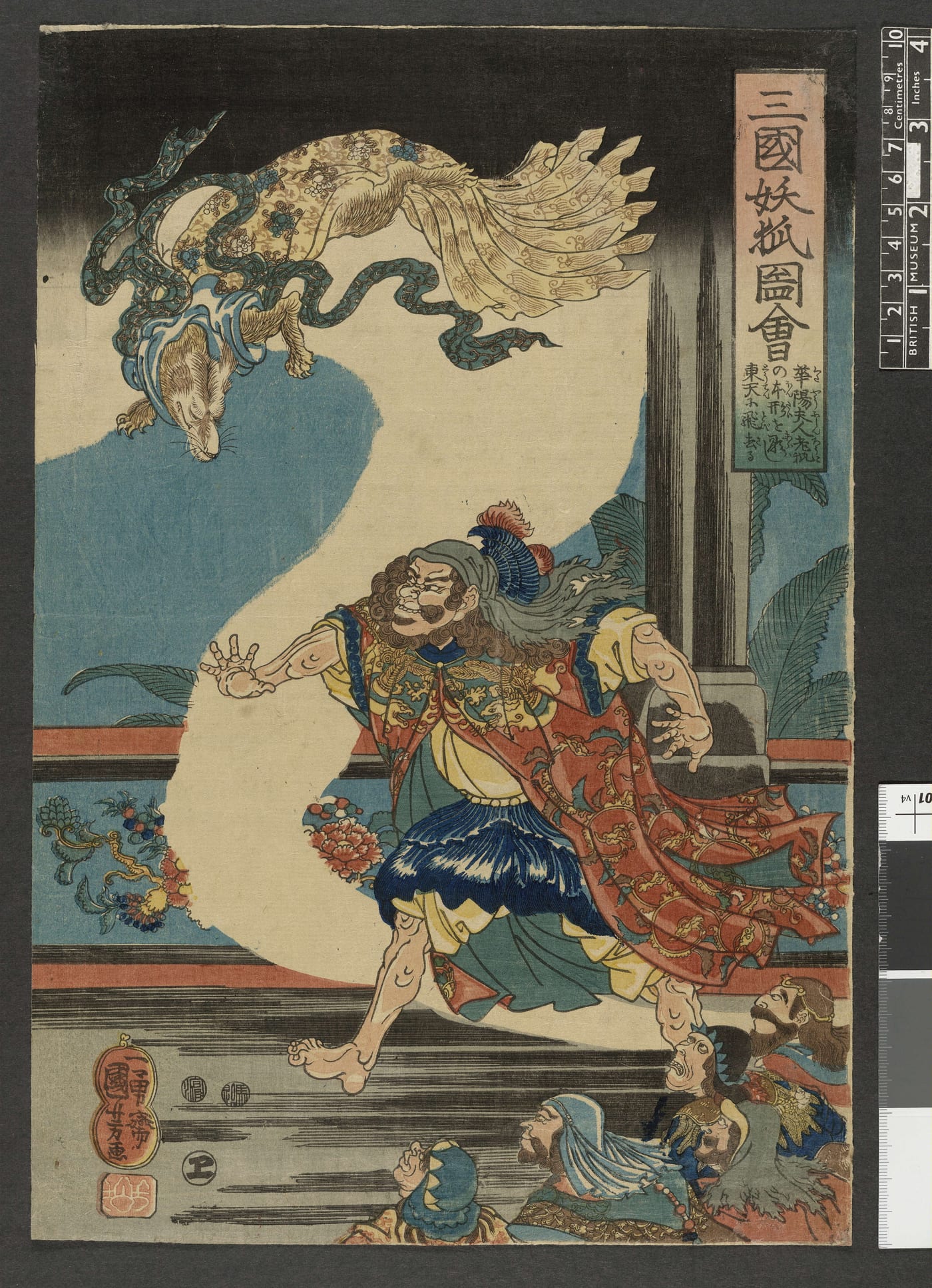
As the shape-shifting kitsune (the traditions interpenetrated from China through Korea to Japan), the fox is something else entirely, capable of human form, equally capable of deception or love. Pu Songling’s Liaozhai Zhiyi (Strange Tales from a Chinese Studio, c. 1679; John Minford trans., Penguin Classics, 2006) contains several dozen stories of fox-spirit encounters, most involving a scholar who falls in love with a woman who is eventually revealed to be a fox. Some of these foxes are genuinely kind. Some are catastrophically not. The dream-fox in this tradition is the shape-shifter whose form is suspect and whose intentions require assessment.
Reynard and the European trickster
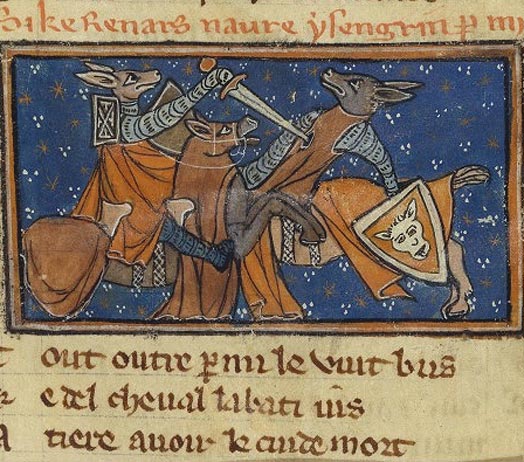
The Roman de Renart (Old French, c. 1170s–1250) established the fox’s European dream-grammar. Reynard, cunning and self-serving, perpetually outwitting the powerful by exploiting their vanity, is the direct descendant of Aesop’s foxes (6th century BCE) but turned into a full satirical protagonist. The bear gets his snout stuck in a tree. The wolf is repeatedly disgraced. The lion-king is manipulated into absurd reversals. Reynard escapes every trap, usually by talking his way out of it.
The Roman de Renart cycle was among the most widely-read narrative traditions in medieval Europe, translated across languages, adapted in German as Reineke Fuchs, in Dutch as Van den vos Reynaerde, in English through Caxton’s 1481 The History of Reynard the Fox. It established an association so durable it’s nearly transparent: the fox in a dream represents the trickster, the clever-but-untrustworthy figure, the energy that may serve you or may be working in the opposite direction.
Jung’s treatment of the trickster archetype in The Archetypes and the Collective Unconscious (CW 9i, 1959) draws on the Northern European trickster tradition. The trickster in Jungian analysis is the disruptive, boundary-crossing figure in the psyche, neither good nor evil, but the agent of change through disruption. A fox dream in this frame suggests the trickster is active: that the expected rules may be circumvented, that someone, or some part of yourself, is not playing straight.
Reading a fox dream
The cultural frame does the interpretive work. A fox in a dream to someone with Japanese-inflected expectations activates the kitsune tradition: is this an Inari-blessed encounter or a shape-shifter making contact for its own reasons? A fox in a European-inflected imagination activates the Reynard trickster: who is outsmarting whom, and to what end?
The reading differences are real, but both traditions treat the fox as a purposeful actor with its own agenda. A fox dream where you feel aligned with the fox differs from one where the fox is working against you. That distinction holds whether you’re in the kitsune tradition or the Reynard cycle.
No tradition treats the fox as passive scenery. In the Japanese frame it is either a divine messenger or something making deliberate contact. In the Reynard frame it is the cleverest actor in the room, already three moves ahead. Worth thinking about whose side the fox in your dream was on.
Frequently asked
- What does it mean to dream of a fox?
- The cultural frame determines the reading. In Japanese kitsune tradition: possible supernatural contact, either from an Inari messenger or a shape-shifting fox-spirit. In Chinese húli jīng tradition: an ambivalent encounter with a seductive, potentially dangerous spirit. In European Reynard tradition: trickster energy, cunning, unreliable counsel. In Jungian analysis: the trickster archetype or the animus's mercurial form. The same dream generates opposed readings depending on which tradition you're working from.
- What is the Japanese kitsune dream tradition?
- Japanese fox-spirit lore is extensively documented from the 10th century forward. Toriyama Sekien's Gazu Hyakki Yakō (1776) systematized the visual iconography; Lafcadio Hearn's Kwaidan (1904) collected folk traditions into English. A kitsune in a dream was understood as a potentially real supernatural encounter: the fox might be an Inari messenger, or a shape-shifting kitsune making contact for its own reasons. Michael Foster's The Book of Yokai (UC Press, 2015) is the standard English scholarly treatment.
- Who is Reynard the Fox?
- Reynard is the protagonist of the Roman de Renart (Old French, c. 1170s–1250), a cycle of beast-fable narratives in which a cunning fox perpetually outwits the wolf Noble (the lion-king), the bear Bruin, and other court figures through deception and wit. The Reynard cycle was one of the most widely-read narrative traditions in medieval Europe and established the fox-as-clever-schemer substrate in Western culture, drawing on Aesop's fox fables (c. 6th century BCE) and extending them into a full satirical court narrative.
Sources
- PRIMARY Toriyama Sekien, Gazu Hyakki Yakō . 1776; context in Michael Foster, The Book of Yokai, UC Press, 2015.
- PRIMARY Pu Songling, Liaozhai Zhiyi . c. 1679; Minford trans., Penguin Classics, 2006.
- PRIMARY Roman de Renart . Old French, c. 1170s–1250; Varty trans., Brill, 1999.
- PEER-REVIEWED Michael Foster, The Book of Yokai . UC Press, 2015.
- PRIMARY Lafcadio Hearn, Kwaidan . Houghton Mifflin, 1904; public domain.
- PEER-REVIEWED C.G. Jung, Archetypes and the Collective Unconscious . Collected Works 9i, Princeton, 1959.
- PEER-REVIEWED J. Allan Hobson, Dreaming: An Introduction to the Science of Sleep . Oxford University Press, 2002.