Water Sign · February 19 – March 20
Pisces Spirit Animal
Pisces the Fish: Babylonian KUN.MES ('the tails'), the Greek myth of Aphrodite and Eros transformed into fish to escape Typhon.
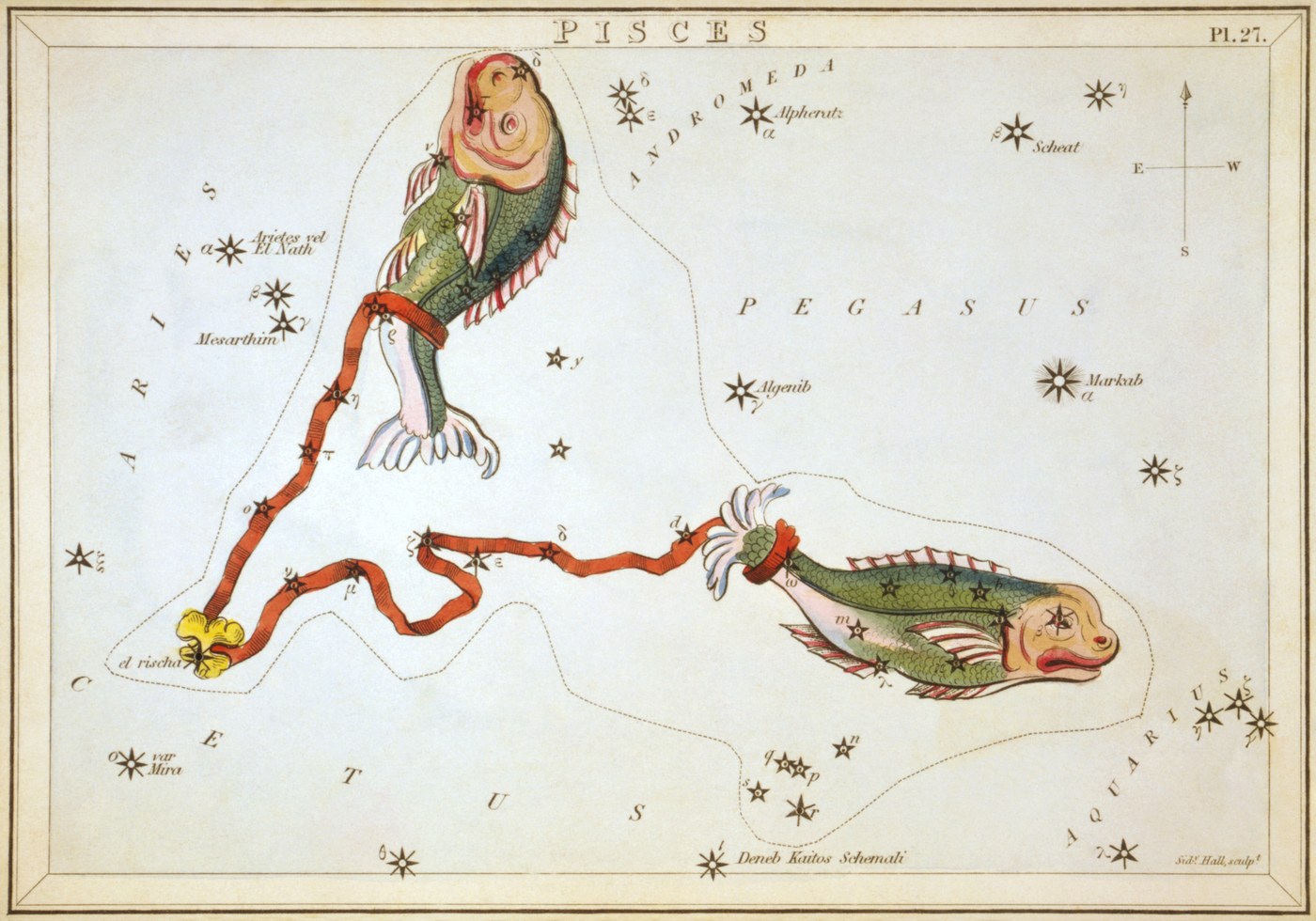
Pisces is the Two Fish (February 19 – March 20, Water element). Babylonian KUN.MES ('the tails'). The Greek myth: Aphrodite and Eros, fleeing the monster Typhon, transformed into fish and tied themselves together with a cord so they would not be separated (Hyginus Astronomica 2.30, Ovid Fasti 2.459–474). Primary animal: fish.
The Babylonian name KUN.MES means “the tails”, and that is precisely what the constellation shows. Two fish, swimming in opposite directions, tied together by a cord whose knot is the star Al Rischa (“the knot” in Arabic). The cord binding them is not incidental; it is visually central to the constellation’s form, and it carries the mythological weight.
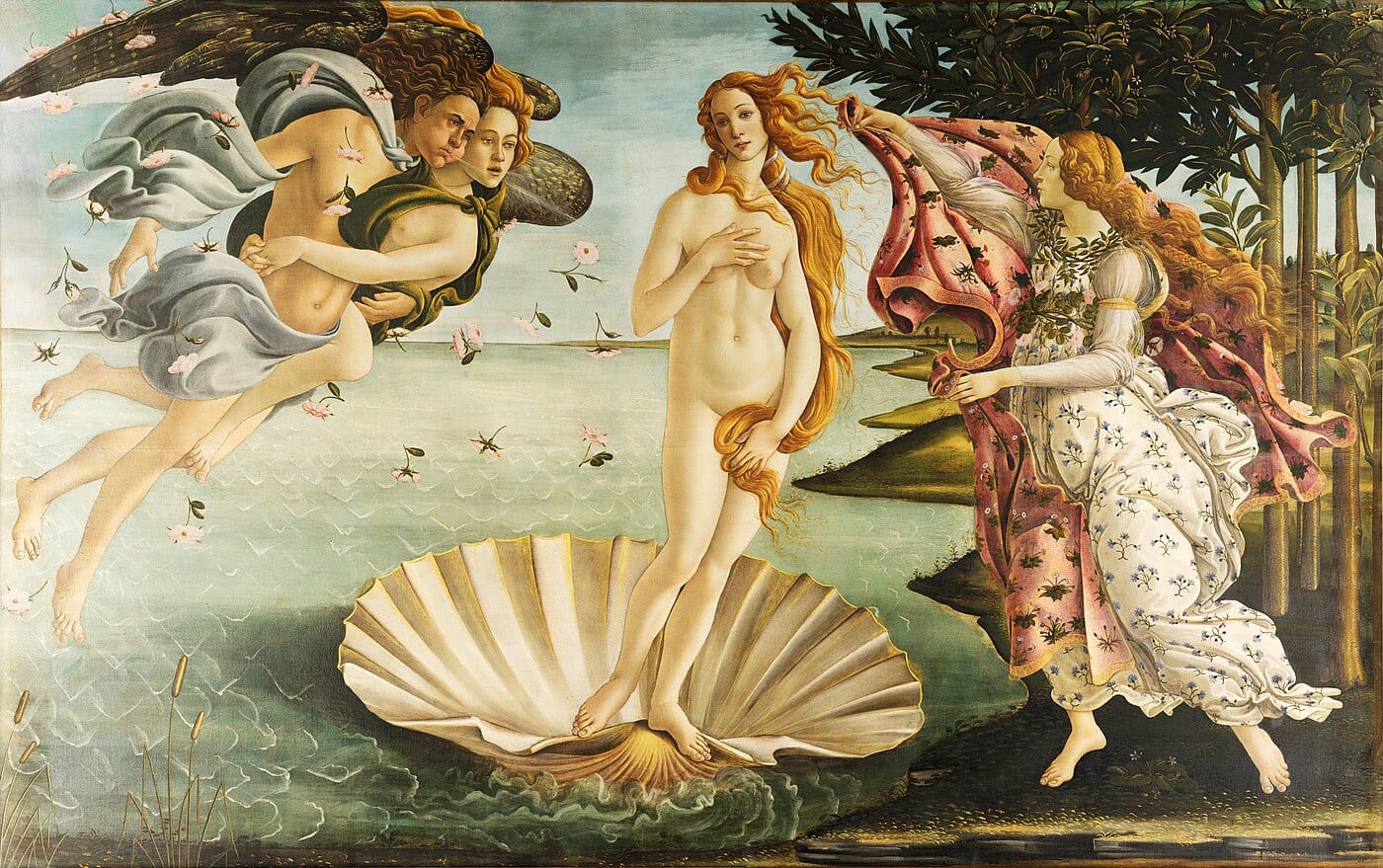
Aphrodite and Eros escaping Typhon
Ovid tells the story in the Fasti 2.459–474. The gods were feasting by the Euphrates when Typhon (the monstrous, world-threatening creature of primordial chaos) appeared. Every god transformed to escape: Mercury became an ibis, Diana a cat, Juno a white cow, Bacchus a goat, Apollo a crow. Aphrodite and Eros leapt into the river and transformed into fish to swim away. So that they would not be separated in the water and in their panic, they tied themselves together with a cord.
Hyginus’s Astronomica 2.30 preserves a parallel version: the fish were already in the river and carried Aphrodite and Eros to safety, being catasterized as thanks afterward. Either way, the cord is explained, the two fish are explained, and the myth encodes a bond that cannot be broken even in crisis.
The Age of Pisces
Pisces is the sign the vernal equinox has been moving through for roughly the past 2,000 years, and will continue to inhabit for another 600 years, due to axial precession. Ancient astronomers used the equinox as their reference point, the sun’s position at the spring equinox defines the beginning of the zodiacal cycle. In the era when the Hellenistic zodiac was being formalized, the equinox was in Aries. It has since precessed backward through Aries and into Pisces.
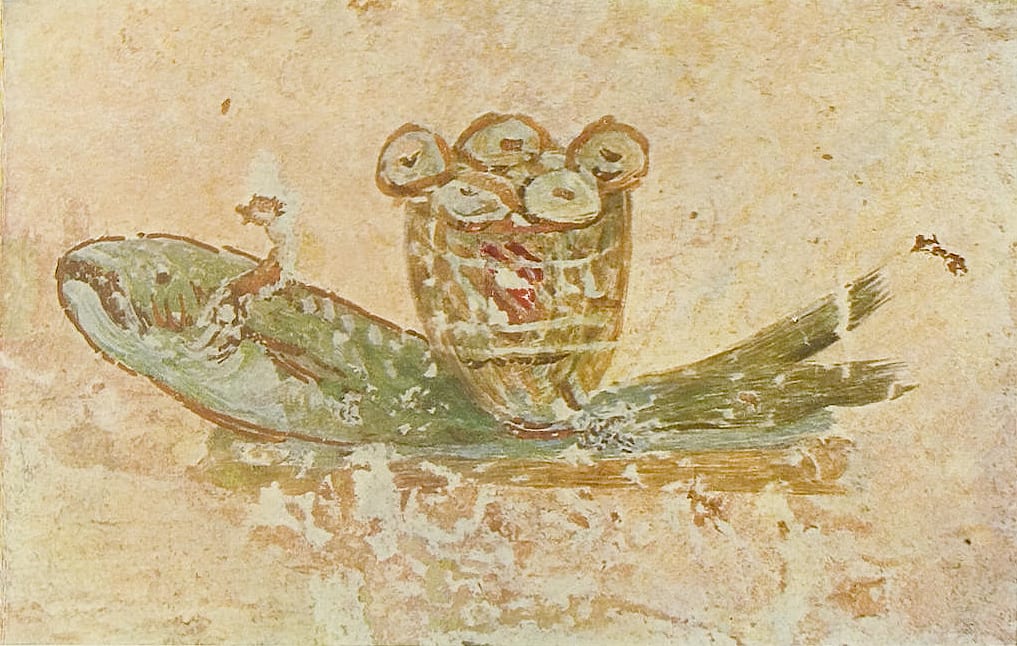
Some scholars of early Christianity have noted that the ichthys (the fish symbol adopted by early Christians) emerged during the transition into the Piscean Age, and that the two fish bound together have been interpreted as the tension within Christian theology between law and grace, or between the earthly and divine. These are readings built from the astronomical coincidence; the Church Fathers themselves did not teach them. But the coincidence of the fish symbol and the Piscean era is real.
The cord and the knot
The star Al Rischa (Arabic for “the knot”) sits at the point where the cord connecting the two fish meets. It is the most clearly named navigational feature of the constellation. Ancient astronomers saw the cord binding the fish not merely as a mythological detail but as the defining structural element of the sign: two directions held together by a single point. The two fish pulling in different directions, held together by a knot that doesn’t break: that is the image ancient astrologers used for Pisces, and it is more specific and more interesting than the standard “spiritual, dreamy, empathic” personality summary.
The animal associations
The fish (two fish) are the primary Pisces animals. The dolphin appears as the secondary animal because dolphins were associated with Aphrodite and the sea from the earliest Greek sources; the dolphin spirit animal entry covers the Delphi-Apollo connection, the Dionysus-transforms-pirates narrative, and the Haida and Polynesian dolphin traditions. The seahorse and the whale appear in modern zodiacal lists through their oceanic associations; see the whale spirit animal entry for the Haida-Tlingit orca and the biblical Leviathan traditions, and the seahorse spirit animal entry for the Poseidon hippocampus tradition that directly underlies the Pisces imagery.
Associated animals
Primary: Fish , Dolphin
Frequently asked
- What animal is Pisces?
- The Fish, specifically two fish tied together by a cord. Babylonian KUN.MES ('the tails'). Greek myth: Aphrodite and Eros transformed into fish to escape Typhon (Ovid Fasti 2.459–474, Hyginus Astronomica 2.30). Primary animal: fish; secondary: dolphin.
- What is the Greek myth of the two fish?
- In Hyginus's Astronomica 2.30 and Ovid's Fasti 2.461–466, Aphrodite and Eros transform into fish (or are carried on fish) to escape the monster Typhon, mirroring the Pan-becomes-Capricorn escape. The two fish are tied together to keep them from being separated. The constellation's pair-and-cord composition encodes this rescue scene. The earlier Babylonian tradition had the constellation as the Tails (KUN.MEŠ), already paired.
- Why is the early Christian ichthys symbol relevant to Pisces?
- The ichthys (Greek for "fish") emerged among early Christian communities in the 1st–2nd centuries CE as a covert visual emblem: the letters of ichthys forming an acrostic for "Jesus Christ, God's Son, Savior." Catacomb paintings in Rome preserve the earliest visual record. The overlap with the astrological Pisces is not coincidence: Hellenistic astrology placed the start of the Christian era at the precession entry into Pisces, an association the early Church recognized.
Sources
- PRIMARY MUL.APIN (KUN.MES) . Hunger & Pingree, 1989.
- PRIMARY Ovid, Fasti 2.459–474 . Loeb Classical Library.
- PRIMARY Hyginus, Astronomica 2.30 . Grant trans., University of Kansas, 1960.
- PRIMARY Ptolemy, Tetrabiblos . Loeb.
- PRIMARY Ovid, Fasti 2.461–466 . Frazer trans., Loeb Classical Library.