Oracle deck guide
Best Spirit Animal Oracle Decks: A Ranked, Honest Guide
Five decks (and the book behind them), ranked for tradition, visual quality, and usable structure.
Medicine Cards by Jamie Sams and David Carson (St. Martin's, 1999) is the most tradition-grounded oracle in the genre, built from Sams's Seneca and other Indigenous teachings. The Wild Unknown Animal Spirit by Kim Krans (HarperOne, 2018) is the strongest choice for visual quality. The Spirit Animal Oracle by Colette Baron-Reid (Hay House, 2019) has the most structured guidance system for new readers. Ted Andrews's Animal Speak (Llewellyn, 1993) is the reference book that most decks are paraphrasing, reading it reveals where the interpretations come from.
Most spirit animal oracle decks draw on a common well: Ted Andrews's Animal Speak, Jamie Sams's Medicine Cards tradition, and a loose synthesis of Indigenous, Celtic, and Jungian symbolism. Knowing that makes the field navigable. The five below are ranked on three criteria: how grounded they are in specific traditions, how usable they are for actual readings, and whether the art is worth looking at.
None of these are tarot, which is worth separating clearly if you're new to either. Tarot decks have kept a fixed structure since the 15th century: 78 cards, split between 22 Major Arcana and 56 Minor Arcana. Oracle cards answer to no such convention. A deck can run any card count, any theme, any system its creator invents, and that's exactly what makes the five below diverge as much as they do. Medicine Cards' bear won't mean the same thing as the bear in Krans's deck, because each deck is its own closed interpretive system, not a variant reading of one shared 78-card structure.
The appropriation question is worth asking directly rather than avoiding, given how much of this genre borrows Indigenous vocabulary without Indigenous authorship. Medicine Cards has an answer built in: Sams draws on Seneca and Cherokee heritage that's hers to draw on, and the guidebook cites its sources rather than gesturing at a vague "Native American tradition." Decks built by outside authors under generic "ancient wisdom" framing don't get that same benefit of the doubt. Deloria's God Is Red, cited above, remains the sharpest primary-source treatment of the gap between the traditions Mooney and his contemporaries documented and the New Age synthesis most of this genre actually sells.
- #1 Classic
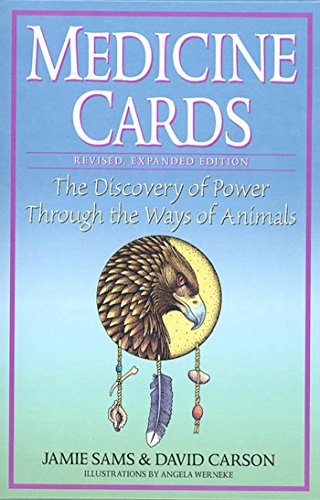
Medicine Cards: The Discovery of Power Through the Ways of Animals
The foundational modern spirit-animal oracle. Forty-four cards derived from Sams's Seneca and other Indigenous teachings, with a guidebook that actually explains the source material. More grounded in specific traditions than most decks in the genre. The original that most later oracle decks are consciously or unconsciously imitating.
- #2 Visual / Artistic
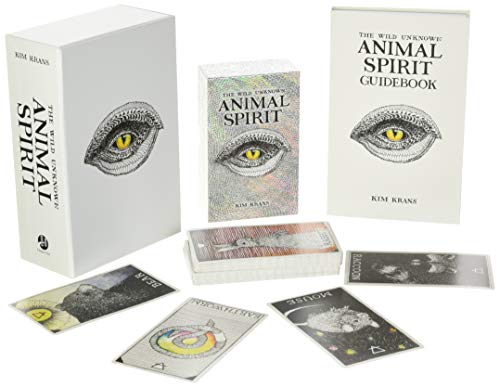
The Wild Unknown Animal Spirit Deck and Guidebook
The most visually distinctive deck in the genre. Krans's ink-and-watercolor animals are immediately recognizable. Sixty-three cards organized by five elemental suits (Earth, Air, Fire, Water, Spirit). The guidebook is honest about its psychological rather than ethnographic approach, which is the right call. If you're going to give one deck to someone who values art as much as symbolism, this is it.
- #3 Structured Guidance
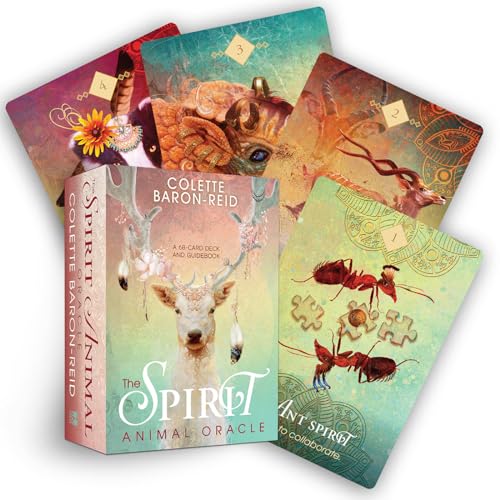
The Spirit Animal Oracle
Sixty-eight cards with a strong intuitive-guidance framework. Baron-Reid's system uses three card positions (Protection, Wisdom, Challenge) per reading, which gives the deck real interpretive structure. More accessible than Medicine Cards for readers new to oracle work. The art is well-executed and the guidebook doesn't overpromise.
- #4 Shamanistic
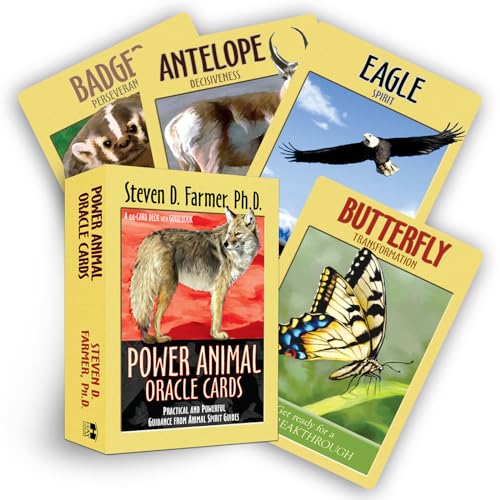
Power Animal Oracle Cards
Forty-four cards with a shamanistic framework drawn from Farmer's Power Animals companion book. The cards are direct and practical, each one has a clear, usable message rather than open-ended symbolism. Farmer's background in shamanic counseling shapes the approach: these read more like messages from spirit guides than Jungian archetypes. A workable companion to his Power Animals book.
- #5 Foundational Text
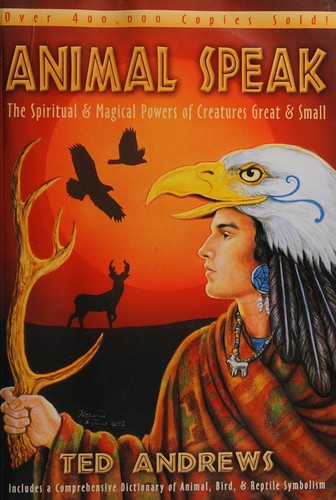
Animal Speak: The Spiritual & Magical Powers of Creatures Great and Small
Not an oracle deck, the book that most oracle decks are paraphrasing. Andrews synthesized Lakota, Celtic, and Egyptian material into a generalized framework that became the default vocabulary of American spirit-animal culture. Reading it tells you where the deck interpretations came from. Essential context for working with any of the decks above, and useful for looking up any animal the decks don't include. Pair it with the primary scholarship it's synthesizing rather than stopping there: Neil Price's The Viking Way (2019) for the Norse material, Raymond DeMallie's The Sixth Grandfather (1984) for Lakota primary sources, and Michael Foster's The Book of Yokai (2015) for Japanese folklore. Andrews hands you the practice; those three hand you the history behind what he condensed.