Air Sign · September 23 – October 22
Libra Spirit Animal
Libra the Scales: Babylonian ZIB.BA.AN.NA ('balance of heaven'), Greek Chelae ('claws' of Scorpio), Roman re-introduction as Libra from the 1st century BCE.
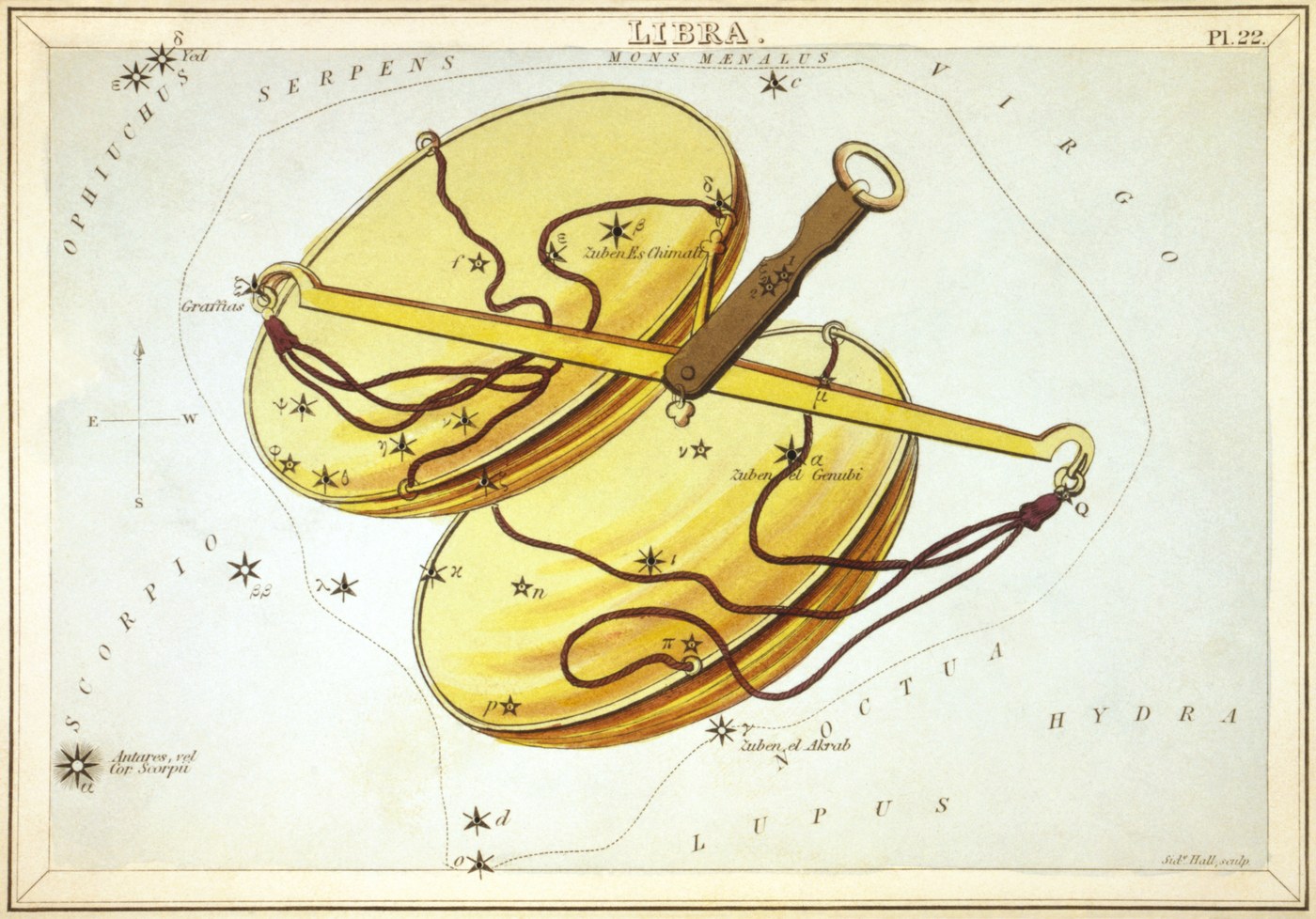
Libra is the Scales (Sept 23 – Oct 22, Air). Babylonian ZIB.BA.AN.NA ('balance of heaven'). Greeks called the stars Chelae (claws of Scorpio); Romans re-introduced Libra as an independent sign from the 1st century BCE. No primary animal; secondary dove, swan associations via Venus-ruled air-element.
Libra is the only non-living symbol in the Western zodiac. Every other sign is an animal, a human figure, or a composite being. The scales are an instrument. That matters. A conceptual entity replaced an animal in the zodiacal sequence, a specific moment in Roman astronomical history, and the reasoning behind it reveals something about how the ancients organized their sky.
The Greeks called them claws
In Greek astronomical tradition, the stars we now call Libra were the chelae, the claws of Scorpio. The constellation Scorpius, in Greek depictions, was drawn as a much larger figure than it appears in modern sky charts, with the front claws extending well into what Romans later separated out as Libra. Aratus’s Phaenomena (c. 270 BCE) describes the “claws of the Scorpion” where a reader today would see Libra. This was not a Greek oversight. It was a deliberate choice: the scorpion is a large creature, and the extended claws were natural extensions of the constellation.
Rome re-drew the line
Roman astronomers and writers of the 1st century BCE separated the claws into an independent sign. The most commonly cited figure is Julius Caesar, whose astronomers formalized Libra as the sign associated with the autumnal equinox, equal day and night, the balance point of the year. The equinox connection is why the scales are the symbol: at the autumnal equinox, the sun is in Libra, and day and night are balanced. Aratus had known this balance too, but kept the stars as Scorpio’s claws; Roman interpretation emphasized the calendrical meaning and gave the sign its own identity.
The Babylonian ZIB.BA.AN.NA
The Babylonian MUL.APIN tablets do preserve a sign corresponding to Libra’s position. ZIB.BA.AN.NA means “balance of heaven” or “yoke of heaven.” This predates Roman Libra, and it carries the same balance/scale concept, suggesting the equinox meaning was recognized in Babylonian astronomy long before Julius Caesar’s astronomers formalized it in the Roman system. The continuity is striking, scales in Babylon, scales in Rome, the same stars, the same reasoning.
The animal associations
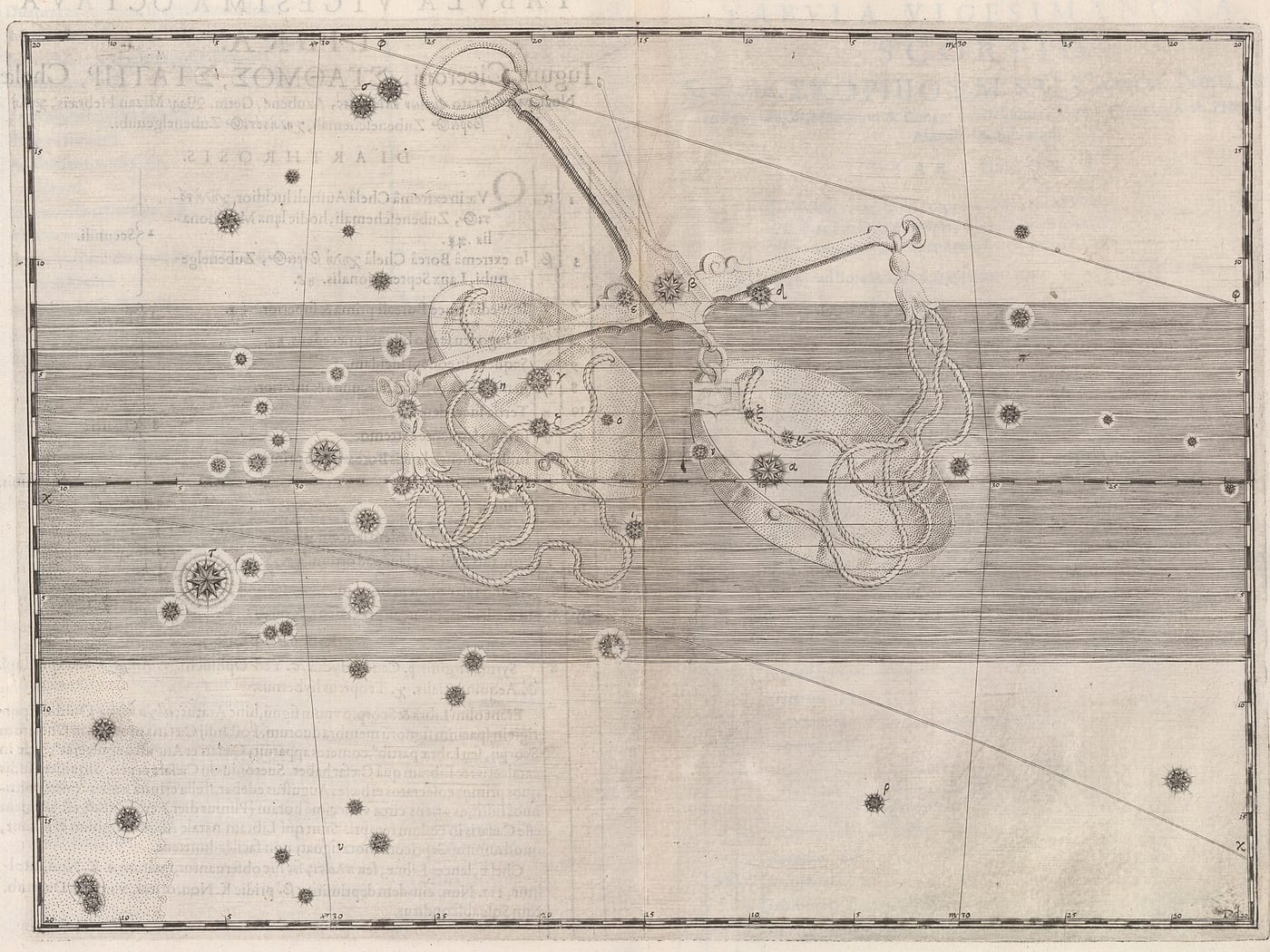
Since Libra has no primary mythological figure and is not an animal, its animal associations are entirely secondhand. The sign is ruled by Venus in Hellenistic astrology, which is why the dove and the swan appear as secondary associations, both are animals of Aphrodite/Venus. The dove’s connection to peace and love and the swan’s association with beauty and music connect to Venusian qualities rather than to any specific Libra mythology. See the dove spirit animal entry and the swan spirit animal entry for the actual ancient traditions behind those animals.
Associated animals
Primary: Dove
Secondary: Swan
Frequently asked
- What animal is Libra?
- Libra is the Scales, not an animal. Babylonian ZIB.BA.AN.NA. Greek Chelae (Scorpio's claws). Roman Libra from 1st century BCE. Secondary dove/swan associations via Venus-ruled air-element.
- What was Libra before it was Libra?
- The constellation we now call Libra was, in classical-era Greek and Roman astronomy, the Claws of the Scorpion (Chelae), an extension of Scorpius. The separation into a distinct sign with the scales is a Roman addition documented in Geminus's Introduction to the Phenomena (1st c. BCE) and Manilius's Astronomica 1.609. The Roman re-attribution to scales (libra, "weighing instrument") connected the sign to the autumnal equinox, where day and night are "weighed" in balance.
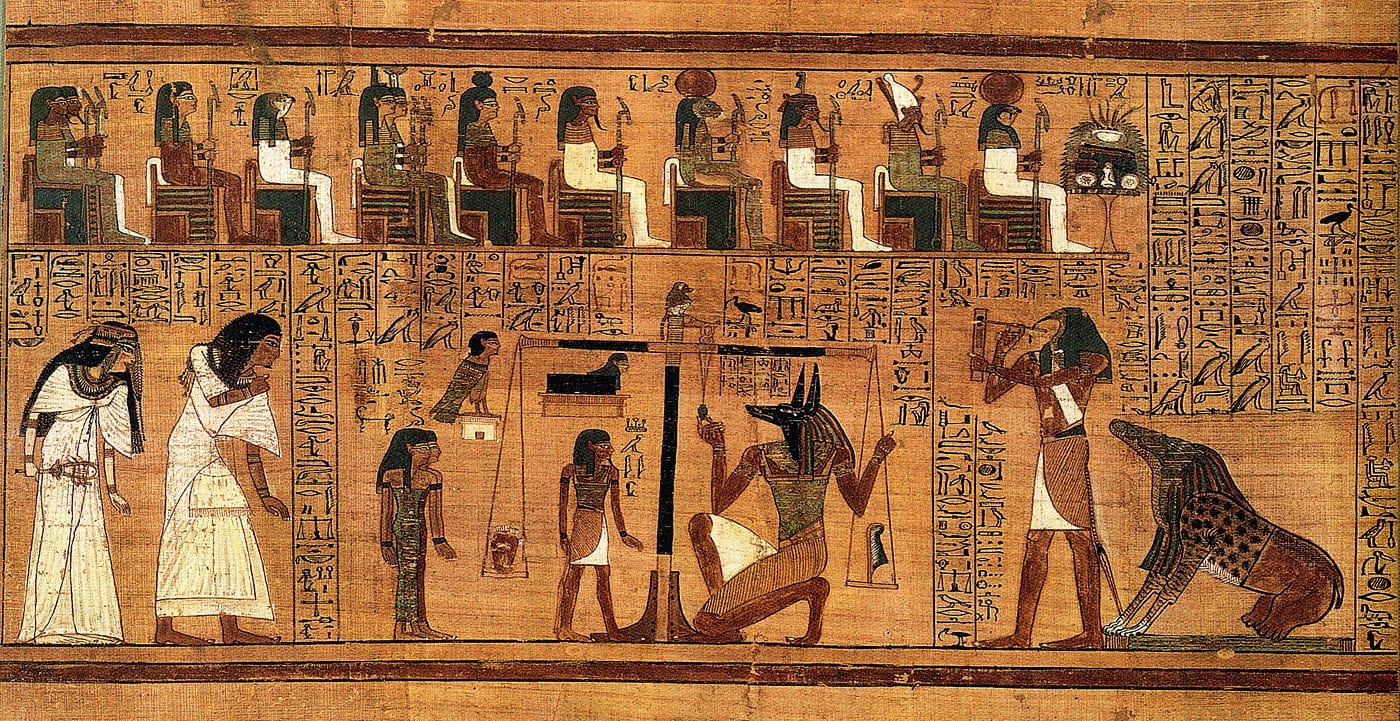
- How is the Egyptian Book of the Dead relevant to Libra?
- The weighing-of-the-heart scene in the Book of the Dead chapter 125 places Anubis tending a scale on which the deceased's heart is weighed against the feather of Ma'at (truth). Thoth records the verdict. The Egyptian iconography of cosmic balance (predating the Greco-Roman Libra by more than a millennium) supplies the visual and conceptual substrate the Roman scales tradition inherited.
Sources
- PRIMARY MUL.APIN (ZIB.BA.AN.NA) . Hunger & Pingree, 1989.
- PRIMARY Aratus, Phaenomena . Cambridge, 1997.
- PRIMARY Ptolemy, Tetrabiblos . Loeb.
- PRIMARY Manilius, Astronomica 1.609 . Goold trans., Loeb Classical Library.
- PRIMARY Geminus, Introduction to the Phenomena . Evans and Berggren trans., Princeton, 2006.
- PRIMARY Book of the Dead, Ch. 125 . Allen trans., 1974.