Air Sign · January 20 – February 18
Aquarius Spirit Animal
Aquarius the Water-Bearer: Babylonian GU.LA ('the great one'), Greek identification with Ganymede (cup-bearer to Zeus) and Deucalion (the flood-survivor).
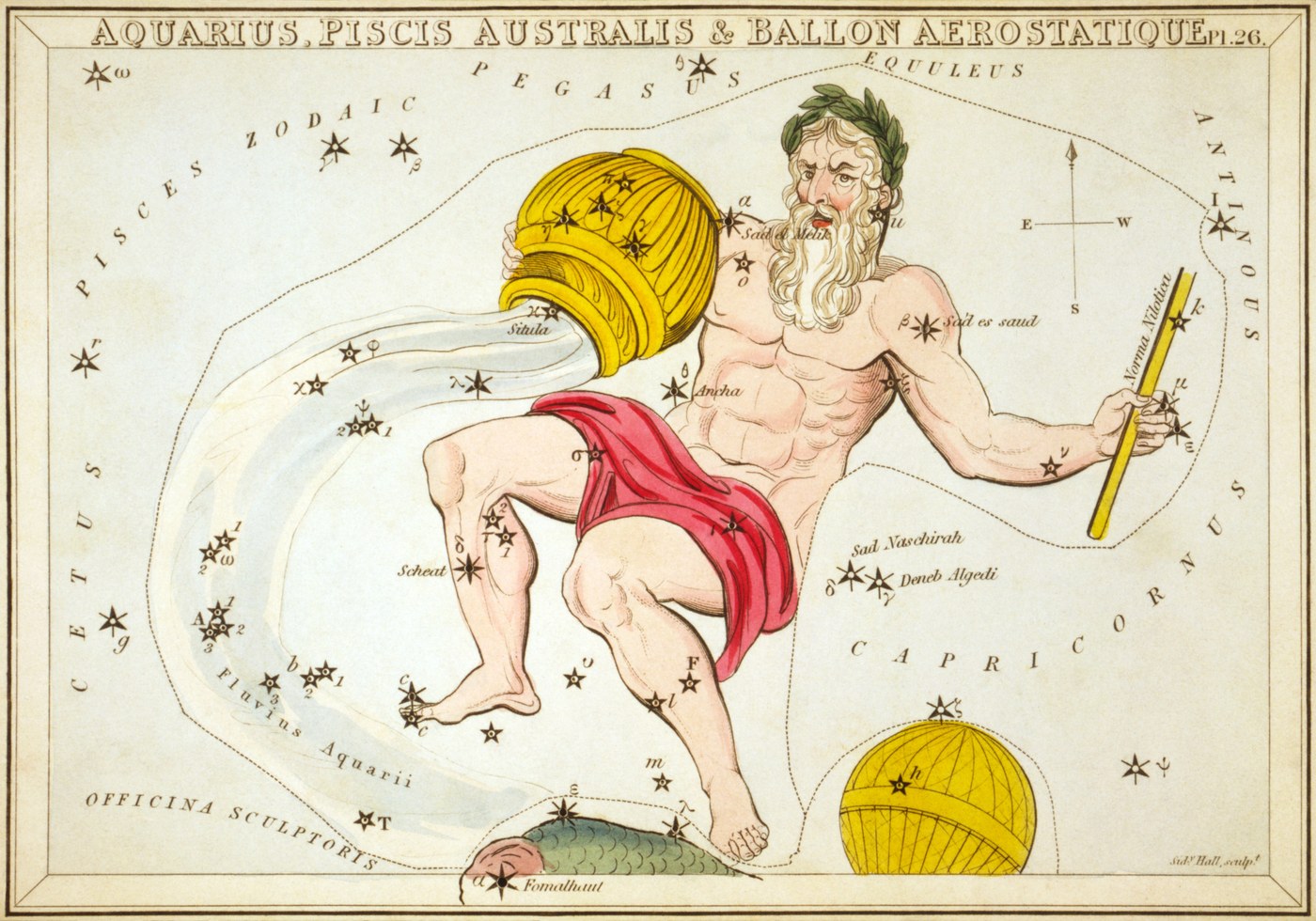
Aquarius is the Water-Bearer (January 20 – February 18, Air element). Babylonian GU.LA ('the great one'). Greek identification with Ganymede, the Trojan prince abducted by Zeus-as-eagle to be cup-bearer to the gods (Homer Iliad 20.232–235, Ovid Met. 10.155–161). Secondary identification with Deucalion, the Greek flood-survivor. Primary animal-association: the eagle of Ganymede's abduction.
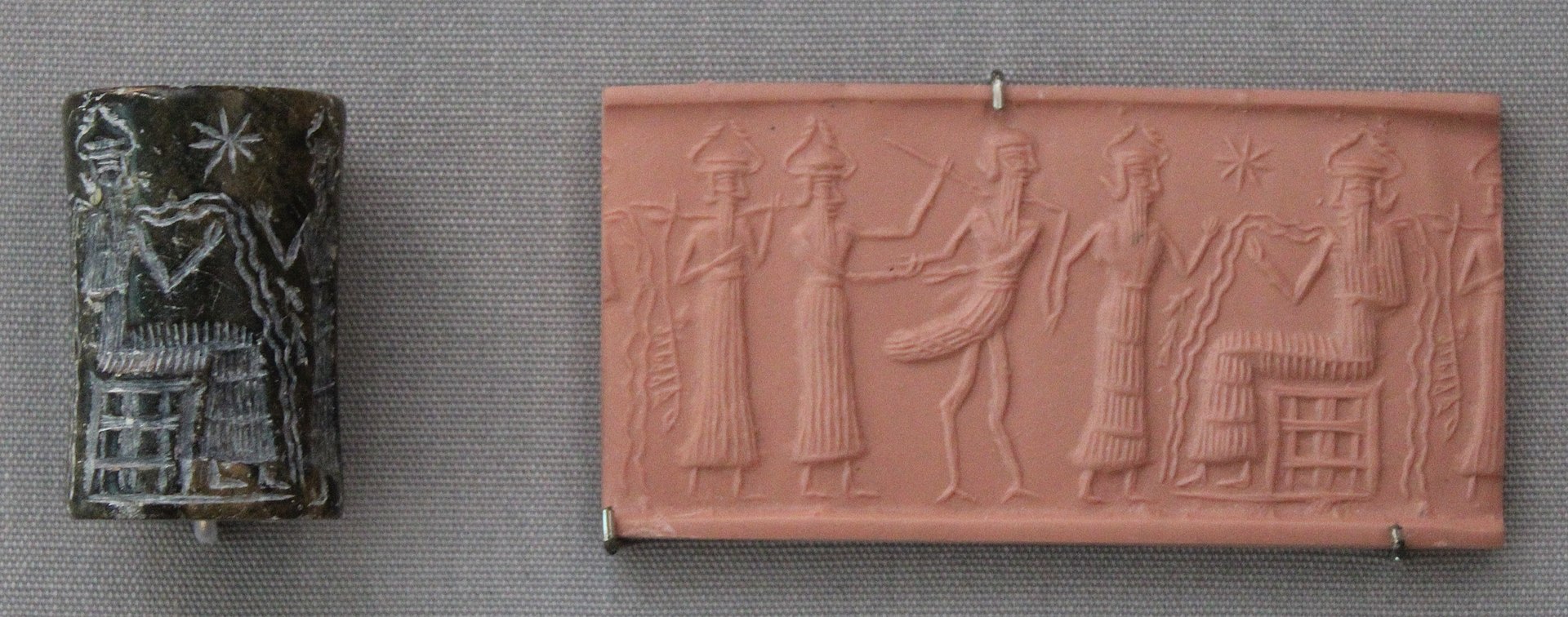
The Babylonian name GU.LA means “the great one,” and the figure (a man pouring water from a vessel) was associated with the god Enki (or his Babylonian equivalent Ea), the deity of fresh water, wisdom, and the subterranean Apsu. The water-bearer’s gift was not rain; it was the deep water of wisdom, the water that makes civilization possible. Enki in Sumerian mythology is the deity who gave humanity the knowledge of agriculture, crafts, medicine, and writing. The water he pours is intelligence made visible.
Ganymede and the eagle
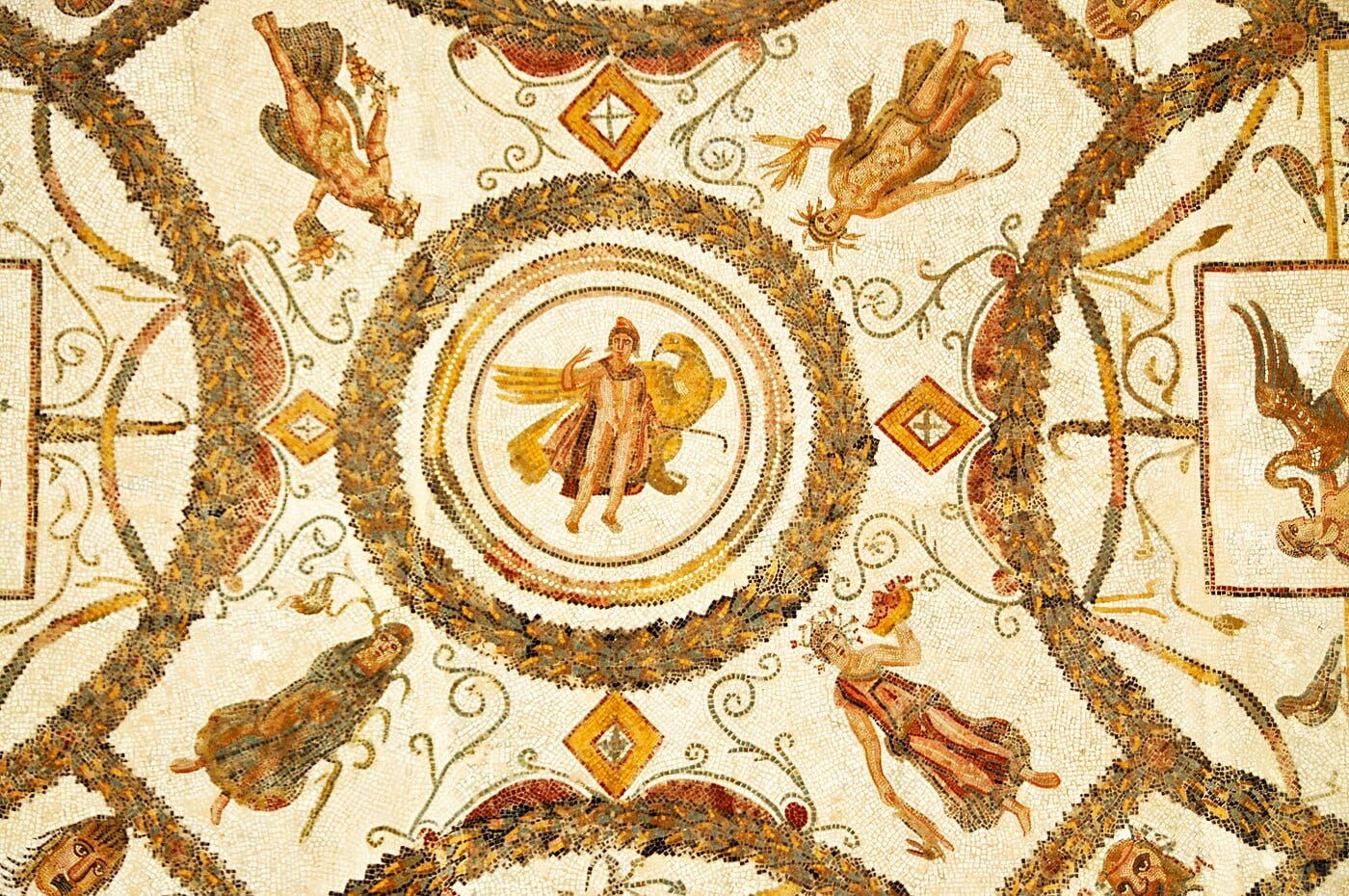
The Greek mythological identification is Ganymede, the Trojan prince. Homer’s Iliad 20.232–235 names him as the most beautiful of mortal men, which is why Zeus abducted him to Olympus to serve as cup-bearer to the gods. The mechanism of the abduction: Zeus transformed into an eagle, or sent his eagle, to carry the boy away from his father’s herds on the slopes of Mount Ida. Ovid’s Metamorphoses 10.155–161 is the fullest Latin treatment.
Ganymede’s role as cup-bearer to the gods made him the divine water-bearer, pouring not water but nectar and ambrosia at the divine table. This is the visual image that connected the ancient sky-figure to the Greek myth: a youth with a vessel, pouring. That the vessel contained the gods’ drink rather than water-for-the-earth is the Hellenistic refinement.
The eagle of Ganymede’s abduction points directly to Zeus’s most common animal transformation, and to the eagle spirit animal entry for the broader Zeus-as-eagle tradition, the eagle of Ethan’s vision in Psalm 103, the Roman legionary eagle, and the Haida and Tlingit eagle traditions.
Deucalion: the other identification
Some ancient sources identify Aquarius with Deucalion rather than Ganymede. Deucalion is the Greek Noah: the man who survived the great flood in a chest while Zeus drowned the corrupted Bronze Age generation. In this reading, Aquarius pours not from a vessel held in his hands but from the flood itself, and the sign marks the winter rains that come when the sun transits it. The dual identification, the youth pouring ambrosia and the flood-survivor pouring the waters, reflects genuine ambiguity in the ancient sources.
Jupiter’s moon
In 1610, Galileo observed four moons of Jupiter through his telescope. The largest of them, subsequently named Ganymede, is the largest moon in the entire solar system, larger than Mercury. The name honors the mythological cup-bearer of the gods. NASA’s Juno mission to Jupiter, which reached the planet in 2016, named one of its scientific objectives after the moon named for the Trojan prince who gave Aquarius its Greek form.
The animal associations
The eagle is Aquarius’s primary animal through the Ganymede myth. The peacock appears through Juno/Hera, some ancient sources say Hera transferred Argus’s hundred eyes to the peacock’s tail, and Hera was Zeus’s consort, giving the peacock a secondary Jovian connection. The owl connects through wisdom, paralleling Aquarius’s Babylonian water-of-wisdom origin. None of these is a primary ancient tradition. Aquarius is a human-form sign, and its animal associations are all inherited through the myths attached to it rather than direct zodiacal animal symbolism.
Associated animals
Primary: Eagle
Frequently asked
- What animal is Aquarius?
- Aquarius is the Water-Bearer, a human-form sign. Babylonian GU.LA. Greek Ganymede (abducted by Zeus-as-eagle, Homer Iliad 20.232–235). The primary animal-association is the eagle of Ganymede's abduction (the eagle spirit animal entry covers the Zeus-as-eagle transformation and its broader traditions).
- Where does the Aquarius water-bearer figure actually come from?
- The constellation has two converging traditions. The Babylonian GU.LA (the "Great One") was a man emptying an overflowing urn, the source water-bearer figure. The Greek tradition adopted this as Ganymede, the Trojan boy carried to Olympus by Zeus's eagle to serve as cupbearer (Iliad 20.232–235). Hellenistic astronomers fused the two, and the resulting figure runs unbroken through Hyginus's Astronomica into the early-modern star atlases (Bayer 1603, Hevelius 1690).
- Why does Aquarius rule water if it is a fire sign's air-sign opposite?
- Aquarius is an air sign in tropical astrology, despite the water-bearer iconography. The sign's element is air (intellect, abstraction, communication) and its symbolism is the water-bearer who carries the water but is not the water: the philosopher, the giver-of-knowledge, the channel rather than the source. The Hellenistic-era authors (Ptolemy, Tetrabiblos 1.18) are explicit about the air-element classification despite the iconographic appearance.
Sources
- PRIMARY MUL.APIN (GU.LA) . Hunger & Pingree, 1989.
- PRIMARY Homer, Iliad 20.232–235 (Ganymede) . Loeb Classical Library.
- PRIMARY Ovid, Metamorphoses 10.155–161 . Loeb.
- PRIMARY Ptolemy, Tetrabiblos . Loeb.
- PRIMARY Ptolemy, Tetrabiblos 1.18 . Robbins trans., Loeb Classical Library.
- PRIMARY Hyginus, Astronomica 2.29 . Grant trans., University of Kansas Press, 1960.