Earth Sign · December 22 – January 19
Capricorn Spirit Animal
Capricorn the Sea-Goat: Babylonian SUHUR.MASH ('goat-fish'), Greek identification with Pan and Amalthea, and Hindu astrological identification with the makara.
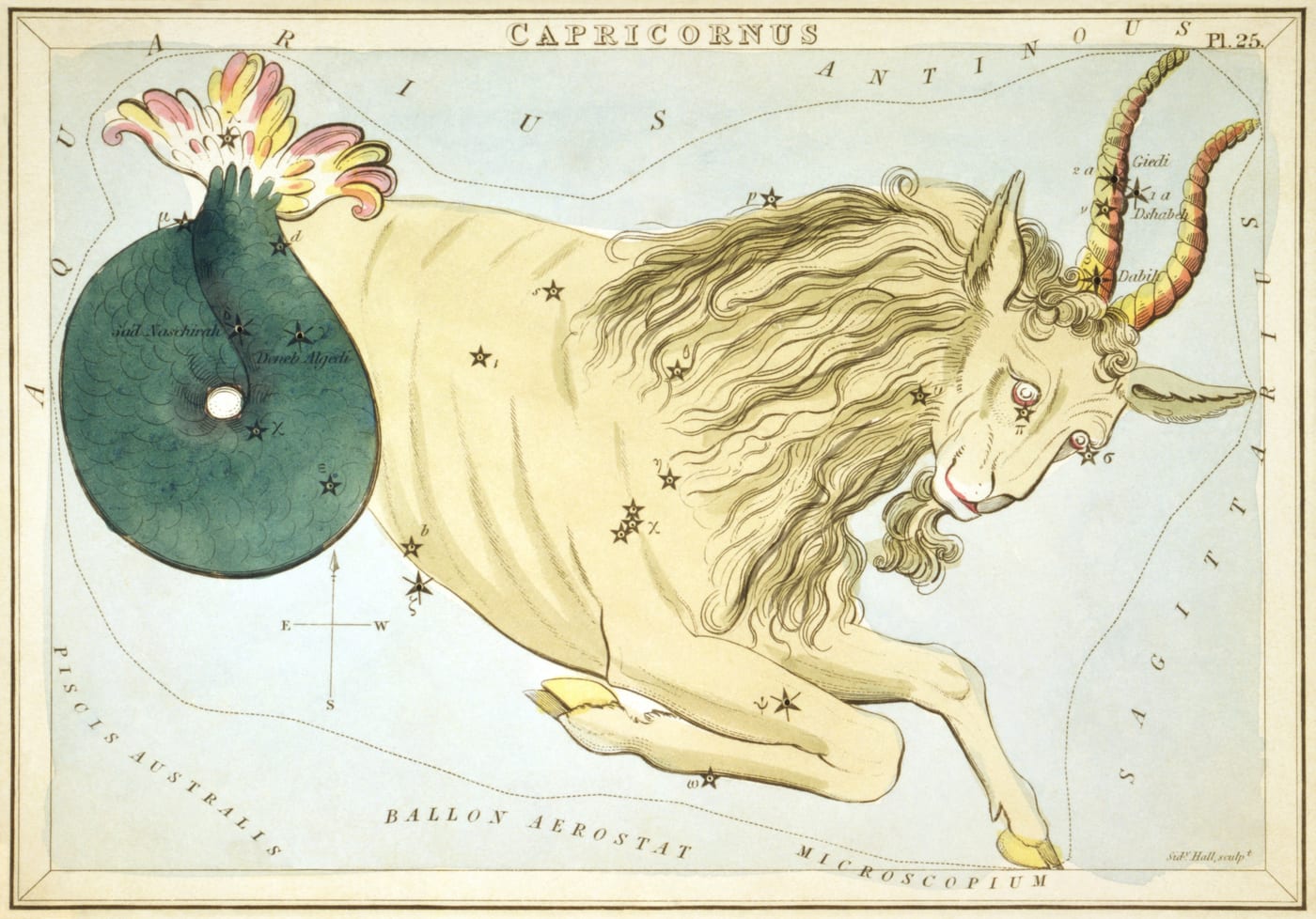
Capricorn is the Sea-Goat (December 22 – January 19, Earth element). Babylonian SUHUR.MASH ('goat-fish'). Greek identification with Pan (who transformed into a sea-goat to escape Typhon, per Hyginus Astronomica 2.28) and Amalthea (goat-nurse of Zeus, whose horn became the cornucopia). Hindu astrological identification with the makara (Matsya Purana; the crocodile spirit animal entry covers the makara tradition). Primary animal: goat, with composite sea-animal features.
The sea-goat is older than the Greeks who named Capricorn. Babylonian SUHUR.MASH (the goat-fish) appears on a cylinder seal dated to the 21st century BCE, making it one of the earliest attested zodiacal images in the archaeological record. The creature has a goat’s forequarters and a fish’s tail. It is not a symbol invented for the zodiac; it is a creature with independent mythological existence that the zodiac absorbed.
The Babylonian Enki connection
SUHUR.MASH in Babylonian cosmology was associated with Enki, the god of fresh water, wisdom, and the Apsu, the primordial underground freshwater ocean. Enki himself was depicted in Sumerian and Babylonian art pouring streams of fish-bearing water from vases, connecting the god of wisdom directly to the creature that is both goat (land, mountains, the highlands) and fish (water, the depths). The sea-goat is a creature of boundaries: between the high places and the deep, between earth and water.
Pan’s transformation
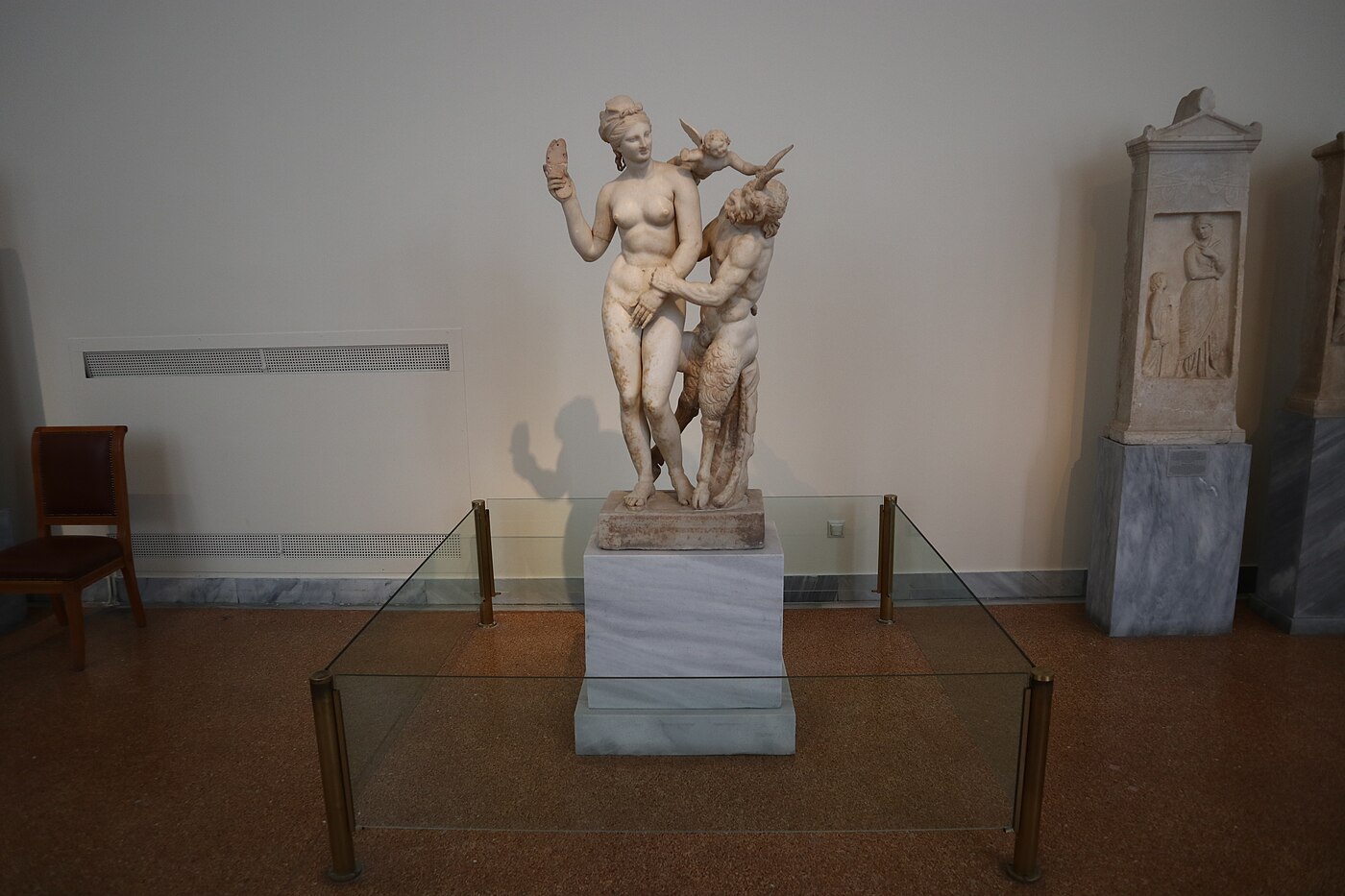
Hyginus’s Astronomica 2.28 gives the Greek version. The Olympians were feasting on the banks of the Nile when the monster Typhon appeared. The gods transformed themselves into animals to escape: Zeus became a ram, Apollo a crow, Hera a white cow, Artemis a cat. Pan, jumping into the Nile to swim away, intended to transform into a fish, but in his panic, he only half-transformed. The lower half became a fish; the upper half remained a goat. Zeus, amused, catasterized the hybrid and gave us Capricorn.
The Pan-as-sea-goat myth does not appear in earlier Greek sources; it has the feel of a Hellenistic mythographer’s invention to explain an already-existing Babylonian constellation. The Babylonian sea-goat predates Pan’s version by at least a millennium.
Amalthea and the cornucopia
Amalthea, the goat who nursed the infant Zeus on Crete, appears in some Capricorn traditions as an alternative identification. When one of Amalthea’s horns broke off, Zeus filled it with fruits and flowers as thanks, creating the cornucopia, the horn of plenty. The broken horn restored with abundance is a separate tradition from Pan’s panicked river-leap, but both connect to the goat figure in the sky and to Capricorn’s associations with earth, material abundance, and the winter-solstice turning point.
The Hindu makara
The Hindu astrological tradition identifies its Capricorn equivalent with the makara, a composite creature (part crocodile, part fish, part elephant in some depictions) that serves as the vehicle (vāhana) of Varuna, the god of the cosmic ocean and divine order. The makara motif appears on temple architecture across India and Southeast Asia, from the Mahabharata-era texts through Angkor Wat in Cambodia. The crocodile spirit animal entry covers the makara tradition alongside the Egyptian Sobek and Mesoamerican Cipactli.
The animal associations
The goat is Capricorn’s primary animal: mountain-climbing, sure-footed, persistent, capable of surviving in austere terrain. The fish-tail and the sea-creature associations are secondary but ancient. The sign’s position at the winter solstice in ancient times (the longest night, the turn toward the light) made it the gate of souls ascending in Neoplatonic tradition, the sign through which souls returned from Earth toward the divine.
Associated animals
Primary: Goat
Secondary: Fish , Crocodile
Frequently asked
- What animal is Capricorn?
- The Sea-Goat, a composite creature with goat-forequarters and fish-tail. Babylonian SUHUR.MASH ('goat-fish'). Greek Pan-as-sea-goat. Hindu astrological identification is the makara (composite crocodile-creature; documented in the crocodile spirit animal entry).
- What was SUHUR.MAŠ in Babylonian astronomy?
- SUHUR.MAŠ (Sumerian "goat-fish") is the Babylonian original of the Capricorn constellation, associated with Enki (Ea), the god of fresh water and wisdom who governed the Apsu, the primordial underground ocean. The figure appears on Kassite-period kudurru boundary stones (c. 1200–900 BCE) and in the MUL.APIN star catalog. The composite goat-fish form predates the Greek tradition by at least a millennium and is what the modern Capricorn figure inherits.
- How did the Greek tradition transform the goat-fish?
- In Hyginus's Astronomica 2.28, Pan disguises himself as a fish to escape the monster Typhon by leaping into the Nile; the half-goat, half-fish form is his transformation in progress when Zeus catastrizes him into the stars. The Greek tradition reads the figure as comedy and rescue. The Babylonian original was an Apsu cosmology figure, the Greek inheritor a Pan-escape comic moment. The same image, different gravitational fields.
Sources
- PRIMARY MUL.APIN (SUHUR.MASH) . Hunger & Pingree, 1989.
- PRIMARY Hyginus, Astronomica 2.28 . Grant trans., University of Kansas Press, 1960.
- PRIMARY Matsya Purana . Sacred Books of the Hindus 17, 1916.
- PRIMARY Ptolemy, Tetrabiblos . Loeb.
- PRIMARY MUL.APIN (cuneiform star catalog) . Hermann Hunger and David Pingree, MUL.APIN: An Astronomical Compendium in Cuneiform, 1989.