Spirit Animal
Goat Spirit Animal
Goat spirit animal meaning traced to real sources: the Chinese zodiac word yang that refuses to say goat or sheep, the two goats of Leviticus 16 and Azazel, Thor's goats in the Prose Edda, and the 1856 drawing that gave the devil a goat's head.
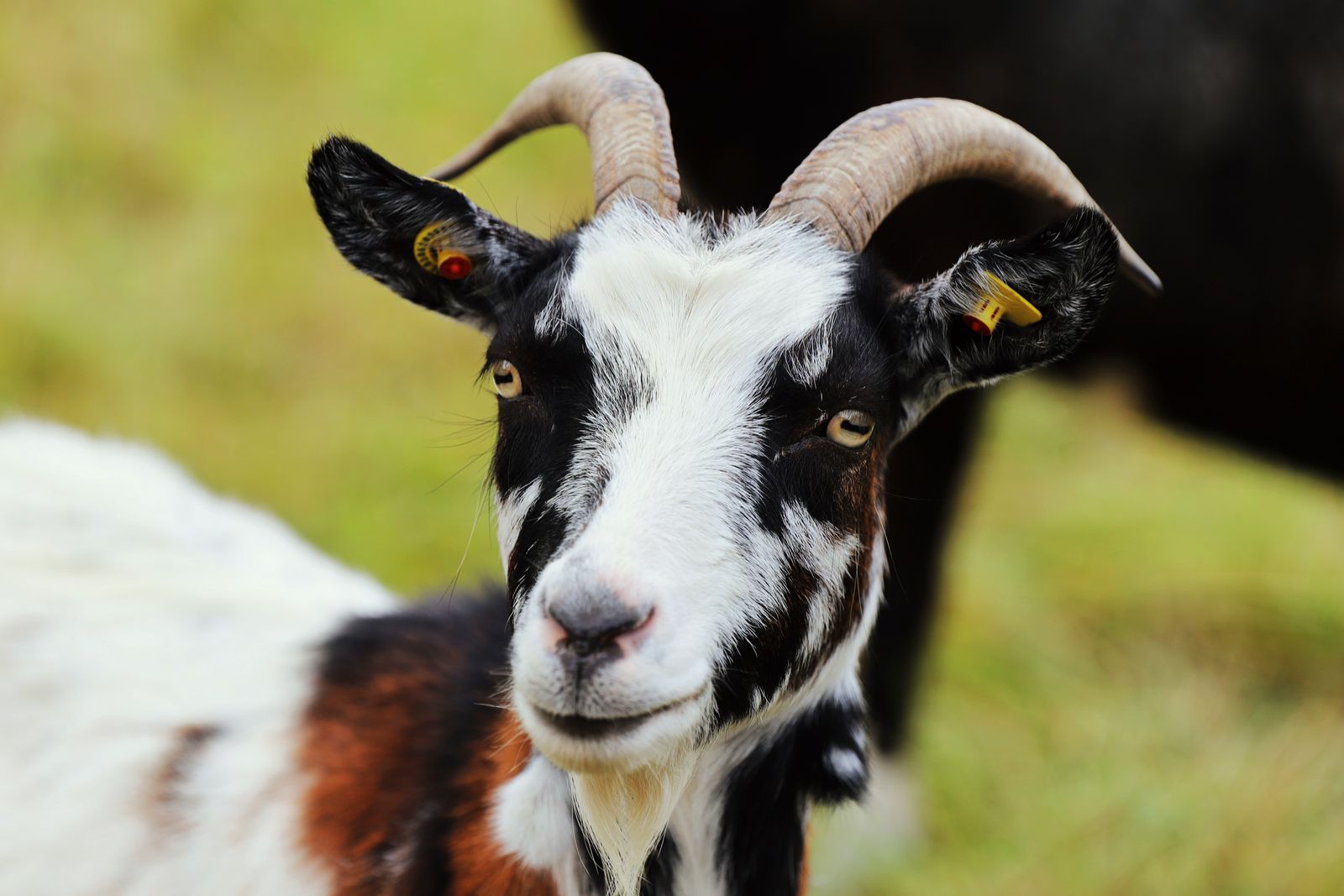
The goat is read as independence, sure-footedness and an appetite that will not be managed, and unlike most animals on this site that reading has no single traceable pop source. The older layers are specific: the scapegoat sent to Azazel in Leviticus 16, the Roman goat-legged Pan, and a Chinese zodiac sign whose name, yang, refuses to say goat or sheep.
Ask what the goat means and you get two answers that cannot both be right. One says stubbornness, lust and the devil. The other says sure-footedness, self-reliance and cheerful appetite. Both are in circulation, and often on the same page.
That split is not a disagreement about interpretation. It is the residue of several traditions that were never describing the same thing, plus one nineteenth-century drawing that rewrote the animal’s reputation almost single-handedly.
There is also a problem with the word itself. In Chinese the zodiac sign is yang, and yang will not tell you whether it means a goat or a sheep. In Hebrew the animal driven into the wilderness is a sa’ir, a hairy one, from a root that elsewhere gets used for something closer to a demon. In Greek and Latin the goat-legged wood god turns out to have a shorter pedigree than advertised. Before asking what the goat symbolises, it is worth working out which animal, in which language, anybody is talking about.
Is the Chinese zodiac animal a goat or a sheep?
Neither, and both. The eighth Earthly Branch, wei, pairs with the character yang, which covers the whole caprine group. Chinese gets specific when it needs to: shanyang, mountain-yang, is a goat, and mianyang, cotton-yang, is a sheep. The zodiac uses the bare word.
So the sign is not a goat that English keeps mislabelling. It is a category English has no single word for, and the recurring shop-window argument about Year of the Goat versus Year of the Sheep versus Year of the Ram is three translations of one character, none of them wrong in the way the arguing implies.
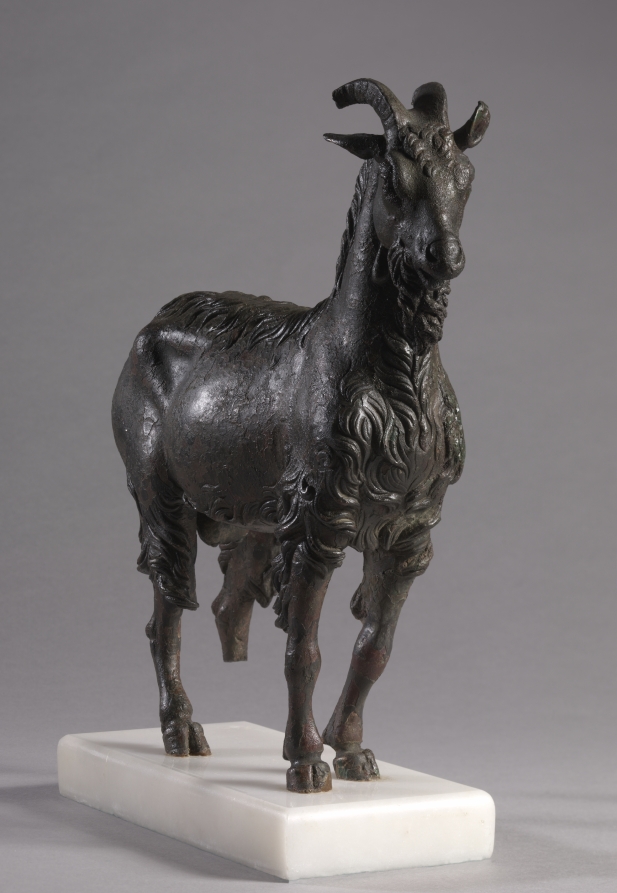
Which animal you picture then drives the personality reading attached to it. A sheep follows; a goat does not. English-language zodiac writing has taken the mild version, and the handbook most of it descends from, Theodora Lau’s The Handbook of Chinese Horoscopes of 1979, gives the sign a character that is artistic, gentle and reliant on others. That is a description of a sheep. Nobody who has kept goats would write it.
What is the scapegoat, and who is Azazel?
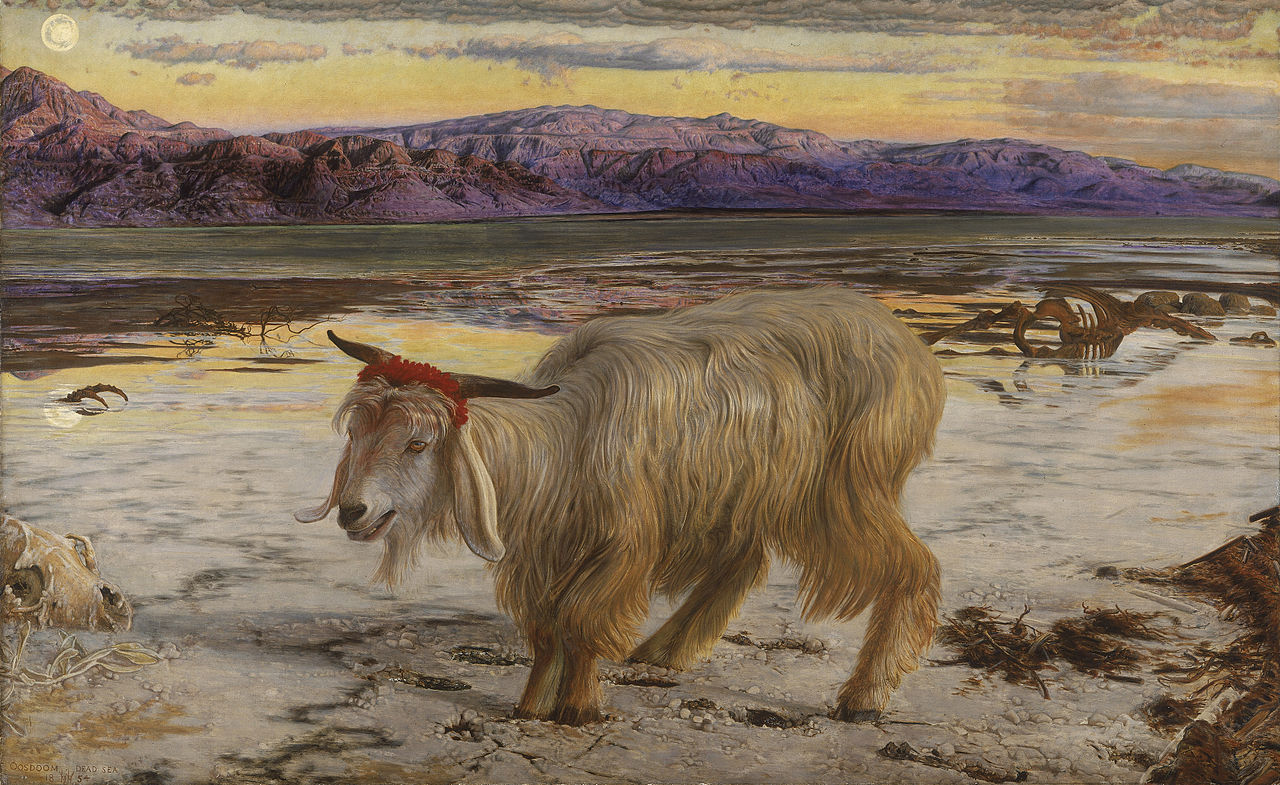
The rite is in Leviticus 16 and it is exact. Aaron takes two he-goats, stands them at the entrance of the Tent of Meeting, and casts lots over them, one lot marked for God and one marked for Azazel. The first goat is killed as a purgation offering. The second is kept alive, has the community’s transgressions laid on it, and is driven into the wilderness.
Two goats, two destinations. The one that walks away has no name in the Hebrew, and the English name it now carries was invented for it. William Tyndale, translating in 1530, wrote escape goat, following the Latin caper emissarius, and English wore it down to scapegoat. The entire modern sense of the word, the blameless party who absorbs a group’s failure, comes from that coinage rather than from the text.
Azazel is the harder half, and careful commentaries admit it. La-azazel can be parsed as a place, a thing, or a proper name. Rabbinic tradition reads it as a cliff. The Book of Enoch reads it as a fallen angel who taught men to make weapons. The scholarly split is centuries old and unresolved. Leviticus names him twice, assigns him a goat, and explains nothing, so any page that tells you flatly what Azazel was is telling you more than the text does.
Thor’s goats, and the one that came back lame
Norse myth hands the goat a job nothing else in European mythology gives it. Thor’s chariot is pulled by two he-goats, Tanngrisnir and Tanngnjostr, teeth-barer and teeth-grinder, and the noise of the chariot is the thunder.
The story is in chapter 44 of Snorri Sturluson’s Prose Edda. Thor and Loki stop at a farm. Thor slaughters both goats for supper and tells the household to throw the bones back onto the hides. The farmer’s son Thjalfi splits a thigh bone with his knife to get at the marrow. Next morning Thor raises the goats with his hammer and one of them is lame behind. He takes Thjalfi and his sister Roskva as servants in compensation, and keeps them for the rest of the mythology.
The mechanics are the meaning. This is an animal you can eat and still have, provided you do not break the bones. Irish tradition runs the same idea through pigs, and Norse tradition runs it through the boar Saehrimnir in Valhalla. It has nothing to do with lust or devils. It also comes to us from a Christian Icelander writing around 1220, which is worth remembering before treating any of it as a report from the inside.
Why is the goat-legged god a Roman idea rather than a Greek one?
Pan is Greek and genuinely goatish: goat legs, goat horns, an Arcadian god of flocks and rough country, blamed for the sudden groundless fear that still carries his name.
The satyrs are what gets misdescribed. In Archaic and Classical Greek art, satyrs are men with horse ears and horse tails. Attic vase painting gives them flat noses, long pointed ears and equine tails, not cloven hooves. The goat-legged satyr arrives later, when Roman culture merged the Greek satyr with the Italic Faunus, who had already been identified with Pan. By the time you are reading Latin poetry, the satyr has goat legs and a goat tail and is close to interchangeable with a faun.
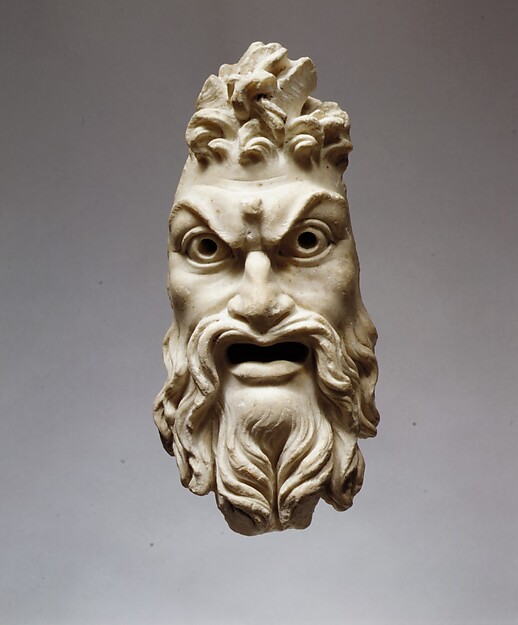
So the woodland goat-man that European painting settles on, and that the spirit-animal genre files under ancient Greek, is largely a Roman composite that later centuries forgot was a composite. Rubens is painting the merged version. Bouguereau is painting the merged version. That is a real tradition with a documented history. It is simply not the one usually claimed for it.
Is the goat in the sky Amalthea?
Two goats get mixed up here, and the mix-up is old enough to have its own literature.
Amalthea is the she-goat who feeds the infant Zeus in a Cretan cave while Rhea hides him from Cronus. Some versions make her a nymph who owns the goat, others make her the goat. A horn breaks off, gets filled with fruit, and becomes the cornucopia. Ovid tells it in book 5 of the Fasti. The star that carries her is Capella, in Auriga, and capella is Latin for a little she-goat.
Capricornus is a different animal, and not entirely a goat. The constellation is a goat-fish, and its ancestry runs back to Babylonian star lists of around 1000 BCE where it appears as suhurmasu, the goat-fish, attached to the god Ea. The Greek story arrives afterwards: Pan, fleeing Typhon, plunges into the Nile, and the submerged half turns to fish while the rest stays goat.
Anyone born under Capricorn who has been told their sign is the goat that nursed Zeus has been handed the wrong goat. That one is in Auriga, and it has a fish for a tail nowhere in the story.
Where does the goat-headed devil actually come from?
From a named man, in a year we can point at.
Baphomet first appears in the Knights Templar trial records from 1307 onward, in confessions taken under interrogation, naming an idol. The most durable explanation is a garbling of Mahomet. No goat appears anywhere in that material.
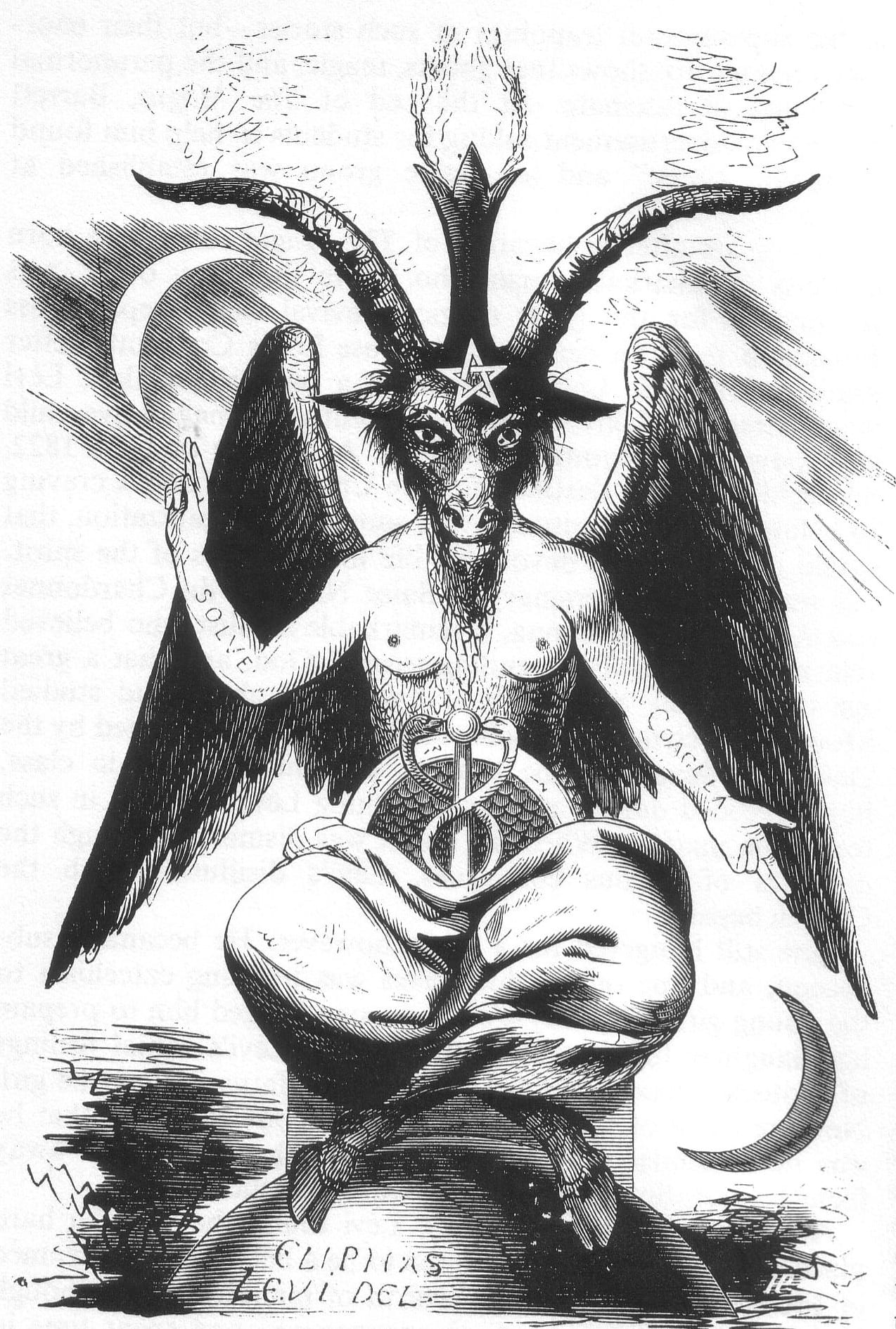
The picture is 1856. Eliphas Levi, the pen name of the former seminarian Alphonse-Louis Constant, drew it as the frontispiece to the second volume of Dogme et Rituel de la Haute Magie. Levi’s own reading is not satanic at all. He treated the figure as a deliberate assembly of opposites held in balance, which is the whole point of the raised hand and the lowered one.
Everything since is downstream of that plate. The sigil the Church of Satan adopted in the 1960s is downstream of it. Every goat-headed devil in film is downstream of it. A general association between goats and the diabolical is older, running through medieval sabbath imagery and through the sheep and the goats of Matthew 25, but the specific image that fixed it in every reader’s head was drawn by a French occultist sixteen years after the invention of the negative-positive photograph.
So what does the goat mean now?
The current spirit-animal reading, self-reliance and sure-footedness and appetite and refusing to be herded, has no author I could trace. It is not Ted Andrews in the way the praying mantis is: I looked for a goat keynote in Animal Speak and could not verify one. It is not Jamie Sams and David Carson either, whose Medicine Cards roster is North American and contains no goat.
What it looks like is a reading taken straight off the animal. Goats climb things nothing else climbs. They eat what other livestock refuse. They open gates that were latched. Anyone who has kept a few will report the same set of facts, and the symbolism falls out of the facts without a book in between.
That is unusual here, and worth saying plainly instead of inventing a lineage for it. The documented meanings, meanwhile, do not agree with each other at all: an animal that carries a community’s failures out into the desert, an animal that pulls the thunder and comes back from the cooking pot, an animal whose broken horn feeds the world, and an animal a Frenchman gave wings and a pentagram in 1856. Pick the one whose evidence you can actually read.
Across traditions
Hebrew Bible (Leviticus 16, the two goats and Azazel)
Leviticus 16 sets out the Day of Atonement rite, and it is more precise than the English word built from it. Aaron takes two he-goats, stands them at the entrance of the Tent of Meeting, and casts lots: one marked for GOD and the other marked for Azazel.
The goat drawn for the Lord is offered as a purgation offering. The other shall be left standing alive before GOD, to make expiation with it and to send it off to the wilderness for Azazel.
The Hebrew word for both animals is sa'ir, a he-goat, from a root meaning hairy. The living goat has no name of its own in the text. William Tyndale, translating in 1530 and needing something to call it, coined escape goat, following the Vulgate's caper emissarius and the Septuagint's reading of azazel as the goat that departs. English then slurred it into scapegoat. Every modern use of the word, the innocent party made to carry a group's failure, descends from that improvisation rather than from the Hebrew.
Azazel himself is unresolved and honest commentaries say so. La-azazel can be read as a place, a thing, or a proper name; rabbinic tradition takes it as a cliff, the Book of Enoch takes it as a fallen angel who taught men metallurgy and weapons, and the scholarly literature has been divided for centuries. What Leviticus does not do is call Azazel a goat, a demon, or anything else. It names him twice and moves on.
- PRIMARY Leviticus 16:7-10 (Masoretic text with JPS translation) . Sefaria. Hebrew text per the Miqra according to the Masorah; English per the JPS Tanakh.
- PRIMARY William Tyndale, Pentateuch (1530) . First English rendering of la-azazel as 'escape goat', following the Vulgate's caper emissarius. The English word scapegoat has no earlier attestation.
- PRIMARY Mishnah Yoma 4:2 . The High Priest 'tied a strip of crimson wool upon the head of the scapegoat'. The red band is rabbinic, not biblical, which is where painters got it.
Chinese zodiac (the eighth branch, wei, and the word yang)
The eighth Earthly Branch, wei 未, pairs with the character yang 羊. That character covers the whole caprine group. Chinese specifies when it needs to: shanyang 山羊, mountain-yang, is a goat; mianyang 綿羊, cotton-yang, is a sheep. The zodiac uses the bare word, so the sign is not a goat that translators keep getting wrong. It is a category English has no single term for, which is why the same lunar year is advertised as the Year of the Goat in one shop window and the Year of the Sheep in the next.
The twelve-animal cycle in its complete form is Han-dynasty. The earliest full listing of the animals against the branches is in Wang Chong's Lunheng, first century CE. Which animal a given community pictures under yang has varied by region and period, and the imagery varies with it.
That choice does more work than it looks. English-language zodiac writing has generally taken the mild reading, and the standard English handbook, Theodora Lau's The Handbook of Chinese Horoscopes (first published 1979, still in print at its fortieth-anniversary edition), sets the tone most later pages repeat: artistic, gentle, reliant on others. That is a description of a sheep. Almost nobody who has kept goats would write it.
- PRIMARY Wang Chong, Lunheng . First century CE. Earliest complete listing of the twelve animals paired with the Earthly Branches. Alfred Forke translation, Kelly and Walsh, 1907-11.
- REFERENCE Theodora Lau, The Handbook of Chinese Horoscopes . First published 1979; 40th anniversary edition 2018. The most-copied English-language source for zodiac personality descriptions.
Norse (Prose Edda, Gylfaginning)
Thor's chariot is drawn by two he-goats, Tanngrisnir and Tanngnjostr, names usually glossed as teeth-barer and teeth-grinder. The chariot's noise is the thunder.
The episode that matters is in chapter 44 of Snorri Sturluson's Prose Edda. Thor and Loki lodge at a farm, and Thor slaughters both goats for the meal, telling the household to throw the bones back onto the hides. The farmer's son Thjalfi splits a thigh bone with his knife for the marrow. In the morning Thor raises the goats with his hammer and one is lame in a hind leg. He takes Thjalfi and his sister Roskva into service in compensation and keeps them.
The mechanism is the interesting part: an animal that can be eaten and still be there tomorrow, provided the bones come back whole. The same idea appears in Irish material with swine and in Norse material with the boar Saehrimnir. Snorri was writing in Iceland around 1220, roughly two centuries after conversion, and his account is a learned Christian's systematisation of older material rather than a transcript of belief.
- PRIMARY Snorri Sturluson, Prose Edda, Gylfaginning 44 . Composed c. 1220. Standard English edition: Anthony Faulkes, Edda, Everyman, 1987. Older public-domain translation: Arthur Gilchrist Brodeur, American-Scandinavian Foundation, 1916.
Nineteenth-century occultism (Eliphas Levi, 1856)
The goat-headed devil is a named person's drawing, and it is much younger than the genre implies.
The word Baphomet first appears in the Knights Templar trial records from 1307 onward, in confessions taken under interrogation, describing an idol by that name. The most-argued explanation is a garbling of Mahomet. Nothing in that material describes a goat.
The image itself was published in 1856, as the frontispiece to the second volume of Dogme et Rituel de la Haute Magie by Eliphas Levi, the pen name of the former seminarian Alphonse-Louis Constant. It shows a winged seated figure with a goat's head, a pentagram on the brow, a torch between the horns, a caduceus, breasts, and the words SOLVE and COAGULA lettered along the forearms. Levi did not present it as satanic. He read the figure as opposites held deliberately in balance, which is what the raised and lowered arms are doing. Everything downstream, including the sigil the Church of Satan adopted in the 1960s and every goat-headed devil in film since, is working from that plate.
- PRIMARY Eliphas Levi, Dogme et Rituel de la Haute Magie, volume 2 . Paris, 1856. The Baphomet frontispiece, signed ELIPHAS LEVI DEL. in the plate itself.
- PRIMARY Knights Templar trial records, 1307 onward . Earliest attestation of the name Baphomet, in confessions taken under interrogation. No goat is described in this material.
Working with the Goat
If you want a regular practice rather than a one-time read, an oracle deck is the standard tool: you draw a card and sit with whatever animal comes up. Our ranked guide to spirit animal oracle decks compares the field.
Sources
- PRIMARY Leviticus 16:7-10 . Sefaria; Masoretic Hebrew with JPS English.
- PRIMARY Mishnah Yoma 4:2 . The crimson wool tied to the scapegoat's head; the source of the red band painters put on its horns.
- PRIMARY Snorri Sturluson, Prose Edda, Gylfaginning 44 . c. 1220.
- PRIMARY Eliphas Levi, Dogme et Rituel de la Haute Magie, vol. 2 . Paris, 1856.
- PRIMARY Ovid, Fasti, book 5 . Amalthea, the she-goat's broken horn, and the cornucopia.
- MUSEUM Marble mask of Pan, Roman, 1st century CE . Metropolitan Museum of Art 2002.284, The Bothmer Purchase Fund, 2002.
- MUSEUM Nanny Goat, Greek, Hellenistic period, late 200s BCE . Cleveland Museum of Art 1990.32, Leonard C. Hanna Jr. Fund. CC0.
- REFERENCE Theodora Lau, The Handbook of Chinese Horoscopes . First published 1979.