Fire Sign · July 23 – August 22
Leo Spirit Animal
Leo the Lion: Babylonian origins as UR.GU.LA ('Great Lion'), the Greek myth of Heracles's first labor (the Nemean Lion), and the modern zodiac-animal associations.
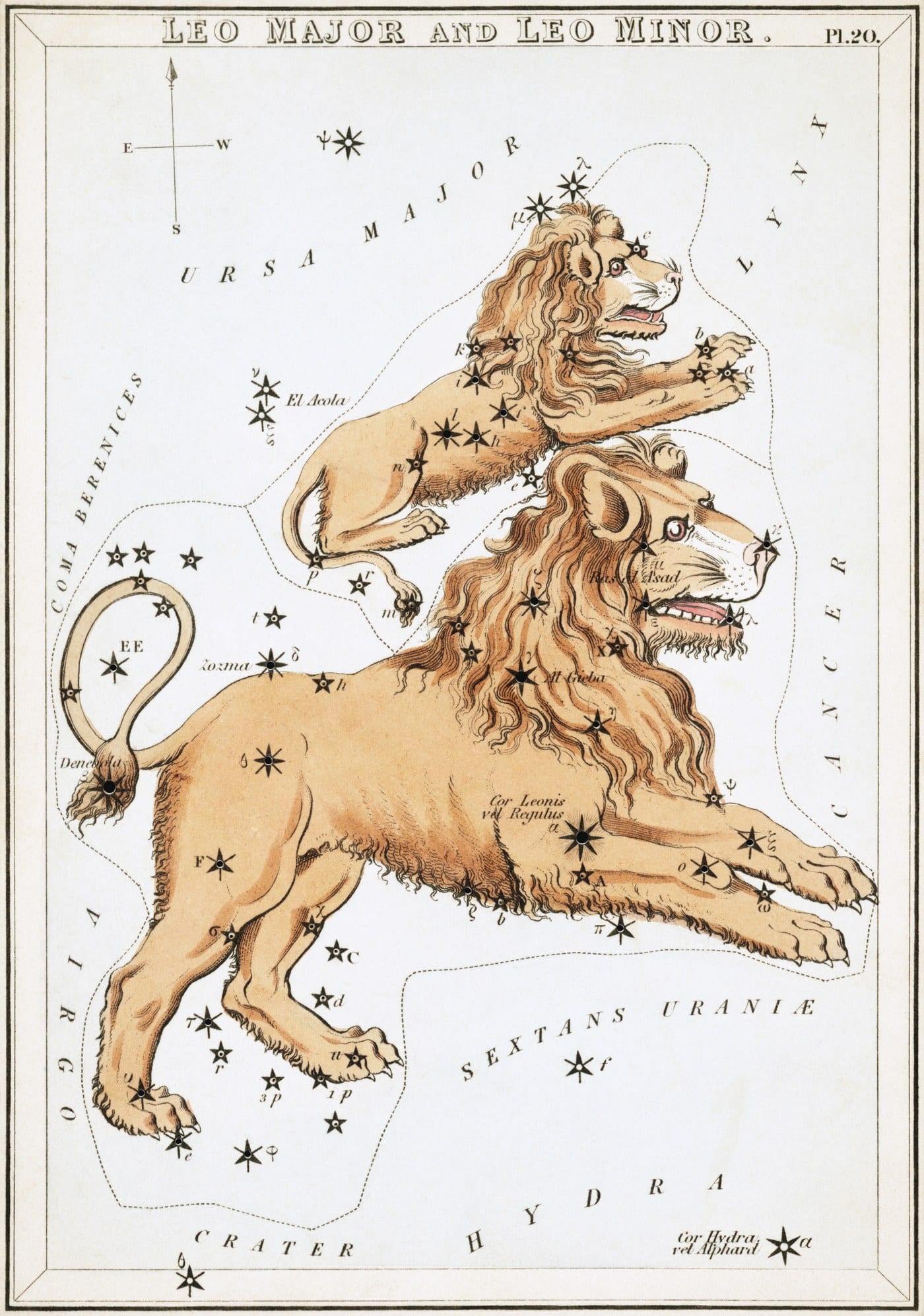
Leo is the Lion (July 23 – August 22, Fire element). Babylonian MUL.APIN names the sign UR.GU.LA ('Great Lion'). The Greek myth is the Nemean Lion of Heracles's first labor: invulnerable to weapons, Heracles strangled it and wore its pelt thereafter as his iconographic attribute. Apollodorus Library 2.5.1 and Hesiod Theogony 326–332 preserve the narrative. The lion spirit animal entry covers the broader Mesopotamian, Egyptian, biblical, and Buddhist lion traditions.
The Babylonian name UR.GU.LA, “Great Lion,” has been in use for at least three thousand years. The constellation appears in Babylonian star catalogs well before the formalized zodiacal system of the MUL.APIN tablets, and it was one of the few zodiacal signs whose shape ancient observers agreed on across cultures, a lion crouching in the sky, the backwards question-mark of stars forming the head and mane, the body trailing east.
The Nemean Lion
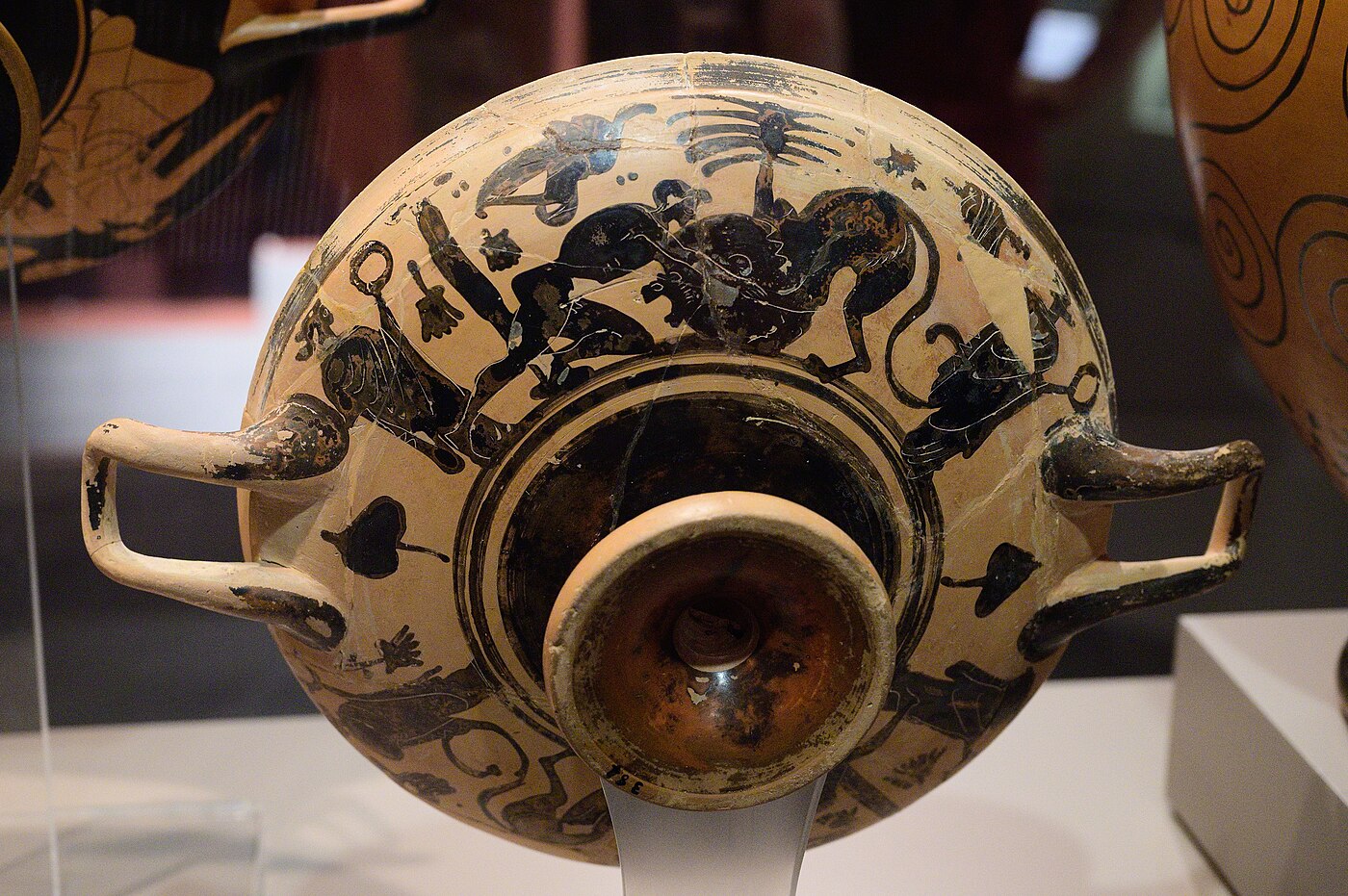
Heracles’s first labor was to kill the Nemean Lion, a creature invulnerable to weapons, whose pelt could not be pierced by any blade. Hesiod’s Theogony 326–332 identifies it as the offspring of Typhon and Echidna, placing it in the same family as the Lernaean Hydra, Cerberus, and the Sphinx: the monstrous children of the two primal monsters. Apollodorus’s Library 2.5.1 narrates Heracles’s solution: since weapons were useless, he strangled the lion with his bare hands. He used the lion’s own claws to skin it, the only edge sharp enough. He wore the pelt thereafter, becoming the most recognizable iconographic figure in all of Greek mythology: the man in the lion-skin.
Zeus catasterized the Nemean Lion as the constellation Leo. Egyptian iconography makes the same equation independently: Sekhmet the lioness-goddess, Ra’s solar power taking lion form, the lion-headed Sphinx at Giza. The summer sun was in Leo during much of the period when Egyptian and Greek civilization were building their astronomical traditions, which is likely why the lion became the premier solar zodiacal sign.
Regulus
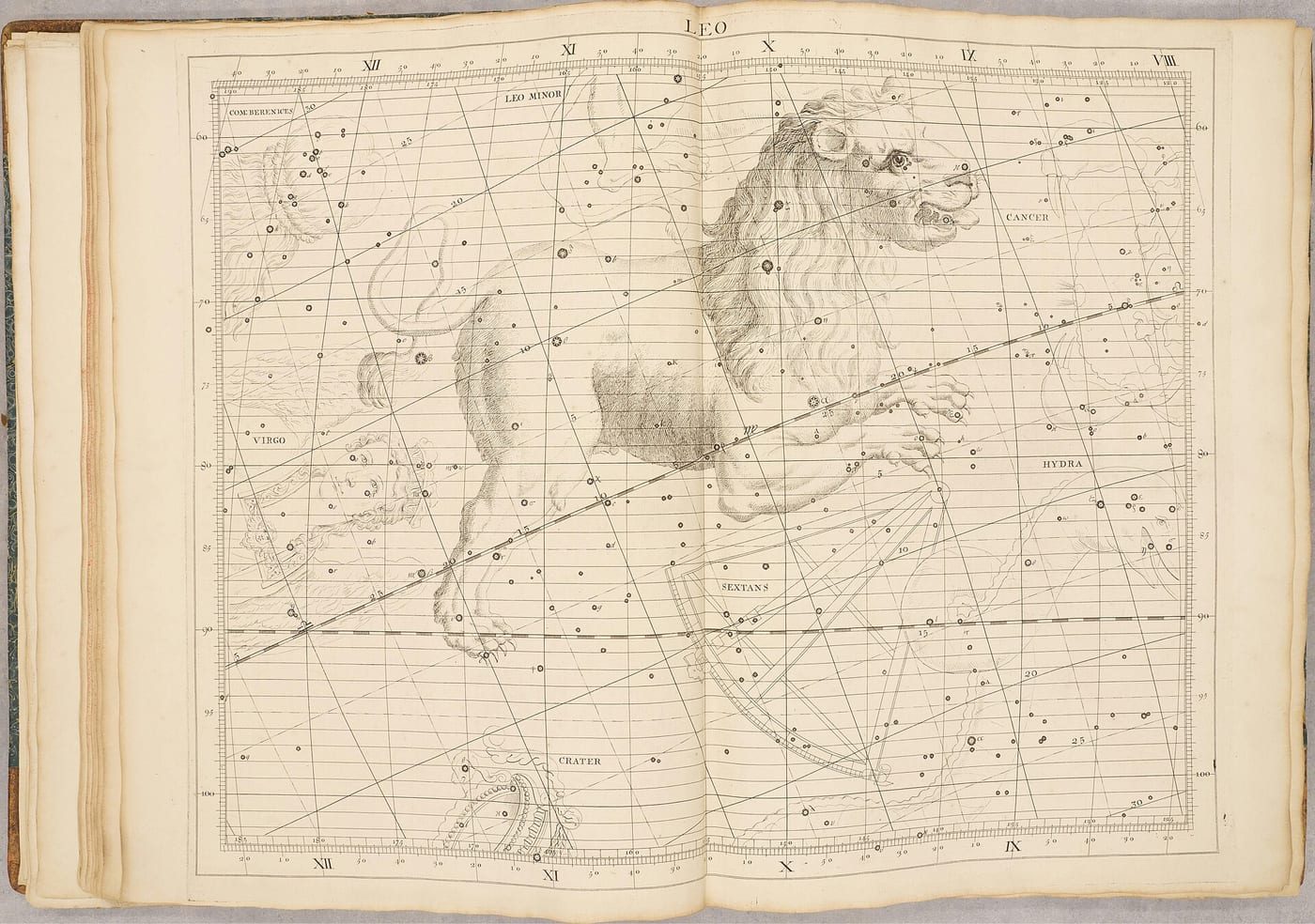
The brightest star in Leo is Regulus, from Latin regulus, “little king.” It was known in Babylonian astronomy as LUGAL, “king,” and it sits almost precisely on the ecliptic, the path the sun travels through the zodiac. Regulus has been called the “heart of the lion” and the “royal star” in astrological traditions from Babylonian through Renaissance. Ptolemy’s Tetrabiblos identifies it as one of four “royal stars,” along with Aldebaran (in Taurus), Antares (in Scorpius), and Fomalhaut. These four stars were used as calendrical markers, each governing one of the four seasonal quadrants of the year.
The animal
The lion is Leo’s only animal. No secondary associations are needed; the lion’s mythological density across Mediterranean, Near Eastern, and African cultures is sufficient on its own. The lion spirit animal entry covers the Mesopotamian Inanna-Ishtar lion throne, Egyptian Sekhmet and Aker, the biblical lions of Daniel and Revelation, and the Buddhist Shakyasimha tradition in detail. That cross-civilizational weight is precisely why the lion became the zodiac’s royal animal: it carried the authority of ancient tradition into the Hellenistic astrological synthesis.
Associated animals
Primary: Lion
Frequently asked
- What animal is Leo?
- The Lion. Babylonian UR.GU.LA ('Great Lion') in MUL.APIN. The Greek myth is the Nemean Lion of Heracles's first labor (Apollodorus 2.5.1). The lion spirit animal entry covers the broader Mesopotamian (Inanna-Ishtar), Egyptian (Sekhmet), biblical (Judges 14, Revelation 5:5), and Buddhist (Shakyasimha) traditions.
- What did the Babylonian "Great Lion" (UR.GU.LA) mean?
- In Babylonian astronomical texts from c. 1200 BCE, the Leo constellation appears as UR.GU.LA, the "Great Lion." Mesopotamian royal iconography associated lions with kingship; the Ishtar Gate Processional Way (c. 575 BCE) lined the path with glazed-brick lions. The constellation's rising at high summer in the Babylonian observational tradition coincided with the season of greatest royal power, fixing the lion-king association astronomically.
- Why is the Nemean Lion the Greek Leo?
- In Heracles' first labor (Apollodorus, Library 2.5.1; Eratosthenes Catasterismi 12), the Nemean Lion was an immortal beast with hide impervious to weapons. Heracles strangled it with his bare hands. Zeus placed the figure among the stars in honor of the labor. The Greek tradition fuses the heroic-defeat reading onto the older Babylonian royal-lion substrate.
Sources
- PRIMARY MUL.APIN (UR.GU.LA) . Hunger & Pingree, 1989.
- PRIMARY Hesiod, Theogony 326–332 . Loeb Classical Library.
- PRIMARY Apollodorus, Library 2.5.1 . Loeb Classical Library.
- PRIMARY Ptolemy, Tetrabiblos . Loeb Classical Library.
- PRIMARY Eratosthenes, Catasterismi 12 . Mair trans., Loeb Classical Library.