Air Sign · May 21 – June 20
Gemini Spirit Animal
Gemini the Twins: Babylonian origins as MASH.TAB.BA.GAL.GAL ('Great Twins'), Greek Castor and Pollux (Dioscuri), and the modern zodiac-animal associations.
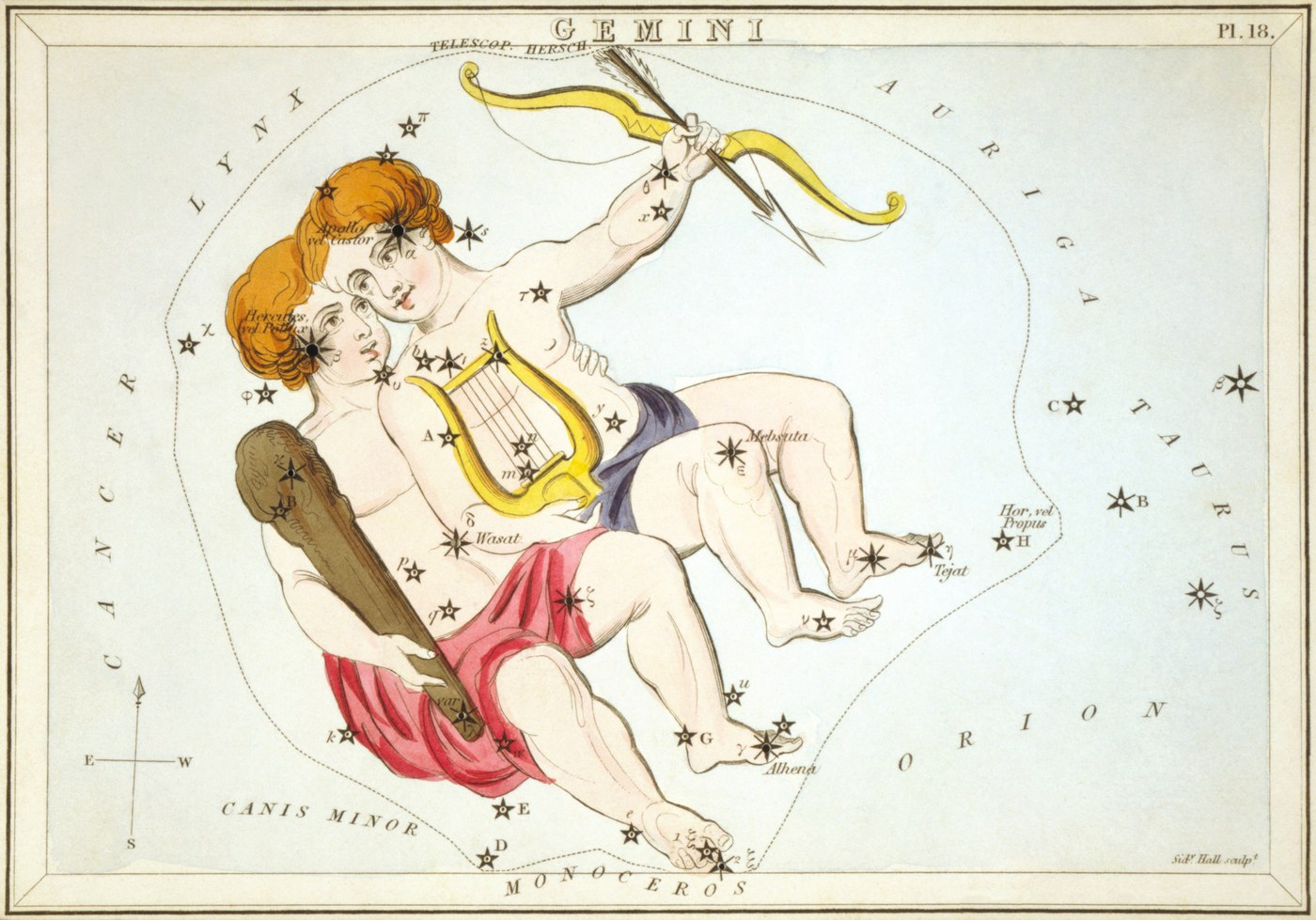
Gemini is the Twins (May 21 – June 20, Air element). Babylonian MUL.APIN attests MASH.TAB.BA.GAL.GAL ('Great Twins'). The Greek identification is Castor and Pollux (the Dioscuri), sons of Leda and Zeus-as-swan (Leda's twins include Helen and Clytemnestra in the female line). Homeric Hymn 33 and Pindar Nemean 10 preserve the Greek mythological backstory.
The Babylonian name MASH.TAB.BA.GAL.GAL, “Great Twins,” is exactly what the constellation looks like: two bright parallel stars, Castor and Pollux, close together in the sky. The constellation was one of the most reliably identified in the ancient world. What the Babylonians were observing and what the Greeks later named (Castor and Pollux, the Dioscuri) is the same pair of stars. The mythology changed; the observation did not.
Castor and Pollux
Castor and Pollux are the sons of Leda, the Spartan queen. Zeus came to her in the form of a swan, and Leda produced eggs from which the children hatched, in some versions, four children: Castor, Pollux, Helen, and Clytemnestra. The swan connection points directly to Zeus’s animal transformations; see the swan spirit animal entry for the broader Zeus-as-swan tradition and its Norse and Hindu parallels.
Which twin is mortal depends on the source. In the version that became standard, Castor is the mortal one (son of Leda’s human husband Tyndareus) while Pollux is immortal (son of Zeus). When Castor dies, Pollux asks Zeus to let him share his immortality with his brother. Zeus agrees: the twins alternate between Olympus and the underworld, each spending alternate days in each realm. Pindar’s Nemean 10, which preserves this version, is one of the most affecting treatments in all of Greek literature. Homeric Hymn 33 to the Dioscuri (a very short poem) is the earliest surviving literary treatment.
The patron saints of sailors
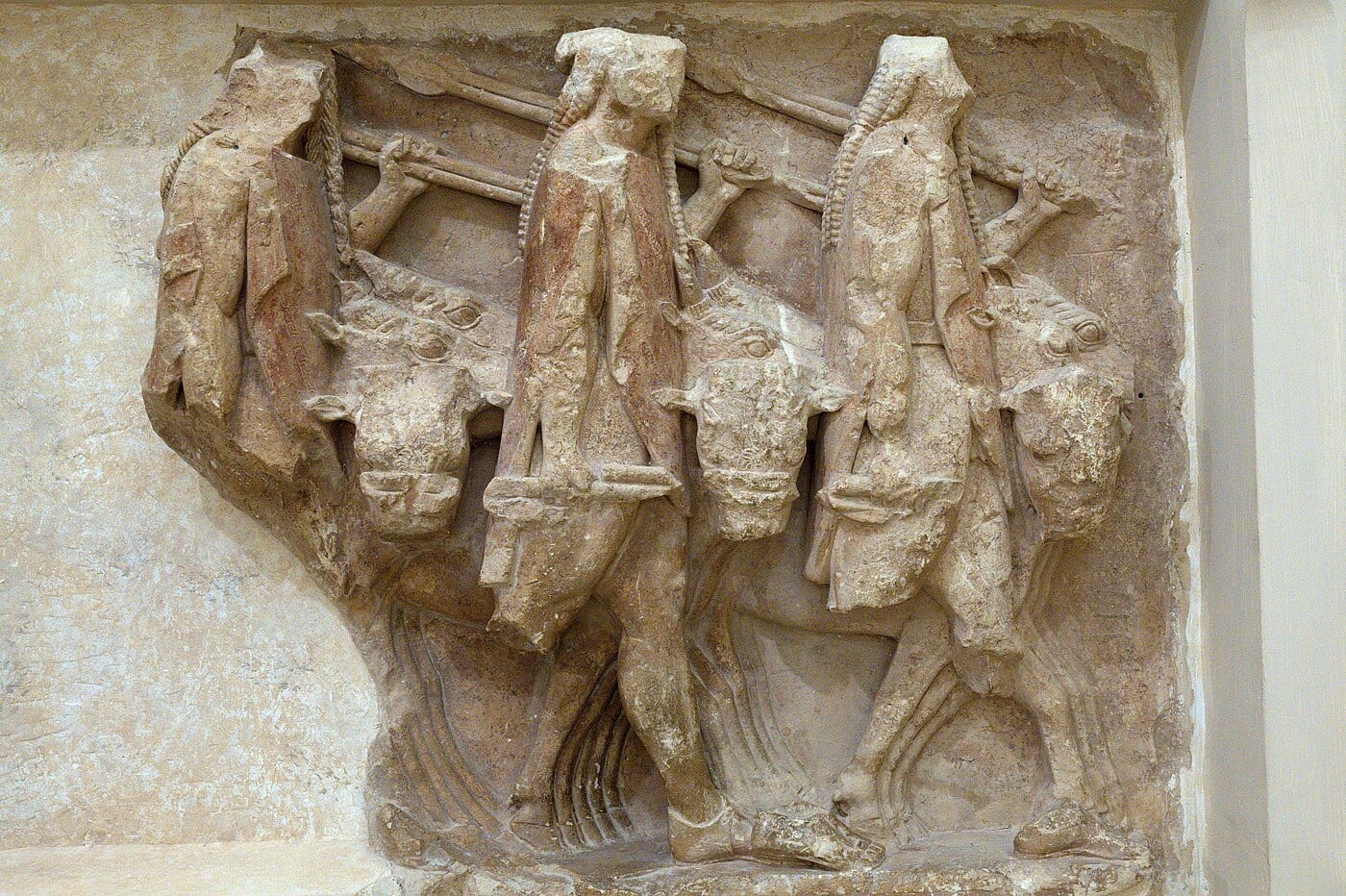
The Dioscuri were the patron deities of sailors across the ancient Mediterranean. Their appearance as twin lights on the mastheads of ships during storms (what we now call St. Elmo’s fire, the electrical discharge visible on pointed conductors in stormy conditions) was understood as a divine sign of protection. Pliny the Elder in Natural History 2.101 describes the lights: a single flame is Castor’s sign, a dire omen; twin lights are the Dioscuri together, a good sign. Euripides’s Helen shows the twins as active divine protectors of mariners. This tradition was absorbed into Christianity as St. Elmo himself (Saint Erasmus of Formia, patron of sailors), but the twin-light phenomenon carried the Dioscuri mythology well into the medieval period and beyond.
The animal associations
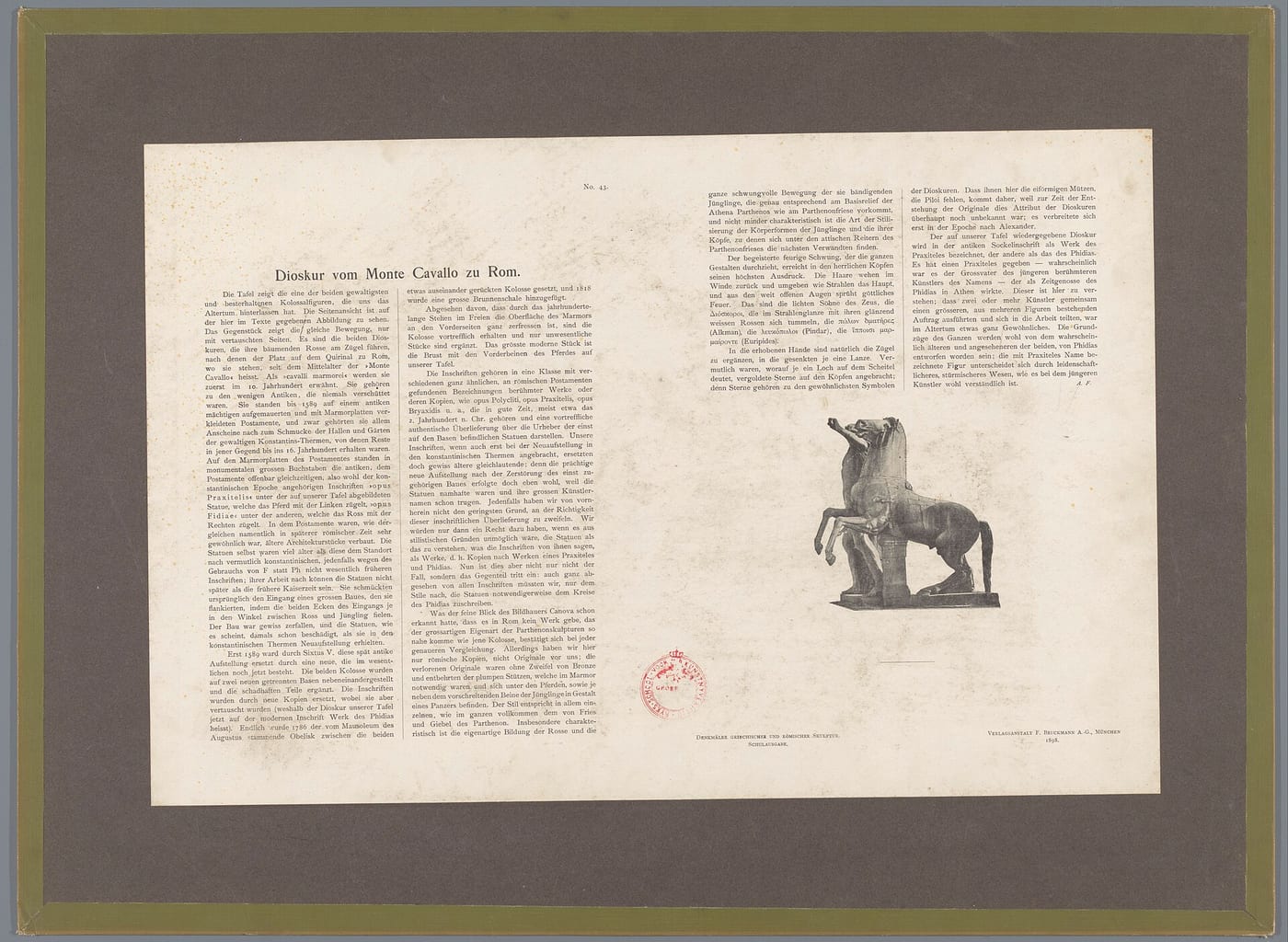
Gemini is not a single-animal sign. The twins themselves were associated with horses (the Dioscuri are often depicted as horsemen) but the popular zodiacal animal associations for Gemini are secondhand. Modern astrological tradition pairs the sign with magpies and parrots for their social behavior, quick intelligence, and tendency to pair up. Monkeys and foxes appear in some traditions for similar reasons. None of these has ancient authority behind it. They are analogical associations built from the sign’s Mercury-ruled, air-element qualities.
Associated animals
Primary: Magpie , Parrot
Frequently asked
- What animal is Gemini?
- Gemini is the Twins rather than a single animal, but popular associations include the magpie and parrot for their social-pair behavior. Castor and Pollux are the Greek Dioscuri, sons of Leda (the swan spirit animal entry covers the Zeus-as-swan tradition in full).
- Who are the Dioscuri and what makes them the Gemini twins?
- Castor and Pollux, the Dioscuri ("sons of Zeus"), are the patron deities of sailors in Euripides's Helen (c. 412 BCE) and in Pliny's Natural History 2.101 (where their atmospheric appearance is the St. Elmo's Fire). Pindar's Tenth Nemean Ode tells the canonical Greek story: Pollux is immortal, Castor mortal; when Castor dies, Pollux refuses to live without him, and Zeus grants them alternating days in Hades and on Olympus. The constellation encodes this loyalty across mortal-immortal lines.
- Is the Gemini "duality" reading Greek or modern?
- Modern. The Greek tradition emphasizes brotherhood and sworn loyalty rather than internal duality. The "two-sided personality" reading common in 20th-century American astrology (Linda Goodman, Sun Signs, 1968) is a modern overlay on the classical material. Ptolemy (Tetrabiblos 1.18) classifies Gemini as an air sign and discusses its meteorological associations rather than its psychology.
Sources
- PRIMARY MUL.APIN (MASH.TAB.BA.GAL.GAL) . Hunger & Pingree, 1989.
- PRIMARY Homeric Hymn 33 (to the Dioscuri) . Loeb Classical Library.
- PRIMARY Pindar, Nemean 10 . Loeb Classical Library.
- PRIMARY Ptolemy, Tetrabiblos . Loeb Classical Library.
- PRIMARY Pindar, Nemean Odes 10 . Race trans., Loeb Classical Library.
- PRIMARY Euripides, Helen . Kovacs trans., Loeb Classical Library.