Spirit Animal
Cheetah Spirit Animal
Cheetah spirit animal meaning: speed, focus and timing. Checked against the actual record: the Mughal coursing establishment documented by Abu'l-Fazl and Jahangir, the Eurasian hunting-cheetah trade, the Egyptian leopard-cheetah confusion, and why the modern speed-and-focus reading has no traceable source.
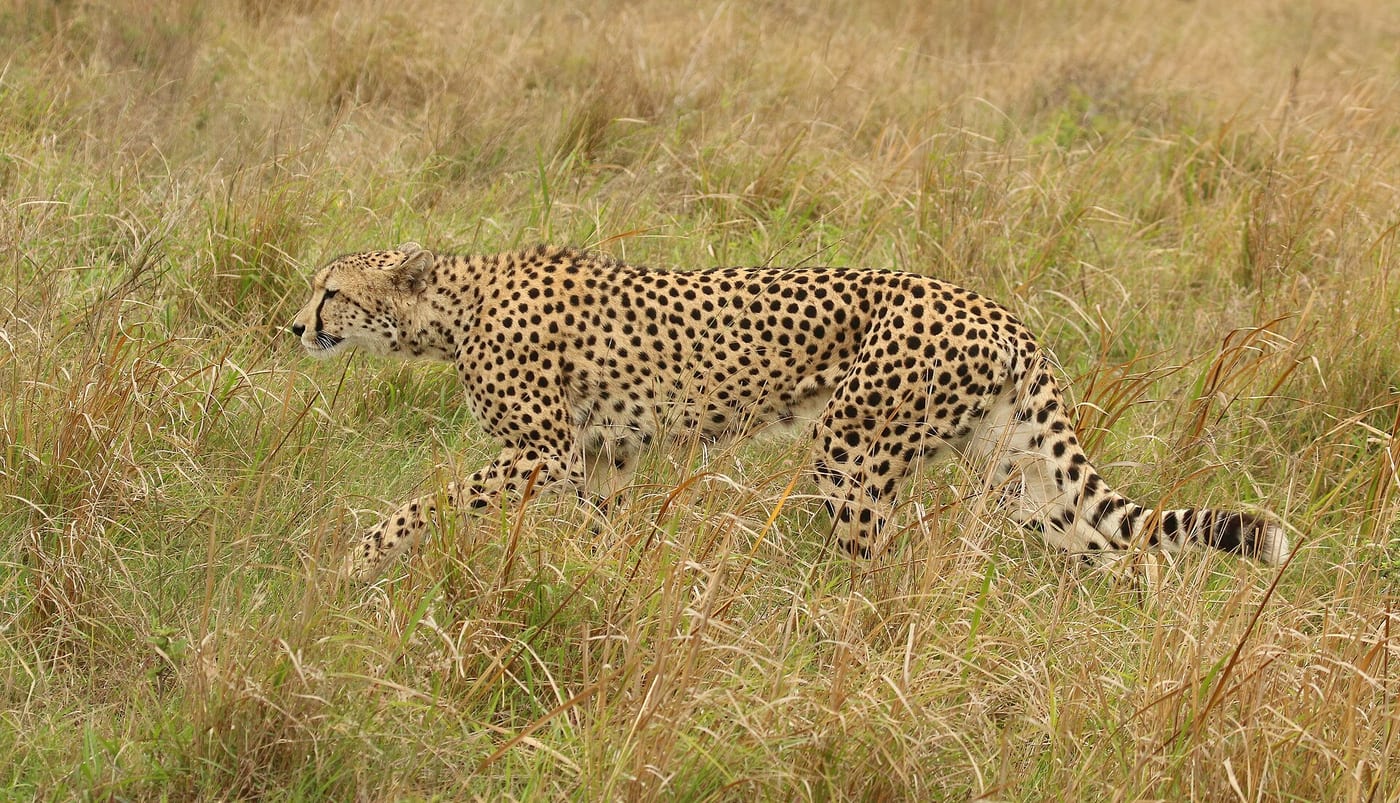
The cheetah's modern reading, speed, focus, and moving decisively when the moment comes, has no single traceable source in the way most spirit-animal meanings do. The historical record is almost entirely practical. Akbar kept cheetahs by the hundred as coursing animals, documented by Abu'l-Fazl and by Jahangir, and what survives is an inventory rather than a symbolism.
Akbar kept a thousand cheetahs, and not one surviving Mughal document says what a cheetah means.
That is the honest shape of this animal’s record, and it is unusual enough to be worth sitting with. Most of the animals on this site have the opposite problem: a thin factual record wrapped in a thick layer of claimed symbolism. The cheetah has an exceptionally rich documentary record, kept by administrators who counted things, and almost no symbolism in it at all.
The best-documented cheetah tradition is an inventory
Abu’l-Fazl was Akbar’s court historian, and the Akbarnama he wrote between roughly 1589 and 1596 is not a myth cycle. It is an account of a working empire, and the imperial hunt is one of its subjects. He treats the capture of cheetahs as the most remarkable of the hunting arts of Hindustan, because of the difficulty: the animals had to be lured into dug pits in a way that left them uninjured, then tamed and trained to run down blackbuck. He records specific operations with dates, including six cheetahs taken at Pakpattan in April 1571.
The scale comes from Akbar’s son. Jahangir wrote in his memoirs that his father kept a thousand cheetahs. You will find much larger totals for the reign asserted on wildlife blogs and news pages; this page could not trace any of them to a primary text, so it does not repeat them.
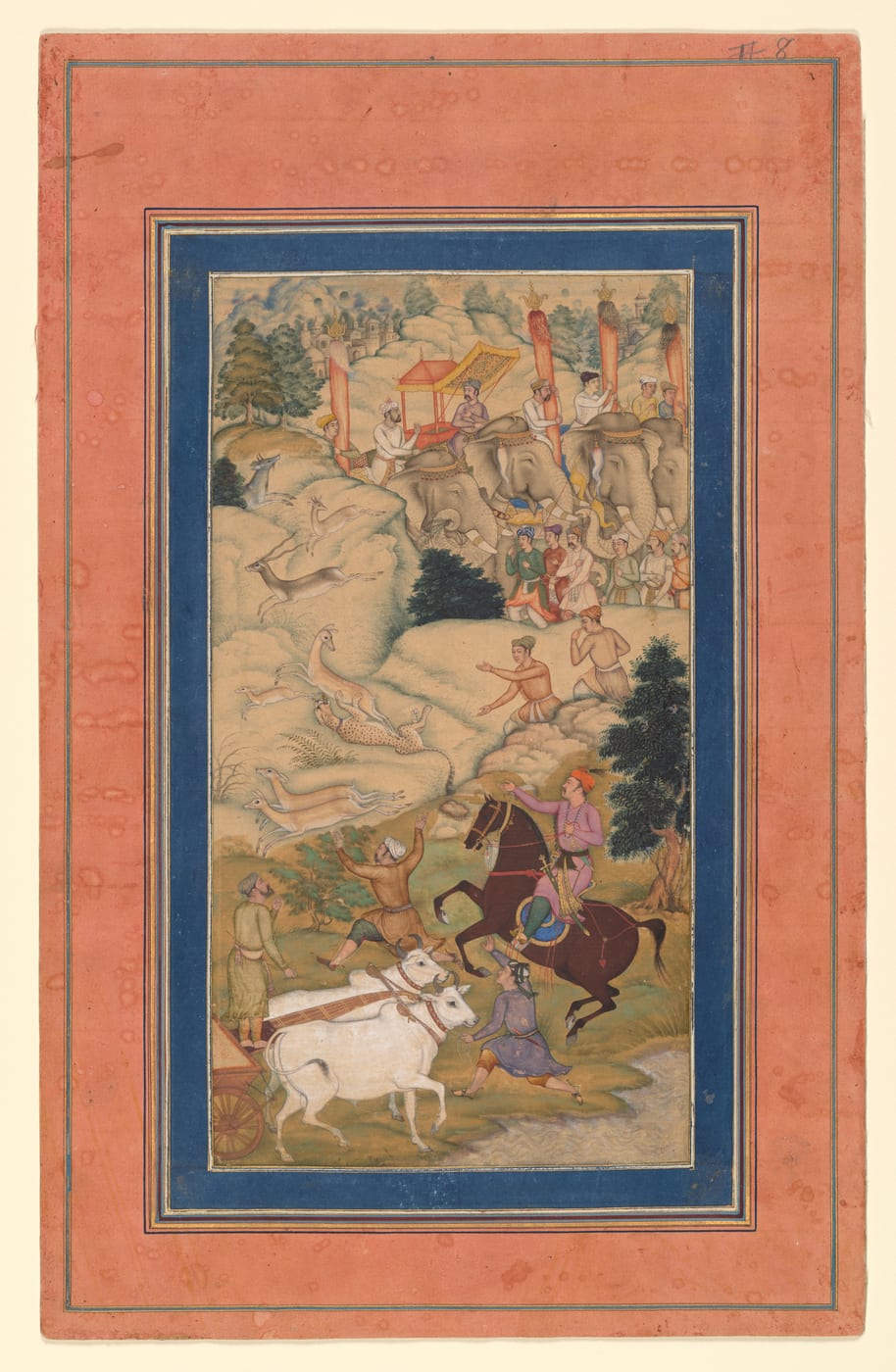
What the imperial record contains is logistics: how the animals were caught, how many, who managed them, what they were fed, how they were carried to the field. What it does not contain is a cheetah who is a god, an ancestor, a clan founder, or a dream visitor. Nobody in this archive receives cheetah medicine.
Every one of them was taken from the wild, and that is a symbol of something
Here is the detail that gives the Mughal record its edge.
Cheetahs almost never bred in captivity. Jahangir recorded that in 1613 one of his tame cheetahs slipped its collar, mated with a female, and produced three cubs. That event is generally described as the first documented captive birth anywhere, and for centuries it stood more or less alone. Every other cheetah in that establishment of a thousand had been caught as an adult in the wild, tamed, and trained.
Which means the coursing tradition was an extraction, running for centuries, that fed on wild populations and gave nothing back. The Asiatic cheetah was declared extinct in India in 1952. If you want a genuine meaning for this animal drawn from the historical record rather than from a keyword list, that is available: a creature so prized that it was collected in the hundreds by people who could not make more of it.
Why so many “ancient cheetah” claims cannot be checked
Search for cheetah symbolism and you will be told that the ancient Egyptians revered the cheetah as a guide to the afterlife, that pharaohs kept them as sacred companions, that the animal carried the soul into the next world.
Egypt did keep cheetahs, and Egyptian art depicts a spotted cat constantly. The difficulty is telling which one. Egyptian used a word for a big spotted cat qualified by a geographic term, and Egyptologists generally take the narrow one for the cheetah and the broad one for the leopard. Elisa Castel published a survey in 2002 in Trabajos de Egiptología whose entire premise is that modern Egyptological writing gets the two backwards routinely.
So the practical position is this. Many claims about cheetahs in ancient Egypt are claims about images that may be leopards. The priestly skin garment is conventionally read as leopard, not cheetah. And where the Egyptian record does distinguish the two animals, it distinguishes them by body and coat rather than by significance.
The modern meaning is an orphan
Most of this genre traces to one book. Ted Andrews’s Animal Speak (Llewellyn, 1993) is where the leopard and jaguar readings come from, and it handles them in a single combined entry with the panther, keynoted reclaiming one’s true power.
The cheetah is not in that entry, and this page could not confirm a cheetah entry in the book at all. The check was done against secondary reproductions rather than the volume itself, so treat it as unresolved rather than as a finding.
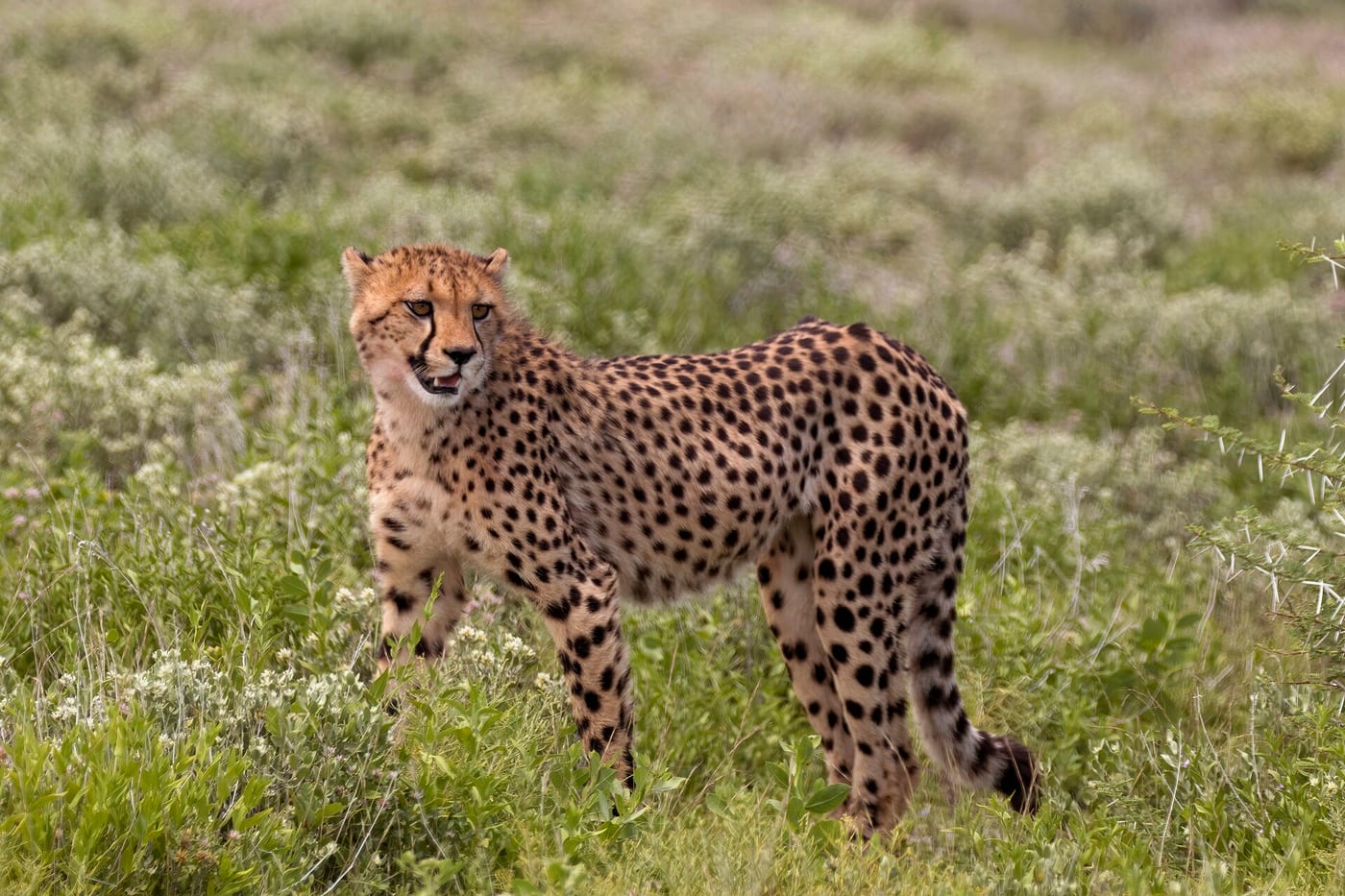
Either way, the situation is unusual. The near-identical wording repeated across cheetah pages, speed, focus, swift decisive action, the urging to act while the window is open, appears to be sites copying sites. It is a plausible reading of an animal that accelerates to roughly 100 km/h in three seconds and then has to stop, because a cheetah’s sprint runs its body temperature up fast and it cannot sustain the chase for long. But nobody seems to be able to say who wrote it first.
What the animal actually is
If the symbolism is thin, the biology carries more than enough weight on its own, and it is the part every source agrees on.
Acinonyx jubatus is built as a single-purpose machine and pays for it everywhere else. Its claws are only semi-retractile, which is unusual among cats and works like sprint spikes. Its chest is deep and narrow, its limbs long and light, its head small. The spine flexes hugely through the stride. The tail counterbalances turns at speed. And the whole design gives up the muscle mass that would let it defend a kill, so cheetahs lose carcasses routinely to lions and hyenas and have to eat fast.
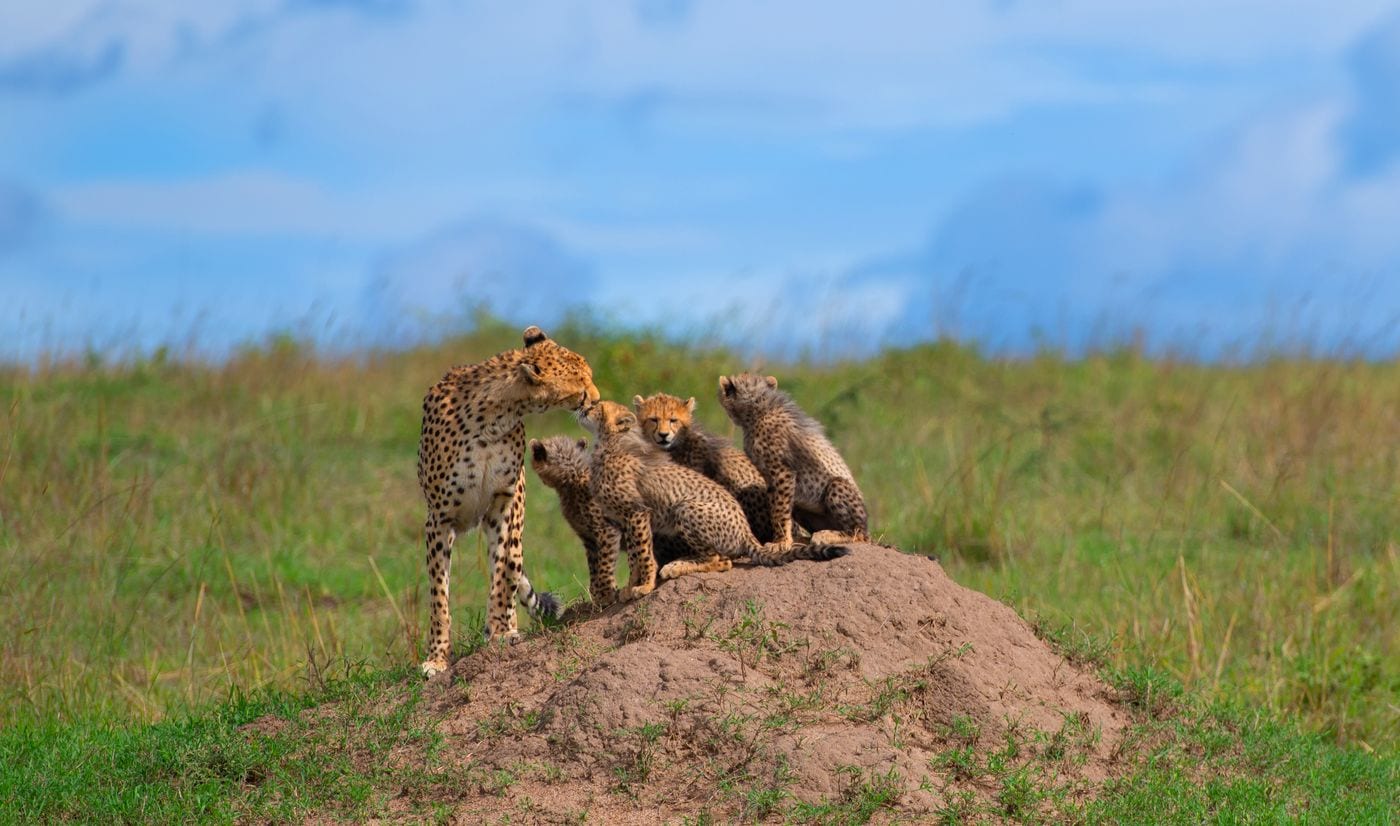
That is a specific animal with specific tradeoffs, not a keyword. The sprint is short because it has to be. The stalk before it is long, patient, and does most of the work, and the cat gives up the chase more often than it wins. A reading built on that is better grounded than one built on the top speed alone, and it has the advantage of being something you can go and verify.
Across traditions
Mughal India (the coursing establishment)
The best-documented relationship between people and cheetahs anywhere is administrative. Abu'l-Fazl, Akbar's court historian, recorded the imperial hunt in the Akbarnama and its final volume the Ain-i-Akbari, written between 1589 and 1596, and treated the capture of cheetahs as the most remarkable of the hunting arts of Hindustan: the animals had to be taken in pits without injury, then tamed and trained to course blackbuck. He logs particular events with dates, including six cheetahs caught in a single operation at Pakpattan in April 1571.
The scale is recorded by Akbar's son. Jahangir, in his own memoirs, wrote that his father kept a thousand cheetahs. Larger totals for the reign circulate widely online; this page could not trace them to a primary text and does not repeat them. Divyabhanusinh's The End of a Trail: The Cheetah in India (Oxford University Press, first published 1995) remains the standard modern treatment of that record.
What is absent from all of it is theology. Nobody dreams of a cheetah, receives cheetah medicine, or claims descent from one. The cheetah appears in the sources the way a gyrfalcon or a war elephant appears: expensive, prestigious, difficult to obtain, and useful.
- PRIMARY Abu'l-Fazl, Akbarnama and Ain-i-Akbari . Persian, written ca. 1589-1596. Capture and training of cheetahs for the imperial hunt.
- PRIMARY Jahangir, Tuzuk-i-Jahangiri (Jahangirnama) . Records that Akbar kept a thousand cheetahs, and the 1613 litter.
- REFERENCE Divyabhanusinh, The End of a Trail: The Cheetah in India . Oxford University Press. The standard history of the cheetah in India.
- MUSEUM Akbar Hunting with Cheetahs, folio from the Akbarnama, The Metropolitan Museum of Art . Accession 30.95.174.9, ca. 1604. Theodore M. Davis Collection.
The wider Eurasian coursing trade
Hunting with cheetahs was not a Mughal invention and did not stay in India. Thomas T. Allsen's The Royal Hunt in Eurasian History (University of Pennsylvania Press, 2006) traces the practice as a connected phenomenon running from the ancient Near East through the Islamic courts to Mughal India and on into early modern Europe, where cheetahs arrived as diplomatic gifts. His related study of the circulation of hunting leopards across Eurasia treats the animal as a traded commodity of statecraft rather than as an idea.
The English name for the animal in that trade was the hunting leopard, which is where a good deal of the later confusion starts. The word cheetah itself comes into English from Hindi, ultimately from a Sanskrit root meaning speckled or variegated. Both names describe the coat. Neither carries any freight about character.
- PEER-REVIEWED Thomas T. Allsen, The Royal Hunt in Eurasian History . University of Pennsylvania Press, 2006.
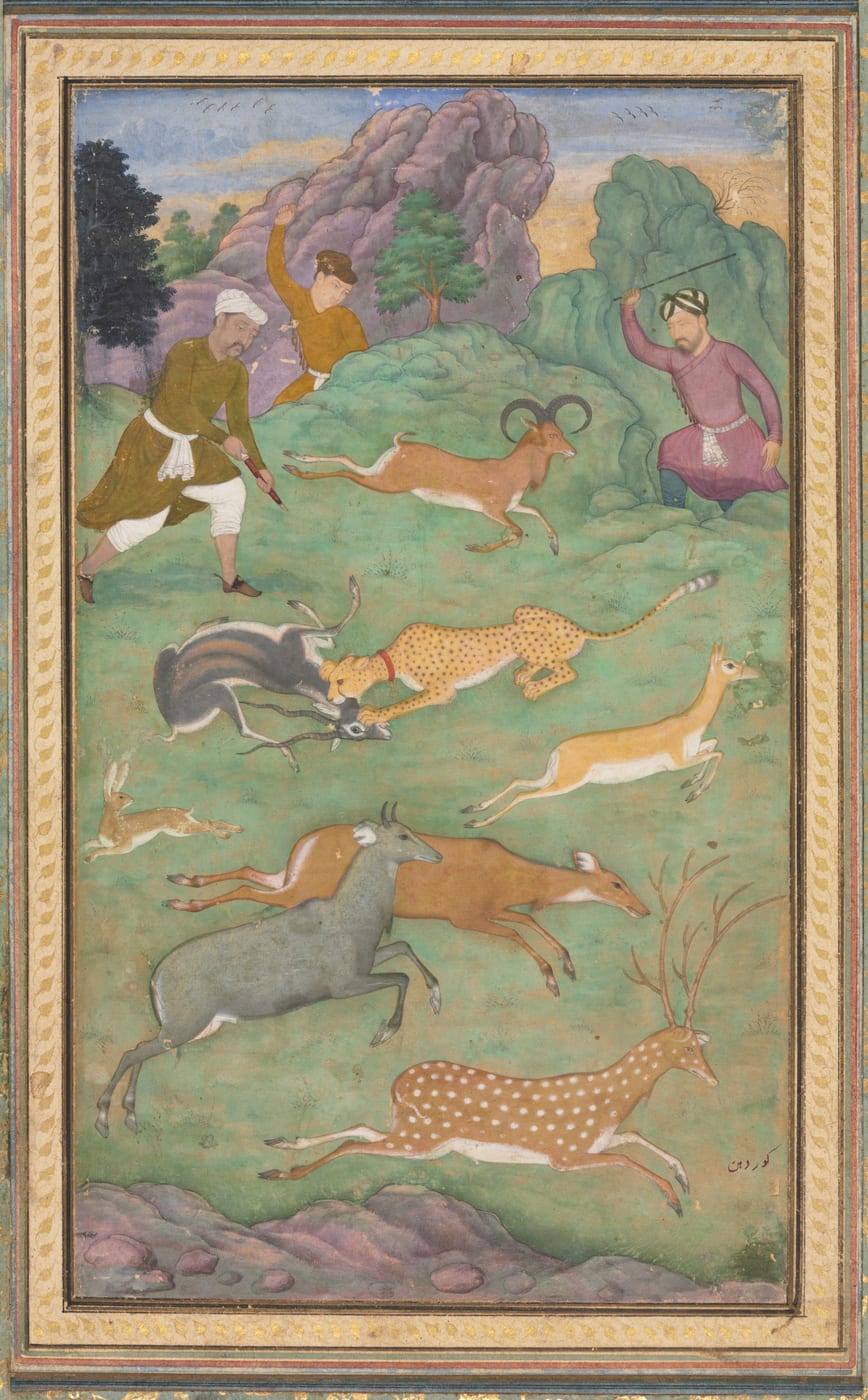
- MUSEUM Antelope and deer hunt, Mughal India, The Cleveland Museum of Art . Accession 1939.66, ca. 1602-04, Allahabad, made for Prince Salim.
Ancient Egypt (kept, drawn, and mistaken for a leopard)
Egypt had cheetahs and kept them, and Egyptian has a word that Egyptologists generally read as the cheetah: a spotted cat qualified as the narrow one, set against a broad one taken to be the leopard. Elisa Castel's survey Panthers, leopards and cheetahs. Notes on identification (Trabajos de Egiptologia / Papers on Ancient Egypt 1, 2002, 17-28) exists precisely because modern Egyptological writing swaps the two constantly.
This has a direct consequence for anyone reading cheetah symbolism online. A large share of claims about the cheetah in ancient Egypt are claims about images that could equally be leopards, and the priestly skin garments are conventionally read as leopard. Where the record genuinely distinguishes them it does so on coat and build, not on meaning, and no Egyptian text that this page could find assigns the cheetah a character.
- PEER-REVIEWED Elisa Castel Ronda, Panthers, leopards and cheetahs. Notes on identification . Trabajos de Egiptologia / Papers on Ancient Egypt 1 (2002): 17-28.
The modern reading (source not established)
Most spirit-animal pages give the cheetah a keynote built on speed: act now, move decisively, do not overthink the moment. It is a reasonable reading of the animal and it is repeated almost word for word across hundreds of sites.
This page could not establish where it came from. Ted Andrews's Animal Speak (Llewellyn, 1993), the source behind most of this genre and the source behind the leopard and jaguar readings specifically, files panther, leopard and jaguar in one combined entry; no cheetah entry in it could be confirmed here, and the copy consulted for that check was secondary rather than the book itself. Treat the cheetah's pop meaning as an orphan until somebody produces its parent.
- REFERENCE Ted Andrews, Animal Speak: The Spiritual & Magical Powers of Creatures Great and Small . Llewellyn, September 1993. Combined Panther / Leopard / Jaguar entry; cheetah entry not confirmed.
Working with the Cheetah
If you want a regular practice rather than a one-time read, an oracle deck is the standard tool: you draw a card and sit with whatever animal comes up. Our ranked guide to spirit animal oracle decks compares the field.
Sources
- PRIMARY Abu'l-Fazl, Akbarnama and Ain-i-Akbari . ca. 1589-1596.
- PRIMARY Jahangir, Tuzuk-i-Jahangiri (Jahangirnama) . Records a thousand cheetahs under Akbar and the 1613 litter.
- MUSEUM Akbar Hunting with Cheetahs, The Metropolitan Museum of Art . Accession 30.95.174.9, ca. 1604.
- MUSEUM Antelope and deer hunt, The Cleveland Museum of Art . Accession 1939.66, ca. 1602-04.
- PEER-REVIEWED Thomas T. Allsen, The Royal Hunt in Eurasian History . University of Pennsylvania Press, 2006.
- REFERENCE Divyabhanusinh, The End of a Trail: The Cheetah in India . Oxford University Press.
- PEER-REVIEWED Elisa Castel Ronda, Panthers, leopards and cheetahs. Notes on identification . Trabajos de Egiptologia 1 (2002): 17-28.
- REFERENCE Ted Andrews, Animal Speak . Llewellyn, September 1993.